
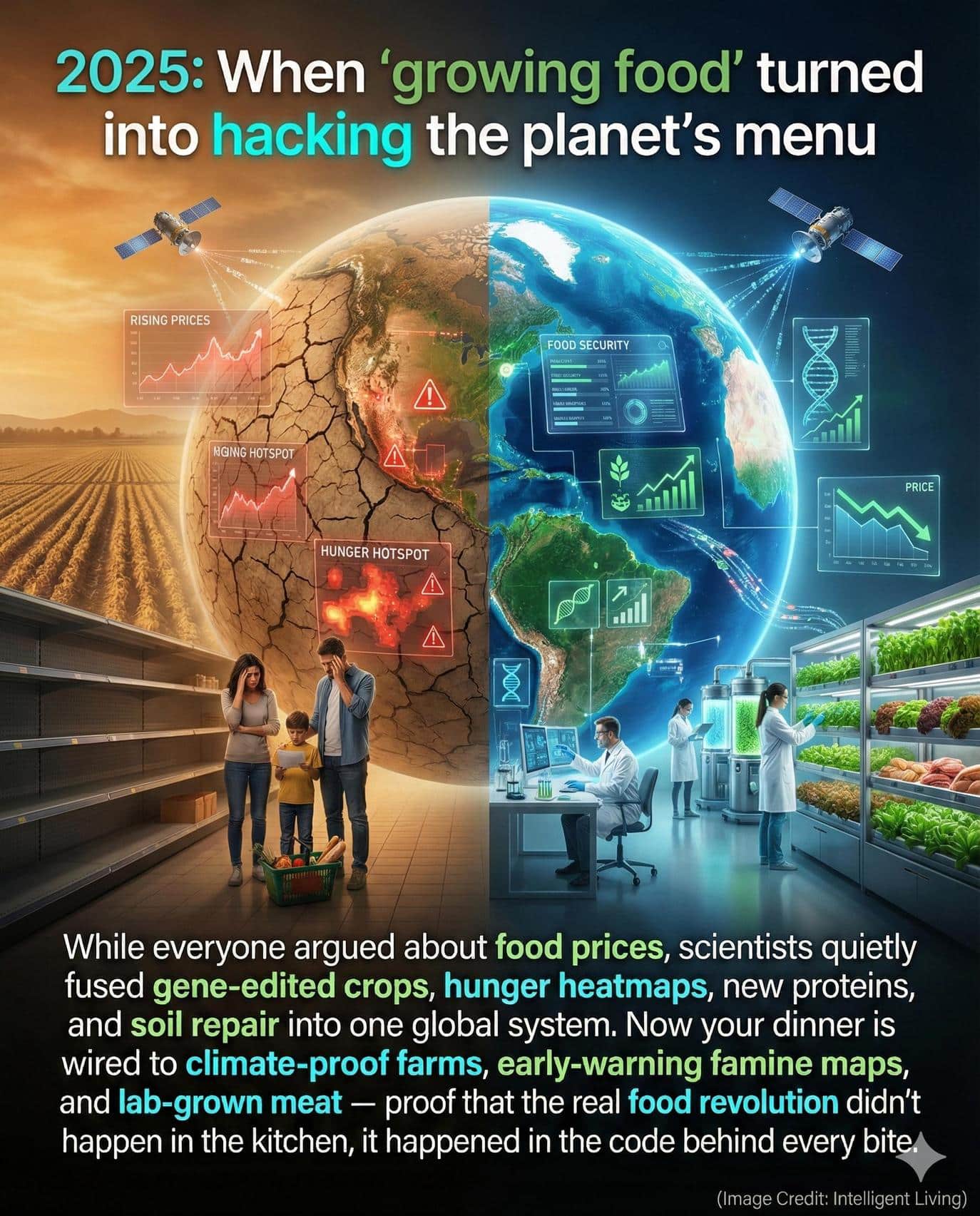
Global food systems encountered a foundational shift throughout 2025 as the boundaries between biology, data science, and international regulation dissolved. This transition moved agriculture beyond the scope of traditional cultivation, establishing a sophisticated engineering landscape where genomic precision and predictive analytics safeguard every stage of the supply chain.
These advancements represent more than isolated technical successes; they signify the birth of an interconnected infrastructure capable of anticipating crises and stabilizing nutritional access for a growing population. Science and law achieved a rare synchronization last year, bridging the gap between experimental research and commercial deployment.
Policy breakthroughs in Europe and landmark crop approvals in India provided the necessary frameworks for climate-resilient varieties to reach the hands of smallholder farmers. Simultaneously, the integration of real-time market data and early-warning technologies allowed humanitarian efforts to transition from reactive responses to proactive mitigation.
This analysis examines the primary catalysts that rewired the food economy in 2025 and established the operational standards for 2026.
Strategic Agriculture Breakthroughs Establishing the 2026 Food Security Landscape
1. Scaling Genome-Edited Rice Varieties: India’s Milestone in Crop Biotechnology
India achieved a global biotechnology milestone in May 2025 by officially approving two genome-edited rice varieties. Developed by the Indian Council of Agricultural Research (ICAR), DRR Dhan 100 (Kamala) and Pusa DST Rice 1 are designed to perform better under environmental stress. Early results reported up to 30% higher yields during drought alongside notable water-use efficiency gains. Such benefits could reshape how rice is grown in a warming world.
Unlike genetically modified organisms (GMOs), genome-edited crops like these make precise edits within the plant’s own DNA without inserting foreign genes. These efforts extended earlier successes in editing plant mitochondrial DNA in rice and canola to enhance crop resilience.
Agriculture experts project full commercial planting beyond pilot regions throughout 2026, positioning these varieties as a global standard for nations pursuing climate-resilient food strategies.
2. The European NGT Framework: Establishing New Genomic Regulatory Standards
European Union negotiators reached a provisional agreement on new genomic techniques in late 2025, signaling a breakthrough policy moment after years of debate. The deal creates a clearer legal framework for crops developed through modern gene-editing methods such as CRISPR, balancing innovation with consumer transparency.
The agreement allows certain NGT crops to be treated differently from traditional GMOs if they could also occur naturally or through conventional breeding. Updated regulatory standards allow European research institutions and seed companies to compete globally in developing climate-ready crops without the hindrance of outdated restrictions.
First-wave gene-edited European crops should advance toward field testing and limited market entry during 2026, signaling a new era of regulated innovation for global agriculture.
3. Mitigating Food Price Inflation: Prioritizing Nutritious and Affordable Supply Chains
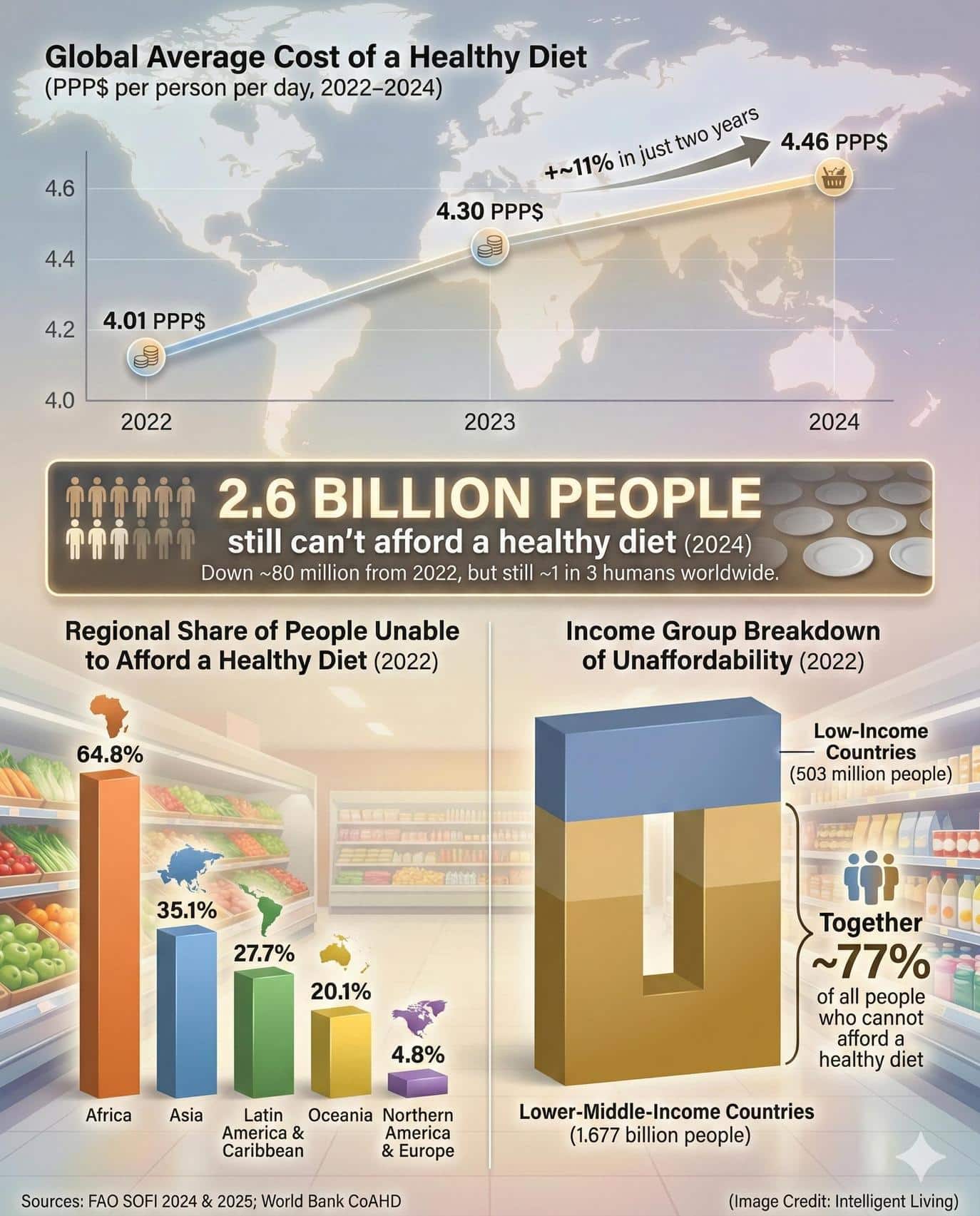
While technology grabbed headlines, affordability became the real measure of food security in 2025. Data from the most recent global assessments reveals that the cost of a healthy diet continues to rise faster than global income levels.
A 10% increase in food prices now translates directly into more families slipping into food insecurity, particularly in low-income nations. Global food security now depends on maintaining affordable, nutritious supply chains that remain resilient during market fluctuations rather than simply increasing production volume.
Affordable bioengineered crops, local production technologies, and shorter supply chains are becoming key priorities heading into 2026. The affordability crisis is forcing food security experts to merge economics with agriculture in ways that could redefine the next decade of food policy.
4. Predictive Analytics and Hunger Hotspots: Operationalizing Anticipatory Food Security
Predictive systems designed to anticipate food crises reached full operational scale for the first time in 2025. This technical maturity allowed humanitarian organizations to deploy resources with greater speed and accuracy. Regional reporting identified several key risk factors for late 2025 and early 2026:
- Severe conflict zones disrupting traditional supply routes.
- Acute climate shocks affecting seasonal harvests.
- Volatile market disruptions causing price instability.
- Inadequate local infrastructure hindering aid delivery.
Strategic deployment of aid now precedes the onset of crisis, ensuring that intervention occurs while stabilization is still possible. By merging remote-sensing data, climate forecasts, and on-the-ground intelligence, the system is transforming humanitarian response from reactive to proactive.

5. A Rice Gene Variant Shows Measurable Drought Yield Gains (OsIRO2)
Researchers reported a significant biological discovery in August 2025 involving a rice gene known as OsIRO2. This variant demonstrated up to 27% higher grain yield under drought conditions—a critical gain in the face of increasingly frequent heat waves and water shortages.
The finding is more than a scientific milestone; it represents a concrete adaptation pathway for millions of smallholder farmers whose livelihoods depend on rice. Integrating this drought-tolerant trait into regional breeding programs could stabilize food supplies across South and Southeast Asia as global rice demand intensifies through 2026.
Early trials are already underway to combine OsIRO2 with salt-tolerance genes, aiming to protect crops in coastal and flood-prone areas. Such progress shows that genetic innovation is not about replacing farmers—it is about equipping them for an unpredictable climate.
6. Gene-Edited Livestock Crosses a New Line: PRRS-Resistant Pigs (FDA 2025)
The U.S. Food and Drug Administration established a new precedent in April 2025 by authorizing gene-edited livestock for the food supply. These animals were genetically modified to resist Porcine Reproductive and Respiratory Syndrome (PRRS), which remains one of the costliest animal diseases worldwide. Precise deletion of a portion of the CD163 gene allowed scientists to render the animals immune to the virus without affecting growth or reproduction.
The approval marks a turning point for biotechnology in livestock. It shifts genetic editing from experimental labs to commercial agriculture, potentially reducing antibiotic use and preventing devastating herd losses.
Trade acceptance and consumer perception remain critical hurdles that will likely define the regulatory landscape throughout 2026. The PRRS-resistant pig is not just a scientific achievement; it is a test case for how society balances innovation, ethics, and transparency in the food system.
7. Quantifying Land Degradation: Data-Driven Soil Restoration and Asset Management
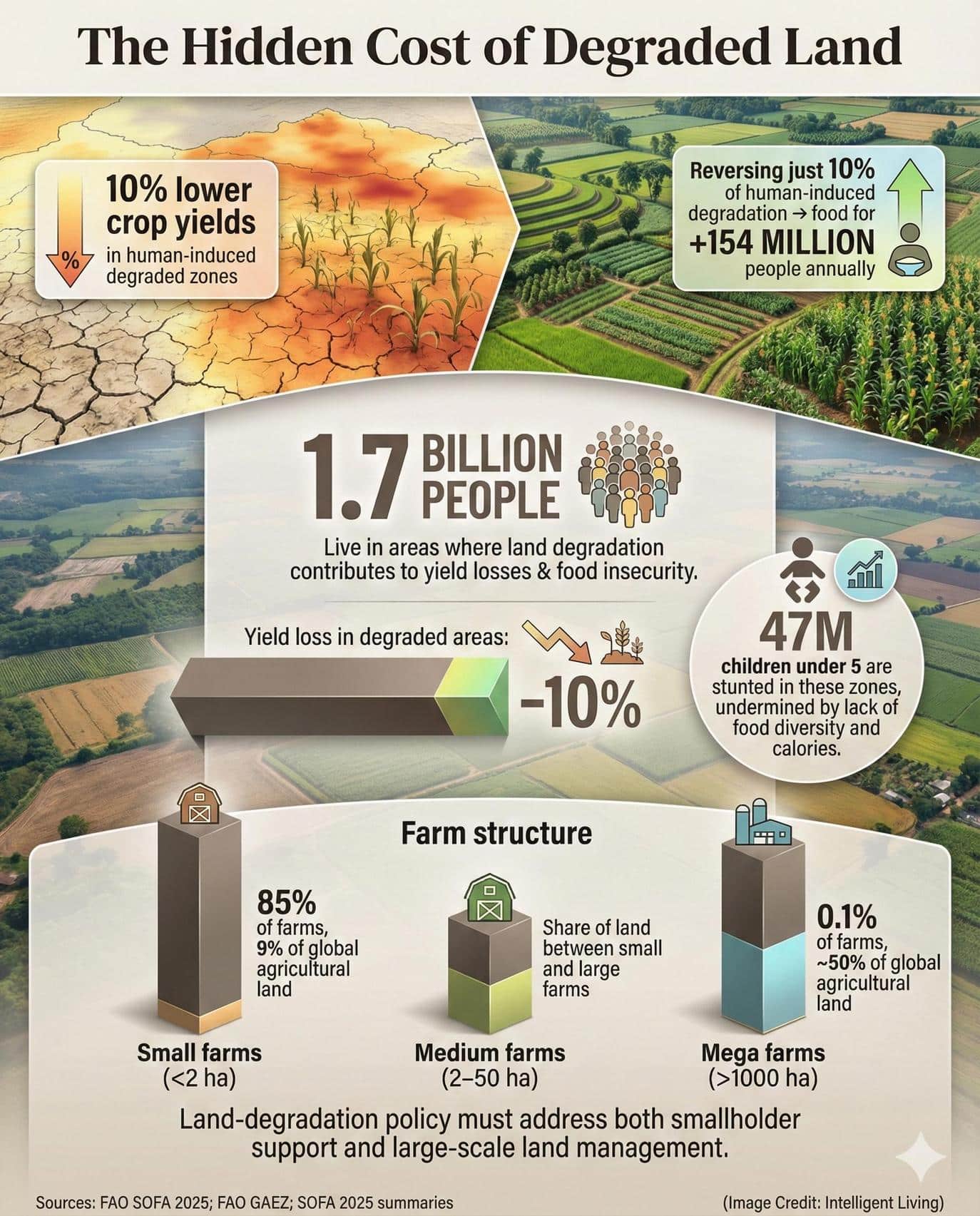
For years, conversations about soil and land degradation sounded theoretical. That changed in 2025 when reporting identified specific areas where degraded soil is actively reducing crop yields. Policymakers gained a quantifiable mandate for action in 2025 as new data transformed land degradation from an abstract concept into a measurable and mapped reality.
The SOFA 2025 findings underscore the need for large-scale soil restoration programs supported by better measurement, reporting, and verification (MRV) systems. These data-driven tools enable investors and governments to tie financial incentives to verifiable improvements in soil health, especially when aligned with recirculating agriculture systems that keep nutrients and water cycling on-farm.
As 2026 begins, soil quality is expected to be treated not only as an environmental concern but also as a measurable asset that directly influences global food security and economic stability.
8. Deep-Tech Agriculture Gets a Clearer Blueprint (WEF 2025)
The 2025 blueprint for deep-tech agriculture signaled that agriculture has officially entered the data-and-automation era. It defined a cohesive framework for integrating artificial intelligence, robotics, and remote sensing into a unified production ecosystem. Rather than standalone innovations, the report emphasized entire systems—combining sensors, predictive analytics, and automation into full agricultural “stacks” that could make food production both efficient and sustainable.
Operational deployments are already yielding measurable results across diverse geographies. AI-powered drones are identifying nutrient deficiencies, while precision irrigation systems are optimizing water use at the field level.
These integrations allow farmers to make decisions in real time rather than relying on historical averages, especially as AI-driven vertical farming and precision agriculture move from pilot projects to scalable systems. The WEF’s blueprint suggests that 2026 will be the year when deep-tech farming evolves from pilot projects into full commercial ecosystems.
9. Cultivated Meat Hits a New Regulatory Milestone (FSANZ A1269, 2025)
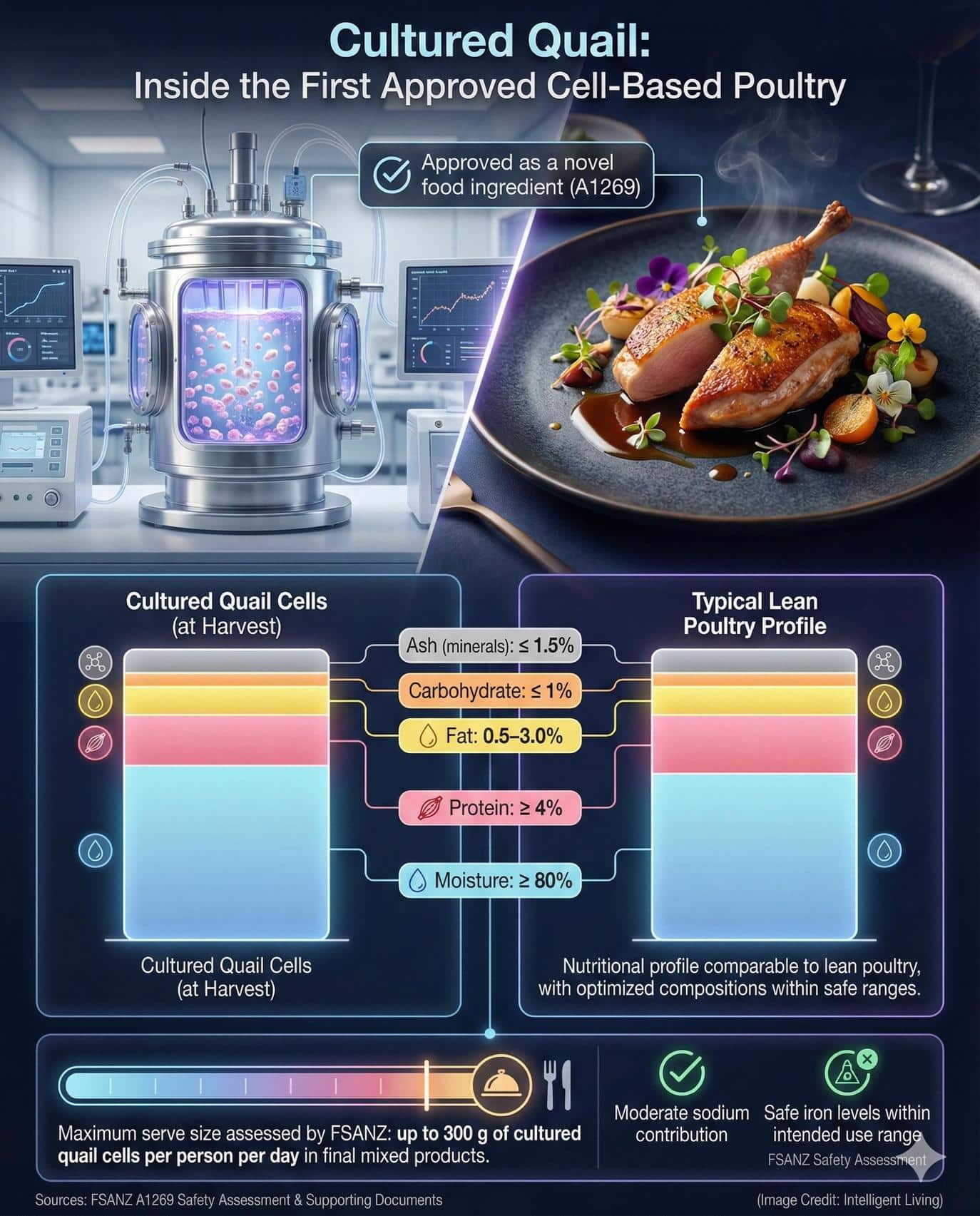
In mid-2025, regulatory authorities in Australia and New Zealand authorized the sale of cell-cultured quail meat. This made the region the first outside Singapore to authorize cultivated meat for consumer use. The approval not only validates years of cellular agriculture research but also paves the way for other producers seeking similar clearances.
Cultivated meat technology replicates animal cells within controlled environments to produce genuine protein without the need for traditional slaughter. Cellular agriculture strategies could drastically reduce land use, greenhouse gas emissions, and antibiotic reliance. These benefits are particularly effective when considered alongside solar-powered microbial protein Solein, which can turn air and renewable electricity into edible protein.
In 2026, watch for cultivated meats to move beyond novelty tasting events and into high-end restaurants and specialty markets, supported by transparent labeling and consumer education initiatives. The FSANZ milestone demonstrates that sustainable protein diversification is no longer a futuristic idea—it is entering regulated reality.
10. Precision Fermentation Matures Into an Ingredient Economy
Precision fermentation evolved from a laboratory curiosity into a scaling industrial platform during the final months of 2025. Companies began producing dairy proteins through microbial fermentation to create everyday products, creating alternatives to milk and cheese without involving animals.
Innovation shifted toward ingredient manufacturing in 2025 as producers prioritized the synthesis of specific proteins, fats, and enzymes for broad food industry applications. The shift to ingredient-level precision fermentation represents a practical economic model: instead of replacing traditional agriculture, it complements it by supplying functional ingredients sustainably.
As 2026 approaches, partnerships between biotech startups and established food manufacturers are expected to accelerate, pushing these ingredients toward mainstream product lines. This growing “ingredient economy” underscores a larger truth: the food industry’s innovation frontier now lies as much in bioreactors as it does in soil.

Establishing a Resilient Global Food System Architecture for 2026
The progress witnessed throughout 2025 confirms that the future of global food security depends on the successful convergence of disparate technologies. Genomic precision, when paired with robust regulatory oversight and predictive mapping, creates a defensive perimeter against the dual threats of climate volatility and economic instability. These innovations have provided the world with a scalable blueprint for sustainability, proving that high-tech interventions can remain accessible to those most vulnerable to market shifts.
The strategic priority throughout 2026 shifts from conceptual proof to the integration of a global ecosystem that actively promotes human health and environmental restoration. Sustaining this momentum requires a continued commitment to transparency and public trust. As alternative proteins and gene-edited staples move from specialty markets into mainstream grocery aisles, clear communication regarding safety and environmental benefits will determine the speed of adoption.
The foundation laid during this pivotal year suggests that the food industry is no longer merely reacting to scarcity but is instead actively designing abundance. Future success depends on how effectively these breakthroughs stabilize market pricing, restore soil vitality, and achieve a verifiable decline in global hunger metrics.
Frequently Asked Questions on Strategic Agriculture Innovations
What distinguishes 2025 genome-edited crops from older GMO technology?
Genome editing makes precise, internal adjustments to a plant’s existing DNA without introducing genetic material from external species.
How do predictive hunger maps improve international food security?
These systems combine satellite data and climate forecasts to identify high-risk regions months before a crisis occurs, enabling preventive aid.
Which regions have officially authorized cultivated meat for consumer purchase?
Singapore and the combined regulatory zone of Australia and New Zealand currently lead the world in authorizing these sustainable protein sources.
Why is soil health measurement becoming a major financial priority?
Verification systems now treat soil quality as a measurable asset, linking financial incentives directly to verifiable fertility gains and carbon storage.
What role does precision fermentation play in the ingredient economy?
This technology uses microbes to produce specific proteins or enzymes identical to those found in animal or plant foods. It enables sustainable manufacturing of food ingredients without traditional agriculture.


