
For quite a long time, humans have focused on building simple cubic areas for living spaces, offices, towns, and cities, each serving a specific utilitarian purpose. These sharp angles and cluttered spaces often exude a vibe of methodical living that leaves much to be desired, as even researchers would agree is quite detrimental to health and wellness. But all of that can change through embracing the concepts of biophilic design.
Your home environment can function like a quiet therapist and a thrifty energy coach at the same time. Cities are testing this idea at scale with districts like Stockholm Wood City, which pairs visible wood, generous daylight, and accessible greenery to lower construction emissions while improving daily life.
You can apply the same biophilic design logic in a single room, or maybe even every room in your home or office. By combining living plants, wood touchpoints, and natural light, you begin with targeted moves drawn from credible biophilic building design science similar to the principles used in Stockholm’s mass-timber district.
Before we dive into specific rooms, a quick primer helps explain why these spaces feel different. Interaction with indoor plants has been shown to reduce physiological and psychological stress in controlled studies, while touching wood surfaces can increase parasympathetic activity associated with deep relaxation.
When you align these choices with higher daylight exposure (which correlates with better sleep duration and overall well-being), you build a home that supports your health as much as it lowers your bills. These three pillars will guide each blueprint.
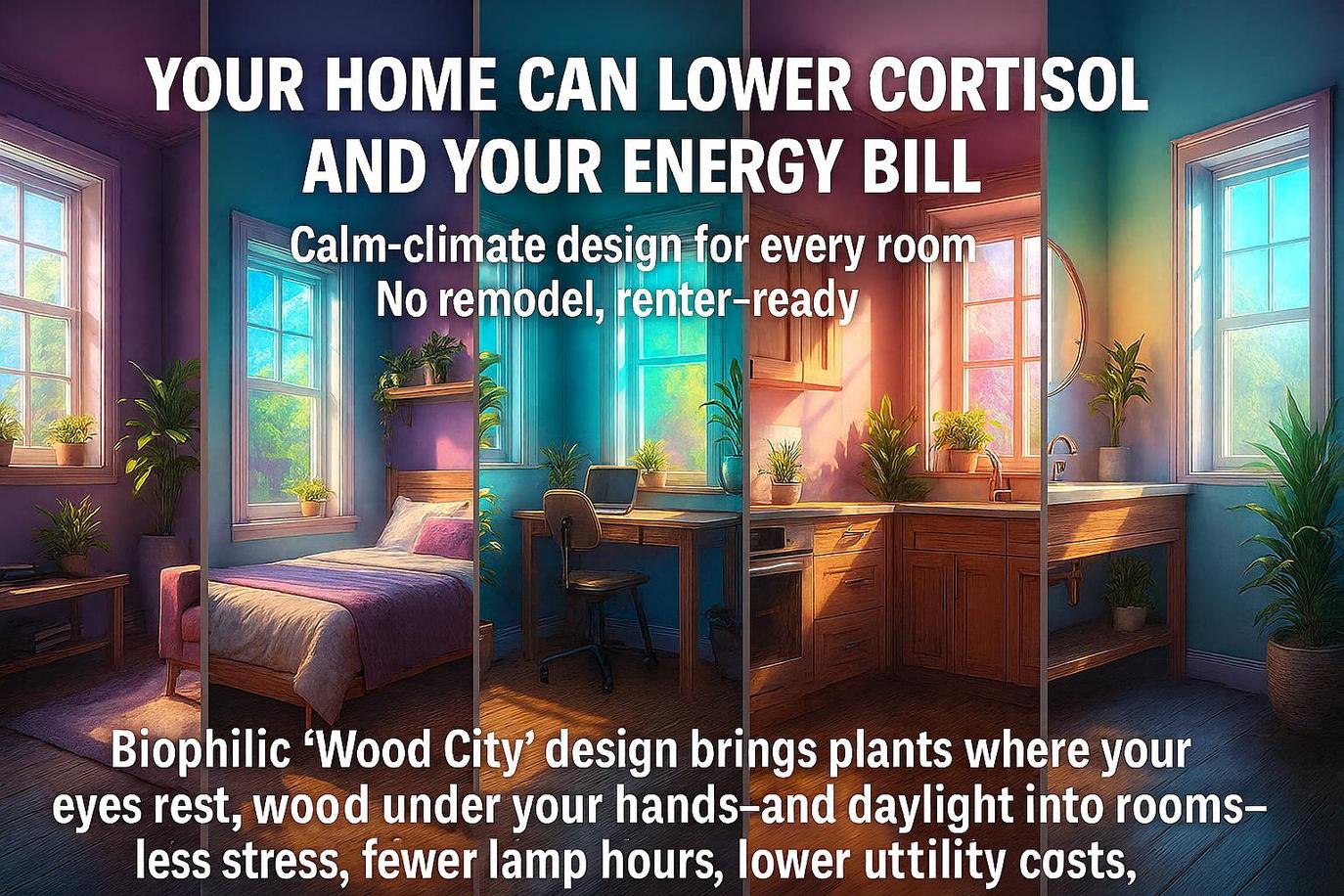
Stress Reduction and Energy Savings with Biophilic Design
- Plants are more than décor: Short sessions of hands-on plant care have been shown to lower diastolic blood pressure and calm the autonomic nervous system.
- Wood invites the body to relax: Brief tactile contact with unfinished or lightly finished wood can reduce prefrontal cortex activity and increase parasympathetic response, which people describe as feeling calmer.
- Daylight saves energy while supporting sleep: Well-designed daylighting trims electric lighting loads and may reduce total energy costs by up to one-third when paired with proper controls.
- You do not need a renovation to start: Start without a renovation. Strategic furniture positioning captures natural views, utilizing biophilic design hacks for a healthier home.
Scaling Down: Applying Urban Timber Concepts to Interiors
Urban designers describe Stockholm Wood City as a prototype for climate-smart neighborhoods. Mass timber stores carbon and speeds cleaner construction, while sky views, rooftop greenery, and large windows create calmer interiors. You can borrow that playbook inside an ordinary apartment by prioritizing three elements in every room:
- A living plant cluster positioned within your visual field.
- At least one wood surface where your hands naturally rest.
- A clear path for daylight to reach the places where you read, work, or gather.
Biophilic design frameworks translate those choices into a simple checklist, covering environmental features like vegetation, natural materials, and the quality of light. One accessible reference is the Biophilic Interior Design Matrix, which breaks biophilic interiors into practical attributes that anyone can count and improve.

The Physiology of Calm: How Plants, Wood, and Light Impact You
Indoor Plants as Everyday Stress Buffers
The calm you feel when watering a pothos is physiological, not just psychological. A randomized crossover study compared light gardening with a computer task. It found that short plant-interaction sessions reduced blood pressure and sympathetic nervous activity while increasing reported comfort. Home rituals like misting leaves or repotting once a month deliver reliable micro-doses of calm.
Beyond single trials, a broader systematic review of indoor plants links greenery with improved comfort, attention, and mood across multiple settings, while noting that air-cleaning effects are modest in typical homes. Beginners can adopt a sustainable indoor garden for urban living that thrives on windowsills and shelves.
Wood Surfaces as Warm, Calming Touchpoints
Many people describe wood-rich rooms as warmer and more welcoming. A wide-angle Wood and Human Health review links interior timber with perceived warmth, lower stress markers, and higher environmental satisfaction in offices, homes, and classrooms. Laboratory data point to a reason.
Touching wood with the palm can reduce prefrontal cortex activation and increase parasympathetic activity associated with relaxation, especially when compared with common non-wood materials, a finding confirmed by laboratory measurements of wood contact. Apply this finding to surfaces you handle often. Choose a wood armrest tray, a solid desk edge, or a bedside table rather than a distant shelf.
Daylight as Sleep and Mood Infrastructure
Daylight provides more than just visual brightness. In a case-control study of office workers, those with windows reported better sleep quality and longer sleep duration while also receiving higher daily light exposure, as measured by actigraphy. At home, place your daytime activities where natural light is reliable. Then, use layered artificial lighting only when the sun dips.
To stay comfortable, follow side-light, not backlight, placement; control glare with sheers; and keep screens out of mirror reflections. Manage glare and reflections using WELL Light concepts and DOE daylighting guidance. Adopt eco-friendly home lighting trends to lower energy use without sacrificing mood.
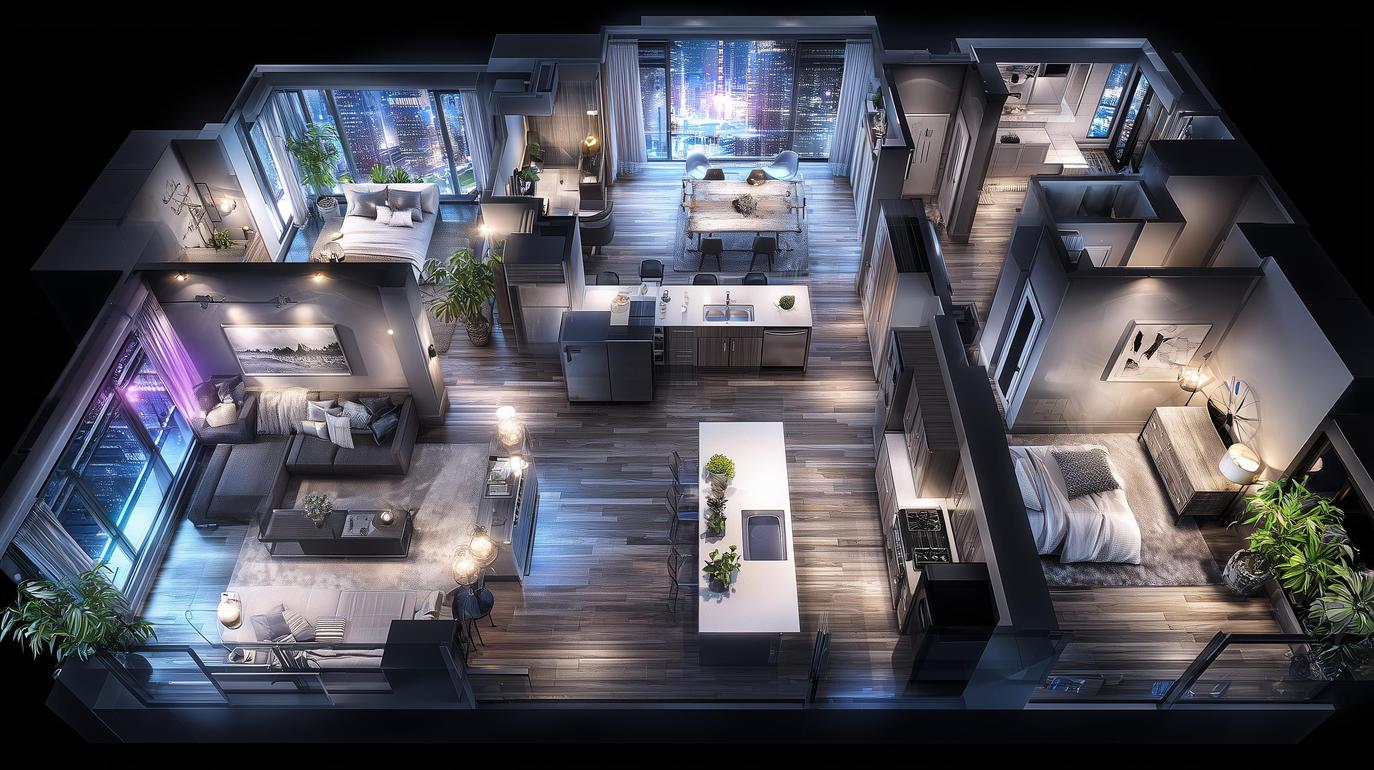
Biophilic Blueprints: A Room-by-Room Design Guide
Read Each Template Like a Dual Checklist
First, a nervous-system goal reduces stress to support focus or rest. Second, a climate goal lowers artificial lighting hours or favors low-carbon materials. Renters can always find noninvasive variants. Look for clip-on, peel-off, or freestanding solutions that apply healthy home tweaks for accessible upgrades.
Global Light, Plants, and Wood Rules (Apply to Every Room)
- Keep Primary Activities Near Daylight: Favor sidelight on seats and desks to avoid glare, use sheer curtains for privacy, and reserve blackout only for true darkness needs. These basics align with DOE daylighting guidance and WELL Light concepts.
- Use Mirrors and Light, Matte Surfaces to Carry Light Deeper: Place mirrors opposite or adjacent to windows with care so they do not reflect directly into screens. Lightly colored matte walls and backsplashes bounce light without harsh reflections.
- Define a Small Plant Cluster You Can Actually See: One compact grouping near your main sightline offers stress buffering and is easiest to care for when grouped in a single tray.
- Prioritize Wood where Your Hands Rest: Use wood at touchpoints like tables, desks, and benches. The tactile signal supports relaxation.
- Layer Artificial Light by Task: Let daylight reduce lamp hours, then use a few warm, high-CRI sources at night.
- Comfort Band for Humidity and Air: Aim for roughly 30 to 50 percent relative humidity and good air movement to sustain plant health, human comfort, and healthy indoor air quality.
The Three Constant Moves
- Place a Plant Cluster Where You Actually Look: A small cluster near your brightest window creates a focal point that encourages microbreaks for the eyes and modest humidity smoothing. Start with low-maintenance species that tolerate typical indoor light.
- Put Wood Under Your Hands: Choose a wood desktop, side table, or window bench with an inviting edge radius. The tactile signal matters more than a distant object.
- Open a Daylight Lane: Clear the path from the window to the seating or desk. Favor lightly colored matte walls and surfaces to bounce light deeper without glare. Use sheer curtains for privacy during the day and heavier curtains only at night. As a bonus, well-planned daylighting often cuts electric lighting use and can reduce overall building energy costs in certain cases when controls are used, a core principle of daylighting basics.
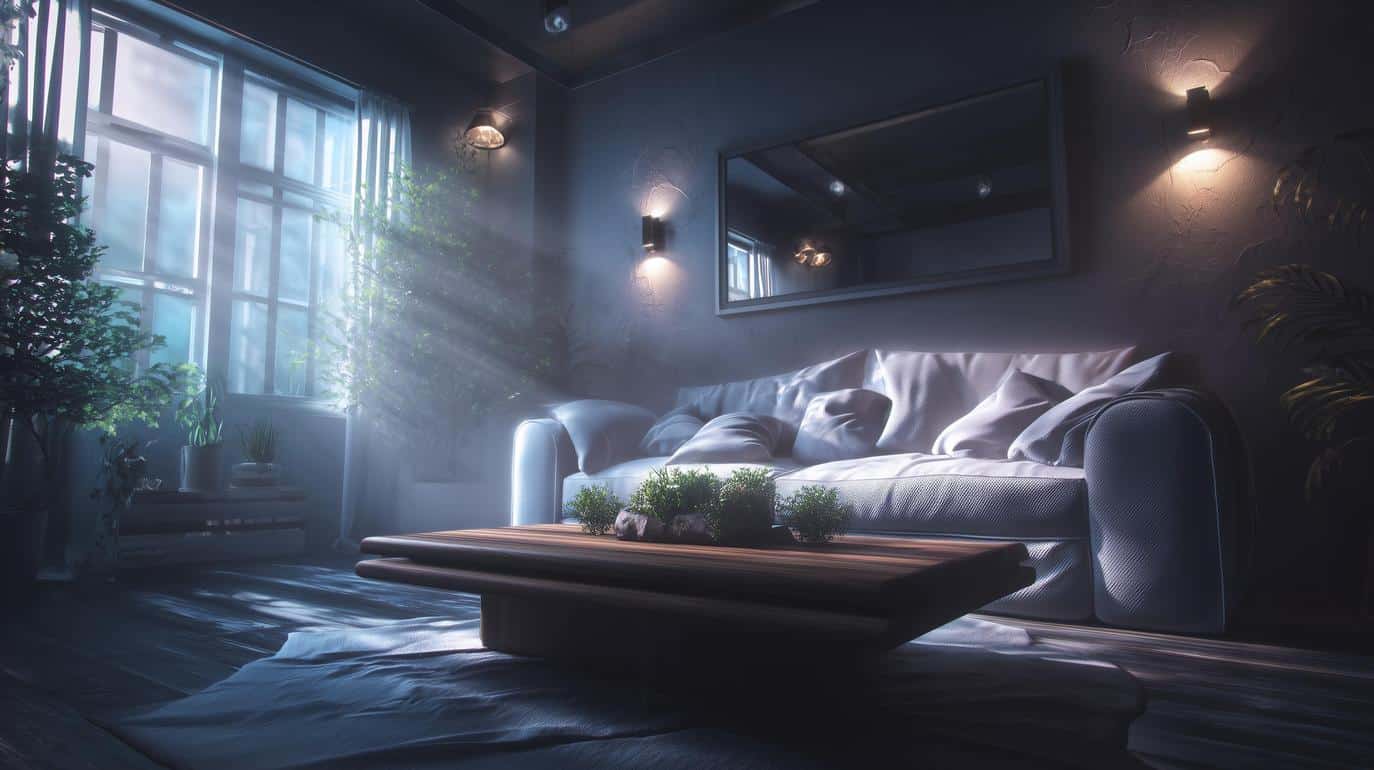
The Living Room: Optimizing for Social Connection and Efficiency
Set the tone for the whole home with a conversation-first layout that feels biophilic and effortless to use. Prioritize sound as much as light to keep stress low and movie nights immersive.
- Add soft acoustics with a dense rug, wool throw, or a cork side panel to tame echo without renovations.
- Install low-glare bias lighting behind the TV to reduce eye strain and maintain comfortable ambient levels; choose efficient, dimmable fixtures that provide even, glare-free light.
- Keep sightlines under seated eye height by choosing a coffee table lower than the windowsill so exterior views remain relaxing.
Two small nudges make a big difference. Place remotes and books on a tactile wood tray that invites touch, and keep a single, simple plant near the conversation zone to cue micro-breaks without visual clutter.
The Bedroom: Designing a Deep Recovery Space
Treat the bedroom as a recovery room where everything supports wind-down and steady sleep. Focus on visual quiet, tactile comfort, and predictable evening cues.
- Mask visual noise using covered storage or baskets; a clear field of view eases pre-sleep arousal.
- Create a simple wind-down station on a wood headboard shelf or tray; the familiar tactile signal supports relaxation.
- Keep one low-maintenance plant away from the pillow to signal slower breathing with easy, resilient species.
Anchor mornings by reading near the brightest spot for a few minutes so circadian timing stays consistent. This simple habit supports better sleep quality over time.
The Home Office: Balancing High Focus with Evening Disconnection
Design the workstation for clear video calls and deep work, then add a quick ritual that signals evening shutdown. Keep tools within arm’s reach and surfaces calm.
- Set your camera at eye level with the window off to one side for flattering, non-silhouetted calls; keep a small task light ready for cloudy days.
- Use a smooth wood wrist rest or board at the forearms to reduce tension during long sessions; the wood surface under your forearms reduces pressure points during long sessions.
- Establish an analog break corner with a notepad and a single architectural plant just outside your central view to refresh attention between sprints.
Close the workday the same way each time. Dim the lights, clear the desk, water the plant, and switch to a softer chair for a five-minute unwind so home mode begins cleanly.
Kitchen and Dining: Creating Natural Rhythm and Brightness
Make meals brighter, safer, and calmer with a few placement tweaks and comfort-first lighting. Keep prep zones crisp and the table welcoming.
- Center a shallow wood bowl of seasonal fruit to prompt healthy snacking and create a natural focal point.
- Mount a dining pendant roughly 30 to 36 inches above the tabletop for flattering faces and comfortable brightness, and select efficient lamps guided by energy-efficient lighting choices.
- Keep herb scissors and a small rail planter by the most-used prep spot so clipping greens becomes a habit.
A little choreography goes far. Set prep, cook, and serve stations in a clockwise loop if right-handed (reverse if left-handed). This reduces steps and keeps conversations flowing at the table.
Entryways and Baths: Managing Transitions and Daily Resets
Your entry sets the nervous-system tone for the home, while the bath offers a steam-powered reset. Keep both simple and easy to maintain.
- Give keys and bags a defined landing grid with a narrow bench and tray; borrow light thoughtfully using practical dining-room lighting tips.
- In the bath, use a teak mat, a moisture-hardy plant, and two eye-level lights for even grooming; start with budget-friendly upgrades and track humidity near 30 to 50 percent using a healthy home checklist.
- Choose a machine-washable entry runner and a small squeegee in the shower to keep grit and moisture from spiking cleaning time.
Finish each day with a tiny ritual. Clear the entry bench before bed so morning departures start calm, and hang a fresh towel to signal a reset in the bathroom.

Renter-Friendly Biophilic Playbook & Simple Scorecard: Track Calm and Cut Energy Bills
Make renter-safe, no-drill upgrades that feel luxurious, then measure what matters so your biophilic home keeps getting calmer and more energy-smart.
- Clip-On Greenery & Portable Wood: Use tension rods, over-door rails, and freestanding ladders to stage plants without screws; add trays, armrest boards, and small benches you can take with you. Reversible upgrades feel elevated and create a luxe look in a rental.
- Maximize Daylight without Drills: Open curtains early, switch to sheers in bright hours, and position mirrors to carry light to desks and tables—no wiring, no holes.
- Stack Tiny Habits: Pair plant care with a weekly chore, open curtains with your alarm, and use a 5-minute evening reset (clear the entry bench, prep a fresh towel) to cue calm.
- Mini Scorecard (Update Monthly): Track three signals: plants visible from your main seat (0–5), wood touch-surfaces within reach (0–5), and hours per day in a naturally lit spot (weekday/weekend).
- Tracking plants and light exposure aligns with evidence that indoor greenery supports well-being, a correlation supported by a recent meta-analysis on indoor plants and health.
- If a metric stalls, make a change. Move the plant cluster, add a wood touch surface, or open a clearer daylight lane.
Bringing the Biophilic Home Design of Wood City Into Your Daily Routine
You do not need a new building to live with the calm and climate logic of Stockholm’s timber districts. Start simply: one plant cluster, one wood surface your hands touch often, and one daylight lane in the room you use most. Establishing this pattern allows you to bypass expensive renovations while still capturing the core benefits of evidence-based design.
Over time, these small adjustments compound. You will find yourself reaching for lamps less often and feeling the subtle steadiness that biophilic elements bring to your routine. Home upgrades that lower energy bills work best when paired with these daily habits, creating a home that actively supports your nervous system.

Common Questions About Biophilic Home Upgrades
Will Wood Surfaces Warp in Humid Rooms?
Choose moisture-appropriate species like teak or cedar and maintain good airflow. Small pieces like trays and stools are low-risk, high-impact upgrades for kitchens and baths when wiped dry regularly.
How Does Daylighting Actually Reduce Energy Bills?
Daylighting cuts artificial lamp hours when you position desks and seating in naturally lit zones. The DOE’s Energy 101 overview explains how this passive strategy lowers daily energy consumption.
What If My Apartment Gets Very Little Sun?
Rely on mirrors and matte surfaces to bounce available light deeper into the room. Ensure survival in dim corners by using a guide to getting plants enough light indoors, and use warm, high-efficiency task lighting to supplement the lack of natural sun.
Are There Allergy Concerns With Indoor Plants?
Select low-pollen species and dust leaves frequently. Protect indoor air quality by consulting the EPA’s VOC overview regarding wood finishes, and opt for foliage-heavy varieties like pothos or snake plants if you have sensitivities.
Is Biophilic Design Expensive to Start?
Most benefits come from placement and habits rather than purchases. Start with a single plant, one wood touchpoint, and optimized furniture alignment to lower stress and energy use without renovation costs.


