
Most people plan one drink and finish two, and the gap is rarely a mystery of willpower. It comes down to cue, routine, and reward.
You said one glass. You meant it. Then the glass was empty, the bottle was open, and the evening had a different shape than the one you planned at 6 p.m. That gap between intention and outcome is the most useful thing to understand about drinking, and it has nothing to do with being weak.
Most people assume the second drink is a decision. Usually it’s a reflex built from repetition, and reflexes don’t negotiate. Writers covering this topic, including the team behind Greater Boston Addiction Centers’ blog, tend to land on the same point: the pattern is learnable, which means it’s also interruptible. Understanding the loop is the whole job.
Here’s what you’ll get below: a plain model of how the one-drink promise breaks, five cues that quietly start the loop, a decision test for spotting the difference between a habit and something deeper, and a swap list you can run this week. No lectures. Just mechanics.
What actually happens between drink one and drink two?
The honest answer: almost nothing conscious. Drink one begins a chemical and social sequence, and by the time you’re deciding about drink two, the decision has already been made by the setting, the company, and the routine you attached to that hour. Behavior researchers describe this as a cue-routine-reward cycle, and the reward is rarely the alcohol itself. It’s the tension leaving your shoulders, the conversation getting easier, the silence at the table filling in.
I think that’s why the willpower conversation misses so badly. You can’t out-argue a reward you haven’t named. If the reward is “the noise in my head quiets down for twenty minutes,” a rule like “only two drinks” doesn’t touch the actual driver. You’d be fighting the wrong opponent.
The Stacked Trigger method
I use a simple exercise with people trying to change a drinking pattern, and I’ll walk you through it because it’s the part that tends to surprise people. It’s called Stacked Triggers, and it works on the idea that almost nobody has one cue. They have a stack, and the stack has an order.
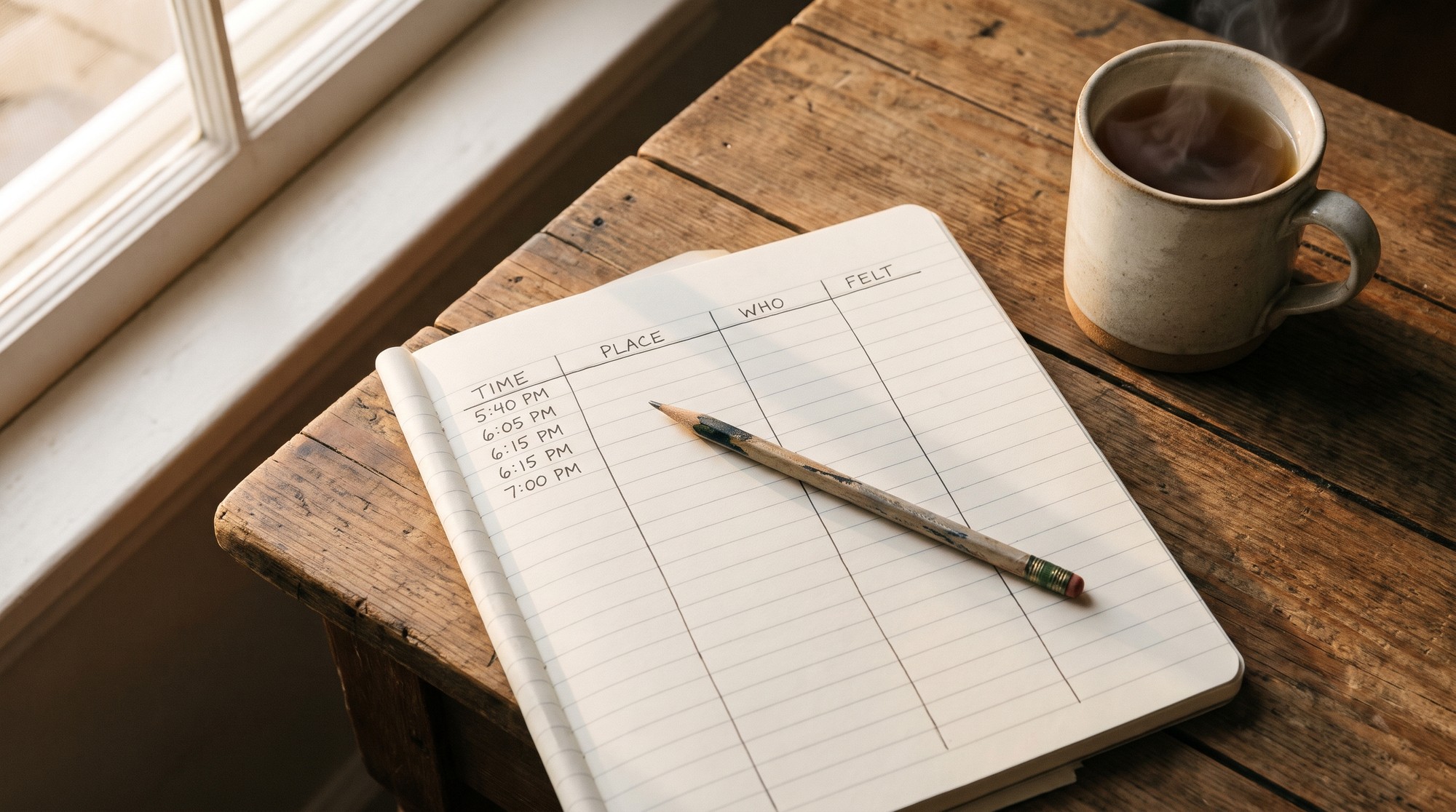
Take a sheet of paper and draw four columns: time, place, who’s there, and what you felt thirty seconds before you poured. Do that for a week, uncensored. Then read it back and look for the column that repeats. In my experience the repeat is almost never “I wanted alcohol.” It’s a time of day, a specific chair, or a person you find exhausting.
One person I worked through this with found that every single entry landed between 5:40 and 6:10 p.m., before her partner got home, in the kitchen, alone. The drink wasn’t the event. The empty house was the event. Once she saw it on paper, she started taking a walk at 5:30, and the loop lost its first domino. Her words: “It felt stupidly small. It also worked.”
Five cues that start the loop before you notice
- The fixed hour. The clock is a cue. If the pour happens at the same time daily, time is doing the work, not craving.
- One specific room. Kitchens and home offices carry more associations than people realize.
- The relief ritual. Pouring signals the workday is over. The signal matters more than the liquid.
- Certain people. Some friends are a permission structure, not a companion.
- Frictionless access. A stocked fridge at eye level is a cue you built yourself.
Pick the two on that list that make you flinch. Those are yours. Friction is the cheapest tool available: move the bottle to a top shelf behind the cereal, stop buying the case, change the chair you sit in at 6 p.m. Small, unglamorous, effective.
Is it a habit, or is it something heavier?
Habits loosen when you change the cue. Something heavier doesn’t. There’s a practical difference, and it matters because the response is different.
Try six weeks of serious cue changes. Move the time, change the room, add a substitute ritual you actually like. If your drinking bends to those changes, you’re working with a habit. If it keeps snapping back, or if you notice shaking, sweating, or a hard jolt of anxiety when you skip, that’s a different conversation. Significant withdrawal symptoms after cutting back are a reason to get medical guidance rather than push through alone. The National Institute on Alcohol Abuse and Alcoholism publishes plain-language guidance on alcohol use disorder and treatment options, and it’s a reasonable first stop before you decide anything.
A swap list you can run this week
Not a wellness list. A set of specific, small substitutions that break the chain without requiring you to become a different person.
- Put a physical barrier between you and the bottle. A door, a box, a shelf you can’t reach half-asleep.
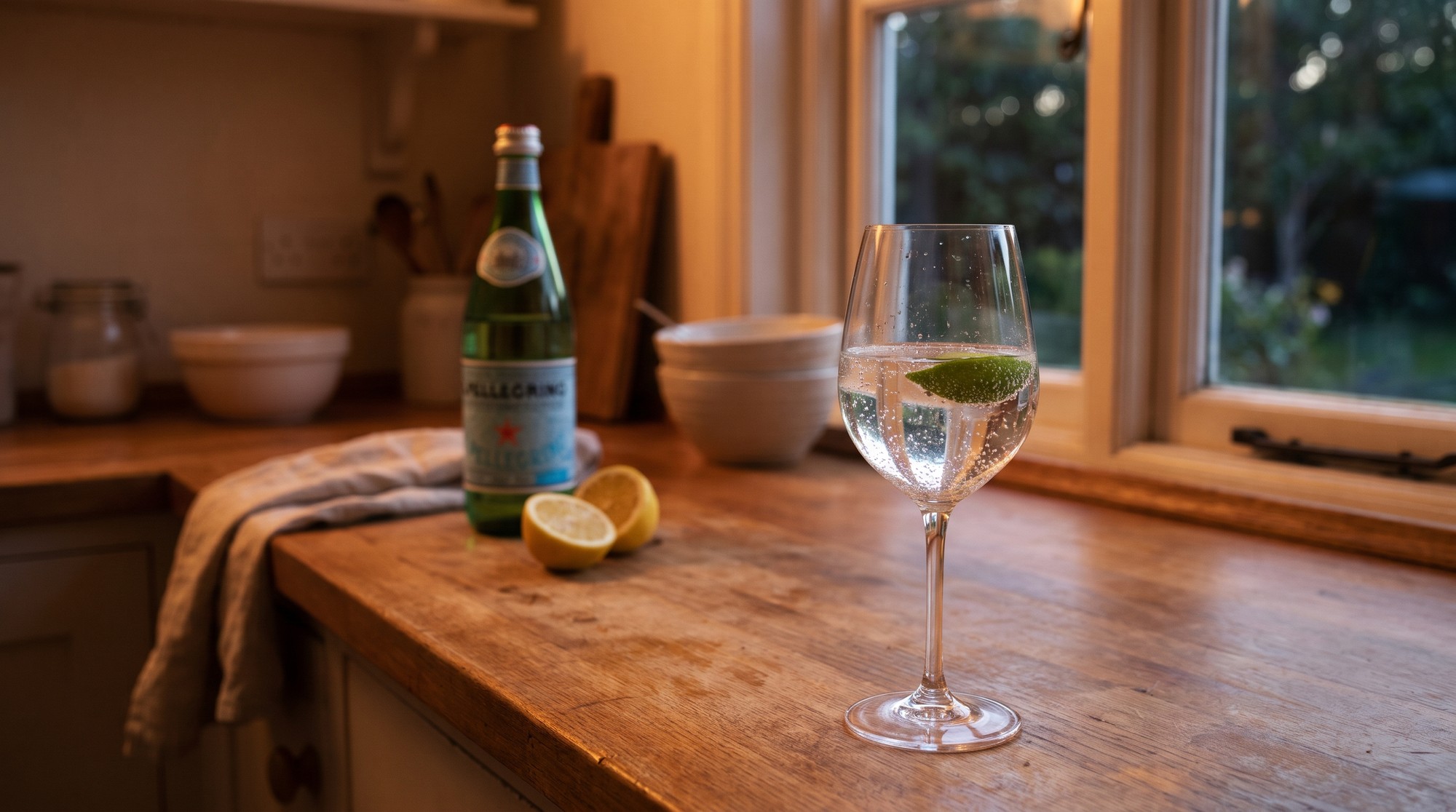
- Replace the ritual, not the drink. Sparkling water in the same glass at the same hour satisfies the gesture.
- Change one variable. Same time, different room. Same room, different person. One change is enough to test the loop.
- Schedule the 5 p.m. slot with something that requires you to leave the house.
- Track it for seven days. Not to judge yourself, but to see the pattern in your own handwriting.
Two of these will feel easy, and one will feel absurd. Start with the absurd one. It’s usually the one hitting the actual cue.
When to stop tinkering and get real help
Behavior change is a solid tool, and it has a ceiling. If drinking has started affecting your work, your sleep, your relationships, or your mornings, treating it as a puzzle to solve alone is a bad trade. Broad public health data from the Centers for Disease Control and Prevention makes clear that excessive alcohol use is common across the population, not confined to a small group with obvious problems. That framing helps: needing help isn’t a rare failure; it’s a common path.
The American Medical Association has long classified alcohol use disorder as a chronic condition rather than a moral failing, which is worth knowing if shame is the thing keeping you from evaluating your own habits honestly. I’d rather you use that framing early than wait until a crisis forces the issue.
The part that actually changes things
None of this works as information alone. The loop breaks when you interrupt a cue in the real world, at 5:47 p.m., in your own kitchen, with your own hands. The paper exercise takes a week. The swaps take an afternoon. The honest look at whether it’s habit or something heavier takes a bit of courage, and it’s the only part of this that really asks anything of you.
So here’s the question I’d leave you with: if you tracked your drinking for seven days, which cue would show up most often? You probably already know the answer, and you’ve known it for a while.

