
Beyond the headline number lies a stark reality: human pressures are closing in. Naming these species is now a race against time, with profound implications for public health—from the plant‑derived drugs we rely on today to the next generation of antifungal candidates. The list reads like speculative fiction: a tooth fungus hiding in British woodlands, a ghostly palm from Borneo, and even a marzipan-scented liana in West Africa.
The reality, underscored by Kew’s 2024 year-end summary of new species and independent reporting from The Guardian, is more sobering. Many of these species are already at risk from quarrying, plantation expansion, and habitat conversion, meaning we are often discovering life at the very moment we are losing it.
Why should anyone outside a herbarium care? Because biodiversity is upstream infrastructure for everyday life. Plants and fungi underpin today’s medicines and the next wave of antibiotics, and they safeguard future food security through traits held in wild relatives of crops.
Kew’s State of the World’s Plants and Fungi shows how thin our margin already is: nearly half of flowering plants could be threatened, and three in four of the world’s undescribed plants are likely at risk. Fungi are even more of a blind spot, with millions of species still unnamed.
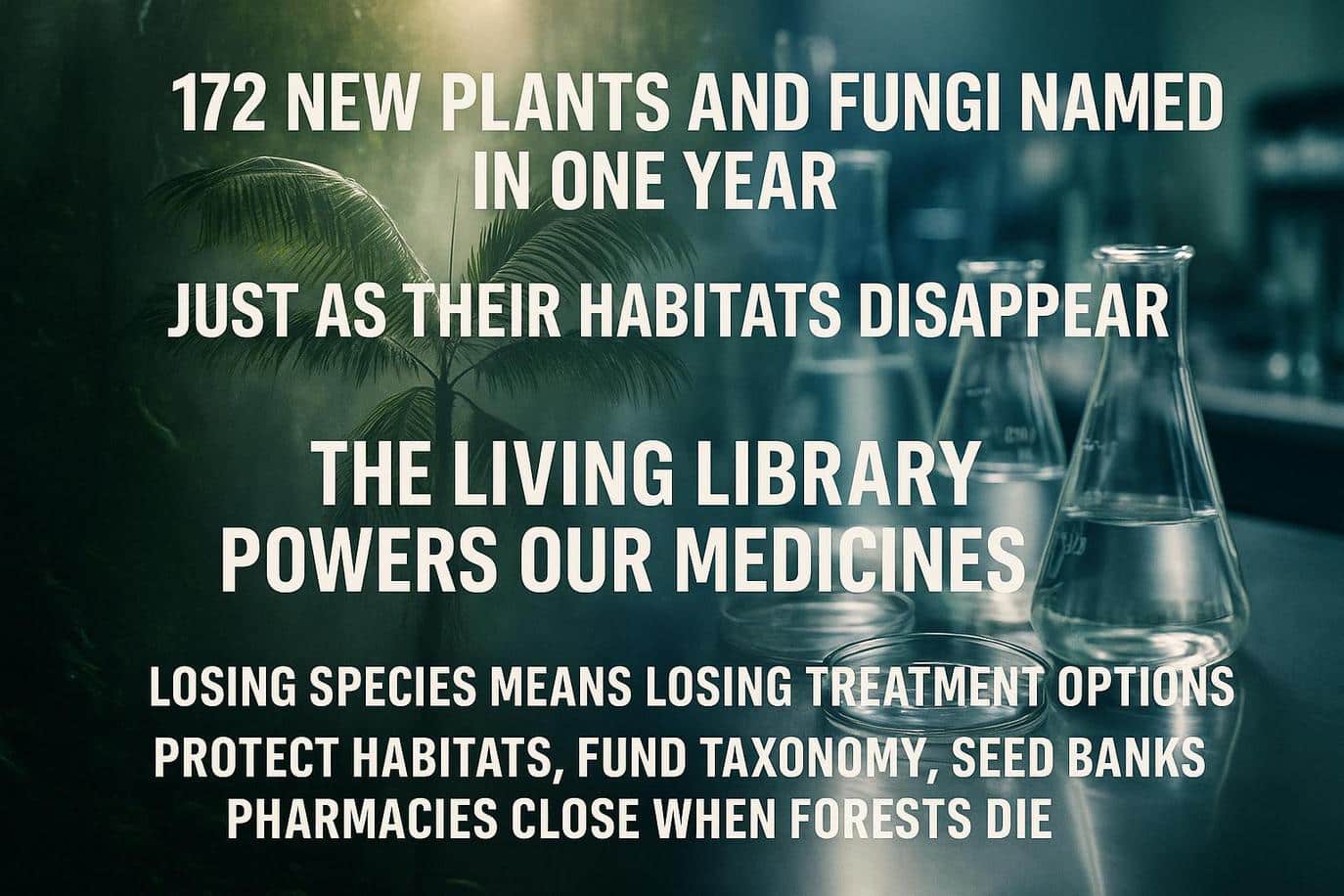
New Species and Extinction Risk: Key Facts for Medicine and Food Security
- 172 New Species in 2024: Kew and collaborators described 149 plants and 23 fungi, including tooth fungi in the UK and a ghostly palm from Borneo, while warning that several entries are already at risk from human activity.
- Nearly Half of Flowering Plants at Risk: The most recent State of the World’s Plants and Fungi estimates that about 45% of flowering plant species may be threatened, and three in four undescribed plants are likely already at risk, which means discovery often arrives late.
- Fungi are the Largest Unknown: Scientists estimate around 2.5 million fungal species globally. Only a small fraction have been named and assessed, which leaves a vast reservoir of potential medicines and ecosystem functions uncharted.
- Medicinal Species Already at Risk: Kew’s 2020 synthesis highlights 723 plant species used for medicine that are threatened, and it notes how little we know about medicinal fungi, with only a handful assessed so far.
- Modern Medicine Still Depends on Plants: A classic NIH overview lists 119 plant-derived drugs in global use, drawn from fewer than 90 species, which underscores how a small portion of biodiversity can deliver outsized medical value.
- Food Security Relies on Wild Relatives: Conservation groups warn that dozens of wild relatives of key crops already face extinction, which erodes the genetic options needed for breeding pest resistance and climate resilience.
- New Antifungals are Emerging, but Only if We Keep Looking: Recent work on mandimycin shows promise against drug-resistant Candida auris in mouse studies, a reminder that undiscovered microbes can still change the clinical playbook.
The Year We Named 172 New Species and Nearly Lost Them
At first glance, the figure suggests a celebration. In 2024, Kew and partners cataloged 172 species new to science, a reminder that the natural world still holds surprises. The list spans a spectrum of biological wonder:
- UK tooth fungi in the genus Phellodon, hiding in ancient woodlands.
- A “ghost palm” seen only in the deep understories of Borneo.
- A fragrant liana from Guinea that smells distinctly like marzipan.
The less festive coda is that several of these species are already classed as Endangered or Critically Endangered because of limestone quarrying, plantation expansion, and pollution. Kew’s own summary makes that point directly, and independent reporting has chronicled how often “new to science” also means “already on the brink.”
What “New to Science” Actually Means
“New to science” does not mean newly evolved or newly appeared. It usually means scientists have resolved a species’ identity, compared it with relatives, and then published a formal description. That process can take years because taxonomists must examine museum specimens, field collections, and DNA evidence. During that time, landscapes continue to change, and populations may shrink.
Case Notes that Reveal a Pattern
- Tooth Fungi as Habitat Indicators: The UK’s tooth fungi, with their spiky undersides, tend to show up in older, less-disturbed woodlands, which makes them indirect measures of habitat quality. Their inclusion in 2024’s tally is a nudge to protect the very forests that host them.
- A Ghostly Palm in a Narrow Niche: The ghost palm in Borneo inhabits a specific microhabitat that can vanish quickly if logging roads or plantations shift the local water and light regime.
- A Fragrant Climber in the Crosshairs: The marzipan-scented liana from Guinea grows on limestone, the same bedrock targeted by cement quarries. Naming the plant is a first step; securing the habitat is the outcome that matters for long-term survival.
Why these Stories Matter Beyond Botany
Each entry on the list is a library card to useful chemistry, genetic traits, and ecosystem services. When the habitat goes, future options go with it. That includes food options, since many wild plants are either edible themselves or related to crops we rely on.
For a hands-on sense of that connection at home, build diverse edible gardens and add simple medicinal plants that are easy to grow responsibly. You can start by identifying useful medicinal plants suitable for home cultivation and implementing practical gardening systems. Then consider how those personal choices scale up to the landscapes where these species live.

The Race to Name Life Before It Vanishes
Scientists estimate that we have formally named hundreds of thousands of plant species, yet tens of thousands may remain undescribed, and a significant share could already be threatened. Kew’s global assessment places headline numbers in plain view.
About 45% of flowering plants may face extinction risk, and three in four of the plants we have not yet described are likely at risk as well. For fungi, the gap is larger. The estimate sits at millions of species, most of which are unknown to science, which means we cannot yet measure their roles in soils, forests, or future medicine.
Why Discovery Feels Like a Countdown
Two forces collide. On one side, taxonomy is accelerating thanks to DNA sequencing and large reference databases. On the other hand, habitat loss and fragmentation are accelerating as well, which squeezes the window for discovery and study.
Kew’s Millennium Seed Bank Partnership was created for this emergency mindset, storing billions of seeds so that some genetic options survive even if a wild population does not. For agricultural staples, global backups like the Svalbard Global Seed Vault add resilience by archiving varieties that breeders and farmers may need in a hotter, more variable climate.
Ecosystems as Infrastructure, Not Scenery
It helps to picture biodiversity as living infrastructure rather than a backdrop. Roots and fungal networks move water and nutrients, wild relatives lend disease resistance to crops, and intact habitats buffer floods and heat. For a broad, reader-friendly primer on how these pieces fit together, mapping the pathways to thriving ecosystems connects small choices to system-level outcomes.
The Vanishing Pharmacy: What Extinction Means for Future Medicine
Take a quick inventory of modern pharmacy shelves and hospital formularies, and you will still find plant-derived medicines at the core. A classic analysis curated by the National Institutes of Health tallied 119 plant-derived drugs used worldwide, drawn from fewer than 90 species.
That is a striking concentration of value in a small slice of the plant kingdom. It leaves an obvious question: what medicines are hiding in the species we have not yet studied? For foundational context, the NIH overview of plant-based drug discovery synthesizes methods for finding pharmacologically active compounds in plants.
What We Already Know from Global Assessments
Two distinct signals emerge from Kew’s 2020 review. First, the world has documented thousands of medicinal plants in cultural use, yet formal assessments are incomplete. Second, among the species we have managed to check, at least 723 medicinal plants are already threatened.
That is the red flag in the pharmacy window, because it points to present-day health value at risk, not just hypothetical future cures. For a deeper dive into these findings, Kew’s State of the World’s Plants and Fungi 2020 report synthesizes the data on global plant health.
Fungi and the Next Generation of Antimicrobials
The microbial half of biodiversity is still a frontier for medicine, as antimicrobial resistance rises in clinics worldwide. For example, recent research highlights experimental antibiotics that target drug-resistant fungi, while detailed chemical analyses reveal unique mechanisms of action for compounds like mandimycin.
From Wild Chemistry to Everyday Health
Biodiversity is not just a discovery pipeline for labs. It shapes everyday well-being through foods and supplements that draw on long traditions and active research. Current science around medicinal mushrooms supports evidence of long-term benefits, outlining immune modulation, antioxidant effects, and safety considerations for common species. A companion guide covers methods to cultivate and process mushrooms at home. These resources connect personal choices to the wider story of conservation and research.
Why Conservation is a Healthcare Policy
When a species disappears, clinical possibilities narrow. That is why conservation spending and protected areas should be seen as healthcare policy, not a niche environmental project. Protecting habitats buys time for science, keeps genetic options available for drug discovery, and preserves the ecological services that prevent disease in the first place. The vanishing pharmacy is a solvable problem if we treat biodiversity as true infrastructure: a living knowledge base essential to our health.
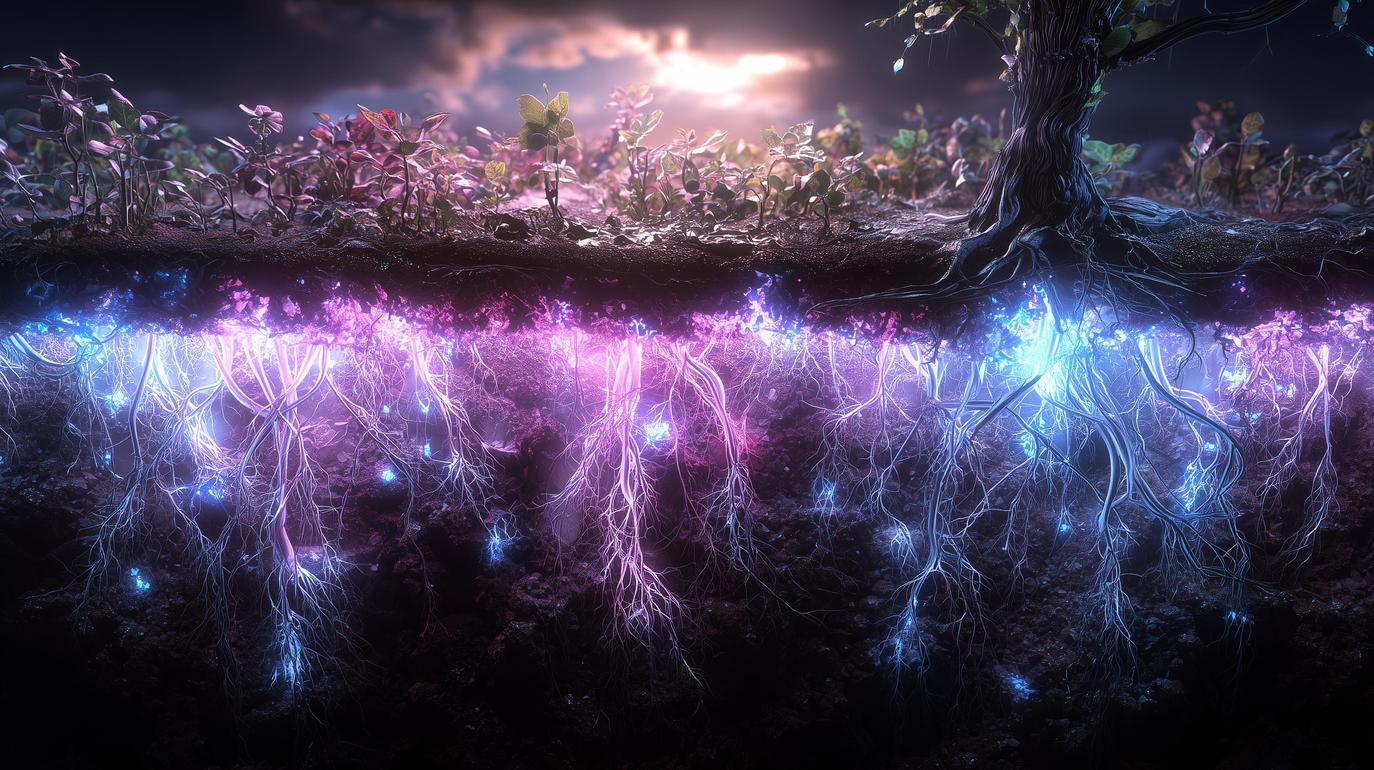
The Hidden Farm Behind Every New Species: Food, Genes, and the Underground Network
Every forest edge and farm hedgerow holds more than scenery. It contains genetic options for tomorrow’s crops and the invisible labor of soil microbes that keep fields productive. The new species that Kew and its partners named in 2024 are not curiosities. They are part of a living system that feeds people by stabilizing soils, moving nutrients, and lending resilience traits to domesticated plants.
Why Crop Wild Relatives Matter to Your Dinner
Domesticated crops are successful because people selected them for yield, flavor, or storage. That selection came with trade-offs. Many varieties lost the wild traits that help plants endure heat waves, long droughts, salt stress, and novel pests. Those traits often persist in crop wild relatives, the undomesticated cousins of everyday foods. When breeders cross a commercial crop with a wild relative, they can recover disease resistance or heat tolerance without redesigning agriculture from scratch.
Conservation groups warn that dozens of these wild relatives are already threatened, which narrows the toolbox just as climate shocks intensify. The International Union for Conservation of Nature has documented how the decline of wild cousins of rice, wheat, and other staples compromises the genetic safety net that food systems rely on. Their assessment of crop wild relatives highlights these critical threats.
What Seven Thousand Edible Plants Mean for Choice
Kew’s earlier global review counted thousands of edible plant species that never reach supermarket shelves, even though this diversity can cushion food supplies when a major crop fails. Embracing a broader set of edible leaves, tubers, legumes, and fruits would:
- Add critical nutrients to homogenous diets.
- Reduce pressure on the few staples that dominate global trade.
- Open economic opportunities for communities that steward wild foods.
Home growers can also increase resilience by building diverse planting schemes, which spread risk and support pollinators.
Fungi and The Underground Network Beneath Every Field
Below the surface, mycorrhizal fungi form networks that link roots, shuttle nutrients, and improve water uptake.
Farmers see the results in better soil structure and healthier plants, yet the engine driving this is biodiversity. The next wave of sustainable agriculture depends on protecting the microbial communities that laboratories have barely sampled.
Millions of fungal species likely remain unnamed, which means we are still mapping the basic parts list of the underground network that sustains crops. These networks have applications ranging from nutrient cycling to mycoremediation strategies for cleaning up environmental pollutants.
Everyday Choices that Strengthen Food Security
Household decisions scale. Cutting waste, buying in-season produce, and supporting regenerative farms all reduce pressure on habitats where crop relatives and wild foods persist. A concise overview of food waste and climate impacts explains how avoidable waste drives climate change and which actions matter most for households and local businesses.

Seeds, Spores, and Safety Nets: How We Back Up the Living Library
Discovery alone does not protect species. We also need safety nets that keep genetic options alive when a wildfire, a new disease, or a land conversion event erases a local population. The first layer is ex situ conservation, which simply means safeguarding material outside the wild.
Inside the Seed and Spore Banks
Kew’s Millennium Seed Bank Partnership is a global effort to store seeds from wild plants under controlled conditions so that researchers and restoration teams can draw on them later. For agriculture, national and international gene banks hold backup collections of crop varieties that breeders can use to reintroduce lost traits.
The high-latitude vault in Svalbard adds a final layer of insurance by storing duplicate seed samples from gene banks around the world. None of these stores can replace living ecosystems, yet they buy time for science, policy, and habitat recovery. The 25-year milestone overview of the Millennium Seed Bank highlights this critical backup role.
DNA Libraries and Equitable Access to Genetic Information
Researchers also back up genetic information by sequencing DNA and archiving it in public databases. That practice accelerates taxonomy and speeds the hunt for useful compounds, but it raises questions about equity and benefit-sharing.
Many of the species that yield valuable chemistry grow on Indigenous lands. Any system that stores and shares genetic data needs to respect the people who have protected those places for generations. Building fair frameworks ensures that conservation and innovation move together rather than at odds.
Biotech Complements, Not Substitutes
When a rare plant is overharvested or a habitat becomes inaccessible, biotechnology can sometimes produce medically relevant molecules without harming wild populations. Scientists have already engineered microbes to synthesize plant-derived compounds, which shows how lab tools can reduce pressure on fragile species.
The key is sequencing and reference material from the wild. Even the best bioreactor still depends on authentic source genes and field knowledge, which is why conservation and biotech belong in the same conversation. Work on bioengineered yeast that produces medicinal compounds demonstrates this synergy.
Nature’s Blueprint: Why Preservation is Our Only Option
Discovery inspires wonder, but the lesson here is practical. We are identifying life during a window that demands stewardship, equitable partnerships, and investment in the quiet institutions that safeguard our future. Biodiversity is far from a luxury; it is the healthcare infrastructure for tomorrow’s treatments and the genetic bedrock for food security in a changing climate.
Action begins with simple choices. Support the organizations defending critical habitats and wild crop relatives. Explore the cultural traditions that link preventive health to nature, balancing ancient wisdom with modern clinical evidence.
Practices in traditional Chinese medicine offer a compelling example of this approach. When you choose foods from diversified, regenerative producers, you ensure that farms and forests can thrive together. Above all, remain curious; curiosity drives discovery, but care ensures survival.
Frequently Asked Questions About Biodiversity and Health
Why does losing an unknown species matter?
Names unlock research. Formal descriptions allow scientists to map relationships, test for useful chemistry, and track population trends. Without a name, funding is scarce, and legal protections are weak. Losing an unnamed species means losing a potential solution before we even know it exists.
How do new species aid modern medicine?
Plants and fungi produce complex molecules to survive, and many of these become our pain relievers, anticancer agents, or antifungals. With only a fraction of Earth’s species studied, the next breakthrough drug is likely hiding in a forest or soil sample we have yet to protect.
What is the role of fungi in food security?
Fungi act as an underground network, recycling nutrients and helping crops withstand heat and drought. Since most fungal species remain unnamed, they represent a critical, untapped frontier for sustainable agriculture and climate adaptation.
Can seed banks replace wild ecosystems?
No. Seed vaults and gene banks are safety nets, not replacements. They preserve genetic options for emergencies, but they cannot replicate the complex interactions—pollinators, soil cycles, and water filtration—that make a living ecosystem function.
What personal actions actually help?
Focus on high-leverage decisions. Reduce food waste, buy from producers who prioritize diversity, and support organizations securing protected areas. If you use plant-based wellness products, choose sustainable sources backed by transparent conservation practices.


