
Wind power just had its biggest year ever. In 2025, the world added a record 165 gigawatts (GW) of new wind capacity, pushing the global total to 1,299 GW across 138 countries.
As governments, businesses, and homeowners weigh the switch to renewable energy, understanding the wind energy advantages and disadvantages has never been more important. This guide breaks down how wind power works, its benefits and drawbacks, its real environmental impact, and how it stacks up against solar and other renewables.
What Is Wind Energy and How Does It Work?
Wind is air in motion, created when the sun heats the Earth’s surface unevenly. Warm air rises, cooler air rushes in to fill the gap, and the resulting pressure differences produce the moving air we feel as wind.
A wind turbine captures that kinetic energy and converts it into electricity. When the wind turns the turbine’s three blades, the spinning rotor drives a generator housed in the nacelle, the box-shaped structure behind the blades. That generator produces electric current that flows to the grid.

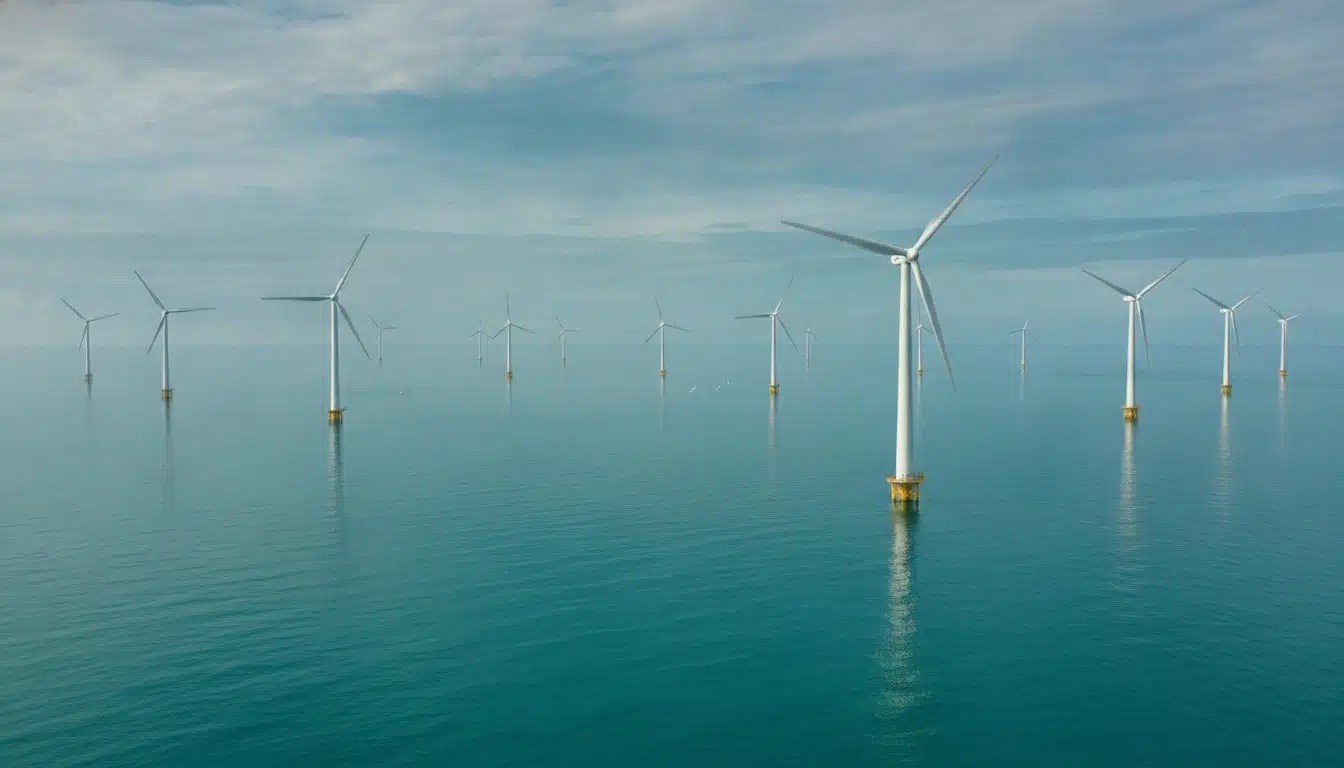
A typical land-based utility-scale turbine stands about 250 feet tall and averages around 2.55 megawatts. The largest offshore machines now exceed 15 megawatts and can top 850 feet, close to four-fifths the height of the Eiffel Tower. For a sense of how far this technology has come, see our roundup of wind energy facts.

The Advantages of Wind Energy
Wind power’s rapid growth is driven by several clear benefits.
- Clean energy with no direct emissions: Turbines generate electricity without burning fuel, so they release no carbon dioxide or air pollutants while operating.
- Renewable and inexhaustible: Wind is powered by the sun’s heating of the planet, so it will not run out on any human timescale.
- Among the cheapest electricity available: According to Lazard’s 2025 Levelized Cost of Energy+ report, unsubsidized onshore wind and solar are the lowest-cost sources of new electricity generation.
- Low operating costs: Once built, a turbine’s fuel, the wind, is free. Ongoing costs are mostly limited to maintenance.
- Quick to deploy: Wind and solar are among the fastest sources of new generation to build, an advantage in a time of rising electricity demand.
- A growing source of jobs: More than 130,000 people work in the U.S. wind industry, and wind turbine service technician is the fastest-growing occupation in the country.
- Efficient land use: Turbines directly occupy only about 1 to 2 percent of the land within a wind farm, leaving roughly 98 percent available for crops, grazing, and other uses.
- Rural income and energy independence: Wind projects pay land lease and tax revenue to local communities and reduce reliance on imported fuels.
The Disadvantages of Wind Energy
Wind power also has real limitations that explain why it cannot power the grid alone.
- Intermittency: The wind does not always blow. Onshore turbines typically achieve a capacity factor of 35 to 45 percent, meaning they generate only a fraction of their theoretical maximum over a year. Calm periods require backup from storage or other power sources.
- Upfront cost and transmission: Building turbines, and especially the new transmission lines needed to connect remote, windy sites to cities, is expensive and time-consuming.
- Noise and visual impact: Turbines produce a low mechanical and aerodynamic hum, and their tall presence on the landscape is not welcomed by everyone.
- Wildlife impacts: Rotating blades can strike birds and bats, although the scale of this impact is often overstated, as the next section explains.
- Blade disposal: Turbine blades are made of tough fiberglass composites that are difficult to recycle, and many decommissioned blades still end up in landfills.
Environmental Impact: Wildlife, Noise, and Land Use
Wind power’s environmental story is more nuanced than either side often admits.
On emissions, the advantage is clear. Across its full life cycle, from manufacturing to decommissioning, a wind turbine produces a small fraction of the carbon emissions of a fossil fuel plant and none while it operates. For the exact figures, see our deep dive on the wind power carbon footprint, which breaks down lifecycle emissions at 7 to 16 grams of CO2 per kilowatt-hour.
On wildlife, the numbers deserve careful context. According to the Renewable Energy Wildlife Institute, most U.S. studies estimate between 2.5 and 6 bird fatalities per megawatt per year, with a median of about 1.94. Wind turbine collisions account for a tiny share of human-caused bird deaths, running hundreds to thousands of times lower than the toll from domestic cats, building and window collisions, and power lines.
The picture for bats is different and often overlooked. Bat fatalities at U.S. wind farms, estimated at 600,000 to 949,000 per year, actually exceed bird fatalities, with three migratory tree bat species (hoary, silver-haired, and eastern red) accounting for more than 90 percent of them. The industry is responding with mitigation measures such as radar-triggered shutdowns during migration, ultrasonic deterrents, and more careful siting.
On noise, the scientific consensus is reassuring. Research reviews have found that wind turbine sound is linked to annoyance but not to direct health effects, and the main driver of complaints is how loud the sound is, not the turbines themselves.
Wind Energy Costs and How It Compares to Solar
Cost is where wind has changed the energy debate. Lazard’s 2025 analysis confirms that onshore wind and utility-scale solar are now the cheapest forms of new electricity generation in most markets, undercutting new gas and coal plants without subsidies.
Wind also pairs naturally with solar. Wind often blows strongest at night and in winter, while solar peaks during the day, which makes the two complementary rather than competing. Offshore wind, while more expensive, is growing fast and is now approaching 100 GW of global capacity as projects scale up. These shifts are part of a broader transformation in how clean energy technologies are reshaping the global landscape.
| Factor | Wind (onshore) | Solar (utility-scale) | Hydropower |
|---|---|---|---|
| Cost | Among the lowest LCOE | Among the lowest LCOE | Low operating cost, high upfront |
| Capacity factor | About 35-45% | About 15-25% | About 40-60% |
| Land use | Dual use with farming | Large surface area | Reservoir footprint |
| Intermittency | Varies with wind | No output at night | Seasonal, drought-dependent |
| Wildlife impact | Bird and bat collisions | Minimal | Fish migration, habitat change |

The Future of Wind Energy
Wind technology is still evolving in striking directions. Engineers are developing airborne wind turbines that are floated by helium or held aloft by their own aerodynamics, a design that could tap stronger, steadier winds high above the ground without expensive towers. Researchers are also exploring artificial wind-harvesting trees that mimic how real trees bend and flex in the breeze, potentially bringing small-scale wind capture into cities. And vertical-axis turbines, which spin around a vertical pole, could be added in flexible clusters within existing wind farms to help grids adapt as wind patterns shift with climate change.

Frequently Asked Questions
What are 5 advantages of wind energy?
Wind energy is clean, producing no emissions in operation; it is renewable and inexhaustible; it is among the cheapest new electricity available; it creates jobs; and it uses land efficiently alongside farming.
What are 5 disadvantages of wind energy?
The main drawbacks are intermittency, noise and visual impact, wildlife collisions, high upfront and transmission costs, and the challenge of recycling turbine blades.
Why is wind energy good?
Wind energy is good because it turns a free, abundant resource into electricity without burning fuel, cutting emissions, strengthening energy independence, and supporting local economies through jobs and land-lease income.
Do wind turbines kill birds?
Yes, but far fewer than other human causes. Wind collisions account for a small fraction of bird deaths, running hundreds to thousands of times lower than the toll from cats, buildings, and power lines.
Why do some people oppose wind energy?
Common objections include the visual impact on landscapes, noise, concerns about wildlife, and the transmission infrastructure needed to connect remote turbines to the grid. Many of these concerns can be reduced through careful siting and newer technology.
Is wind energy cheaper than fossil fuels?
For new power plants, yes. Lazard’s 2025 report found that unsubsidized onshore wind and solar are cheaper than new gas and coal generation in most markets.
Conclusion
Wind energy has become one of the cheapest, fastest-growing sources of electricity on the planet, but it is not a silver bullet. Its intermittency, wildlife impacts, and infrastructure needs are real and must be managed. Still, the record 165 GW added in 2025 shows that the world has largely decided wind is worth it. For most grids, the question is no longer whether to build wind, but how to integrate it alongside solar, storage, and other clean sources.


