
Mesothelioma is among the few diseases where legal accountability and medical reality are almost impossible to separate. According to the National Cancer Institute, approximately 3,000 new mesothelioma cases are diagnosed in the United States each year—and the overwhelming majority trace back to occupational asbestos exposure that happened decades ago, often at worksites that no longer exist, for companies that have since dissolved or restructured. For families in Minnesota, that history includes iron mining operations on the Iron Range, shipyards along Lake Superior, paper mills, power plants, refineries, and construction industries where asbestos use was widespread well into the 1980s.
What makes mesothelioma claims distinct from most personal injury cases isn’t just the severity of the diagnosis—it’s the compressed timeline and the complexity of proving exposure across a chain of employers, manufacturers, and building owners spanning 20 to 40 years. A family navigating this process for the first time is essentially trying to reconstruct employment history, identify responsible parties, and file legally sound claims in multiple venues, all while managing an aggressive terminal illness.
Minnesota mesothelioma lawyers who specialize in this area have built their practices around exactly that challenge. They understand the state’s specific procedural requirements, the asbestos trust fund landscape, and how Minnesota courts approach these cases. What follows is a practical look at how those lawyers manage claims, what qualifications matter most, and what clients can realistically expect at every stage.
How Minnesota Mesothelioma Lawyers Manage the Claims Process
The claims process in mesothelioma cases doesn’t begin in a courtroom—it begins with an intensive investigation. When a client first engages a Minnesota mesothelioma lawyer, the initial phase is almost entirely focused on exposure reconstruction. The attorney works to identify every job site, employer, and product that placed the client in contact with asbestos. This often involves union records, employment files, Social Security work histories, co-worker affidavits, and industrial hygiene databases that catalog which manufacturers supplied asbestos-containing products to specific facilities in Minnesota.
Once exposure sources are mapped, the lawyer identifies all potentially liable parties. This is where the process diverges from typical civil litigation. Many of the companies responsible for asbestos exposure have filed for bankruptcy and established asbestos trust funds — there are currently more than 60 active trusts in the U.S.—which means compensation often comes through multiple simultaneous claim filings rather than a single lawsuit. Minnesota practitioners coordinate these parallel tracks, submitting trust fund claims while also evaluating whether to file suit against solvent defendants in Minnesota state courts or in other jurisdictions where exposure occurred.
The timeline for mesothelioma claims in Minnesota is governed by a statute of limitations that generally gives plaintiffs six years from the date their illness is discovered and connected to asbestos exposure to file a personal injury claim, under Minnesota Statutes section 541.05 and the Minnesota Supreme Court’s 2020 decision in Palmer v. Walker Jamar Co. Wrongful death claims carry a separate deadline of three years from the date of death. That window sounds generous until you realize how much documentation needs to be gathered in that period, particularly for patients who are undergoing active treatment and may have limited energy to participate in case preparation. Experienced lawyers front-load the investigative work early so clients aren’t scrambling near a deadline.
Consider a former pipefitter who worked at a major Minnesota refinery in the 1970s and is now diagnosed at age 72. His employer no longer exists, the refinery changed ownership twice, and some of the gasket manufacturers he used went bankrupt in the 1990s. His lawyer would need to pursue trust claims against multiple defunct manufacturers while simultaneously filing civil claims against any surviving solvent defendants—all while keeping the client as informed and unburdened as possible. That kind of multi-track case management is standard practice for firms that specialize in this area.
Key Qualifications and Experience to Look for in a Minnesota Mesothelioma Lawyer
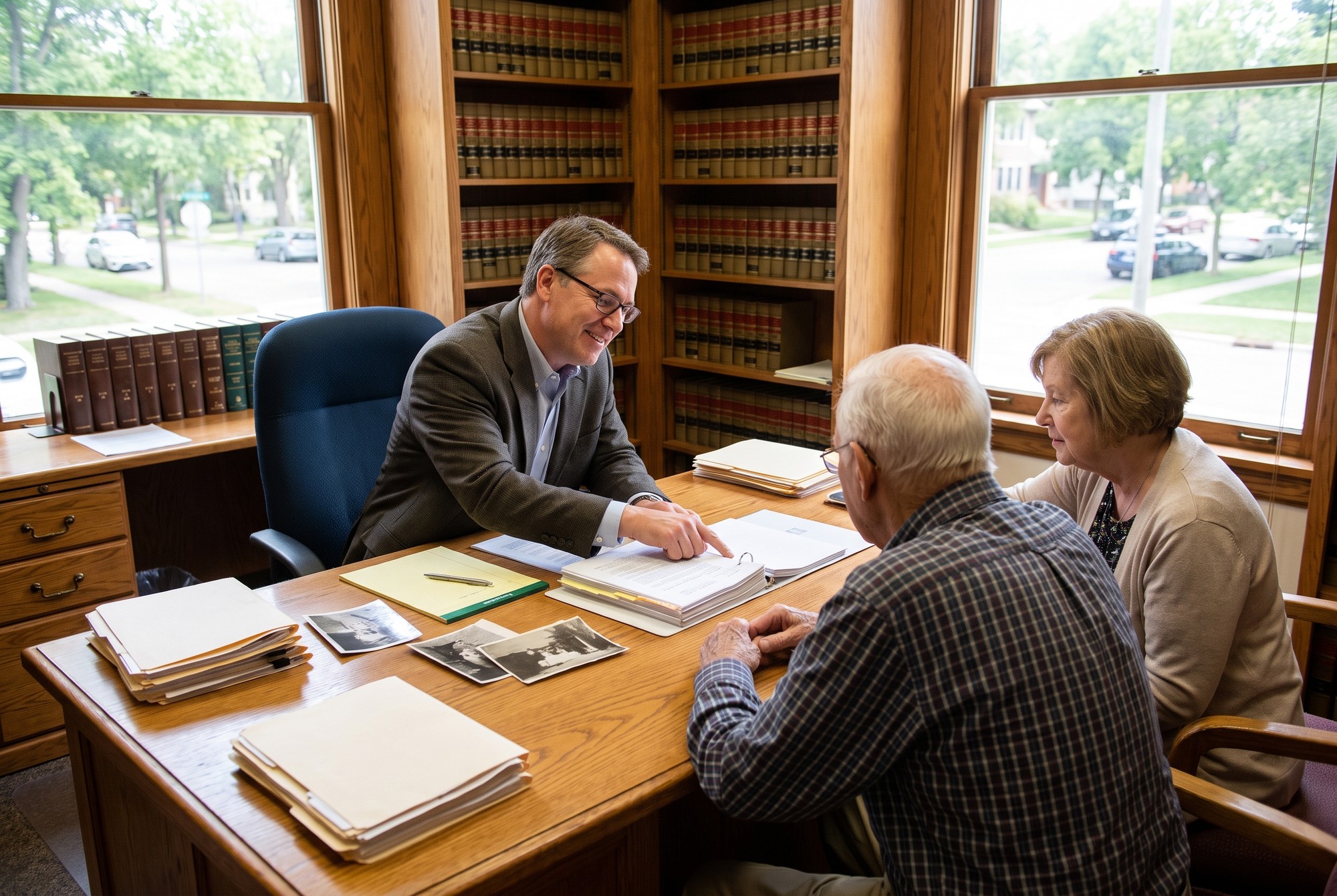
Understanding how the process is managed—as outlined above—makes it easier to see why generic legal credentials matter far less than specialized expertise. A lawyer who handles mesothelioma cases occasionally alongside other personal injury work is operating at a significant disadvantage compared to one who has built an entire practice around asbestos litigation.
Essential Certifications and Local Licensing Requirements
At minimum, any lawyer representing mesothelioma clients in Minnesota must hold an active Minnesota State Bar license in good standing. Beyond that baseline, board certification in civil trial advocacy from the National Board of Trial Advocacy is a meaningful differentiator—it signals that a lawyer has met rigorous standards for trial experience and professional ethics, rather than simply claiming expertise through marketing. Membership in the American Association for Justice’s Asbestos Litigation Group is another credible indicator of specialization, as this group maintains active education and practice resources specific to asbestos claims. When evaluating potential representation, clients should ask directly about these credentials rather than relying on general descriptions of “experience.”
Experience with Minnesota Asbestos Laws and Cases
Minnesota operates under a discovery rule for its statute of limitations, meaning the clock starts when the patient knows or reasonably should know their diagnosis is connected to asbestos exposure—not simply when symptoms first appeared. A lawyer unfamiliar with how Minnesota courts have interpreted this rule could miscalculate a filing deadline, with catastrophic consequences for the client. Beyond statutes of limitations, experienced Minnesota practitioners know which local courts have handled asbestos dockets historically, how Minnesota judges approach expert medical testimony in toxic tort cases, and which defendants have frequently appeared in Minnesota asbestos litigation. That institutional knowledge shapes every tactical decision from filing venue to settlement negotiation strategy.
Legal Strategies and Case Handling Techniques Used in Minnesota
Building on those credentials, what does strong case strategy actually look like in practice? For Minnesota mesothelioma lawyers, much of the strategic work happens at the intersection of medical evidence and legal proof. Establishing causation—showing that a specific defendant’s product caused or contributed to the illness—requires medical experts, occupational health specialists, and sometimes industrial hygienists who can testify about exposure levels at particular job sites. Lawyers who handle these cases regularly maintain ongoing relationships with specialists in pulmonology and oncology, as well as pathologists who can review biopsy results and connect them to asbestos fiber types linked to specific manufacturers.
Exploring the full range of legal options for a mesothelioma claim is something practitioners typically do in the initial case evaluation—because the right combination of trust claims, direct lawsuits, and potential veterans’ benefits claims varies significantly from client to client. A client whose exposure happened primarily on a Navy vessel, for example, may have access to VA benefits that run parallel to any civil recovery.
Settlement strategy in Minnesota reflects the state’s litigation environment. Many defendants in asbestos cases prefer to settle rather than face Minnesota juries, who have historically shown sympathy for industrial illness plaintiffs. Experienced lawyers know which defendants are settlement-oriented and which are more likely to litigate, and they use that knowledge to sequence demands and negotiations accordingly. When cases do proceed to trial, jury selection becomes a critical skill—identifying jurors who understand occupational health risks without harboring resentment toward litigation itself requires nuanced voir dire. It’s a dimension of mesothelioma practice that only lawyers with genuine trial experience can execute effectively.
Lawyer Fees, Costs, and Client Communication Expectations in Minnesota
Understanding Contingency Fees and Costs
Virtually all mesothelioma lawyers in Minnesota work on a contingency fee basis, meaning clients pay nothing unless compensation is recovered. Standard contingency arrangements typically range from 25% to 40% of the total recovery, depending on whether the case settles before or after litigation. In addition to legal fees, there are case costs—filing fees, expert witness fees, medical record retrieval, and deposition transcripts—that are often fronted by the firm and reimbursed from any recovery. Before signing a retainer, clients should ask how costs are handled if the case is unsuccessful. Some firms absorb those costs; others may still seek reimbursement. Clarity on this point protects families from unexpected financial exposure.
Communication Practices and Client Support
Given the medical circumstances involved, transparent communication isn’t just a courtesy—it’s a practical necessity. Reputable Minnesota mesothelioma lawyers maintain dedicated case managers or paralegals who serve as the primary day-to-day contacts for clients, reserving attorney time for legal strategy while ensuring families are never left wondering about their case status. Clients should expect regular status updates, honest assessments of case value and risks, and clear explanations of any document they’re asked to sign. If a firm is difficult to reach or vague about timelines during the initial consultation, that pattern tends to continue throughout the representation. How a firm communicates before engagement is usually a reliable preview of how it communicates after.

Differences Between Minnesota Mesothelioma Lawyers and Others
Out-of-state national firms that advertise heavily in Minnesota do handle mesothelioma cases—and some have deep resources and strong track records. But there’s a meaningful distinction between a firm that occasionally files cases in Minnesota and one whose attorneys appear regularly in Minnesota’s district courts, have established relationships with local medical experts, and understand how specific Minnesota employers and facilities appear in the state’s industrial history.
Minnesota’s industrial profile—mining, paper production, heavy manufacturing, and utilities—means that certain exposure patterns recur frequently in the state’s mesothelioma cases. A lawyer who has handled dozens of cases involving the same Iron Range mining operations or Minneapolis-area industrial facilities has practical knowledge that no amount of general asbestos litigation experience can replicate. They’ve seen how those cases develop, which defendants are cooperative and which are combative, and what documentation tends to survive from those employers.
That said, some national firms partner with local Minnesota counsel specifically to bridge this gap. The important question for any prospective client isn’t where the firm is headquartered—it’s whether the attorneys who will actually work on the case have meaningful Minnesota-specific experience and whether that local knowledge will actively shape strategy.
The most practical question to carry into a first consultation isn’t about fees or timelines—it’s this: how many mesothelioma cases has this attorney personally litigated in Minnesota, and what happened when those cases went to trial? That answer, more than any credential or client review, reveals whether the lawyer can do what the case actually demands.

