
A guest checks in for a three-night break. By the next morning, the dining table has become a desk, the sofa is covered in luggage, and someone is taking a video call beside the kettle.
That’s modern travel.
People don’t simply sleep in accommodation anymore. They work, cook, exercise, entertain children, stream films, unpack shopping, and occasionally spend an entire rainy afternoon indoors. A room built around one fixed purpose can start feeling restrictive within hours.
This is why multifunctional spaces are moving from a nice design feature to a basic expectation. The best accommodation doesn’t tell guests how to use the room. It gives them options.
Smaller Rooms Have to Earn Their Space
Every square foot matters in compact accommodation. A chair that looks good but blocks a cupboard door isn’t helping. Neither is a large coffee table that guests have to shuffle around whenever they open the sofa bed.
Flexible furniture allows one area to support several activities without turning the room into a storage unit. A drop-leaf table can handle breakfast, laptop work, and an evening meal. A padded bench can provide seating, luggage space, and hidden storage. A nesting table can appear when needed and disappear when it’s not.
For short-term rentals, a carefully planned Airbnb furniture package can make these choices easier by combining pieces that suit the same proportions, usage demands, and overall style. The goal shouldn’t be to fill every corner. It should be to make each item pull its weight.
A simple test helps. Open every drawer, cabinet, door, and pull-out bed at the same time. Can someone still walk through the room? If not, the layout needs another look.
Guests Want Spaces That Change With Them
A guest’s needs can shift several times in one day. The quiet reading corner becomes a workspace before lunch. The kitchen counter becomes a drinks station in the evening. A child’s play area needs to disappear before everyone sits down to eat.
That kind of flexibility makes accommodation feel more generous than it really is.
It also gives guests a sense of control. They’re not forced to sit on the bed to answer emails or balance a takeaway meal on their lap because the only table is covered with decorative objects. Those details sound small until someone has lived with them for five days.
Good multifunctional design removes friction. Not dramatically. Quietly.
Storage Is More Important Than Decoration
Guests rarely book a room because it has excellent storage. They’ll certainly notice when it doesn’t.
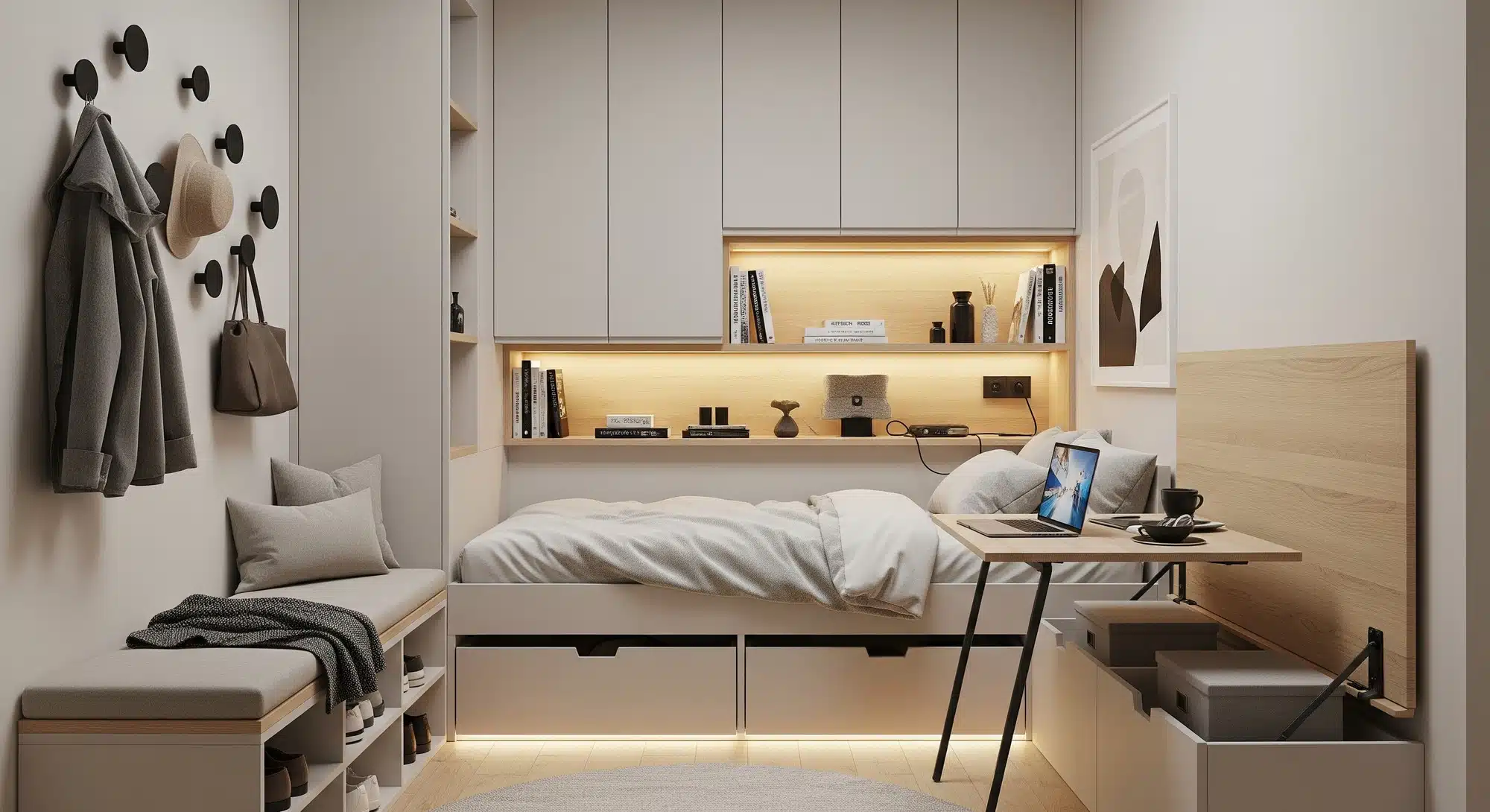
Without enough drawers, hooks, shelves, or luggage space, belongings spread quickly. Shoes gather near the entrance. Charging cables snake across the floor. Suitcases stay open because there’s nowhere else for their contents to go. Suddenly, a polished apartment looks smaller and messier than it did in the listing photos.
Storage should sit close to where people naturally need it. Hooks belong near doors. Charging spaces belong near beds and desks. Extra bedding should be easy to reach without emptying an entire cupboard first.
Built-in benches, under-bed drawers, recessed shelving, and concealed cabinets can absorb clutter without taking over the room. The same thoughtful approach is key when optimizing small spaces for urban living, where every storage decision shapes the daily experience.
Awkward Corners Can Become Useful Features
Not every room starts with a clean, rectangular floor plan. Older buildings may have narrow alcoves, uneven walls, structural posts, or ceilings that slope at inconvenient angles. Standard furniture often leaves those areas wasted.
Custom-built features can solve the problem without making the room feel overdesigned. In Queensland’s subtropical capital, providers of custom cabinetry in Brisbane often need to account for compact apartment layouts, airflow, renovation constraints, and the open-plan style found in many local properties. A shallow wall recess might become a desk, a minibar, a linen cupboard, or a media unit.
That’s the real strength of built-ins. They can turn a frustrating gap into something useful.
Still, restraint matters. A room doesn’t need hidden compartments in every wall. Guests shouldn’t feel as though they’re staying inside a puzzle box. One or two clever solutions usually work better than a dozen complicated ones.
Longer Stays Expose Poor Design
A room can photograph beautifully and still be uncomfortable to live in.
Guests staying for one night may overlook a stiff chair or a lack of storage. Someone staying for two weeks won’t. They’ll notice the dim desk lamp, the missing power outlet, the cramped kitchen bench, and the wardrobe that only fits four hangers.
Longer stays need accommodation that feels usable, not staged. Comfortable seating matters. So does proper task lighting. Guests need places to unpack, work, prepare food, and relax without constantly moving their belongings from one surface to another.
Ever tried working from a decorative stool for an afternoon? The novelty disappears quickly.
Multifunctional design supports longer bookings because it allows the space to adapt without forcing guests into one routine. A room that works for breakfast, remote work, and an evening film feels far more livable than one designed mainly for the listing photo. Major booking platforms including Airbnb now provide hosting guidance that emphasizes flexible, multifunctional design as a key factor in guest satisfaction.
Technology Should Fit the Room, Not Dominate It
Smart televisions, digital locks, app-controlled lighting, speakers, and charging hubs can improve the guest experience. They can also create clutter.
Cables need to stay accessible without hanging in plain sight. Screens shouldn’t overpower the room. Charging points should be placed where people actually sit and sleep, not hidden behind furniture that weighs as much as a small car.
Technology works best when it supports the space rather than becoming the main event. A fold-away workstation might include built-in power. A bedside shelf might include wireless charging. A media cabinet can conceal equipment while keeping controls easy to reach.
Simple. Useful. Done.
Good Multifunctional Design Feels Effortless
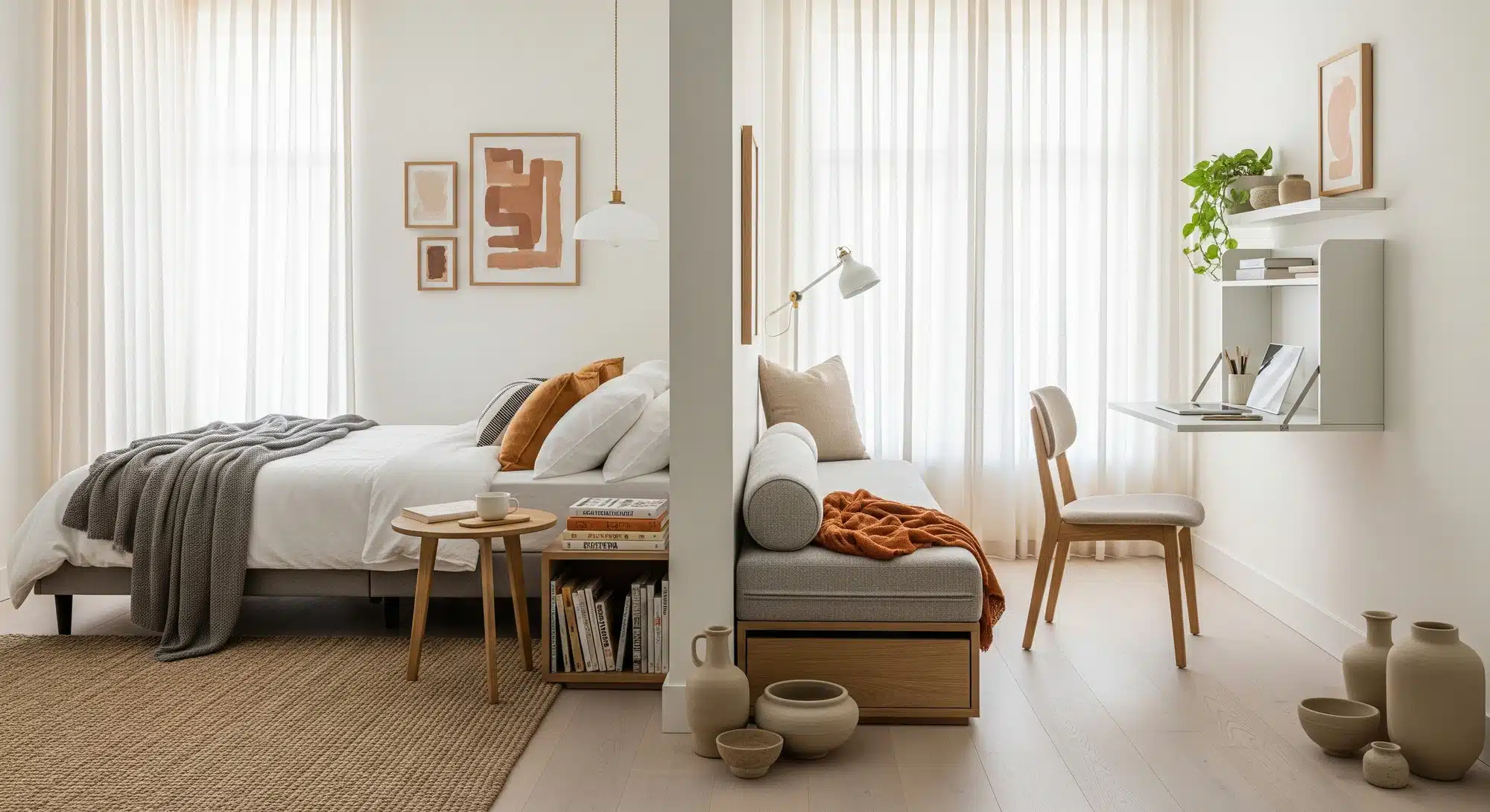
The strongest multifunctional rooms don’t show off. They simply make daily activities easier.
Furniture moves without a struggle. Storage sits where it makes sense. Work areas don’t feel like afterthoughts. Sleeping zones remain calm, even when the rest of the room is busy. Guests can change how they use the accommodation without rearranging half the property.
That’s the standard modern accommodation should aim for. Not more furniture. Not more features. Better decisions.
Real life is messy, flexible, and rarely limited to one activity at a time. Accommodation needs to keep up.


