
When a cardiac arrest patient arrives, you have roughly 30 seconds to transition from theoretical knowledge to life-saving action. That critical window separates students who’ve memorized textbook procedures from those who’ve developed genuine competence through hands-on medical learning.
Whether you’re a pre-med student, career changer, or healthcare professional seeking advancement, understanding what to expect from a medical education experience can make the difference between feeling prepared and feeling overwhelmed when real emergencies arise.

A Look Inside Modern Medical Training Programs
Modern training programs combine cutting-edge technology with traditional skill-building methods to create immersive learning environments. These programs don’t just teach procedures—they build the confidence and muscle memory you’ll need when stakes are highest.
High-Fidelity Medical Simulation Environments
Today’s medical simulation technology goes far beyond basic mannequins. Advanced simulators now feature realistic physiological responses, including changing pulse rates, blood pressure variations, and even simulated breathing patterns. This hands-on approach is critical because it educates a student’s attention, teaching them to carefully observe what a procedure feels, looks, and sounds like. It builds an intuitive understanding of medical tools and materials that goes far beyond textbook descriptions.
Additionally, specialized programs like a medical camp often feature partnerships with prestigious institutions, providing participants with access to state-of-the-art equipment. Virtual reality integration allows you to practice complex procedures in risk-free environments. Some programs, like those offered through specialized experiences, take advantage of such collaborations to enrich the learning environment.
Real-Time Clinical Skills Development Programs
Clinical skills development happens through progressive modules that build complexity gradually. You’ll start with basic procedures under close supervision, then advance to more autonomous practice as your confidence grows. Immediate feedback systems track your performance, highlighting areas that need improvement before you move to the next level.
Technology-Enhanced Learning Platforms
Wearable sensors now analyze your technique in real-time, providing data on everything from hand positioning to timing. Mobile apps track your progress across multiple skill areas, creating personalized learning pathways based on your strengths and weaknesses.
Understanding these technological foundations prepares you for the structured approach most programs use to build your skills systematically.

How To Prepare for Your Medical Training Experience
Success in practical medical training starts long before you enter the simulation lab. Programs expect participants to arrive with certain foundational knowledge and the right mindset for intensive learning.
Essential Knowledge Foundation Requirements
Most programs require basic anatomy and physiology understanding before enrollment. You’ll need to demonstrate familiarity with medical terminology and fundamental concepts through pre-assessments. Physical preparation matters too—some training involves long hours and physically demanding procedures.
Don’t underestimate the mental preparation aspect. These programs can be emotionally intense, especially when dealing with emergency scenarios or patient communication challenges.
Goal Setting and Learning Objectives Framework
Successful participants set specific, measurable goals before starting. Whether you’re aiming to master specific procedures or build general clinical confidence, having clear objectives helps instructors tailor your experience. Portfolio development becomes crucial for documenting your progress and showcasing your skills to future employers or educational programs.
With proper preparation complete, you’re ready to maximize the structured learning progression that transforms novice students into confident practitioners.
Maximizing Your Learning During The Training Program
The actual training experience follows proven educational models designed to build skills progressively while maintaining safety and effectiveness.
Structured Learning Progression Models
Programs typically start with guided practice sessions where instructors demonstrate techniques before you attempt them. As you develop proficiency, supervision decreases while expectations increase. This model of learning-by-doing builds confidence and reinforces knowledge. When students engage in hands-on creation, they are better able to articulate and share their takeaways, solidifying their own understanding while helping their peers.
Advanced students often mentor newcomers, reinforcing their own learning while building leadership skills. This peer-to-peer approach creates a supportive learning environment where everyone benefits from shared experiences.
Interactive Learning Methodologies
Problem-based learning scenarios challenge you to think critically about patient care decisions. Case-based discussions help develop clinical reasoning skills that textbooks can’t teach. These sessions often involve standardized patients—actors trained to portray specific medical conditions realistically.
Assessment and Feedback Systems
Continuous assessment ensures you’re meeting competency standards before advancing. Feedback comes from multiple sources, ensuring a well-rounded evaluation. Instructors, peers, and standardized patients all contribute to your performance assessment. Digital badges and micro-credentials document your achievements, creating valuable additions to your professional portfolio.
Beyond general skill development, specialized training modules address the unique demands of different medical fields.
Specialized Training Tracks for Healthcare Professionals
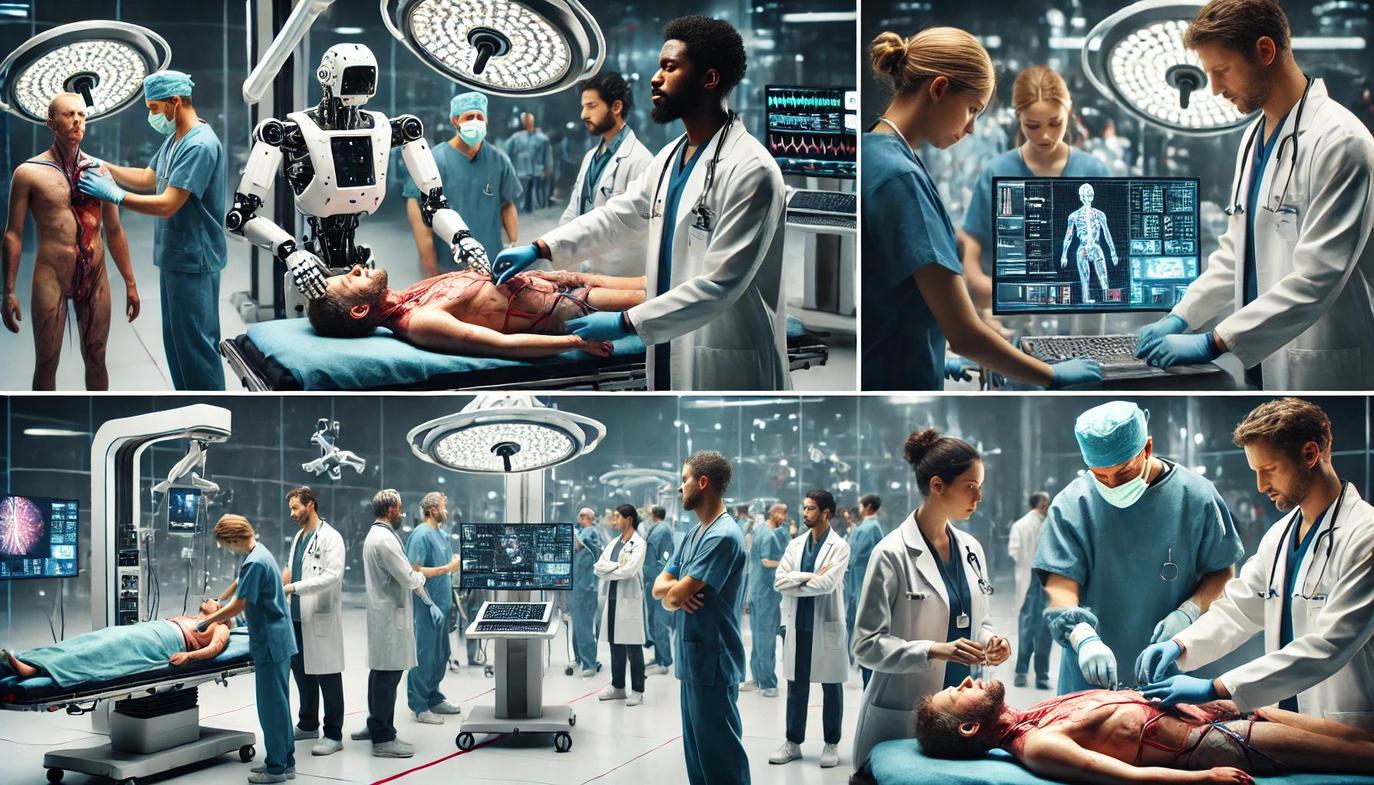
Different medical specialties require distinct skill sets, and modern training programs offer targeted modules that address these specific needs.
Emergency Medicine and Critical Care Simulations
These high-stress scenarios help build the mental resilience you’ll need in actual crisis situations and typically include:
- Code Blue Scenarios: Testing your ability to perform under pressure while working as part of a team.
- Trauma Simulations: Teaching triage decision-making skills that could save multiple lives in real emergencies.
Surgical Skills Development Programs
Modern surgical skills programs allow you to practice complex procedures safely using advanced technology, including:
- Minimally Invasive Surgery Simulators: Practice delicate procedures in a risk-free environment.
- Robotic Surgery Platforms: Learn to work with the advanced technology that is becoming standard in today’s operating rooms.
- Microsurgery Training: Develop the steady hands and precise movements required for the most challenging surgical procedures.
Mental Health and Communication Training
This training focuses on crucial interpersonal skills, including:
- Therapeutic Communication: Practice with standardized patients until effective communication becomes second nature.
- De-escalation Techniques: Learn to manage difficult situations safely and effectively.
- Cultural Competency: Prepare to work with the diverse patient populations you will encounter in your practice.
Mastering these specialized skills in controlled environments prepares you for the crucial transition to real-world application.

Career Application: Putting Your Medical Training to Work
A training program’s true value is measured by how effectively it prepares you for real-world patient care and career advancement.
Skill Translation to Real-World Practice
Bridging the gap between simulation and real patients requires careful mentorship and gradual responsibility increases. Clinical preceptorships provide supervised real-world experience where you can apply newly learned skills safely. Continuing education requirements ensure your skills remain sharp throughout your career.
Performance Tracking and Continuous Improvement
Long-term skill retention requires regular practice and periodic reassessment. Many programs offer alumni networks and continuing education opportunities to support your ongoing development. Professional development planning helps you identify advanced training opportunities that align with your career goals.
As you integrate these practical skills into your career, emerging technologies and methodologies continue reshaping how medical training evolves.
Emerging Trends and the Future of Medical Education
The field of medical education is rapidly evolving, with new technologies and methods improving training outcomes, including:
- AI Integration in Medical Simulation: AI-powered systems now personalize learning based on performance data. Predictive analytics can flag struggling students early, while automated assessments ease instructor workload and ensure consistent evaluations.
- Global Standardization and Quality Assurance: International accreditation is ensuring a high standard of quality across borders, which enables greater global career mobility for healthcare professionals. This is often supported by data-driven quality metrics that help improve programs through measurable outcomes.
With these innovations transforming training, choosing the right medical education program is more important than ever.
The Lasting Impact of Hands-On Medical Learning
Hands-on medical learning transforms theoretical knowledge into practical competence through structured progression, advanced simulation, and real-world application. Whether you choose traditional programs or innovative approaches like a specialized medical camp, success depends on thorough preparation, active engagement, and a commitment to continuous improvement.
The investment in quality practical medical training pays dividends throughout your medical career. It builds the confidence and critical skills that distinguish competent practitioners from merely knowledgeable ones. This level of comprehensive preparation is what your future patients—and your own professional peace of mind—truly deserve.
Common Questions About Hands-On Medical Training
What Does A Hands-On Medical Experience Involve?
It involves direct exposure to healthcare settings through activities like volunteering, shadowing, internships, research, or paid roles. These opportunities allow for direct interaction with patients and seasoned healthcare professionals.
What Are The Core Benefits Of Hands-On Healthcare Experience?
It helps you develop key clinical skills, patient care techniques, and cultural awareness in a controlled, low-pressure environment. It also builds confidence by providing real-world practice alongside experienced professionals.
How Long Are Most Hands-On Medical Training Programs?
Program durations vary widely, from intensive weekend workshops to full semester-long courses. However, most immersive programs last between two and eight weeks, depending on the specific focus and depth of the training provided.


