
Removing a tree in Sammamish can be more complicated than it first appears. Tree size is only one factor. The condition of the tree, its distance from nearby homes, equipment access, stump removal, cleanup, and local permit requirements can all affect how the project needs to be handled.
For homeowners, the most useful approach is to understand the entire removal process before requesting estimates. That means determining whether removal is necessary, checking which city requirements apply, understanding how contractors may access the tree, and deciding what should happen to the area afterward.
Here are the main things to consider before planning a tree removal project in 2026.
Determine Whether the Tree Actually Needs to Be Removed
A damaged or unhealthy-looking tree does not automatically need to come down.
The first step should be assessing its condition and the potential risk it presents to people, buildings, vehicles, utility lines, or other parts of the property. Depending on the situation, alternatives to tree removal such as pruning or continued monitoring may sometimes be considered before complete removal.
An assessment becomes particularly important when dealing with a mature tree or one located close to a house. Visible problems such as dead branches may only tell part of the story, while other structural or health concerns can be less obvious from the ground.
Ask the tree care provider to explain the reason behind a removal recommendation and whether there are realistic alternatives.
Check Tree Removal Permit Requirements
Local regulations should be considered before removal is scheduled.
The City of Sammamish requires a tree removal permit to remove certain “significant trees.” The city defines significant deciduous trees as those measuring at least 12 inches in diameter at breast height and significant coniferous trees as those measuring at least 8 inches in diameter at breast height.
Requirements can also vary depending on where the tree is located and why it is being removed. Trees within the street right-of-way can involve a separate permit process, while removal associated with anticipated development may be subject to additional requirements.
Before work begins, establish who is responsible for checking the applicable rules and handling any required documentation.
If a contractor offers permit assistance, ask what that actually includes. There is a difference between explaining the process, preparing supporting information, and submitting an application on the homeowner’s behalf.
Think About Equipment Access
Two trees of similar size can require very different removal plans.
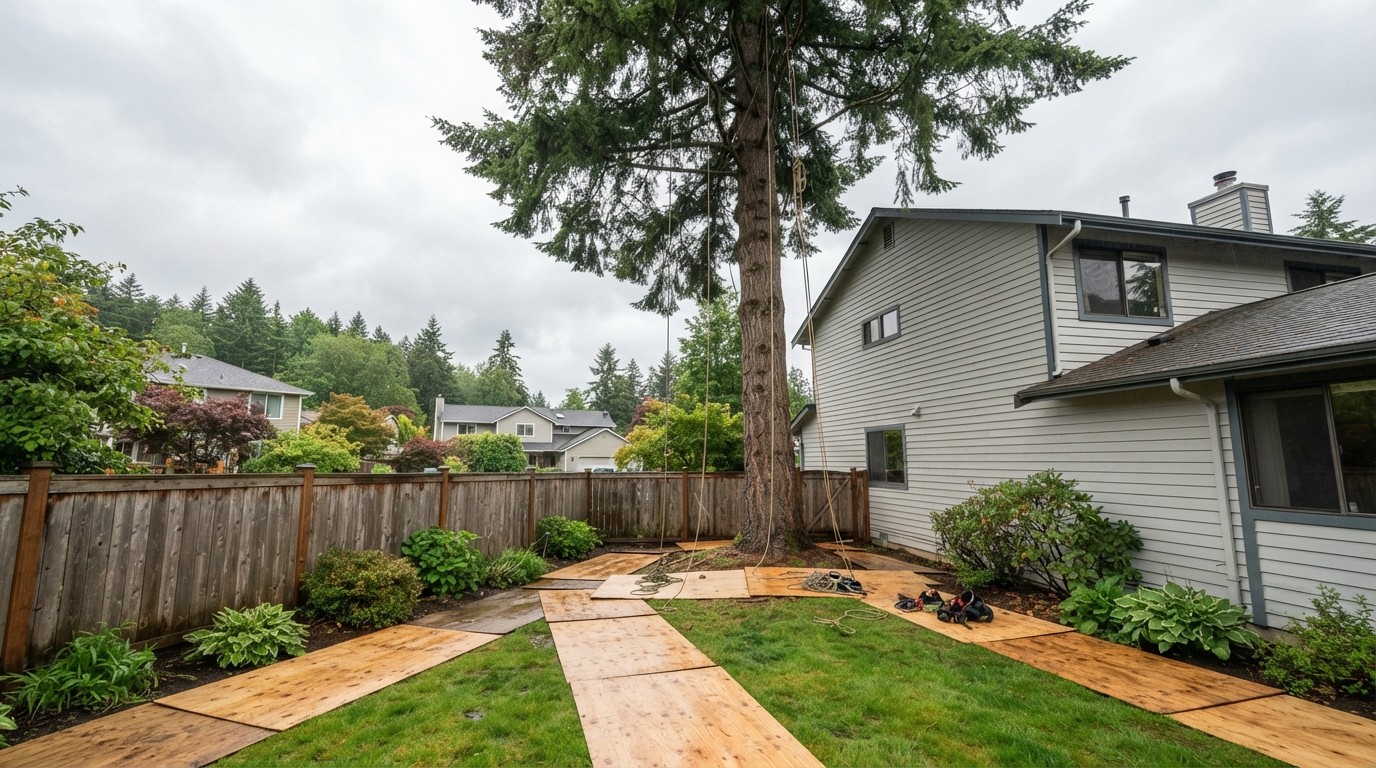
A tree standing in an open section of a large yard may offer relatively straightforward access. A tree positioned between a house and neighboring property, behind a fence, or close to landscaping can require considerably more planning.
The contractor should evaluate how workers and equipment will reach the tree, where branches and trunk sections can be lowered, and how nearby property will be protected.
Some removals may involve climbing and technical rigging, while others can require crane assistance. A crane is not automatically necessary for every large tree; the appropriate method depends on the individual site.
A company such as MTS Tree & Landscape describes a removal process that starts with an arborist assessment and can include crane-assisted removal for large or difficult-to-access trees.
For homeowners, the important point is to have the proposed method explained before approving the work. If specialized equipment is required, ask where it will be positioned and whether the associated costs are included in the estimate.
Consider Nearby Homes, Fences, and Landscaping
Property protection should be part of the removal plan rather than an afterthought.
In established neighborhoods, trees may stand close to houses, garages, fences, driveways, garden beds, or neighboring properties. Removing sections of the canopy and trunk requires enough space to control material as it comes down.
Before work begins, ask how the crew plans to protect the surrounding area.
That can include identifying equipment routes, protecting surfaces where necessary, determining where branches will be staged, and discussing any parts of the landscape that could be affected.
If access requires equipment to cross a lawn or driveway, clarify what precautions will be taken and what happens if restoration is needed afterward.
Decide What Happens to the Stump
Tree removal does not necessarily include stump removal.
Once the visible portion of the tree is gone, the stump may remain unless grinding or another form of stump work is specifically included in the project.
For homeowners who plan to replant, install new landscaping, change the lawn, or use the area for another purpose, this decision can affect the next stage of the project.
Ask whether stump grinding is included in the estimate, how the remaining material will be handled, and whether the surrounding area will be backfilled or otherwise prepared afterward.
It is also worth asking what happens to the grindings. Depending on the scope, they may be hauled away, spread on site, or left for the homeowner to manage.
Plan the Area After Tree Removal
One of the most overlooked questions is what the property should look like once the tree is gone.
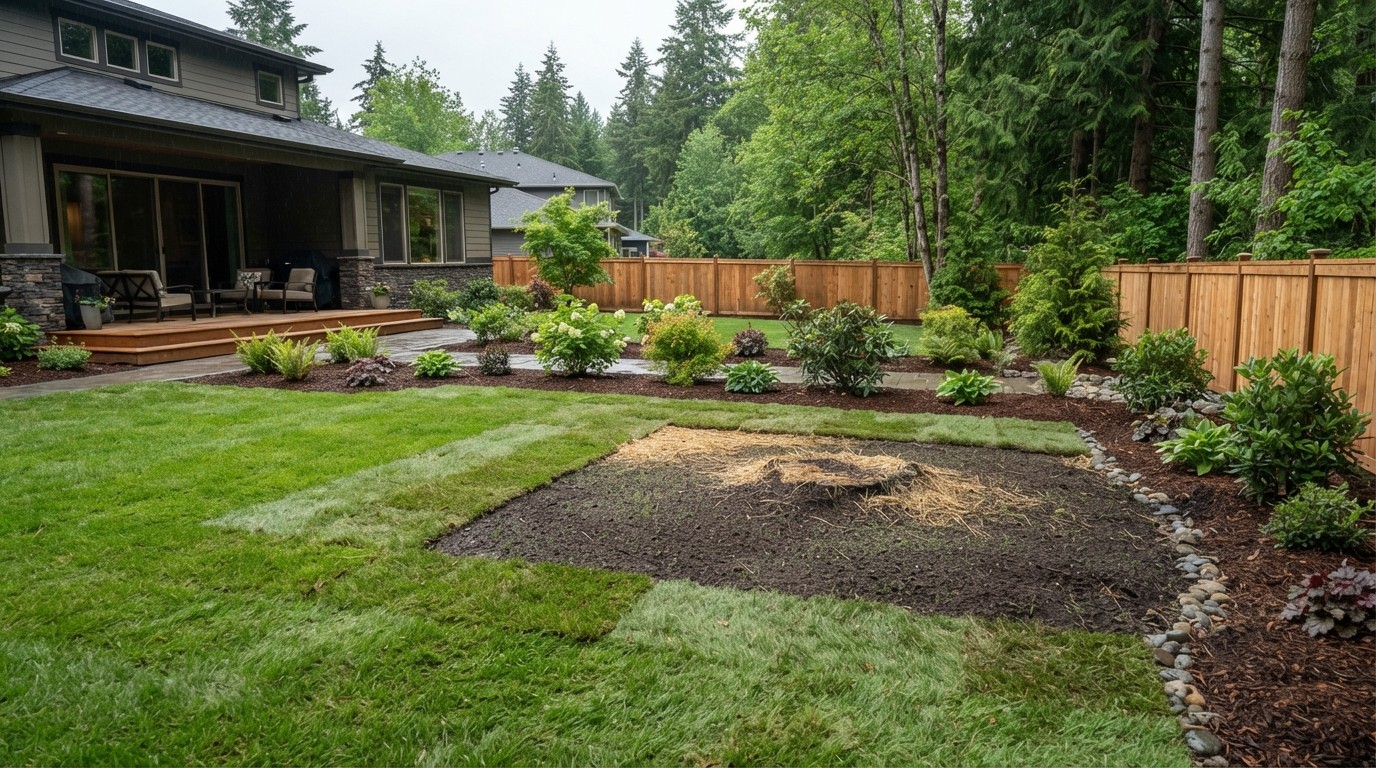
If removal leaves a large open area, homeowners may want to restore the lawn, introduce replacement planting, redesign a garden bed, or make broader landscape changes.
Thinking about this before removal can help avoid duplicated work.
This is also where a company that provides both tree and landscape services can be useful. A provider that handles tree removal and stump grinding alongside landscaping and hardscaping lets homeowners discuss what happens to the site after the tree comes down as part of the same project.
That does not mean every service needs to be bundled together. Requesting separate line items for removal, stump work, and landscape restoration makes it easier to understand the cost and scope of each stage.
Understand What “Cleanup” Includes
Cleanup can mean different things in different estimates.
One contractor may remove all branches, logs, and wood chips. Another may leave usable logs or chipped material on the property. Stump grindings may also be handled separately.
Before accepting an estimate, ask specifically what will remain after the crew leaves.
Items to clarify include:
- branches and brush
- trunk sections and logs
- wood chips
- stump grindings
- disturbed soil
- temporary access materials
- any landscape areas affected by equipment
If you want firewood or wood chips left behind, discuss that in advance as well.
What Should a Tree Removal Estimate Include?
A lower headline price does not necessarily represent a less expensive project if important services have been excluded.
When comparing estimates, make sure the contractors are quoting approximately the same scope.
| Estimate item | What to clarify |
| Tree identification | Which tree or trees are included? |
| Removal method | How will the tree be dismantled and removed? |
| Equipment | Will specialized equipment or a crane be required? |
| Access | Where will workers and equipment enter the property? |
| Property protection | How will buildings, fences, lawns, driveways, and landscaping be protected? |
| Permits | Who checks requirements and handles necessary documentation? |
| Stump work | Is stump grinding included? |
| Debris | What material will be hauled away or left behind? |
| Restoration | What condition will the site be left in? |
| Additional work | Are landscaping, planting, or other services quoted separately? |
Homeowners should also request current insurance documentation and applicable contractor information before agreeing to the work.
The proposal should explain payment terms and how any changes to the original scope will be approved.
Why Tree Removal Quotes Can Vary
It is common for homeowners to receive noticeably different prices for what appears to be the same tree.
Often, the difference comes down to scope.
One estimate may cover only dismantling and removing the standing tree. Another may include specialized equipment, stump grinding, hauling, permit assistance, and cleanup.
Access can also make a major difference. A tree that equipment can reach directly may require a different process from one behind a house or surrounded by structures.
Instead of comparing only the final price, compare what each contractor plans to do and what condition the property will be left in afterward.
Questions to Ask Before Hiring a Tree Removal Contractor
Before scheduling the work, ask:
- Why is removal being recommended?
- What removal method will be used?
- Will a crane or other specialized equipment be required?
- How will equipment access the tree?
- How will nearby structures and landscaping be protected?
- Who is responsible for checking permit requirements?
- Is stump grinding included?
- What debris will be removed?
- What will the site look like when the work is finished?
- Is current insurance documentation available?
- How will unexpected changes to the scope be handled?
Getting these answers in writing makes it much easier to compare estimates fairly.
Frequently Asked Questions
Do you need a permit to remove a tree in Sammamish?
The city regulates the removal of significant trees. The city defines significant deciduous trees as at least 12 inches in diameter at breast height and significant coniferous trees as at least 8 inches in diameter at breast height. Additional requirements can apply depending on the tree’s location and the nature of the project, so homeowners should confirm current city requirements before removal.
How much does tree removal cost in Sammamish?
The cost depends on factors such as tree size and condition, access, surrounding structures, equipment requirements, stump work, and cleanup. An on-site estimate that clearly identifies the included work provides a more useful basis for comparison than a general price range.
Is stump grinding included with tree removal?
Not always. Tree removal and stump grinding can be separate services. Ask whether grinding is included, what happens to the grindings, and whether any backfilling or surface restoration is part of the estimate.
Does a large tree always require a crane?
No. The removal method depends on tree condition, access, surrounding structures, and available working space. If a crane is recommended, ask why it is appropriate for the site and whether its cost is included in the proposal.
Can tree removal and landscaping be handled as one project?
Yes, if the contractor provides both services. A company that offers tree removal, stump grinding, landscaping, and hardscaping can handle both sides of the project. For a project involving both removal and yard restoration, homeowners can discuss the stages together while requesting separate pricing for each part of the work.
What should I compare between tree removal estimates?
Compare the removal method, access requirements, equipment, property protection, permit responsibilities, stump work, debris disposal, cleanup, insurance documentation, and final site condition. Two estimates with different scopes should not be compared on price alone.
Final Thoughts
Planning tree removal starts with understanding the tree, the property, and the work required around it.
Confirm whether removal is necessary and which permit requirements apply. Then consider access, nearby structures, equipment, stump work, debris removal, and the condition in which you want the site left.
For homeowners planning additional yard work after removal, it is worth considering the next stage at the same time. A provider that handles tree removal alongside stump grinding and broader landscape work can simplify the process, while a clearly itemized estimate helps keep each part of the project transparent.
The goal is not simply to get the tree down. It is to complete the project safely, understand what is included, and leave the property ready for whatever comes next.

