
Regenerative medicine is changing fast, and the way it is taught needs to keep up. Traditional classroom methods are often insufficient for today’s complex science. That is why schools are using tools like virtual reality, augmented reality, and simulations.
These tools make learning more tangible, showing the body in ways books cannot. Students can utilize digital tools to practice essential skills before entering the laboratory. This article explores how technology is changing medical education and getting students ready for regenerative care.
The Role of Technology in Regenerative Medicine Education
Technology is reshaping how students learn about regenerative medicine. Tools like 3D printing let them build models of organs or tissues before working with real samples. This early exposure builds confidence and makes complex topics easier to understand.
Additionally, digital simulations provide a secure environment for experimenting with ideas. Students can practice procedures, explore cell behavior, and repeat experiments without real-world risks. Such simulations minimize errors and facilitate accelerated learning for students.
Together, these tools give students more than just textbook knowledge. They allow for hands-on learning that mirrors real clinical settings. As a result, students enter the lab better prepared and more skilled.
Virtual and Augmented Reality in Learning
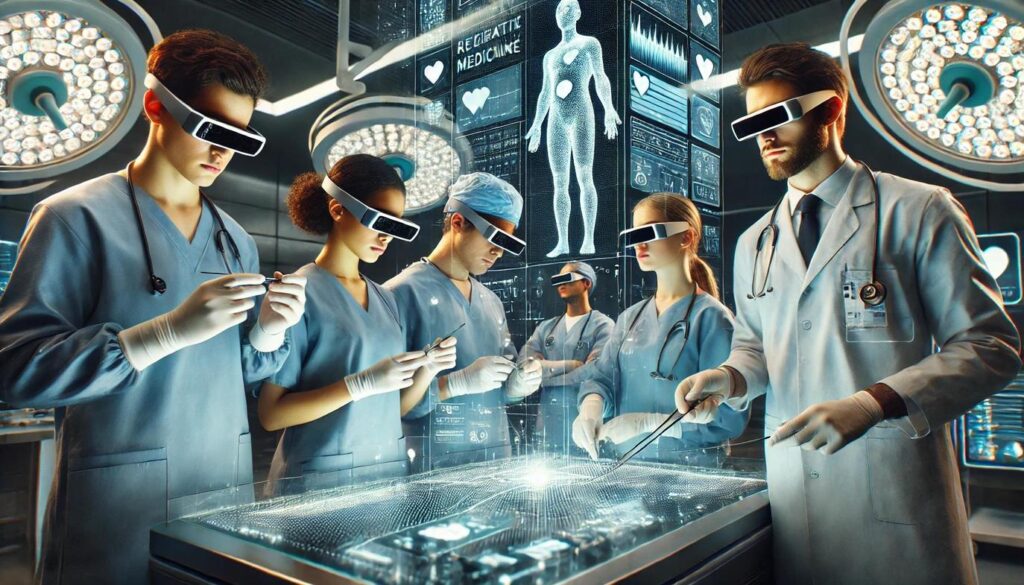
Virtual reality (VR) is changing how students learn about regenerative medicine. With VR, they can walk through a 3D model of the body and see how stem cells grow and change. This immersive setup helps them understand complex ideas in a way that textbooks cannot match.
VR also allows students to practice risky procedures in a safe space. They can repeat steps, fix mistakes, and build confidence without harming real patients. This hands-on training boosts both skill and safety.
Augmented reality (AR) adds another layer to this learning. By overlaying digital images onto real objects, AR helps students see how treatments work in real time. It makes tough topics easier to grasp and keeps students more focused and involved.
Data-Driven Insights for Improved Learning
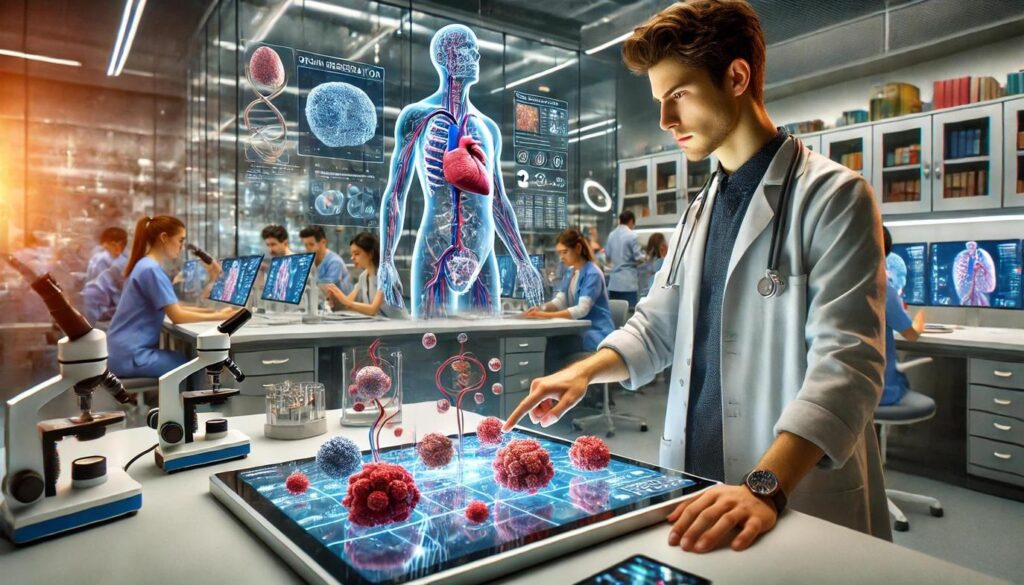
Another big step in regenerative medicine education is using big data. By studying large sets of data, teachers can see how students are doing and where they need help. AI-powered tools can adjust lessons to fit each student’s needs, making it easier to understand hard topics.
Data also helps schools find weak spots in their teaching and improve their programs. Tracking results over time lets them make smart changes that boost student success. With tech at the center, learning becomes more personal and better suited to this fast-changing field.
Interactive Learning Platforms
Contemporary online learning platforms play a pivotal role in teaching regenerative medicine. They allow students from around the world to connect, share ideas, and learn together. This global access helps create a rich, diverse learning environment.
These platforms also make it easier to stay in touch with teachers and classmates. Tools such as sdarts bring lessons to life with interactive simulations and instant feedback. Students can try medical procedures in real time, making learning more active and interesting.
Online platforms help students learn better and work well with others through teamwork and active learning. They also make complex topics easier to understand through guided practice. In a fast-moving field like regenerative medicine, this kind of learning support is more valuable than ever.
The Future of Regenerative Medicine Education
As technology keeps improving, the future of regenerative medicine education looks bright. Tools like artificial intelligence (AI) and machine learning are set to make learning even smarter. These systems can track student progress and highlight areas where extra help is needed.
AI can also personalize lessons to fit each student’s pace and style. Instead of one-size-fits-all learning, students get tailored support that helps them grow faster. This kind of smart learning can boost confidence and improve results.
Telemedicine is also becoming a powerful teaching tool. This technology enables students to engage with real patients, observe treatments firsthand, and ask questions in real time. This helps students learn better and get ready for real work.
Challenges in Integrating Technology
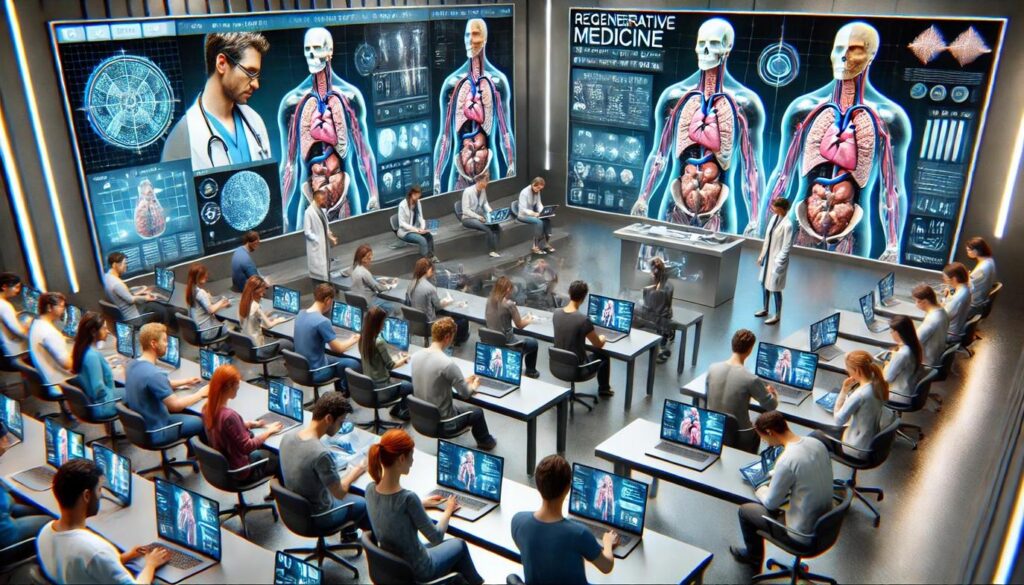
While technology helps regenerative medicine education a lot, it also has some challenges. Many schools still lack the funds or tools needed to bring in high-tech options like VR or 3D printing. Some teachers also resist switching from traditional methods they have used for years.
To fix this, schools need to invest in both equipment and staff training. Hosting workshops and hands-on sessions can help teachers feel more confident using new tools. When educators are well-prepared, they can pass that knowledge on to their students more effectively.
Changing old habits is not easy, but the benefits are clear. With better tools and teaching methods, students become more skilled and job-ready. Ultimately, embracing technology elevates the standard of care for future patients.
The Impact on Student Competency
Bringing technology into regenerative medicine classrooms is changing how students learn and grow. Research shows that students using tech-based tools stay more focused and remember more. This helps them feel more ready to handle real clinical challenges later on.
Interactive tools like simulations and virtual labs do more than just teach facts. They push students to think deeper, ask questions, and solve problems on their own. These skills are key for anyone entering the fast-moving world of modern healthcare.
In regenerative medicine, things change quickly, and new methods appear all the time. That is why students need more than basic knowledge; they need to adapt and think creatively. Technology helps build those skills early, giving future professionals a strong head start.
Conclusion
Technology is changing how students learn, and regenerative medicine is leading the way. Tools like VR, simulations, and data make learning easier, more real, and practical. These updates help students gain the skills and confidence they need to succeed in real-life medical settings. Schools and training centers that embrace these changes give their students a strong edge. When future healthcare pros learn with modern tools, they are better prepared to tackle complex challenges from day one.


