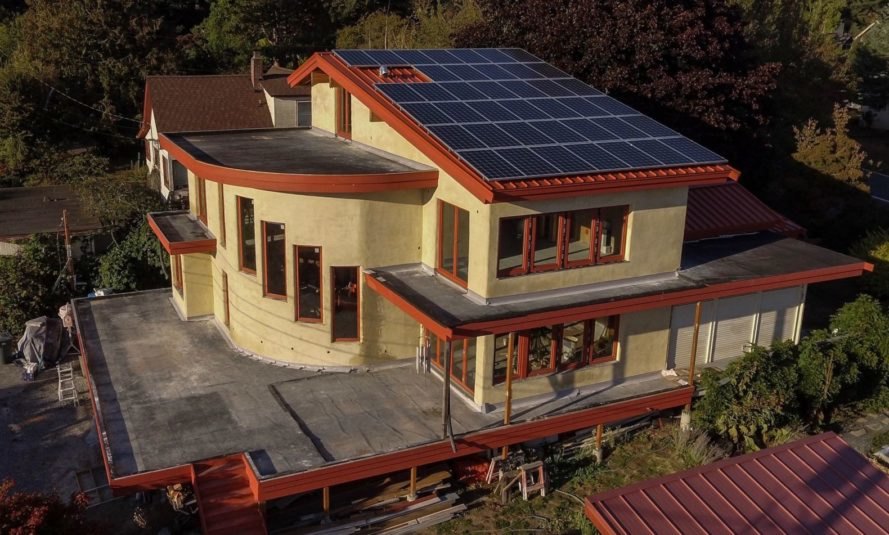
Homeowner Pam Bosch was determined to renovate her older house in Bellingham, Washington with energy-efficient, eco-friendly, and non-toxic materials. When looking for ways to remodel this 1960s home, she researched various potential sustainable materials. That’s how she discovered hempcrete, a hemp-based render made out of a mixture of hemp, lime, and water. She knew instantly it was the best option for her project.
Some Benefits Include:
- Carbon sequestration
- Highly insulating
- No need for landfilling
- No Volatile organic compounds (VOCs)
- Fireproof & resistant to mold and pests
- Increased energy performance
She worked in collaboration with Matthew Mead from Hempitecture to transform her place into a now solar-powered Highland Hemp House constructed with an insulative hempcrete thermal envelope. The process of remodeling the three-story home began with Mead working in collaboration with local contractors to create a new framework suited for a hempcrete wall system.
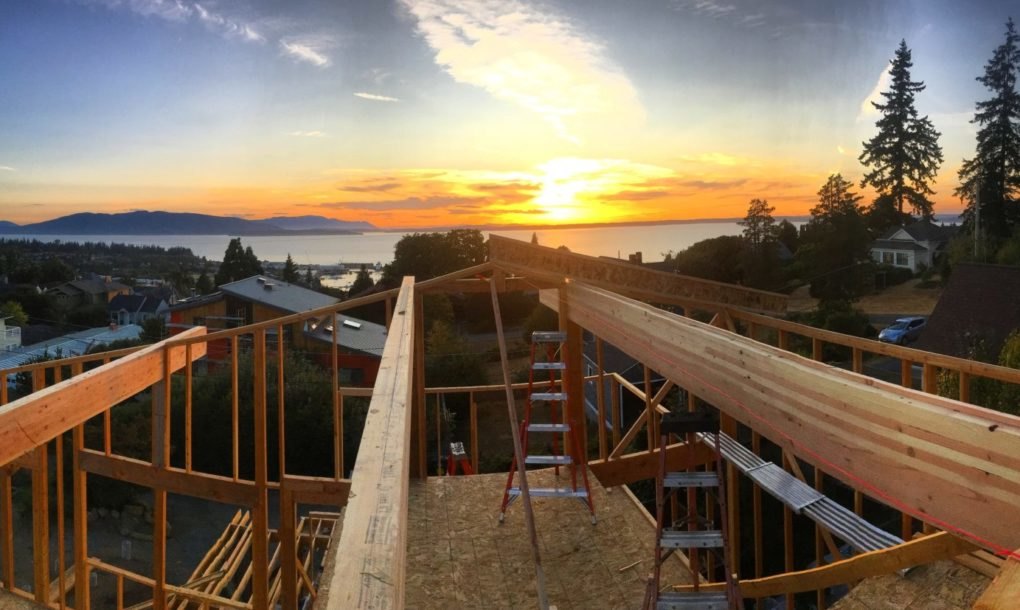
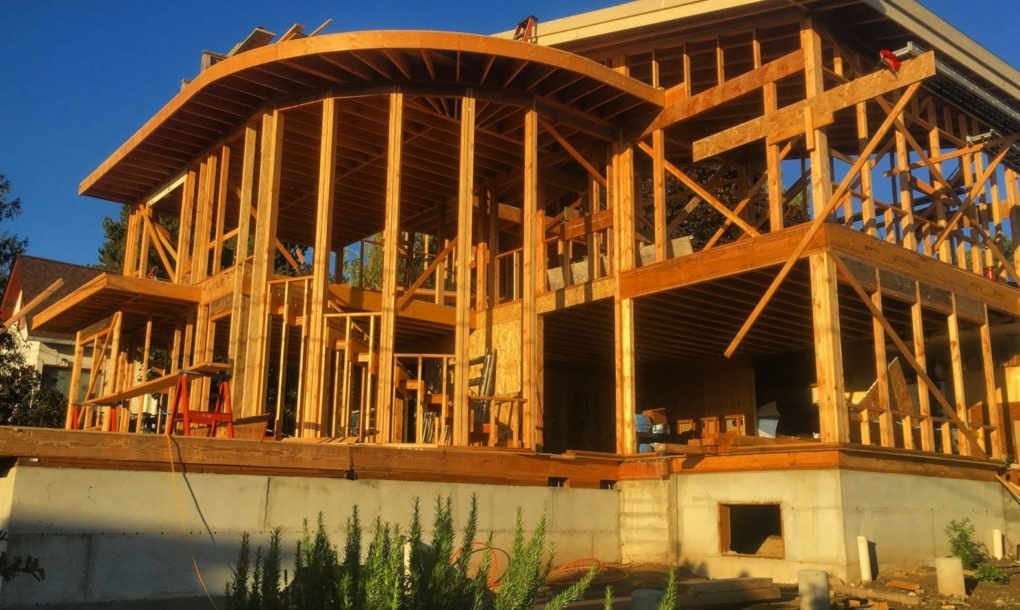
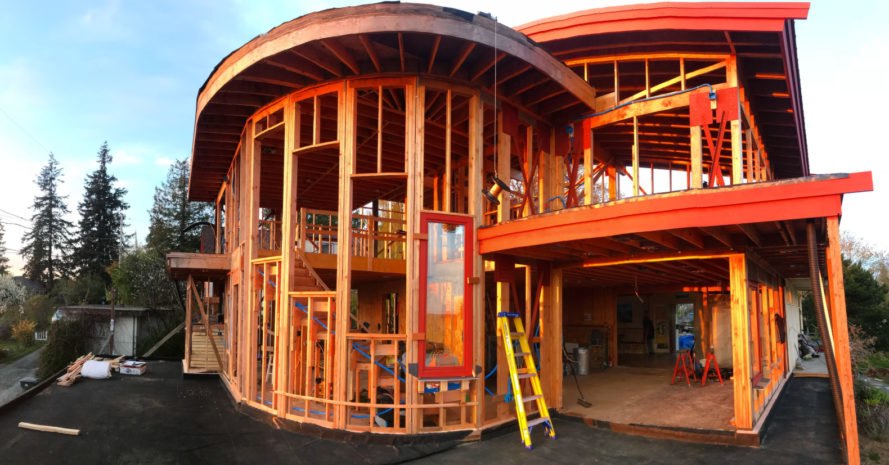
Once the home was primed for its new envelope, the following step was to create the hempcrete material. Hempcrete is a bio-aggregate building material that is derived from the woody core of the industrial hemp stalk. When combined with hydrated lime and water in the right ratio, it solidifies by absorbing carbon dioxide, resulting in a concrete-like material. For the final step, the material was cast around the home’s frame, forming a monolithic wall.
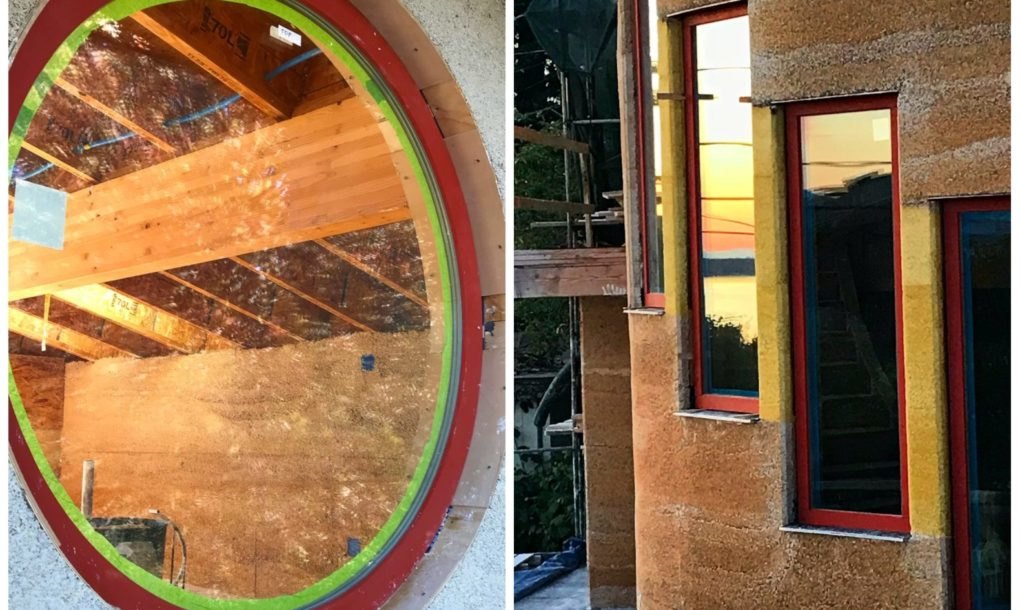
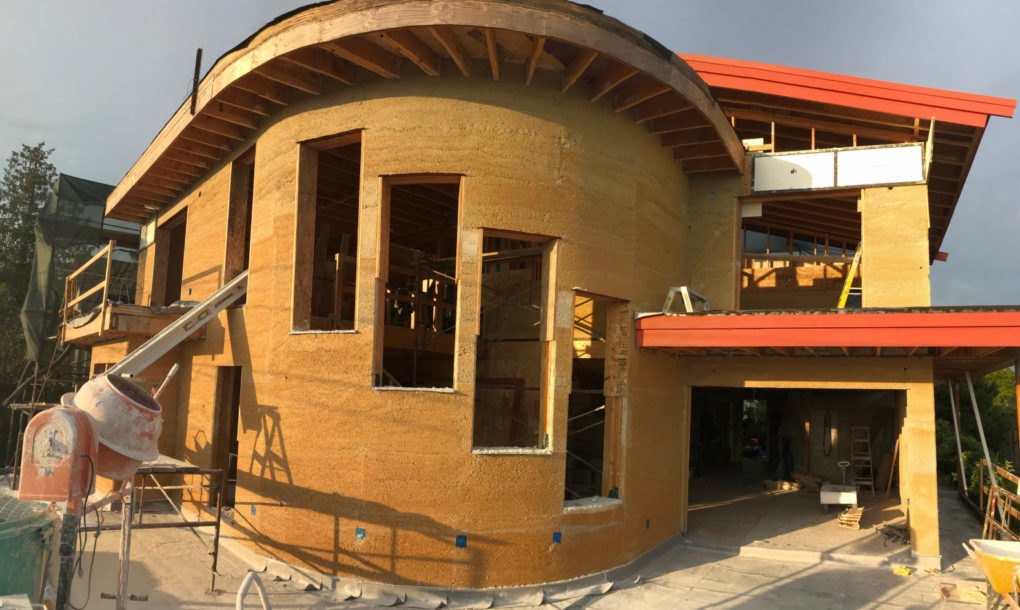
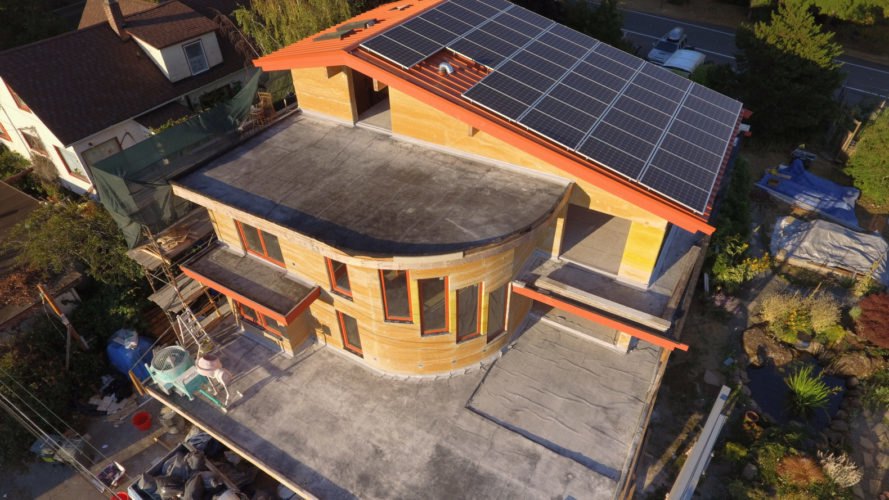
What Bosch really liked about the material is that, in comparison to concrete, hempcrete is a more sustainable and affordable material. How? For one thing, it is estimated to absorb about seven pounds of CO2 per cubic foot. The new thermal envelope of her home in specific is estimated to sequester about 15,372 pounds of CO2. Another great thing is that the Highland Hemp House is now insulated with a material that is fireproof, breathable, resistant to mold, pests, and regulates moisture.
About Hemp
Industrial hemp is a rapidly renewable plant-based commodity. It isn’t energy intensive to grow and it contributes to soil biodiversity during growth. Hemp hurds are considered a waste byproduct in the hemp industry, but it is one of the main ingredients of hempcrete! The hurds are mixed with a mineral based binder and water in a specific ratio to achieve a cohesive mixture (becoming hempcrete) which will solidify into any form in which it is cast.
According to Hempitecture:
“Buildings and Building Materials are the major source of global demand for energy that produces by-product greenhouse gases. In fact, Buildings consume nearly half (46.7%) of all the energy produced in the United States… AND Hempitecture offers an environmentally conscious approach that is in accordance with the call to action to integrate sustainable and passive design strategies to achieve carbon-neutrality in 2030.”