
A new bio-compatible material has been developed that improves upon acrylic-based fillings, which are currently in the market. Its strength and durability just might end all your worries about having to touch up dental repairs completely. It can be molded and even has the potential for 3D printing in a clinical setting.
The one in charge of the research is Michael Malkoch, a professor in the Department of Fibre and Polymer Technology at the KTH Royal Institute of Technology, Sweden. He claims that this new material can bond to tooth surfaces 160% better than today’s available polymers. The excellent biological profile of the composition and final material is an important feature here. The quality of a filling made with this new material would be good enough to keep patients from having to go to the dentist again just to solve detachment of dental filler problems.
Technically speaking, the new material is made out of light-initiated thiol-yne coupling (TYC) chemistry to polymerize triazine-trione (TATO) monomers, which, compared to the currently used thiol-ene coupling (TEC) systems, generates higher crosslinking density. In other words, it is a mechanically stronger and more rigid material. “The reason why this works is that we have elevated the number of chemical crosslinks in the materials to such level that the properties we receive are extraordinary,” Malkoch said.
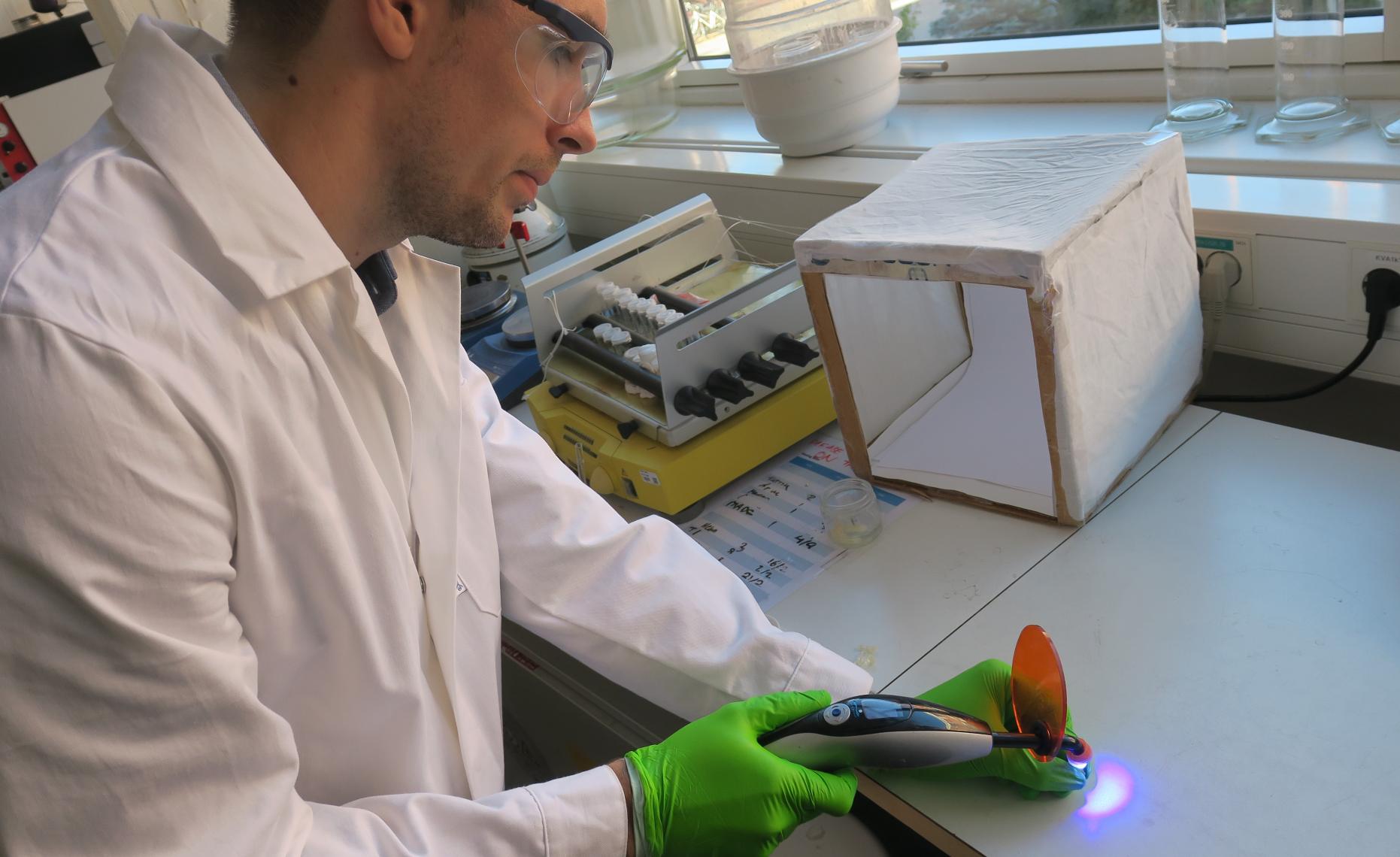
In order to prove and verify this development, Malkoch even put their research to the test and had the material used on himself to repair his own teeth. He said, “Personally, I would rather have these materials as dental filler than existing acrylate-based ones, known for their allergenic properties and questionable compositions.”
A research paper was written outlining the team’s findings and published in Advanced Materials. The researchers see their work as a guide in the development of future materials for implants. “It provides higher strength, straightforward moldability, and non-toxicity,” says Malkoch. We believe this foretells a new era in hard tissue repair.” The research was financed by the Knut and Alice Wallenberg Foundation under the Wallenberg Academy Fellow Program.
There have been other similar studies conducted by this team. The aforementioned research had followed a previously published article in the journal Advanced Functional Materials about bone fracture glue research. In that study Malkoch’s team and researchers from Karolinska Institutet developed a bone fracture adhesive that combines the rigidity and load-bearing properties of dental resin composites with the bonding strength of self-etching primer. More recently, University of Nottingham researchers have developed a protein gel that regrows tooth enamel, with the first human clinical trials beginning in 2026.


