
Every time you stand up, climb a flight of stairs, or tap your heel against the floor while sitting at a desk, a small group of muscles in your lower legs performs a job most people never think about: pushing blood back uphill to your heart.
Physiologists call this mechanism the calf muscle pump, and it is the reason researchers sometimes describe the calves as a “second heart.”
The nickname is more than a clever phrase. A growing body of research links the size, strength, and efficiency of your calf muscles to your circulation, your metabolic health, and even how long you are likely to live.
In one large national analysis, simply adding a calf measurement to standard screening sharply improved the accuracy of mortality predictions.
Here is how the calf muscle pump works, why it matters far beyond your legs, and the evidence-backed habits that keep it in good shape.
What Is the Calf Muscle Pump?
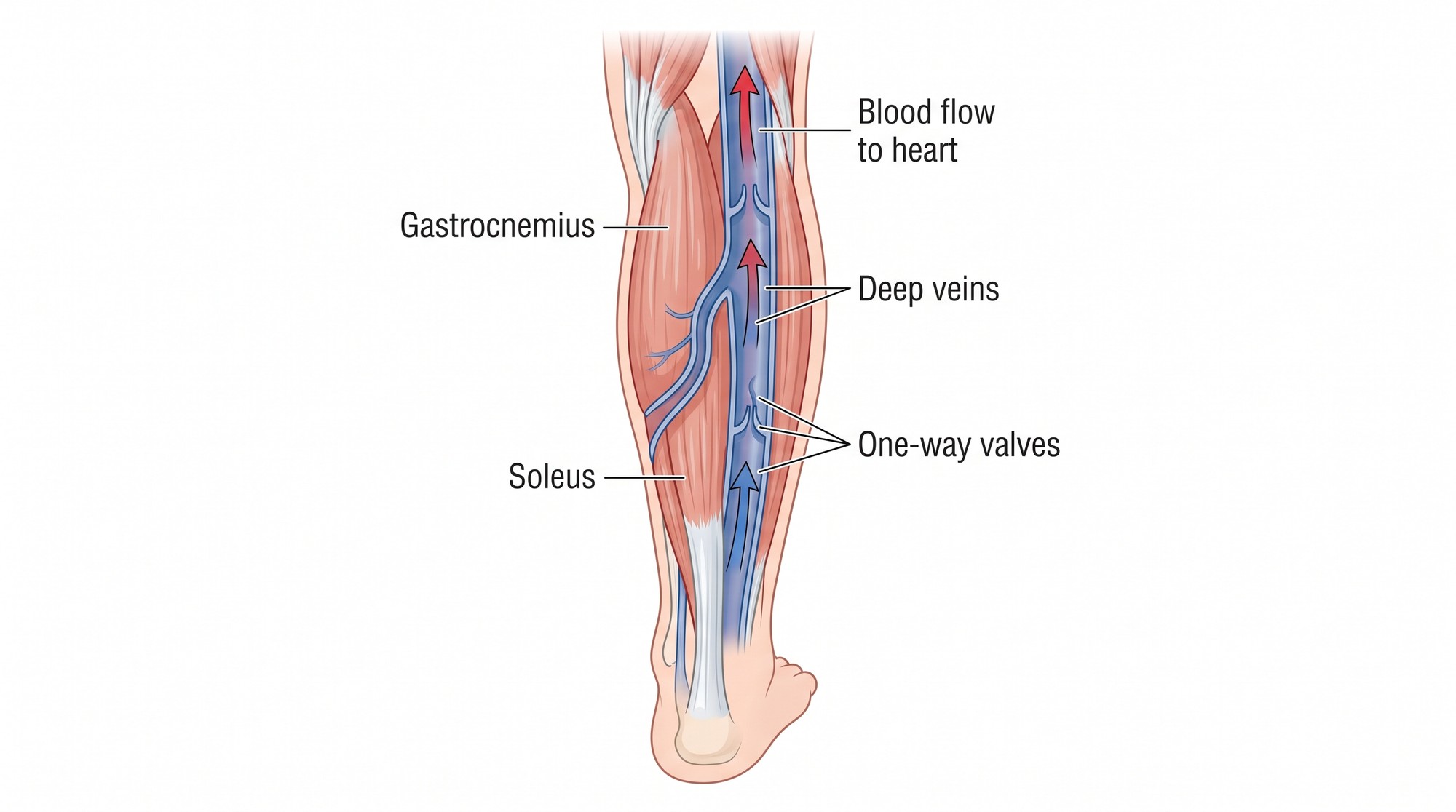
The calf muscle pump is the pumping action created when the muscles of your lower leg contract and squeeze the deep veins, driving blood upward toward the heart. Your veins are low-pressure vessels, and the blood inside them has to travel against gravity whenever you are standing or sitting upright. The calf muscles act as the engine that keeps that blood moving.
The system relies on two components working together:
- The calf muscles themselves, mainly the gastrocnemius and the deeper soleus, which wrap around the veins like a fist.
- One-way valves inside the veins, which snap shut after each squeeze so blood cannot slide back down.
Each time you take a step, the muscles contract, the veins are compressed, and blood is pushed toward the heart. When the muscles relax, the valves hold that blood in place while the veins refill from below.
Repeated thousands of times a day, this rhythm is one of the main reasons blood returns from your feet to your chest at all.
How the Pump Moves Blood Back to the Heart
The stakes are higher than they sound. In classic research published in Circulation Research, the leg muscle pump was found to contribute more than 30% of the energy required to circulate blood during running. Without it, the heart alone would struggle to pull blood up from the lower body, a problem that becomes obvious the moment you stand still for too long.
Why It’s Called a ‘Second Heart’
Doctors adopted the “second heart” label because the calf pump performs a job that sounds cardiac in nature: it generates the pressure that moves a large share of your total blood volume.
At any given moment, a significant portion of your blood sits in the veins of your legs, and the calf pump is what keeps that reservoir circulating instead of pooling.
When the pump works well, you feel nothing at all. When it slows down, the effects tend to show up first in the legs, then in the rest of the body.
What Happens When the Pump Fails
An inefficient calf muscle pump is closely tied to a condition called chronic venous insufficiency, in which blood struggles to leave the legs. Common consequences include:
- Swelling and heaviness in the ankles and calves, especially by the evening
- Aching, cramping, or a “tired legs” feeling after standing for a while
- Skin discoloration, itching, or slow-healing sores near the ankle
- An increased risk of blood clots, since sluggish flow is a known contributor to deep vein thrombosis (DVT)
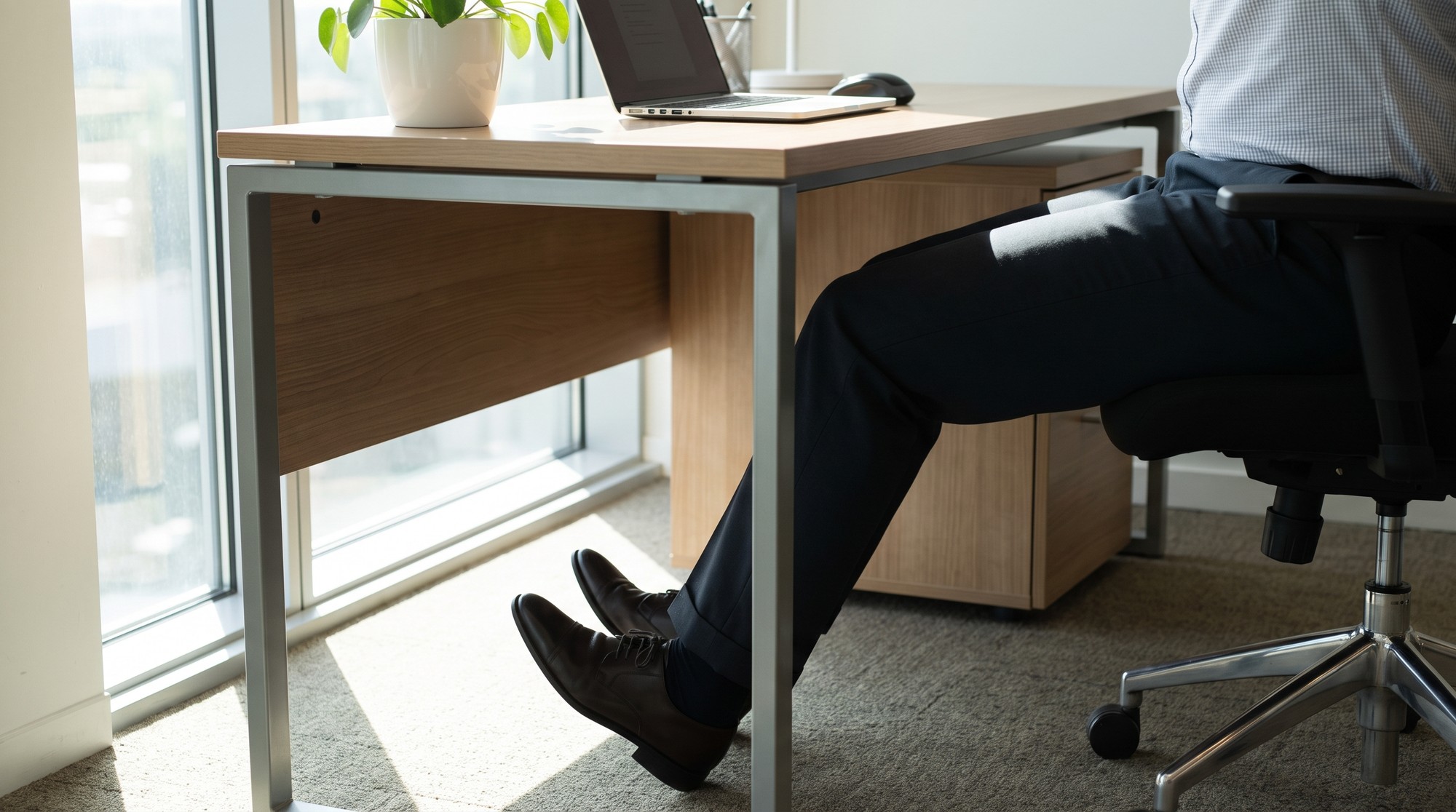
This is why immobility is treated as a genuine circulatory risk. Long flights, extended hospital stays, and desk-bound workdays all reduce calf pump activity, and all are associated with a higher chance of clots forming.
The fix is unglamorous but effective: move your ankles and use your calves. If you spend hours seated, these habits to maintain healthy blood circulation at a desk job are a practical starting point.
The Longevity Clue in Your Calf Size
If the calf pump is a second heart, then the size of the muscle powering it becomes a meaningful signal. Over the past several years, researchers studying sarcopenia (the age-related loss of muscle) have zeroed in on calf circumference as one of the simplest and most revealing measurements in medicine.
But calf size is only part of the story. The function of the pump itself also appears to predict survival. In a Mayo Clinic study of more than 2,700 patients published in the journal Vascular Medicine, people with an impaired calf muscle pump had strikingly higher death rates than those with a normal pump. At five years, 8.9% of the impaired group had died versus 2.4% of the normal group. By ten years the figures were 17.5% versus 5.9%, and by fifteen years they had widened to 22.8% versus 8.3%. Even after adjusting for other health conditions, an impaired calf pump remained an independent predictor of poor outcomes.
The researchers were careful about cause and effect. It is not yet clear whether strengthening the pump directly improves survival, or whether a weak pump is simply a marker of frailty and accumulated disease. Either way, the message is the same: your calf is sending a signal that is worth paying attention to.
A study published in the journal Age and Ageing analyzed more than 2,500 adults aged 50 to 85 from the National Health and Nutrition Examination Survey. When the researchers added low calf circumference to conventional markers of sarcopenia, the ability to predict all-cause mortality jumped sharply. The hazard ratio rose from roughly 6.4 to 15.1, and for cardiovascular mortality it climbed even higher.
Other studies point in the same direction. A prospective cohort study of older patients on maintenance hemodialysis found that low calf circumference independently predicted shorter survival, with optimal screening cutoffs of about 32.5 cm for men and 31.9 cm for women.
Research on frail, hospitalized older adults placed the predictive cutoff near 30.6 cm and reported that a higher calf circumference acted as a protective factor.
The takeaway is not that a larger calf guarantees a longer life. It is that the calf works as a compact, easy-to-measure proxy for overall muscle health, and muscle health is one of the strongest predictors of how well people age.
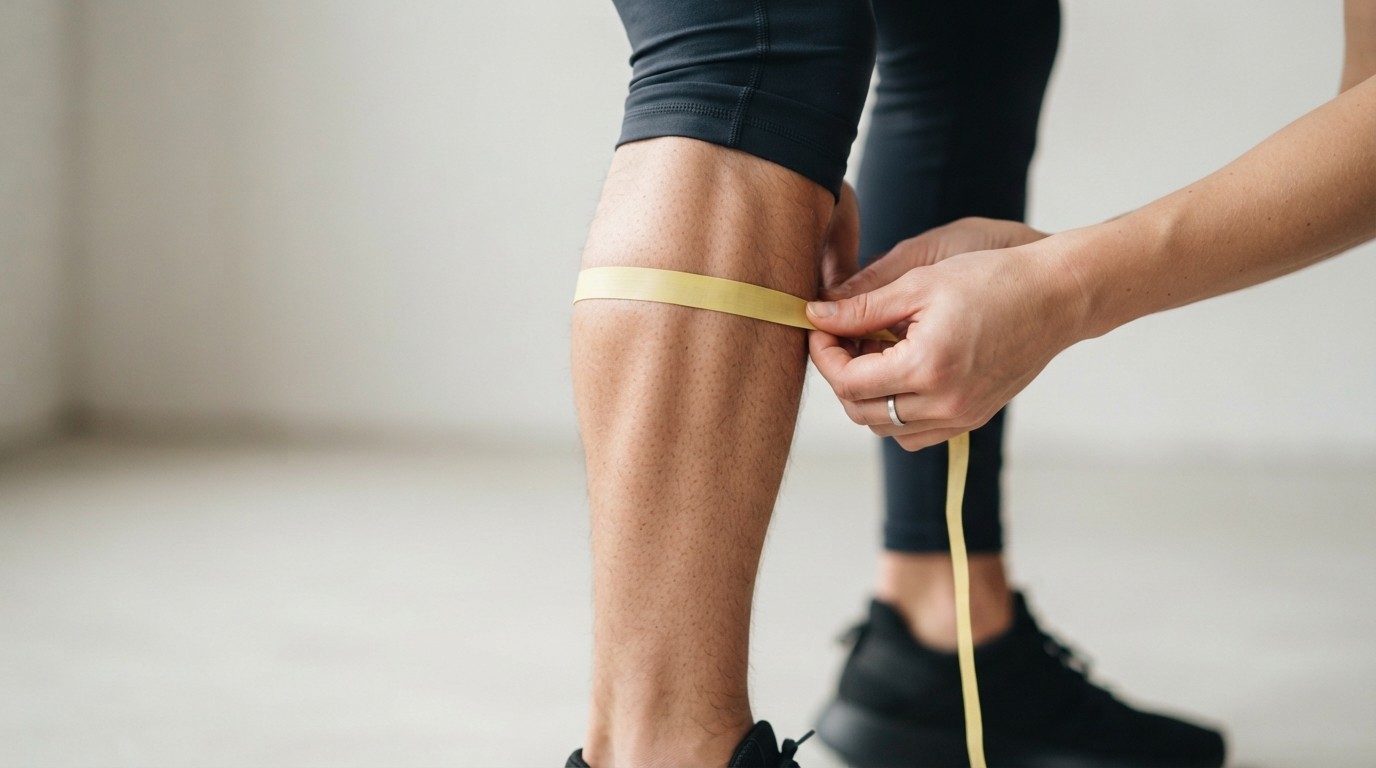
How to Measure Your Calf Circumference at Home
- Sit with your knee bent to about 90 degrees and your foot flat on the floor.
- Wrap a flexible tape measure around the widest part of your calf, usually a few centimeters below the knee crease.
- Keep the tape snug but not pressing into the skin, and take the reading in centimeters.
- Repeat on the other leg and record the larger value to track over time.
The Soleus: The ‘Second Heart’ Muscle You Can Switch On While Sitting
Deep beneath the visible calf is the soleus, a broad, flat muscle that makes up only about 1% of your body weight. Despite its modest size, the soleus is unusual: it is built almost entirely from slow-twitch, oxidative fibers, meaning it can work for long stretches using blood glucose and fats as fuel rather than tiring quickly like a sprinting muscle.
That property caught the attention of Marc Hamilton, a professor of health and human performance at the University of Houston. In research published in the journal iScience, his team found that a specific seated contraction, which they named the soleus push-up, could sustain elevated muscle metabolism for hours. In testing, the movement produced a roughly 52% improvement in blood glucose excursion and reduced insulin requirements by about 60% over three hours after a glucose drink.
The finding matters because it points to the calf as a metabolic organ as well as a circulatory pump. It suggests that even people who sit for long periods can activate part of the “second heart” system without leaving their chair.
How to Do the Soleus Push-Up
- Sit with your feet flat on the floor and your knees bent at roughly 90 degrees.
- Keeping the balls of your feet planted, lift your heels as high as is comfortable, then lower them back down in a smooth rhythm.
- Focus on a slow, continuous, repeated contraction rather than a fast bouncing motion.
- Aim to keep the movement going in relaxed sets while you work, watch television, or take a call.
How to Strengthen Your Calf Muscle Pump
The good news is that the calf muscle pump responds to the same principle as any other muscle: use it and it stays capable. Because these muscles are involved in nearly every step you take, small changes to your daily movement can pay off quickly.
- Walk regularly. Walking is the most natural calf pump activation there is, and it engages the full lower-leg system automatically.
- Do calf raises. Rising onto the balls of your feet and lowering slowly under control builds strength in both the gastrocnemius and soleus.
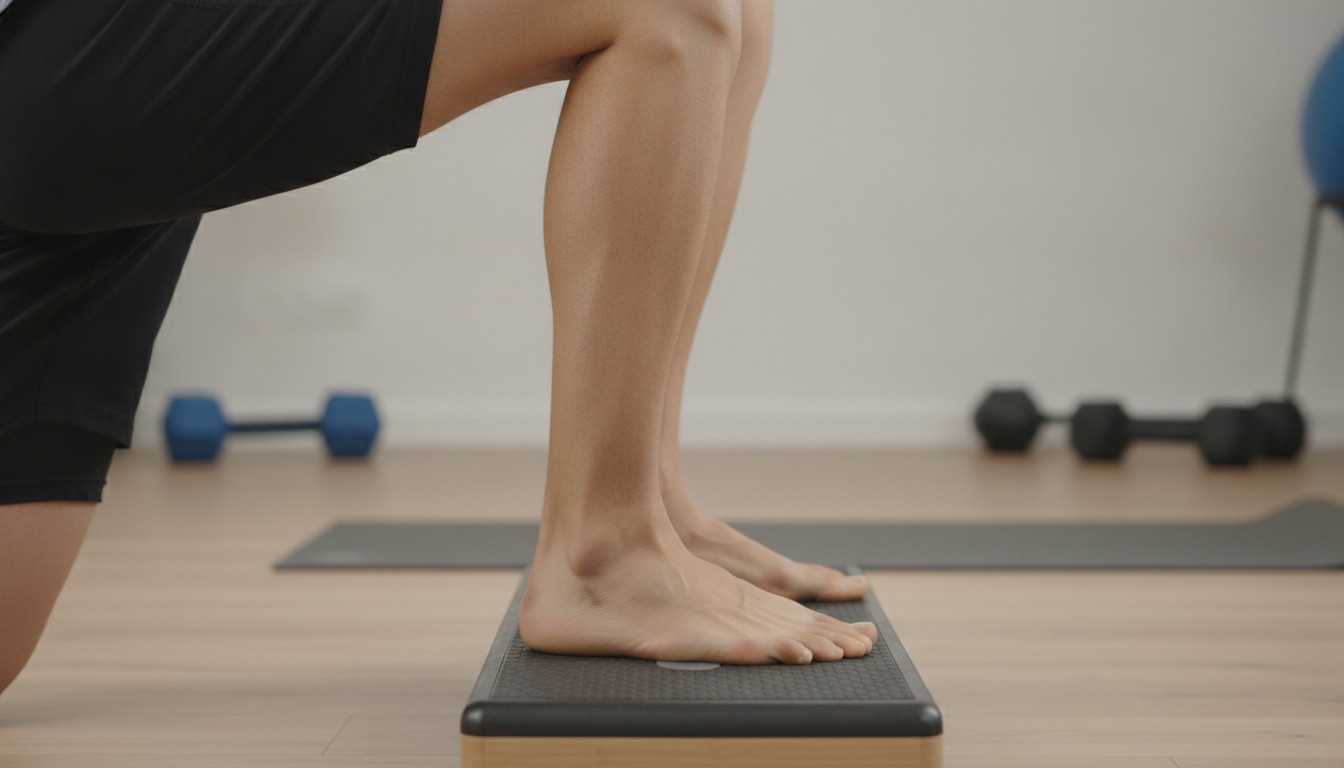
- Try slow heel drops. Standing on a step with your heels hanging off and lowering them slowly is a well-established way to load the calf and Achilles tendon safely.
- Pump your ankles when seated. Simple ankle flexes and the soleus push-up keep blood moving during long periods of sitting.
- Break up immobility. Stand, stretch, or take a short walk at least once an hour during long flights, drives, or desk sessions.
Calf Muscle Pump Exercises for Seniors
For older adults, protecting the calf is as much about maintaining independence as it is about circulation. Ankle pumps, seated heel raises, and gentle standing calf raises are low-impact enough for most people, and they help preserve both muscle mass and balance. Anyone with a history of falls, recent surgery, or a clotting disorder should check with a clinician before starting a new routine.
A Simple Daily Routine
A practical approach is to combine incidental movement with a short deliberate session. Walk as often as your day allows, add the soleus push-up during long stretches of sitting, and finish with two or three sets of controlled calf raises and slow heel drops. Consistency matters far more than intensity. As with any strength work, this pairs well with the broader habits covered in these natural ways to build muscle mass.
When a Weak Calf Pump Is a Warning Sign
A sluggish calf pump is usually a gradual, manageable issue. But certain symptoms deserve prompt medical attention, especially sudden or one-sided changes:
- Swelling, pain, warmth, or redness in just one calf or leg
- New shortness of breath or chest pain alongside leg swelling
- Skin changes, open sores, or persistent discoloration near the ankle
- Leg heaviness or cramping that keeps worsening despite movement
These can signal a deep vein thrombosis or advanced venous disease. They should be evaluated by a clinician rather than managed at home. For general heart and circulation health, there are also broader habits worth knowing, such as the ones gathered in these unusual ways to improve your heart health.
The Bottom Line
The calf muscle pump is a quiet piece of engineering that most people ignore until their legs start to complain. It moves a substantial share of your blood volume against gravity, it shows up in mortality research as a simple marker of muscle health, and its deepest muscle, the soleus, can shape how your body handles blood sugar even while you sit.
You do not need special equipment to take care of it. Regular walking, a few sets of calf raises, and periodic ankle pumps during long periods of sitting are enough to keep this “second heart” doing its job. Small, consistent movement in the lower legs is one of the lowest-effort, highest-return habits available for long-term circulatory and metabolic health.


