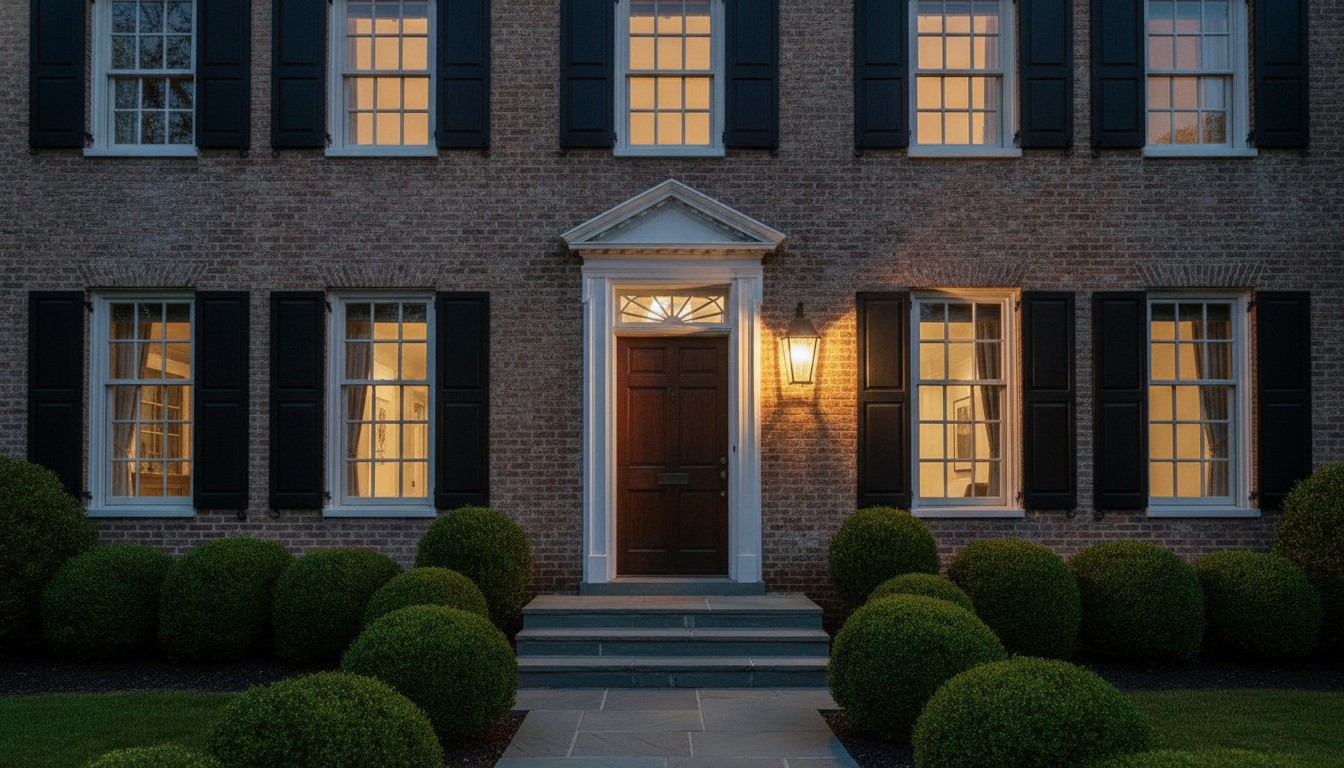
The architectural style is inherent in the very skeleton of a building: the shapes of windows, the profiles of moldings, and the lines of ceilings and doors. Well-chosen fixtures that meet the style requirements are always integrated smoothly into the room. When a fixture does not match the architectural style, it stands on the wall like a stranger. This compatibility has been preserved for many years since the architecture itself remains unchanged.
Matching lighting and architecture begins with an understanding of the architectural style and proceeds to the choice of the fixture family, scale, and finish. Designer collections such as Chapman & Myers lighting use traditional designs of historical lanterns, hall lights, and library sconces, proportions of which are derived from period buildings. In the same way, other designer fixture lines use this approach, allowing the buyer to make a connection between the fixture and the architectural style.
Architecture Sets the Rules for the Fixture
Every period house uses the language of light in its own way. Colonial Revival houses use seeded glass pendants at the front door and arms like candles in the dining room. Craftsman-style houses are perfect with mica shades, hammered copper, and box-like pendants that sit close to the beams on the ceiling. Federal-style houses need hurricane glass pendants, slender brass arms, and symmetry on a wall.
Flat ceilings, large glass panes, and simple trim require more simplicity in their fixture. A cylinder pendant in matte black fits well with a beam that has no molding. Ornamentation clashes with the simple design of such a setting. The less decorative the trim is, the less decorative the fixture should be.
Period Details Point to a Fixture Family
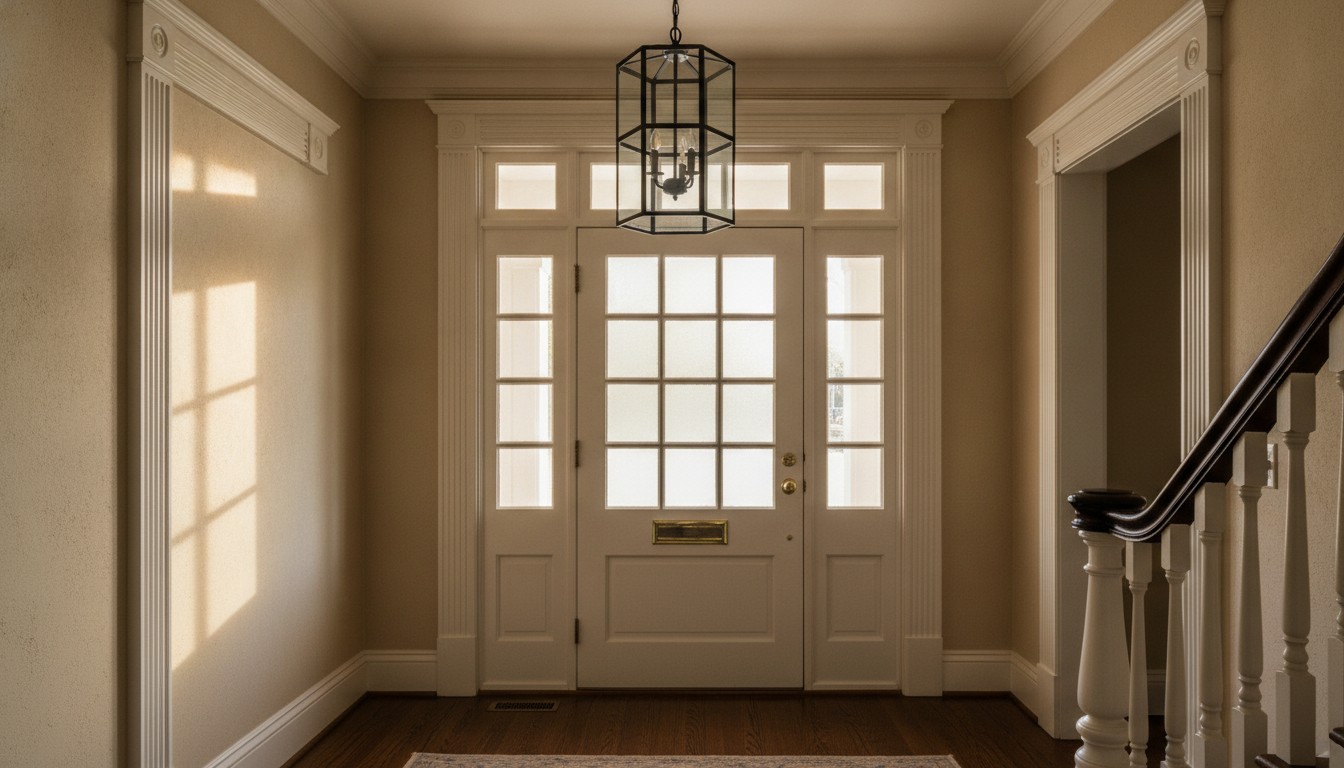
The entry provides the best hints and should thus be the first stop. Molded depths, muntin sizes, newel post designs, and hinges clearly indicate a common group of styles. The front door with glass panes is accompanied by a lantern that uses the same grid pattern. Deep crown molding supports a light whose arms remain visible.
Interiors take their cues from the entryway. Farmhouse kitchens use gooseneck lights made of galvanized metal above the sink. Bookshelves in a library need a swing-arm light with a fabric shade. It is essential to have the same family of shapes throughout the ground floor of the house.
Signs a Fixture Suits the House
A quick walk with a tape measure settles most questions. Four checks cover the fit.
- The glass style repeats the window glazing on the same wall
- The metal finish appears again in the door hardware close at hand
- The fixture height stays near a quarter of the front door height
- The arm profile follows a curve found in the stair railing
If three of the four checks pass, the piece belongs on that wall. A miss across most of the list, a canopy that overlaps trim, or a shade that crowds the molding signals the threshold for a swap. A replacement drawn from the same era family resolves it in one purchase, and the same method works for coordinating light fixtures across a whole home. Measurements written down ahead of the order save a return trip.
Scale Follows the Bones of the Room
Exterior sconces look best at about one-third the height of the front door. Hall lanterns run close to a quarter of the height of the door and hang about 7 feet from the ground. A 9-foot hall allows a slightly taller lantern.
For stair halls, the numbers are increased. A two-story entrance calls for a lantern that is level with the top landing, visible both from the front door and from the stairway. Dining rooms go by the width of the table and not the room. The tape placed at the desired height will help you see the impact before installation.
Finish Choices Echo the Original Hardware
Houses that have been around for some time always have something to say in terms of hardware present. Old or antique brass hardware goes well with brass fittings. Dark oak trim works well with oil-rubbed bronze. The combination of marble counters with white trim complements polished nickel.
The exterior finish not only responds to the style, but also to the weather elements. Black metal, copper, and bronze can handle the rain easily; thus, the finish darkens with every passing season. The copper lanterns appear fresh when new and gradually turn brown after many years.
A Licensed Electrician Handles Older Wiring
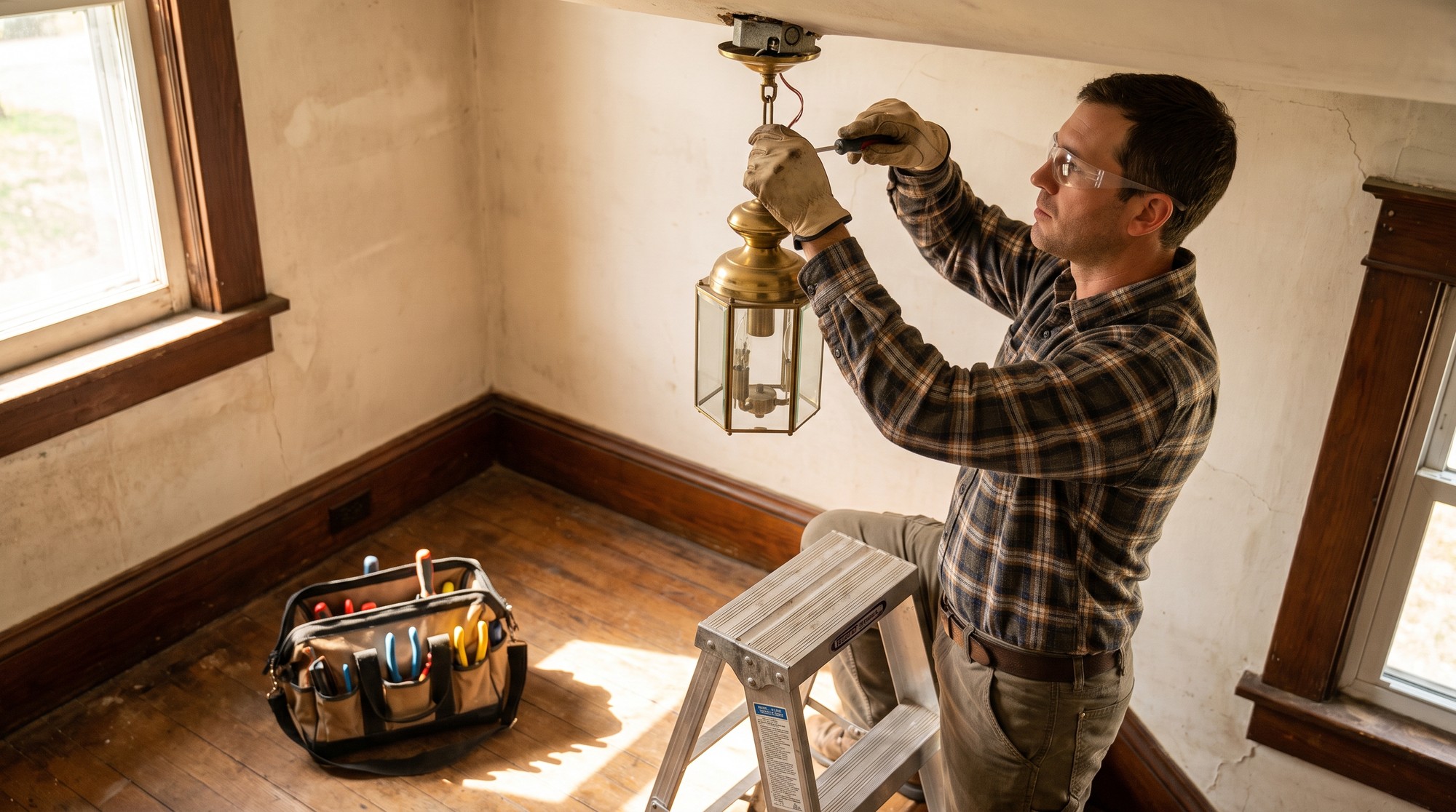
There are surprises waiting above the ceiling in older homes. Cloth-insulated wires, non-grounding boxes, and plaster ceilings with loose key plates are all problems that require a licensed electrician. The Electrical Safety Foundation International recommends an electrical inspection for any home that is 40 or more years old or that has had a major renovation, which is a sound habit before any new fixture goes up.
The electrician evaluates the box load capacity against the weight of the light fixture, wire condition, ground pathway, and dimmer compatibility. This takes the risk out of the job for homeowners. Careful hands secure the tall fixture so the thin glass panels are not damaged during wiring. An electrician verifies the hanging height of the fixture in the hallway, ensures level mounting of the canopy, and checks the operation of the dimmer over its full range. Homeowners keep the packaging until all parts are hung correctly.
Lighting stays in step with a house when the fixture family, the scale, and the finish answer what the architecture already states. Read the entry first, measure against the front door, then match the metal to the hardware close at hand. Designer lines such as Chapman & Myers lighting gather lantern, sconce, and pendant shapes drawn from period proportions, which gives an older home a full set of options in one place. A licensed electrician mounts each piece on a sound box, so the fixture hangs level in plaster for years of use. The reward shows at the threshold every evening: a light that looks original to the house.