
In 1994, Sony made a bold and unexpected entry into the gaming industry with the launch of the original PlayStation, forever changing the landscape of home entertainment, much like Microsoft’s Xbox would do seven years later. At a time when cartridges ruled the market and Nintendo held an iron grip on the industry, Sony bet everything on CD-ROM technology, a gamble that would ultimately redefine gaming as we know it.
Over the past three decades, PlayStation has grown from a single ambitious console into one of the most recognizable and influential brands in entertainment history. From the polygonal worlds of the PS1 to the ray-traced, 4K environments of the PS5 Pro, Sony has consistently pushed the boundaries of hardware innovation, game design, and digital ecosystems.
With landmark services like PlayStation Network, iconic franchises such as God of War, Uncharted, Gran Turismo, and The Last of Us, and groundbreaking hardware like the DualSense controller, PlayStation has shaped how millions of players experience interactive entertainment. This guide covers every PlayStation console ever released, from the original 1994 gray box to the cutting-edge PS5 Pro, complete with detailed specs, model comparisons, and the stories behind each generation.
The First Generation: PlayStation (PS1)
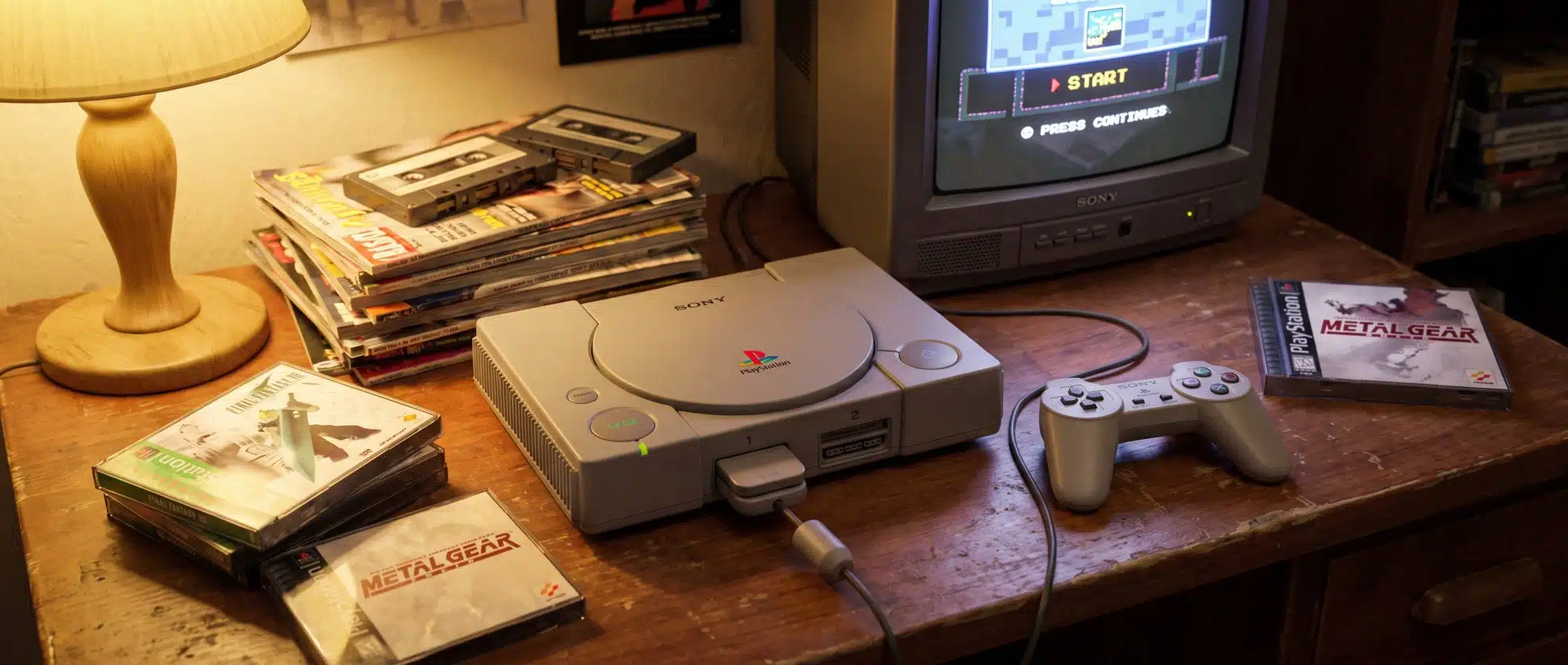
On December 3, 1994, Sony Computer Entertainment released the original PlayStation in Japan, marking the company’s first home video game console. The North American launch followed on September 9, 1995, with a retail price of $299, a moment Sony’s executives dramatically announced at E3 by simply saying “$299” and walking off stage to thunderous applause.
The PlayStation was a fifth-generation console that primarily competed with the Nintendo 64 and Sega Saturn. Its defining feature was the use of CD-ROM discs instead of cartridges, offering vastly more storage space: up to 650MB compared to the Nintendo 64’s 64MB cartridges. This allowed developers to include full-motion video, CD-quality audio, voice acting, and far more detailed 3D environments.
Technically, the PS1 featured a 32-bit RISC MIPS R3000A CPU clocked at 33 MHz, paired with a custom GPU operating at 33 MHz. It had 2 MB of EDO DRAM, 1 MB of VRAM, and used 1 MB memory cards for game saves. The console outputs video at resolutions up to 640×480 via S-Video or SCART.
Sony’s courting of third-party developers was a masterstroke. By the end of 1996, nearly 400 games were in development for the PlayStation, compared to just 200 for the Saturn and 60 for the Nintendo 64. This resulted in an extraordinary game library featuring legendary titles like Final Fantasy VII, Metal Gear Solid, Gran Turismo, Crash Bandicoot, Tekken 3, and Resident Evil 2.
The PlayStation went on to sell over 102.4 million units worldwide, making it the first console to surpass 100 million sales. Sony ceased production on March 23, 2006, more than 11 years after release and in the same year the PlayStation 3 debuted. Over 4,000 games were released with cumulative software sales of 962 million units. A fascinating piece of PlayStation history is the never-released “Nintendo PlayStation”, a prototype SNES with a built-in CD-ROM drive developed in partnership with Nintendo before the deal fell apart in 1991, prompting Sony to launch its own console independently. For the other half of that origin story, see our complete guide to Nintendo consoles.
A notable hardware variant was the Net Yaroze (1997), a matte-black PlayStation sold directly to hobbyists and students as an official development kit. Unlike standard retail consoles, it had no region lock and allowed users to program and run their own games on the console using a PC.
PS One (2000)
On July 7, 2000, Sony released a redesigned, slimmed-down version of the original PlayStation called the PS One, priced at $99.
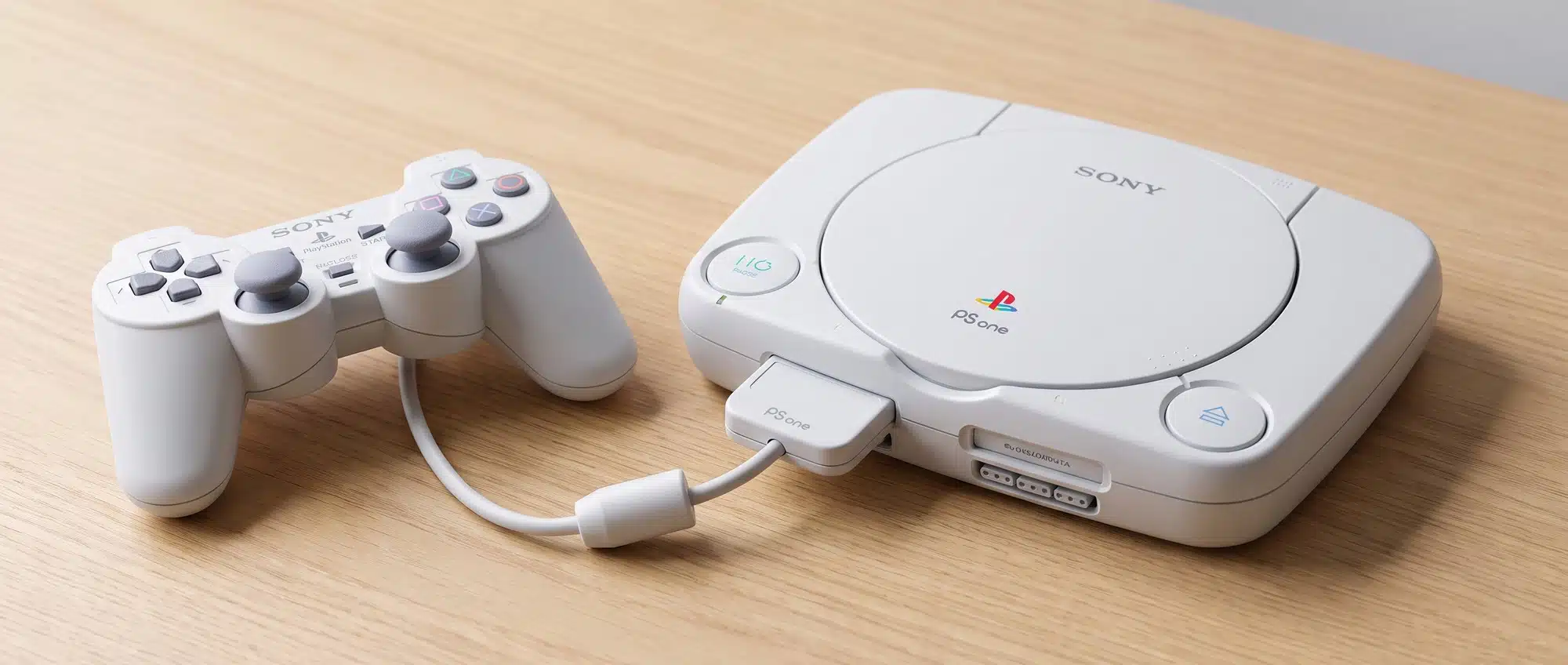
On July 7, 2000, Sony released a redesigned, slimmed-down version of the original PlayStation called the PS One, priced at $99. It featured the same internal hardware as the original but in a significantly smaller, white chassis. The PS One removed the parallel and serial ports from the rear and eliminated the reset button. An optional 5-inch LCD screen attachment (called the Combo) made it a portable gaming solution.
Remarkably, the PS One outsold all other consoles through the end of 2000, including Sony’s own PlayStation 2, proving the enduring appeal of the original. It sold 28.15 million units on its own, contributing to the 102.49 million total for the PS1 family.
| Model | Initial Release Date | CPU | RAM | Storage | Notable Changes |
|---|---|---|---|---|---|
| PlayStation (Original) | December 1994 | MIPS R3000A 33 MHz | 2 MB EDO DRAM | Memory Cards (1 MB) | Original gray chassis; Parallel/serial ports; Reset button |
| PS One | July 2000 | MIPS R3000A 33 MHz | 2 MB EDO DRAM | Memory Cards (1 MB) | Compact white chassis; No reset button; No parallel/serial ports; LCD Combo option |
Sony also released the PocketStation in Japan in 1999, a tiny handheld memory card with a monochrome LCD screen that could play mini-games downloaded from compatible PS1 titles and communicate with other PocketStations via infrared. In 2018, Sony released the PlayStation Classic, a miniature replica of the original PlayStation pre-loaded with 20 classic games, though it received mixed reviews due to its game selection and emulation quality.
The Second Generation: PlayStation 2

Sony unveiled the PlayStation 2 at the Tokyo Game Show on September 20, 1999, and released it in Japan on March 4, 2000, followed by North America on October 26, 2000. The PS2 was a monumental leap forward, offering a 64-bit Emotion Engine CPU running at 294 MHz, a custom Graphics Synthesizer GPU at 147 MHz, and 32 MB of RDRAM. It delivered a floating-point performance of 6.2 GFLOPS and could render up to 75 million polygons per second.
The PS2’s killer feature was its built-in DVD player, which made it not just a gaming console but a home entertainment hub. At $299, it was also significantly cheaper than standalone DVD players at launch. The console was backward compatible with virtually all original PlayStation games and supported PlayStation memory cards and controllers.
The PS2 was also the first PlayStation console to offer online gaming, though it required an external Network Adapter (sold separately) for the original model. By the time the PS2 Slim launched in 2004, online console gaming had matured significantly, driven largely by the success of Xbox Live, and the necessary components had shrunk enough for Sony to integrate a built-in Ethernet port directly into the Slim model.
Sales were staggering: the PS2 generated $250 million on its first day in Japan, demolishing the $97 million first-day record set by Sega’s Dreamcast. Over its lifespan, the PS2 became the best-selling video game console of all time, with over 160 million units sold as of March 2012. Over 3,800 game titles were released with more than 1.5 billion copies sold.
Iconic games included Grand Theft Auto: San Andreas (the best-selling PS2 game at 17.33 million copies), Final Fantasy X, Metal Gear Solid 2: Sons of Liberty, God of War, Kingdom Hearts, Devil May Cry, and Shadow of the Colossus.
PlayStation 2 Slim (2004)
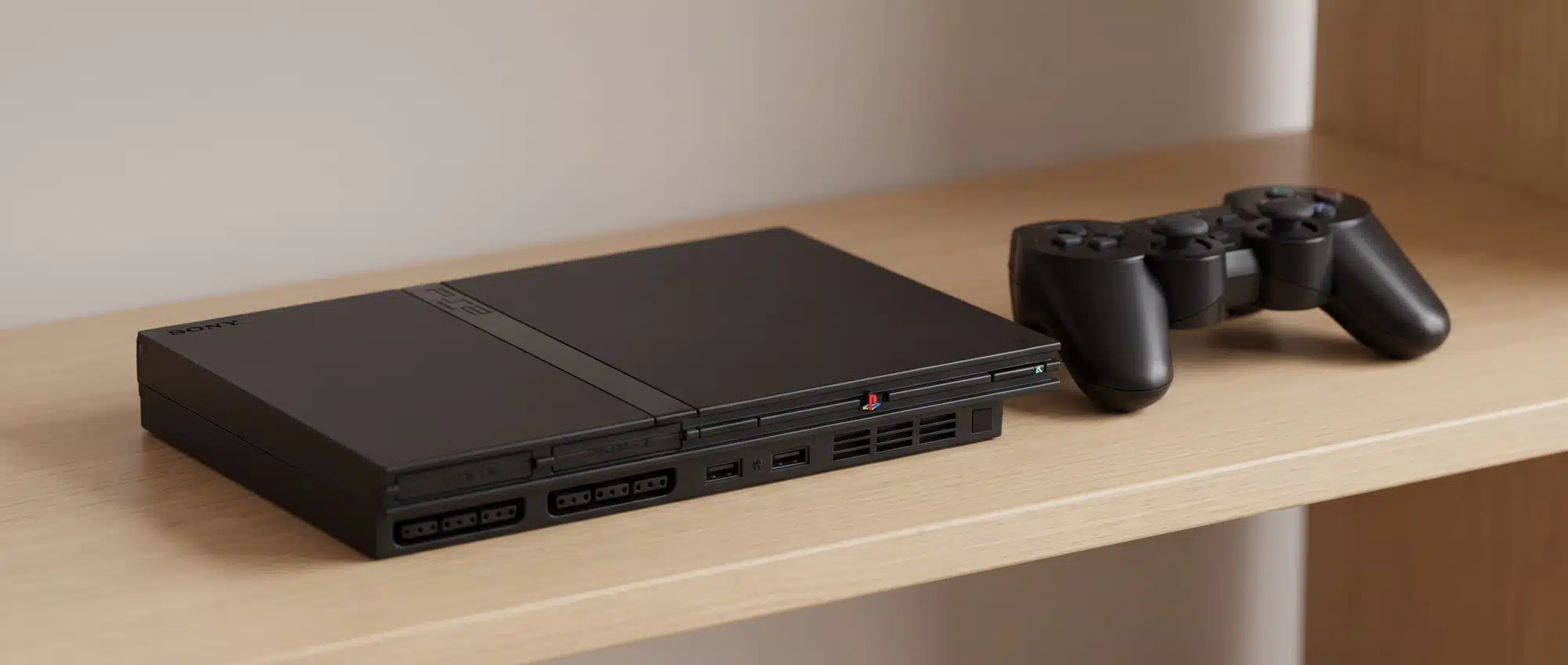
Released in October 2004 at $149, the PS2 Slim was a significantly smaller, thinner, and quieter revision. It featured a top-loading disc drive that fixed issues with dual-layer discs on the original model, a built-in Ethernet port, and reduced power draw. The Slim dropped the internal hard drive bay and the internal power supply in favor of an external AC adapter. Later revisions in 2007 further reduced weight by 33% using a smaller motherboard and a custom ASIC chip that combined the Emotion Engine, Graphics Synthesizer, and RDRAM into a single package.
Two other notable PS2-related devices deserve mention. The PSX (2003) was a Japan-exclusive digital video recorder with a built-in PS2, featuring a hard drive for recording TV and a redesigned interface, distinct from the PlayStation brand’s standard consoles. The Sony BRAVIA KDL-22PX300 (2010) was a UK-exclusive 22-inch LCD television with a fully integrated PlayStation 2 built into its base. It could play PS2 games and DVDs directly through the TV, making it a rare “official hybrid.”
| Model | Initial Release Date | CPU | RAM | Storage | Notable Changes |
|---|---|---|---|---|---|
| PlayStation 2 (Original) | March 2000 | MIPS R5900 294 MHz | 32 MB RDRAM | 40 GB HDD (optional, 2001) | DVD playback; 4 controller ports; 2 USB ports |
| PlayStation 2 Slim | October 2004 | MIPS R5900 294 MHz | 32 MB RDRAM | No HDD bay | Top-loading disc drive; Built-in Ethernet; External PSU; 33% smaller |
The Third Generation: PlayStation 3

The PlayStation 3 launched in Japan on November 11, 2006, and in North America on November 17, 2006. It was a technical tour de force and a commercial gamble. The PS3 introduced the Cell Broadband Engine, a revolutionary multi-core processor developed in collaboration with IBM and Toshiba, running at 3.2 GHz. The graphics were handled by an Nvidia/SCEI RSX GPU at 550 MHz. The console came with 256 MB of XDR RAM and featured a Blu-ray disc drive, making it the first console to use Blu-ray as its primary storage medium. The PS3 launched at a pivotal moment during the high-definition format war between Blu-ray and HD DVD, Sony’s inclusion of a Blu-ray player was a strategic move that ultimately helped Blu-ray prevail as the industry standard. At $499–$599, the PS3 was priced competitively against standalone Blu-ray players of the era, which often cost more and offered no gaming capabilities.
The PS3 also launched the PlayStation Network (PSN) in November 2006, bringing online multiplayer, digital game downloads, and streaming services to PlayStation for the first time. PSN was initially a free service, a stark contrast to Microsoft’s Xbox Live Gold subscription. Sony also introduced the PlayStation Store for digital game purchases, along with services like PlayStation Home (a social virtual world launched in 2008) and PlayStation Plus in June 2010, which offered free monthly games, exclusive discounts, and early access to demos.
As of 2026, PSN has evolved into a multi-tier subscription model. PlayStation Plus Essential ($9.99/month) offers online multiplayer, monthly games, and cloud storage. PlayStation Plus Extra ($14.99/month) adds a catalog of hundreds of PS4 and PS5 games. PlayStation Plus Premium ($17.99/month) adds cloud streaming, the Classics Catalog (PS1, PS2, PSP titles), and game trials. Sony’s online ecosystem now serves over 125 million monthly active users (as of March 2026), making it one of the largest gaming platforms in the world. Notably, Sony announced in March 2026 that it would phase out the “PSN” branding in favor of simply “PlayStation” to better reflect the breadth of its digital services.
Other innovations of the PS3 included built-in Wi-Fi, Bluetooth, and HDMI output supporting up to 1080p resolution.
However, the PS3’s launch was marred by its high price: $499 for the 20 GB model and $599 for the 60 GB model, which drew widespread criticism. The complex Cell architecture made development difficult for third-party studios, and early software lacked the quality expected from a next-generation console. Despite these struggles, the PS3 recovered over time, bolstered by the Slim revision and an eventual price drop to $299.
Iconic games included Grand Theft Auto V (the best-selling PS3 game at 21.3 million copies), The Last of Us, Uncharted 2: Among Thieves, Uncharted 3: Drake’s Deception, Gran Turismo 5, LittleBigPlanet, and Metal Gear Solid 4: Guns of the Patriots. The PS3 sold 87.4 million units over its lifespan, with 595 million games sold as of March 2012.
PlayStation 3 Slim (2009)
Released on September 1, 2009, the PS3 Slim was a major redesign that addressed nearly every complaint about the original. It was 32% smaller, 36% lighter, consumed 34% less power, and featured a redesigned cooling system. The Cell processor moved to a 45 nm manufacturing process, making it cooler and quieter. The RSX later moved to 40 nm. However, the Slim controversially removed backward compatibility with PS2 games, a feature that has never returned on any subsequent PlayStation model.
PlayStation 3 Super Slim (2012)
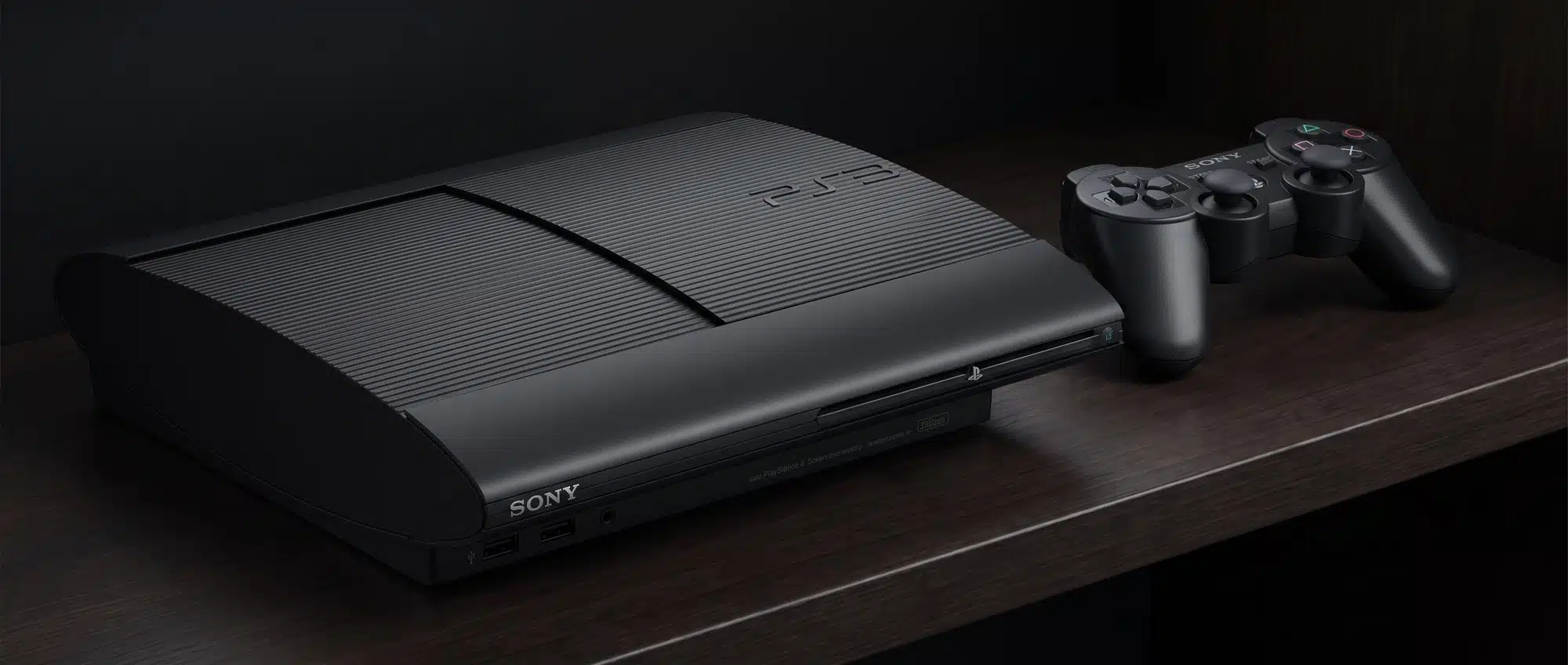
Released on September 25, 2012, starting at $269 for the 12 GB model, the PS3 Super Slim was the final hardware revision. It featured a top-loading Blu-ray drive (replacing the slot-loading mechanism), improved power efficiency, and an even slimmer design. It proved to be the most durable PS3 model due to its simplified disc drive mechanism and smaller body.
Sony also released the PlayStation 3D Display in 2011, a 24-inch 1080p LED monitor designed for PS3 that supported SimulView, allowing two players to see different full-screen images simultaneously while wearing polarized glasses, eliminating screen cheating in split-screen multiplayer.
| Model | Initial Release Date | CPU | RAM | Storage | Notable Changes |
|---|---|---|---|---|---|
| PS3 (Original “Fat”) | November 2006 | Cell BE 6-core 3.2 GHz | 256 MB XDR | 20/60/80 GB HDD | PS2 backward compatibility (early models); 4 USB ports; Flash card readers |
| PS3 Slim | September 2009 | Cell BE 8-core 3.2 GHz (45 nm) | 256 MB XDR | 120/160/250/320 GB HDD | 32% smaller, 36% lighter; No PS2 BC; Redesigned cooling; $299 launch price |
| PS3 Super Slim | September 2012 | Cell BE 8-core 3.2 GHz (45 nm) | 256 MB XDR | 12/250/500 GB | Top-loading Blu-ray drive; Most durable PS3; Streamlined design |
The Fourth Generation: PlayStation 4
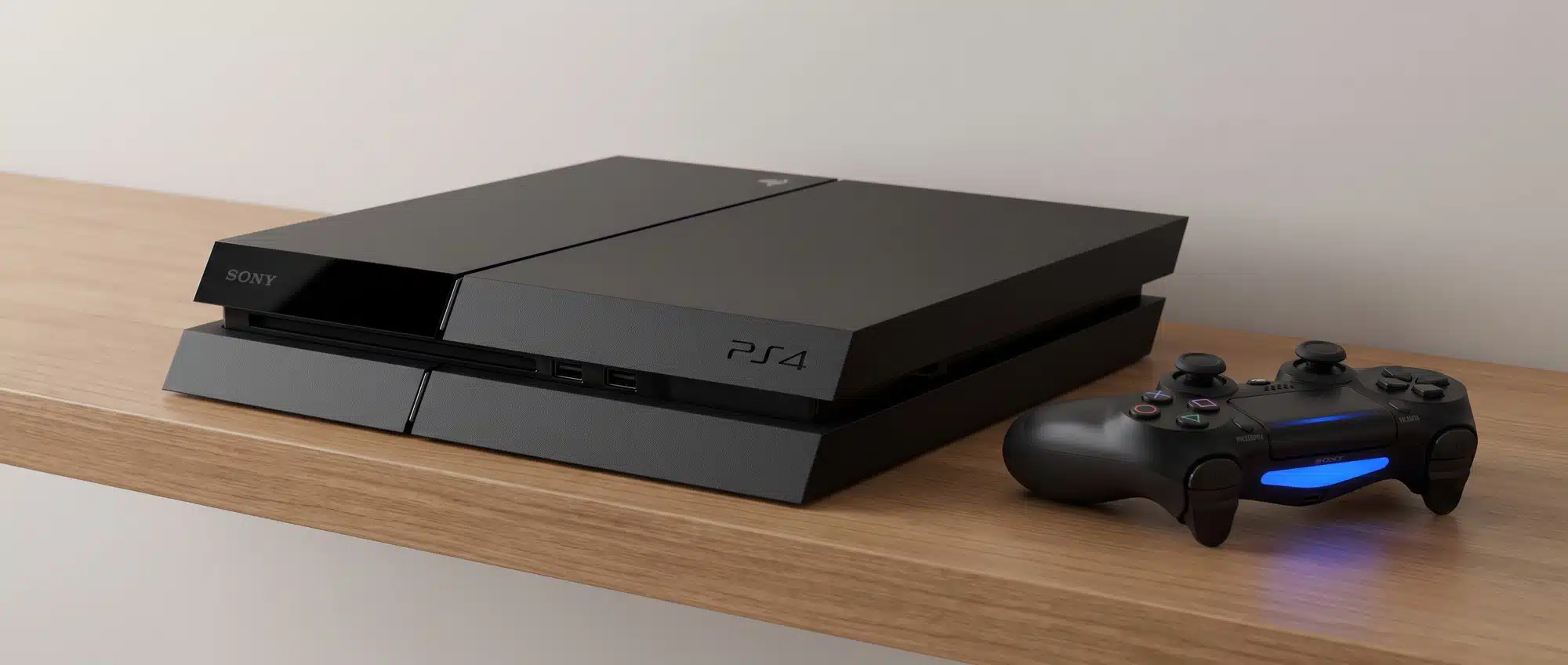
Released in North America on November 15, 2013, and in Europe on November 29, 2013, the PlayStation 4 was a decisive victory for Sony after the PS3’s rocky start. Sony learned from its mistakes: the PS4 used a familiar x86 architecture (an 8-core AMD Jaguar CPU at 1.6 GHz paired with an AMD GCN GPU delivering 1.84 TFLOPS), making it far easier for developers to optimize games. It came with 8 GB of GDDR5 RAM, a 500 GB hard drive, and a Blu-ray drive.
A significant change with the PS4 generation was that online multiplayer now required a PlayStation Plus subscription (unlike the PS3’s free online), matching Microsoft’s Xbox Live Gold model. This shift proved highly lucrative for Sony, with PS Plus subscriptions growing rapidly throughout the generation and funding the infrastructure for improved online services.
The PS4’s social features were also a major focus, including a dedicated Share button on the controller for instant gameplay capture and streaming. The DualShock 4 controller was a significant upgrade, featuring a more ergonomic design, a touchpad, a light bar, and a built-in speaker and headphone jack.
PlayStation Vue, a cloud-based TV streaming service, launched on the PS4 in 2015 (discontinued in 2020), and PlayStation Now expanded its cloud gaming library. Remote Play allowed PS4 games to be streamed to PlayStation Vita, PCs, and mobile devices.
The PS4 became a sales juggernaut, selling over 117.2 million units worldwide, making it the fourth best-selling console of all time. It boasted an extraordinary library of exclusive games including God of War (2018), Uncharted 4: A Thief’s End, Horizon Zero Dawn, Bloodborne, Spider-Man, The Last of Us Remastered, and Ghost of Tsushima.
PlayStation 4 Slim (2016)
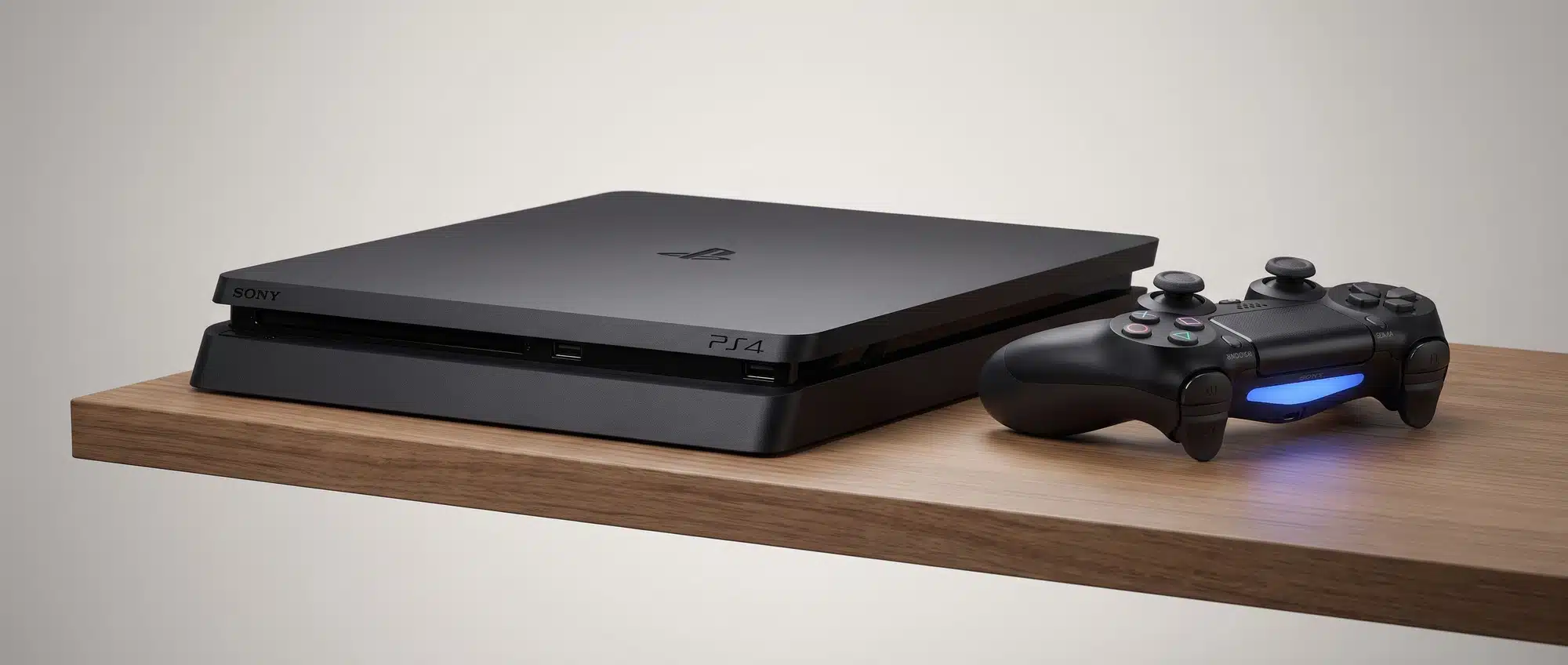
Released on September 15, 2016, at $299, the PS4 Slim was a smaller, more power-efficient revision with no performance changes. It featured a redesigned chassis, quieter cooling, and a streamlined appearance. The optical audio output was removed.
PlayStation 4 Pro (2016)
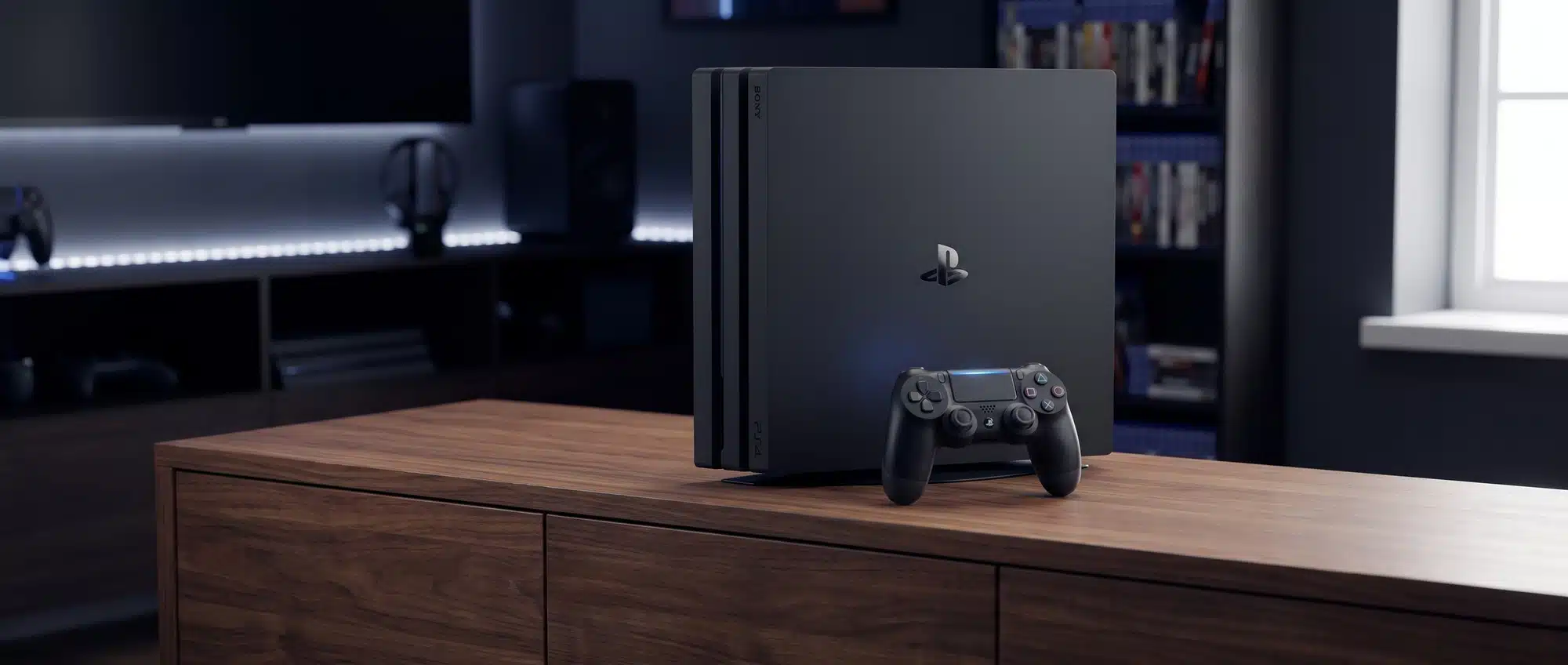
Released on November 10, 2016, the PS4 Pro was Sony’s first console to support 4K output. It doubled the GPU power of the standard PS4 (delivering 4.2 TFLOPS) and boosted the CPU clock speed from 1.6 GHz to 2.1 GHz, added support for HDR, and used PlayStation 4 Pro’s boosted frame rates for compatible titles. It was the first mid-generation “Pro” upgrade in PlayStation history, setting the template for the PS5 Pro that followed. The PS4 generation also featured several notable special editions, including a 20th Anniversary Edition in the original PlayStation gray (limited to 12,300 units worldwide) and a translucent blue 500 Million Limited Edition PS4 Pro celebrating over half a billion PlayStation consoles sold.
| Model | Initial Release Date | CPU | GPU | RAM | Storage | Notable Changes |
|---|---|---|---|---|---|---|
| PS4 (Original) | November 2013 | AMD Jaguar 1.6 GHz (8-core) | AMD GCN 1.84 TFLOPS | 8 GB GDDR5 | 500 GB / 1 TB HDD | Share button; DualShock 4; Social features |
| PS4 Slim | September 2016 | AMD Jaguar 1.6 GHz (8-core) | AMD GCN 1.84 TFLOPS | 8 GB GDDR5 | 500 GB / 1 TB HDD | 30% smaller; Quieter; Lower power draw; No optical audio |
| PS4 Pro | November 2016 | AMD Jaguar 2.1 GHz (8-core) | AMD Polaris 4.2 TFLOPS | 8 GB GDDR5 | 1 TB HDD | 4K upscaling; HDR support; Boosted frame rates; 2x GPU power |
The Fifth Generation: PlayStation 5
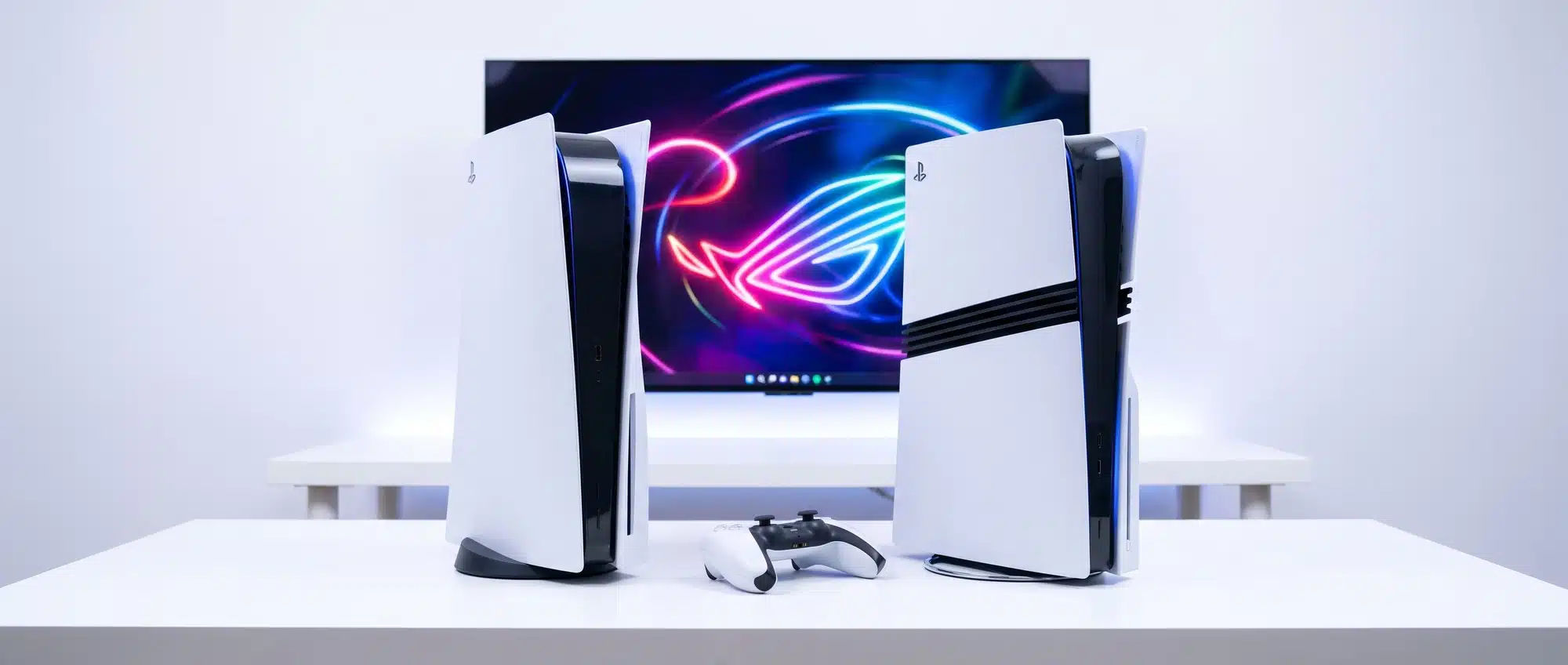
The PlayStation 5 launched on November 12, 2020, in select regions and worldwide on November 19, 2020. It represented the most significant generational leap in PlayStation history, featuring a custom 8-core AMD Zen 2 CPU at 3.5 GHz, an RDNA 2 GPU delivering 10.28 TFLOPS, 16 GB of GDDR6 RAM, and a blazing-fast custom 825 GB NVMe SSD that virtually eliminated load times.
The PS5’s revolutionary DualSense controller did not invent haptic feedback, which has existed in various forms for decades, but it perfected it for mainstream console gaming. Instead of the crude spinning “rumble” motors (ERM) used since the 1990s, the DualSense uses Voice Coil Actuators, highly precise components that can output exact waveforms rather than just shaking. This allows players to feel the distinct texture of walking through sand versus sliding on ice, or the individual patter of raindrops. The controller also introduced Adaptive Triggers on the L2 and R2 buttons, which dynamically add physical tension and resistance to simulate everything from drawing a bowstring to the gritty pull of a trigger. For those looking to optimize their online experience, configuring PS5 proxy server settings can help unlock smoother gameplay The console also supports ray tracing, 120 FPS output, 3D audio via the Tempest Engine, and native 4K gaming.
As of March 31, 2026, the PS5 has sold 93.7 million units worldwide, officially surpassing the PlayStation 3’s 87.4 million lifetime sales. It remains on track to potentially overtake the PS4’s 117.2 million record. The PS5 generation also saw Sony consolidate all its subscription services into a unified PlayStation Plus tiered system (Essential, Extra, and Premium), combining the benefits of the old PS Plus with the cloud streaming and game catalog of PlayStation Now.
Unlike the Xbox Series X/S with its proprietary expansion cards, the PS5 offers a standard internal M.2 NVMe SSD slot (PCIe Gen 4) for user-installable storage expansion, supporting drives from brands like Samsung, WD Black, and Seagate with capacities up to 8 TB. This makes expanding PS5 storage significantly more affordable and flexible than Microsoft’s approach. External USB drives are also supported for storing and playing supported PS4 games or for cold storage of PS5 titles. PlayStation Plus subscribers also receive cloud storage for game saves (up to 100 GB on PS5), ensuring progress is safely backed up across devices.
Key exclusive titles include God of War Ragnarök, Spider-Man 2, Horizon Forbidden West, Ratchet & Clank: Rift Apart, Demon’s Souls, Returnal, and Astro’s Playroom.
PlayStation 5 Digital Edition (2020)

Alongside the standard PS5, Sony released a Digital Edition at $399, a disc-free version with the same internal hardware. It offered a 5% lighter chassis with a symmetrical design. In 2025, Sony released a Japan-only budget Digital Edition at a lower price point, hard-locked to the Japanese language to prevent export and scalping.
PlayStation 5 Slim (2023)
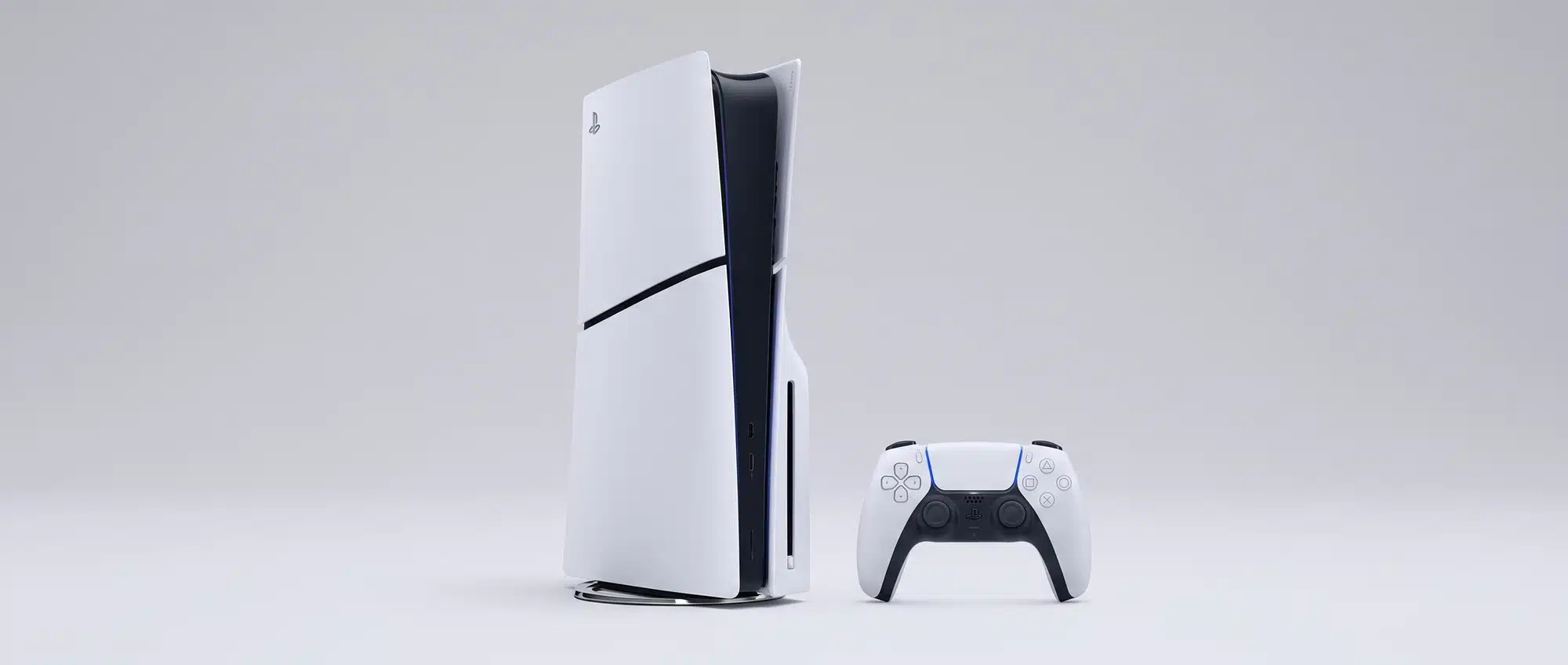
Released in November 2023 starting at $449.99 (digital) and $499.99 (disc), the PS5 Slim brought a 30% volume reduction, a modular disc drive (sold separately and attachable), and a 1 TB SSD upgrade. The hardware remained identical, but the streamlined design and replaceable side plates made it far more TV-friendly.
PlayStation 5 Pro (2024)
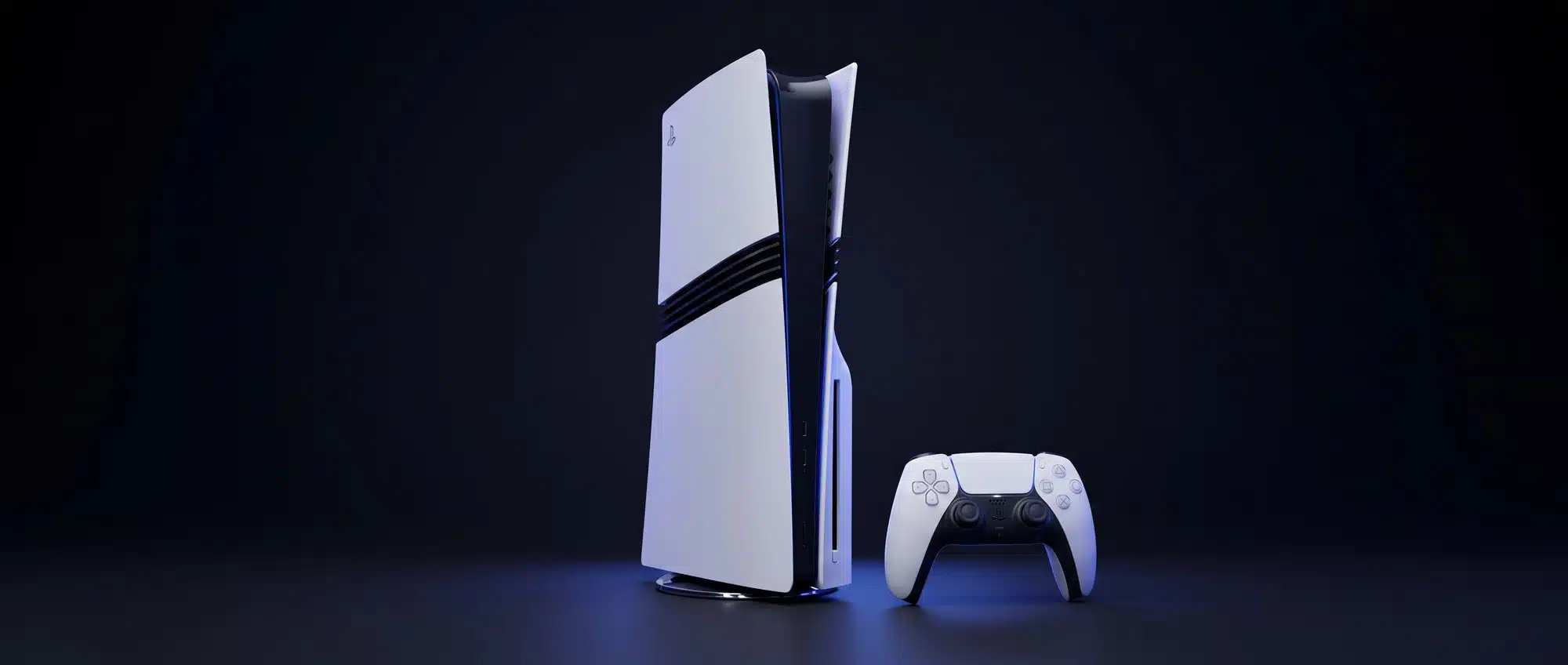
Released on November 7, 2024, at $699.99, the PS5 Pro is the most powerful PlayStation console ever constructed. Unveiled by lead architect Mark Cerny, the PS5 Pro features a GPU with 67% more compute units than the standard PS5, 28% faster memory, and a groundbreaking AI-driven upscaling technology called PlayStation Spectral Super Resolution (PSSR), similar to NVIDIA DLSS and AMD FSR.
These upgrades deliver a 45% increase in rendering speed fuelled by both the 67% larger GPU and a higher CPU clock speed of 3.85 GHz (up from 3.5 GHz on the standard PS5), double or even triple the ray tracing performance, and significantly improved frame rates at high resolutions. The PS5 Pro includes a 2 TB SSD and does not include a disc drive (purchased separately).
| Model | Initial Release Date | CPU | GPU | RAM | Storage | Notable Changes |
|---|---|---|---|---|---|---|
| PS5 (Standard) | November 2020 | AMD Zen 2 3.5 GHz (8-core) | RDNA 2 10.28 TFLOPS | 16 GB GDDR6 | 825 GB NVMe SSD | DualSense; Ray tracing; 4K/120 FPS; Ultra-fast SSD |
| PS5 Digital Edition | November 2020 | AMD Zen 2 3.5 GHz (8-core) | RDNA 2 10.28 TFLOPS | 16 GB GDDR6 | 825 GB NVMe SSD | No disc drive; $399 launch price; Symmetrical design |
| PS5 Slim | November 2023 | AMD Zen 2 3.5 GHz (8-core) | RDNA 2 10.28 TFLOPS | 16 GB GDDR6 | 1 TB NVMe SSD | 30% smaller; Modular disc drive; Replaceable side plates |
| PS5 Pro | November 2024 | AMD Zen 2 3.85 GHz (8-core) | RDNA 2+ 16.7 TFLOPS (67% more CUs) | 16 GB GDDR6 (28% faster) | 2 TB NVMe SSD | PSSR AI upscaling; 45% faster rendering; 2-3x ray tracing; $699.99 |
Sony has also released several special edition PS5 bundles and accessories, notably the PlayStation 30th Anniversary Collection in November 2024, featuring the original PlayStation gray colorway across the PS5, PS5 Pro, DualSense, and PlayStation Portal. Customizable console covers (sold separately) allow users to swap colors such as Midnight Black, Cosmic Red, and Nova Pink on the standard and Slim models.
PlayStation Consoles Comparison: All Generations at a Glance
| Console | Release Year | CPU | GPU | RAM | Storage | Max Resolution | Units Sold | Launch Price |
|---|---|---|---|---|---|---|---|---|
| PlayStation / PS One | 1994 / 2000 | MIPS R3000A 33 MHz | Custom 33 MHz | 2 MB EDO DRAM | Memory Cards (1 MB) | 640×480 (SD) | 102.4M | $299 |
| PS2 / PS2 Slim | 2000 / 2004 | MIPS R5900 294 MHz | Graphics Synthesizer 147 MHz | 32 MB RDRAM | 40 GB HDD (opt.) / None | 1280×720 (HD) | 160M+ | $299 |
| PS3 / Slim / Super Slim | 2006 / 2009 / 2012 | Cell BE 3.2 GHz | Nvidia RSX 550 MHz | 256 MB XDR | 20–500 GB HDD | 1920×1080 (Full HD) | 87.4M | $499–$599 |
| PS4 / PS4 Slim | 2013 / 2016 | AMD Jaguar 1.6 GHz (8-core) | AMD GCN 1.84 TFLOPS | 8 GB GDDR5 | 500 GB / 1 TB HDD | 1080p | 117.2M (all PS4) | $399 / $299 |
| PS4 Pro | 2016 | AMD Jaguar 2.1 GHz (8-core) | AMD Polaris 4.2 TFLOPS | 8 GB GDDR5 | 1 TB HDD | 3840×2160 (4K upscaled) | Included above | $399 |
| PS5 / Digital / Slim | 2020 / 2023 | AMD Zen 2 3.5 GHz (8-core) | RDNA 2 10.28 TFLOPS | 16 GB GDDR6 | 825 GB / 1 TB NVMe SSD | 3840×2160 (Native 4K) | 93.7M+ (all PS5) | $399–$500 |
| PS5 Pro | 2024 | AMD Zen 2 3.85 GHz (8-core) | RDNA 2+ 16.7 TFLOPS | 16 GB GDDR6 (faster) | 2 TB NVMe SSD | 3840×2160 (4K, PSSR upscaled) | Included above | $699 |
PlayStation Cameras: EyeToy, PS Eye, and the Evolution of Camera Gaming
Just as Microsoft brought motion gaming to Xbox with Kinect, Sony explored camera-based gaming across multiple generations with a series of increasingly sophisticated camera peripherals.
EyeToy (PS2, 2003)
Released in 2003 for the PlayStation 2, the EyeToy was a small USB camera that brought motion-controlled gaming to millions. Using computer vision technology, the EyeToy could detect player movement and translate it into on-screen action. Games like EyeToy: Play, EyeToy: AntiGrav, and EyeToy: Kinetic allowed players to physically interact with games by waving their hands, kicking, and dodging, a novel concept at the time. The EyeToy sold over 10.5 million units, making it one of the most successful camera peripherals in gaming history.
PlayStation Eye (PS3, 2007)
Launched alongside the PS3 in 2007, the PlayStation Eye was a substantial upgrade over the EyeToy. It captured video at 640×480 at 60 fps (or 320×240 at 120 fps) and featured a four-capsule microphone array for directional voice detection and echo cancellation. The PlayStation Eye was also four times the resolution and twice as light-sensitive as its predecessor.
The PlayStation Eye was essential for the PlayStation Move motion controller system, launched in September 2010. The PlayStation Move consisted of a wand-like controller with a glowing colored orb at the tip, tracked by the PS Eye camera, along with a Navigation controller and the PlayStation Sharp Shooter accessory. Sony sold over 15 million Move controllers within its first two years, making it a credible competitor to the Nintendo Wii and Microsoft Kinect. The Move was used in games like EyePet, Start the Party!, Sports Champions, Beat Sketcher, and even integrated into major titles like Resident Evil 5: Gold Edition and Heavy Rain.
PlayStation Camera (PS4, 2013)
Released alongside the PS4 in 2013, the PlayStation Camera featured dual 1280×800 cameras with an 85-degree field of view, enabling depth perception similar to the Xbox Kinect. It included a four-channel microphone array for noise reduction and voice commands. The camera was used for PlayStation VR head tracking, broadcasting gameplay, and games like Just Dance and The Playroom. However, it was less central to the PS4 experience than Sony initially envisioned.
PS5 HD Camera (2020)
The PS5 HD Camera is a 1080p camera designed primarily for content creators and streamers. It features a built-in adjustable stand that clips onto the PS5 or sits on a desk and integrates with the PS5’s Create button for easy broadcasting. Unlike its predecessors, the PS5 HD Camera is not required for PlayStation VR2, which uses its own inside-out tracking cameras built into the headset, and has seen more limited game integration.
PlayStation VR: Virtual Reality Gaming
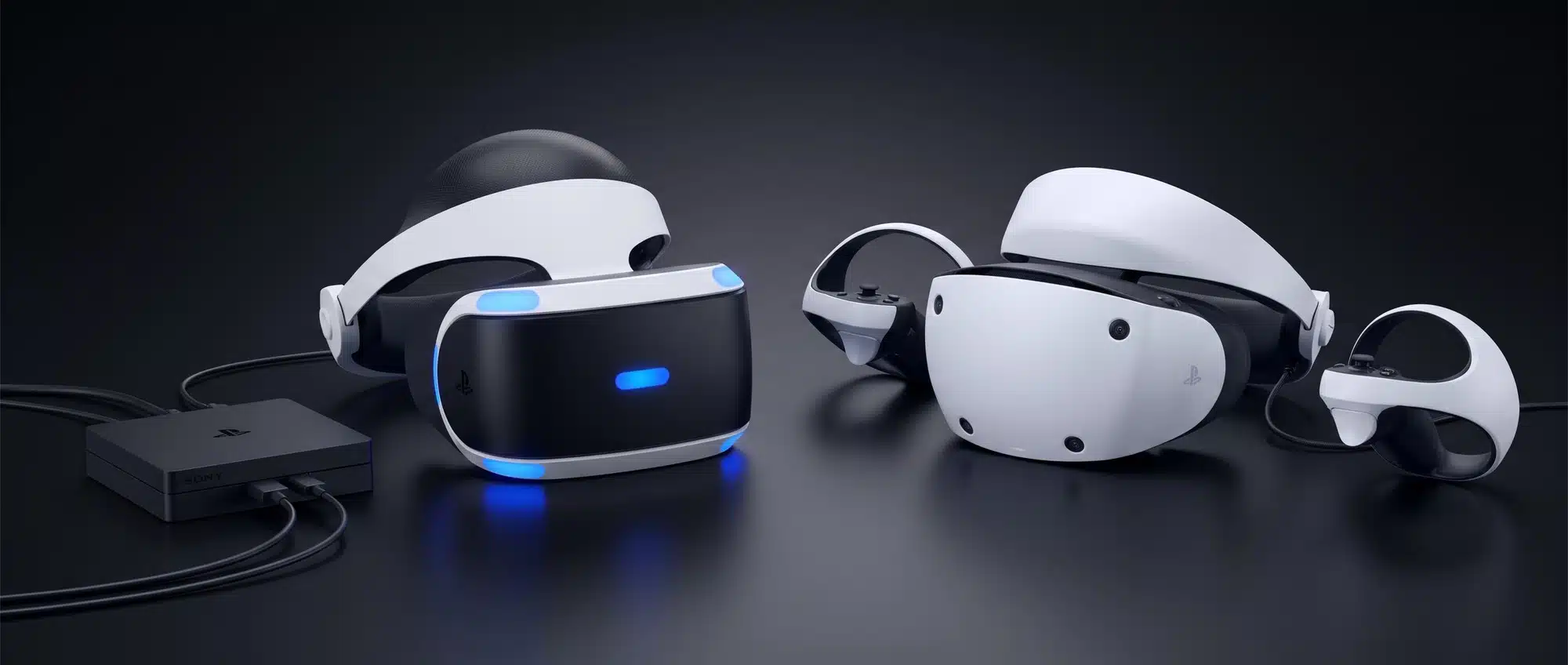
While Microsoft abandoned VR support for Xbox (limiting it to a static virtual screen), Sony invested heavily in virtual reality across two generations, making PlayStation one of the most accessible platforms for high-quality VR gaming.
PlayStation VR (PSVR, 2016)
Launched on October 13, 2016, the original PlayStation VR was Sony’s first entry into virtual reality. It featured a 5.7-inch OLED display delivering 1920×1080 resolution (960×1080 per eye) with a 100-degree field of view and a 120 Hz refresh rate. The headset used the PlayStation Camera for positional tracking and relied on PlayStation Move controllers or the standard DualShock 4 for input.
PSVR was a remarkable success for its generation, selling over 5 million units by 2019, making it the best-selling premium VR headset at the time. It was significantly more affordable than PC-based competitors like the HTC Vive and Oculus Rift, requiring only a PS4 and a PS Camera to get started. Key titles included Astro Bot Rescue Mission, Beat Saber, Resident Evil 7: Biohazard (fully playable in VR), Blood & Truth, Superhot VR, and Firewall Zero Hour. The headset was also compatible with PS5 via a free adapter, allowing existing PSVR owners to continue playing on the new console.
PlayStation VR2 (PSVR2, 2023)
Released on February 22, 2023, at $549.99, the PlayStation VR2 represents a generational leap over its predecessor. It features a 2000×2040 resolution per eye (4K HDR OLED), a 110-degree field of view, and support for 90/120 Hz refresh rates. Unlike the original PSVR, the PSVR2 uses inside-out tracking, meaning the headset tracks its own position via four built-in cameras, eliminating the need for an external camera or sensors.
The PSVR2 introduced several groundbreaking features: foveated rendering (which tracks where your eyes are looking and renders only that area in full detail, dramatically improving performance), eye tracking for both menu navigation and gameplay interaction, headset haptic feedback (a built-in motor that vibrates in sync with in-game action), and the redesigned PlayStation VR2 Sense controllers (which feature adaptive triggers, haptic feedback, and finger-touch detection similar to the DualSense).
The headset also includes a “see-through” view that lets you see your real-world surroundings without removing the headset, and cinematic mode for playing non-VR games on a virtual screen. Key launch and ongoing titles include Horizon Call of the Mountain, Gran Turismo 7 (fully playable in VR), Resident Evil Village, Resident Evil 4 Remake, No Man’s Sky, and Kayak VR: Mirage. Despite mixed sales reports, the PSVR2 remains the most technologically advanced console VR system on the market.
PlayStation Handhelds: PSP, PS Vita & PS Portal
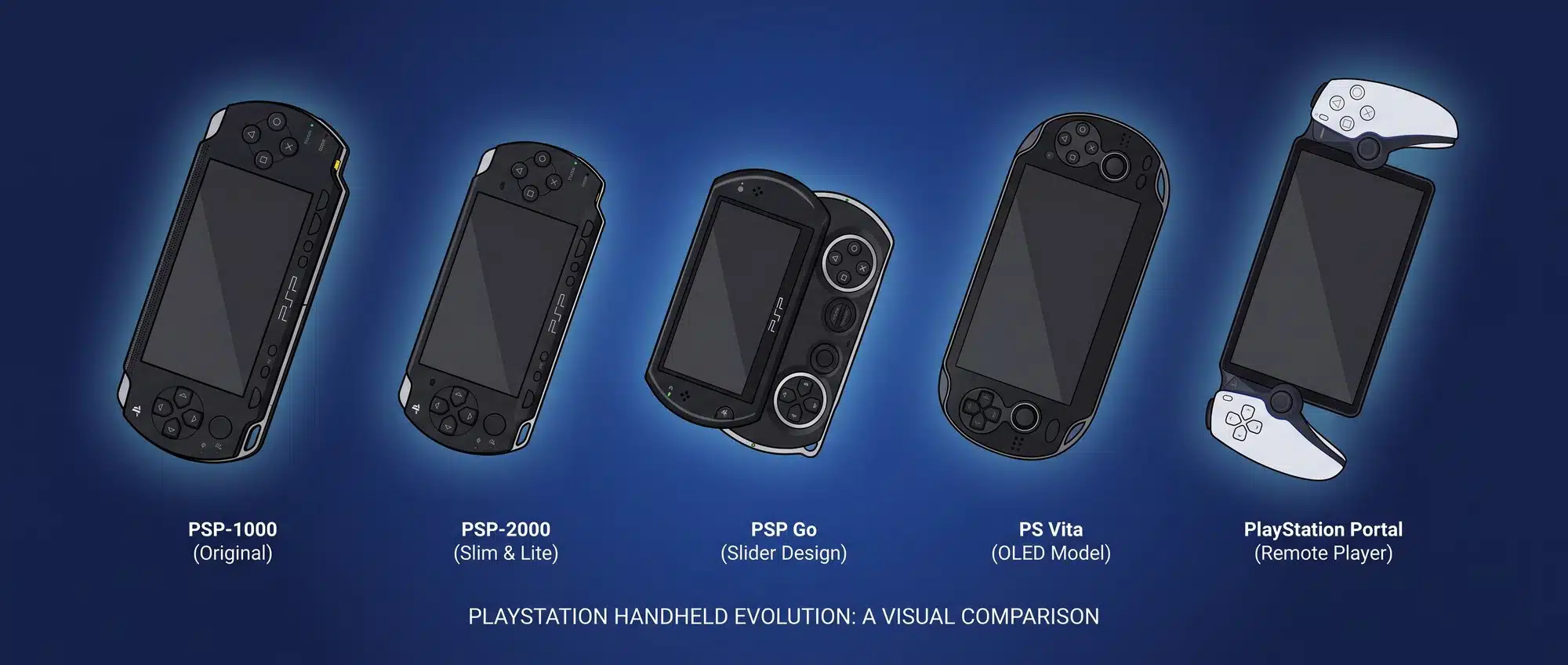
Beyond its home consoles, Sony has made several notable forays into handheld gaming and handheld PCs, with mixed commercial results but a lasting impact on portable gaming.
PlayStation Portable (PSP)
Released in Japan on December 12, 2004, and worldwide in March 2005, the PSP was Sony’s first handheld console and a direct competitor to Nintendo’s DS. It was a technical marvel for its time, featuring a 333 MHz MIPS R4000 CPU, a custom GPU, 32 MB of RAM, and a 4.3-inch widescreen LCD display at 480×272 resolution. Games were distributed on Universal Media Discs (UMDs). The PSP also supported Wi-Fi, web browsing, music, and video playback, making it a multimedia powerhouse.
The PSP went through several revisions: the original PSP-1000, the slimmer PSP-2000 (2007), the PSP-3000 with a brighter screen (2008), the unusual slider-style PSP Go (2009) with no UMD drive, and the budget PSP Street (E-1000, 2011) which stripped out Wi-Fi for a lower price point.
In 2011, Sony also partnered with Sony Ericsson on the Xperia Play, a smartphone running Android with a slide-out gamepad featuring the iconic PlayStation face buttons and D-pad. It was the first “PlayStation Certified” device and could play select PS1 classics downloaded from the PlayStation Store, though it failed to launch a lasting brand. Despite fierce competition, the PSP sold 82 million units worldwide, making it one of the most successful handheld consoles ever.
Key games included Grand Theft Auto: Liberty City Stories (the best-selling PSP game at 8 million copies), God of War: Chains of Olympus, Crisis Core: Final Fantasy VII, Monster Hunter Freedom Unite, and Patapon.
PlayStation Vita (PS Vita)
Released on December 17, 2011, in Japan and February 22, 2012, worldwide, the PS Vita was Sony’s most ambitious handheld. It featured a stunning 5-inch OLED display (later LCD on the PCH-2000 model) at 960×544 resolution, a quad-core ARM Cortex-A9 CPU, a quad-core PowerVR SGX543MP4+ GPU, 512 MB of RAM, dual analog sticks, a 5-inch multi-touch capacitive touchpad, a rear touch panel, and front/rear cameras. It was, by far, the most advanced portable gaming system on the market at launch.
However, the Vita struggled commercially due to high-priced proprietary memory cards, a lack of strong first-party support, and the growing dominance of smartphone gaming. Unlike the PSP, the PS Vita used proprietary flash-based game cards and had no UMD drive, meaning PSP games could only be played through digital downloads from the PlayStation Store (select titles only, not the full PSP library). Sony discontinued the Vita on March 1, 2019, with estimated sales of around 16 million units, a fraction of the PSP’s success.
Notable games include Uncharted: Golden Abyss, Persona 4 Golden, Gravity Rush, Tearaway, and Wipeout 2048.
Sony also released the PlayStation TV (Vita TV in Asia) in 2013, a micro-console that allowed playing select PS Vita, PSP, and PS1 games on a TV using a DualShock 3 or 4 controller. It also supported PlayStation Now cloud streaming, but its limited game compatibility held back its commercial potential.
PlayStation Portal (2023)
Released in November 2023 at $199.99, the PlayStation Portal is Sony’s most recent handheld, but with a crucial difference. It is not a standalone gaming device; rather, it’s a Remote Player that streams games from a PS5 over Wi-Fi. Featuring an 8-inch LCD screen at 1080p/60 FPS, a Snapdragon 680 processor, and all the features of a DualSense controller (haptic feedback and adaptive triggers), the Portal has found a niche audience for players who want to play their PS5 games anywhere with a broadband internet connection, at home, at a hotel, or on another trusted network. It is not a standalone device and requires a PS5 to function.
| Model | Release Date | CPU | Display | Units Sold | Notable Changes |
|---|---|---|---|---|---|
| PSP-1000 (Original) | December 2004 | MIPS R4000 333 MHz | 4.3″ LCD 480×272 | 82M (total) | UMD drive; Wi-Fi; Multimedia |
| PSP-2000 (Slim & Lite) | September 2007 | MIPS R4000 333 MHz | 4.3″ LCD 480×272 | 33% lighter; Video-out; Faster loading | |
| PSP-3000 (Brite) | October 2008 | MIPS R4000 333 MHz | 4.3″ LCD 480×272 (brighter) | Improved screen color; Built-in mic | |
| PSP Go | October 2009 | MIPS R4000 333 MHz | 3.8″ LCD 480×272 (slider) | No UMD; 16 GB internal; Bluetooth; Slider design | |
| PSP Street (E-1000) | 2011 | MIPS R4000 333 MHz | 4.3″ LCD 480×272 | Budget model; No Wi-Fi; Matte finish | |
| PS Vita PCH-1000 | December 2011 | Quad-core Cortex-A9 | 5″ OLED 960×544 | ~10M | Dual analog; Touchpad front & rear; OLED display |
| PS Vita PCH-2000 | 2013 (Japan) | Quad-core Cortex-A9 | 5″ LCD 960×544 | ~6M | 1 GB internal storage; LCD; Micro USB; Slimmer |
| PlayStation Portal | November 2023 | Snapdragon 680 | 8″ LCD 1080p | N/A | Remote play only; DualSense features; Wi-Fi streaming |
Frequently Asked Questions
How many PlayStation consoles are there?
Sony has released five home console generations (PS1, PS2, PS3, PS4, PS5) and three handheld platforms (PSP, PS Vita, PS Portal). Across all these, there are over 20 distinct PlayStation models spanning original, Slim, Pro, digital, and portable variants. The five home console generations include models such as the PS1, PS One, PS2, PS2 Slim, PS3 (original), PS3 Slim, PS3 Super Slim, PS4, PS4 Slim, PS4 Pro, PS5, PS5 Digital Edition, PS5 Slim, and PS5 Pro. The handheld family includes the PSP-1000, PSP-2000, PSP-3000, PSP Go, PSP Street, PS Vita PCH-1000, PS Vita PCH-2000, and the PlayStation Portal.
Which is better, PS4 or PS5?
The PS5 is significantly more powerful, with a much faster SSD (reducing load times from minutes to seconds), ray tracing support, 4K output at up to 120 FPS, and the innovative DualSense controller. However, the PS4 has a vastly larger and more affordable game library. For most gamers, the PS5 is the better choice, especially with its backward compatibility with nearly all PS4 games.
Is there a PS6 coming out?
Sony has not officially announced the PlayStation 6, but substantial leaks and industry reports paint a detailed picture of what is coming. According to multiple sources, Sony is pursuing an ambitious three-tier hardware strategy for its next generation, reportedly including a PS6 Lite (budget model), a PS6 Standard or Pro (premium model), and a dedicated native handheld companion codenamed “Project Canis.”
On the hardware front, the PS6 is expected to feature a custom AMD Zen 6 CPU architecture paired with RDNA 5 graphics, dedicated “Neural Arrays” for built-in AI upscaling (a next-generation version of PSSR), and 32 GB of DDR7 RAM. These components would represent a massive generational leap over the PS5’s Zen 2 and RDNA 2 architecture.
Regarding the release window, the PS6 was initially rumored for a 2027 launch, but component shortages, particularly around memory procurement, have reportedly pushed the timeline to late 2028 or even 2029. Price estimates vary widely by model, from around $350 for the Lite tier up to $999 for the Pro or Orion model. The PS5 Pro (released November 2024 at $699.99) effectively extends the current generation’s lifecycle while Sony prepares its next-generation platform.
Which PlayStation has backward compatibility?
Backward compatibility across PlayStation consoles is complex. Here is how each generation handles it:
- PlayStation 2: The PS2 played virtually all original PlayStation games natively, along with supporting PS1 memory cards and controllers. This was a major selling point at launch and eased the transition for millions of PS1 owners.
- PlayStation 3: Early “fat” PS3 models (20 GB and 60 GB) included full hardware-based backward compatibility for both PS1 and PS2 games via the inclusion of the Emotion Engine and Graphics Synthesizer chips. Later 80 GB models swapped to software emulation for PS2 games, which has reduced compatibility. The PS3 Slim (2009) and Super Slim (2012) completely dropped PS2 backward compatibility (a feature that has never returned on any subsequent PlayStation model). All PS3 models could play PS1 games.
- PlayStation 4: The PS4 could not play PS1, PS2, or PS3 discs natively. Sony instead offered select PS2 titles re-released digitally via the PlayStation Store with trophy support and upscaled resolutions. A small number of PS3 games were made available through PlayStation Now (later part of PS Plus Premium) cloud streaming.
- PlayStation 5: The PS5 can play the vast majority of PS4 games natively (over 99% of the PS4 library), often with improved load times, higher resolutions, and more stable frame rates thanks to Game Boost. However, the PS5 does not support PS3, PS2, or PS1 discs. Select classic titles from all previous generations are available through PlayStation Plus Premium’s cloud streaming and Classics Catalog.
| Console | PS1 Games | PS2 Games | PS3 Games | PS4 Games | PS5 Games | Method |
|---|---|---|---|---|---|---|
| PlayStation 2 | ✅ | ✅ (native) | ❌ | ❌ | ❌ | Hardware / native |
| PS3 (Fat, early) | ✅ | ✅ (hardware) | ✅ (native) | ❌ | ❌ | Hardware EE+GS chip |
| PS3 (Fat, later) | ✅ | ⚠️ (software, partial) | ✅ (native) | ❌ | ❌ | Software emulation |
| PS3 Slim / Super Slim | ✅ | ❌ | ✅ (native) | ❌ | ❌ | Software (PS1 only) |
| PlayStation 4 | ❌ | ⚠️ (select digital re-releases) | ⚠️ (PS Now / cloud) | ✅ (native) | ❌ | Digital / cloud streaming |
| PlayStation 5 | ⚠️ (PS Plus Classics) | ⚠️ (PS Plus Classics) | ⚠️ (PS Plus Premium cloud) | ✅ (native, 99% of library) | ✅ (native) | Native + Classics Catalog + cloud |
What is the best-selling PlayStation console?
The PlayStation 2 remains the best-selling PlayStation console and the best-selling video game console of all time, with over 160 million units sold worldwide. The PS4 is second at 117.2 million, followed by the original PlayStation at 102.4 million.
Conclusion
From a single audacious console in 1994 to a global entertainment ecosystem spanning five generations, three handhelds, and over 600 million cumulative console sales, PlayStation’s journey is one of the most remarkable stories in technology. Each generation brought transformative innovations: the CD-ROM revolution of the PS1, the DVD-powered media hub that was the PS2, the online awakening of the PS3, the developer-friendly dominance of the PS4, and the lightning-fast, haptic-powered immersion of the PS5.
With the PS5 Pro pushing the boundaries of AI-driven upscaling and ray tracing and cloud gaming expanding the PlayStation ecosystem beyond physical hardware, the brand continues to evolve. Whether you’re revisiting the polygonal charm of the original PlayStation or experiencing ray-traced 4K worlds on a PS5 Pro, one thing remains clear: PlayStation has fundamentally shaped what gaming means and will continue to do so for generations to come.


