
Rhode Island is home to a strong and proud veteran community, with former service members living and working in cities, coastal towns, and neighborhoods across the state. For many veterans, disability compensation provides essential financial support after injuries or health conditions linked to military service affect their daily lives. Yet determining what those benefits may actually amount to is not always straightforward. Between multiple service-connected conditions, dependent benefits, and changing federal compensation rates, the process can seem far more complicated than expected.
Understanding how compensation is estimated enables veterans to better evaluate their current situation, plan for future financial needs, and determine whether their benefits accurately reflect the impact of their disabilities. Having a clearer picture of potential compensation can also help when reviewing decisions or considering additional legal action. Veterans seeking a practical starting point before diving into complex calculations can use a disability calculator to explore estimate tools and better understand the benefits they may be entitled to receive.
Start With Current Ratings
A veteran seeking a close estimate should start by seeing a lawyer. They can calculate every granted percentage, not a rough total. To compare those entries against current compensation rules, enter each condition separately, including right-side and left-side impairments that may qualify for the bilateral factor. Small entry errors can shift the final bracket.
Know What Ratings Mean
A disability percentage measures the average loss of earning capacity tied to a service-connected condition. Most ratings are measured in 10-point increments, from 0 to 100 percent. A zero percent award can still matter because it confirms service connection. Payment usually begins at compensable levels, while the combined result controls the monthly amount.
Why VA Math Matters
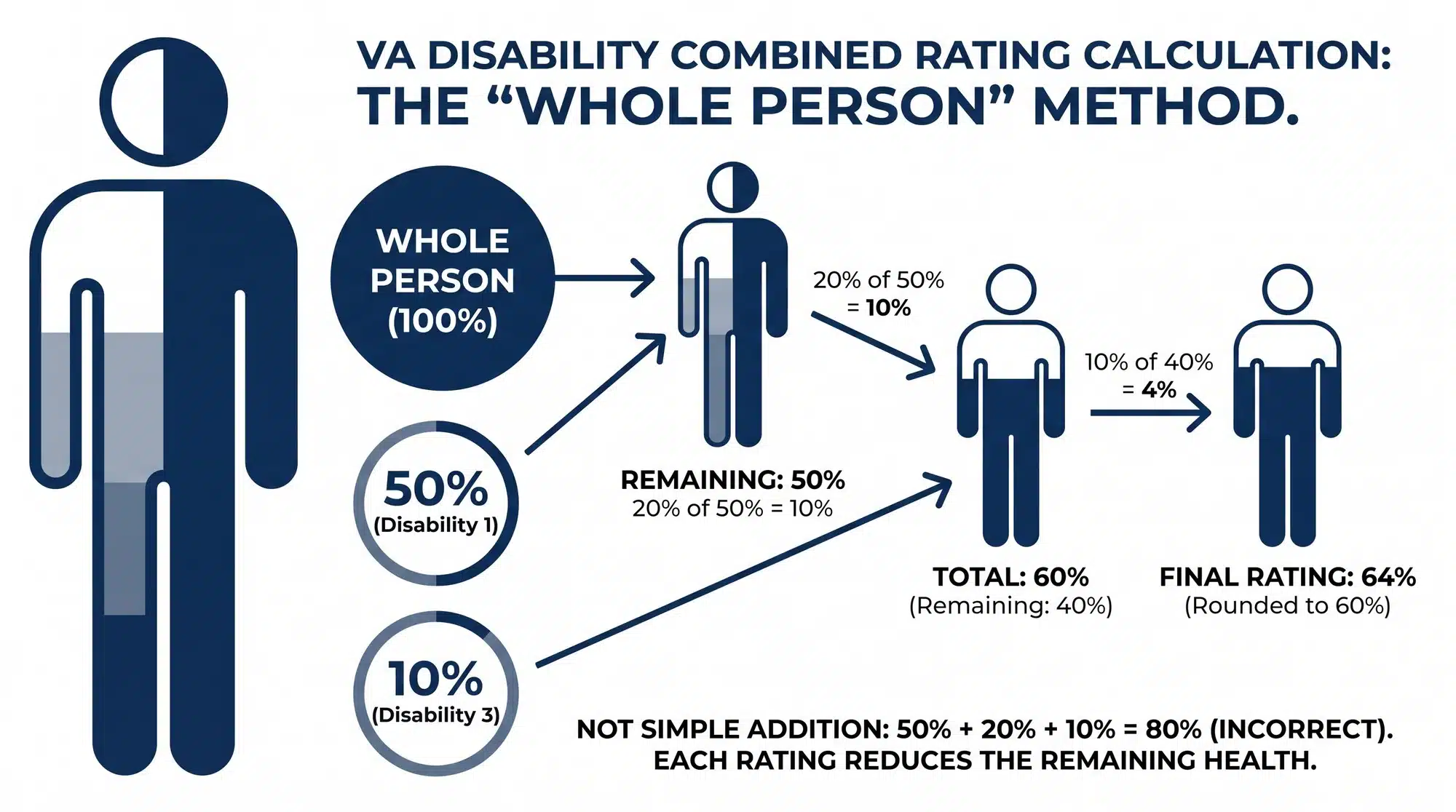
Several percentages do not stack when added together. A 50 percent award paired with 20 percent will not automatically produce 70 percent. The agency begins with a whole person rated at 100 percent efficient. Each additional condition reduces what remains, and then the result is rounded under federal rules.
A Simple Example
Take ratings of 50 percent, 20 percent, and 10 percent. The largest figure applies first, leaving the person with half of their efficiency. Next, 20 percent is applied to that remaining half. The last figure reduces the balance again. After rounding, the combined rating often falls short of the sum produced by simple addition.
Add Dependents
Household information can change the monthly deposit. A spouse, eligible child, school-age child, or dependent parent may increase compensation once the veteran meets the required combined percentage. Each dependent must be documented with correct dates. Missing or outdated family information can make an estimate inaccurate, especially during back-pay calculations.
Check Special Circumstances
Some awards include compensation beyond the standard table. Examples include special monthly compensation, aid and attendance for a spouse, loss of use, or severe combined impairment. These benefits depend on medical findings and legal criteria. A calculator can estimate common factors, while unusual disability patterns often require closer document review.
Gather Better Records
A reliable estimate depends on accurate inputs. Veterans should gather rating decisions, code sheets, medical opinions, dependency forms, and recent correspondence. The latest decision usually lists each granted condition with its percentage and effective date. If a reduction, increase, or new award occurred, the estimate should match that exact period.
Compare Effective Dates
Compensation can change across time. One payment rate may apply before an increase, while another begins after the new effective date. Back pay requires a period-by-period review of ratings, dependents, and annual rate tables. Current monthly compensation is simpler, but dates still control what the agency owes.
Avoid Common Errors
Common errors include adding percentages directly, omitting dependents, using old rate tables, or overlooking the bilateral factor. Another problem is counting symptoms that lack service connection. Veterans should separate granted conditions from pending claims. That distinction helps prevent inflated estimates and keeps the review focused on recognized disabilities.
Use Estimates Wisely
An estimate is a planning aid, not an official award. It can help veterans verify whether a proposed combined rating complies with published rules. It may also reveal missing evidence before an appeal or supplemental claim. Strong claims still depend on medical records, service history, credible statements, and accurate legal standards.

Conclusion
Estimating veterans’ disability compensation is easier when each step follows the same order: confirmed ratings, VA math, dependents, bilateral factors, dates, and special awards. That process turns scattered paperwork into a practical payment range. No estimate can replace an official decision, but a careful review helps veterans read award letters, ask better questions, and plan their next filing with confidence.

