
Corporate video production has undergone a remarkable transformation in recent years, driven by rapid technological advancement and changing audience expectations. What was once a domain reserved for businesses with substantial budgets and access to professional studios has become increasingly democratised, whilst simultaneously offering unprecedented creative possibilities for those at the cutting edge. Today’s corporate videos blend cinematic quality with authentic storytelling, utilising tools and techniques that would have seemed like science fiction just a decade ago. Understanding these technologies is essential for any organisation looking to create compelling visual content that resonates with modern audiences. According to market research from 360iResearch, the corporate video production services market was valued at USD 7.73 billion in 2025 and is projected to reach USD 12.73 billion by 2032, reflecting the growing global investment in professional video content.
The Revolution of AI-Powered Video Production
Artificial intelligence has emerged as perhaps the most transformative force in corporate video production, fundamentally altering how content is created, edited, and distributed. Modern AI tools can now analyse hours of footage and automatically identify the best takes, saving countless hours in the editing suite. These systems use machine learning algorithms to recognise facial expressions, detect emotional moments, and even suggest optimal cutting points based on pacing and narrative flow.
Beyond editing assistance, AI-powered platforms now offer automated colour grading that maintains consistency across different shots and lighting conditions. Text-to-video generators can create preliminary storyboards and animatics from simple script descriptions, helping production teams visualise concepts before committing to expensive shoots. Some advanced systems can even generate synthetic backgrounds or remove unwanted elements from footage with remarkable precision, reducing the need for reshoots or complex manual editing.
Voice synthesis technology has also reached new heights, with AI-generated narration becoming nearly indistinguishable from human speakers. This proves particularly valuable for multilingual corporate communications, allowing companies to produce content in numerous languages without the expense and scheduling challenges of booking multiple voice artists.
Virtual Production and LED Volume Technology
Perhaps no technology has captured the imagination of corporate video producers quite like virtual production, the same technique used in high-profile productions such as “The Mandalorian”. LED volume stages surround talent with massive, high-resolution screens displaying photorealistic environments in real-time. This approach eliminates the need for green screens and extensive post-production compositing, whilst providing realistic lighting that interacts naturally with subjects.
For corporate applications, this technology means executives can appear to present from global locations, futuristic settings, or branded environments without leaving the studio. The immediate visual feedback allows directors and clients to see the final result during filming rather than waiting for post-production, enabling faster decision-making and reducing costly revisions.
Whilst full LED volume stages remain expensive, smaller-scale implementations and hybrid approaches are becoming accessible to mid-sized productions. Curved LED walls and floor panels can create convincing partial environments at a fraction of the cost, bringing this cinematic technique within reach of more corporate budgets.
Advanced Drone and Gimbal Technology
Aerial cinematography has become an expected element of corporate videos, particularly for property showcases, manufacturing facilities, and corporate campus tours. Modern drones equipped with professional-grade cameras can capture stunning 6K or even 8K footage whilst maintaining exceptional stability through advanced gimbal systems and flight control algorithms.
The latest drone technology incorporates obstacle avoidance sensors, automated flight paths, and intelligent tracking modes that can follow subjects smoothly without requiring expert piloting skills. Indoor drones, specifically designed for confined spaces, allow for dynamic movement through facilities that would be impossible with traditional camera equipment.
Ground-based gimbal systems have evolved similarly, with motorised stabilisers that can be mounted on vehicles, worn by operators, or attached to robotic arms. These systems ensure silky-smooth footage even during complex movements, lending corporate videos a professional, cinematic quality that elevates production values significantly.
360-Degree and Virtual Reality Integration
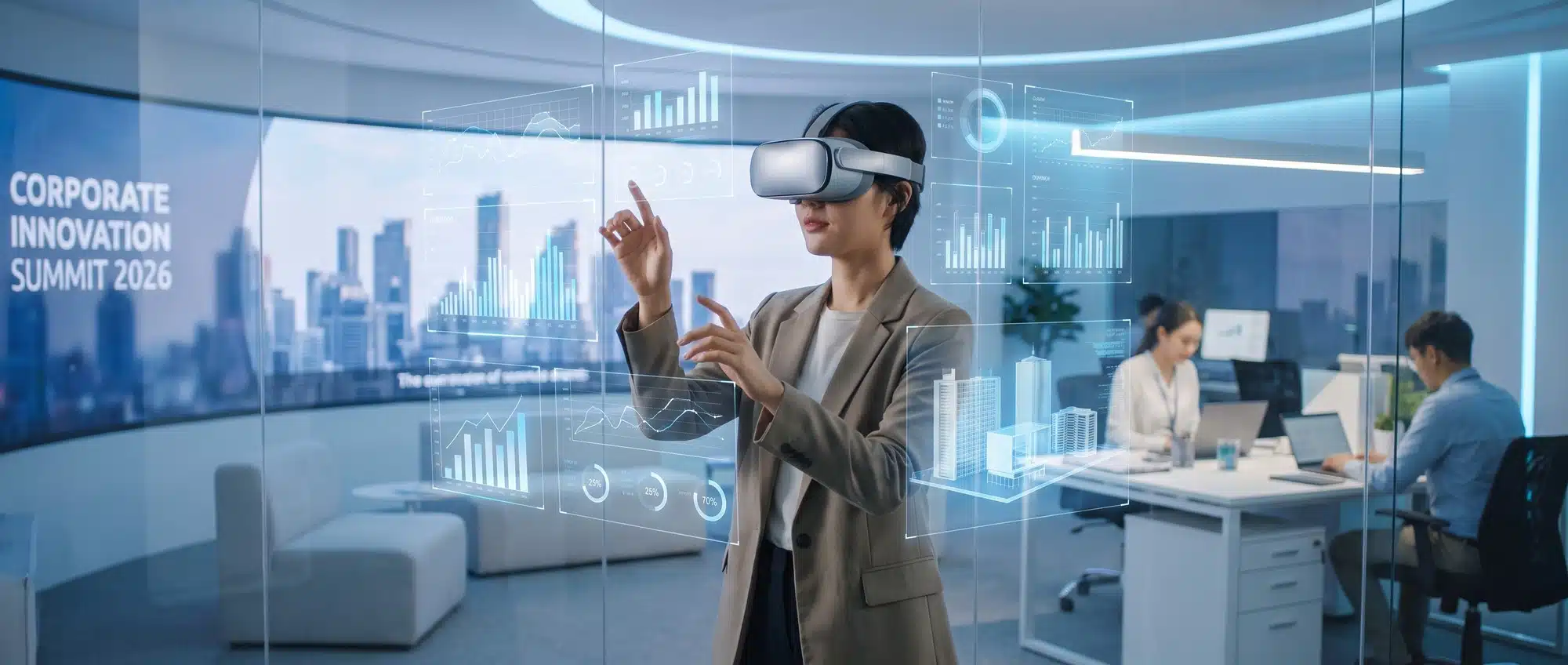
Immersive video formats have moved beyond novelty status to become valuable tools for corporate communication, particularly in training, onboarding, and experiential marketing contexts. 360-degree cameras can capture entire environments simultaneously, allowing viewers to explore spaces at their own pace and focus on elements most relevant to them.
For corporate applications, this technology excels at showcasing facilities, documenting processes, and creating virtual tours that provide remote stakeholders with genuine spatial understanding. Manufacturing companies use 360-degree video to demonstrate safety procedures, whilst property developers create immersive walkthrough experiences for potential buyers or investors across the globe.
Virtual reality takes this concept further, offering truly immersive experiences that can transport viewers into otherwise inaccessible environments. VR corporate videos might place viewers inside machinery to understand operational processes, recreate historical company moments, or provide training simulations that feel genuinely present and engaging.
High-Frame-Rate and HDR Filming
Technical specifications that once concerned only high-end cinema productions have become standard expectations for corporate video. High-frame-rate capture, typically at 60 or 120 frames per second, allows for exceptionally smooth motion and the option to create stunning slow-motion sequences that emphasise product details or manufacturing precision.
High Dynamic Range (HDR) capture and delivery preserve detail in both bright highlights and deep shadows, creating images with depth and dimensionality that standard dynamic range simply cannot match. For corporate videos showcasing products, environments, or brand experiences, HDR provides a visceral quality that better represents how we naturally perceive the world.
The combination of high resolution (4K and beyond), high frame rates, and HDR creates what industry professionals call “hyper-real” video quality. This technical excellence subconsciously communicates professionalism, attention to detail, and quality—attributes that naturally transfer to perceptions of the brand itself.
Real-Time Graphics and Augmented Reality
The integration of computer-generated graphics with live-action footage has become seamless thanks to real-time rendering engines originally developed for video games. These systems can overlay information, animate data visualisations, or insert virtual products into physical environments with perfect perspective and lighting, all visible during filming rather than added weeks later in post-production.
Augmented reality takes this integration further by allowing viewers to interact with virtual elements through their devices. A corporate video might include AR markers that, when scanned with a smartphone, reveal additional product information, animated demonstrations, or interactive experiences that extend engagement beyond passive viewing.
These technologies prove particularly valuable for explaining complex concepts, visualising abstract data, or demonstrating products that are too large, expensive, or dangerous to film practically. The ability to show things that cannot be photographed has always been valuable in corporate communication, but modern tools make such visualisations far more convincing and integrated than traditional animation techniques.
Cloud-Based Collaboration and Review
The production process itself has been revolutionised by cloud-based platforms that facilitate remote collaboration across distributed teams. Footage can be uploaded directly from camera to cloud storage, where editors, directors, and stakeholders can review material, leave time-stamped comments, and approve versions without ever being in the same room—or even the same country.
These platforms incorporate version control, ensuring everyone works from the latest edit and reducing the confusion that plagued email-based review processes. Some systems include AI-assisted search functions that can locate specific shots based on content descriptions, dramatically speeding up the editing process for projects with extensive footage.

Conclusion
The technological landscape of corporate video production continues to evolve at an extraordinary pace, offering organisations unprecedented opportunities to create compelling, high-quality visual content. From AI-powered editing assistants to virtual production environments, from immersive VR experiences to real-time graphics integration, these tools are not merely improving efficiency—they’re expanding what’s creatively possible.
However, technology remains simply a tool in service of storytelling. The most successful corporate videos combine these technical capabilities with clear strategic thinking, authentic messaging, and genuine understanding of audience needs. As these technologies become more accessible and intuitive, the differentiating factor will increasingly be not which tools are used, but how thoughtfully they’re applied to communicate meaningful messages that resonate with viewers and drive business objectives.


