
One of the most transformative shifts for humanity since the discovery of fire has been artificial intelligence (AI). More than a tool for innovation, AI is a global phenomenon reshaping industries and everyday life. The AI landscape is dynamic and complex, characterized by a relentless race among tech giants and new players, all striving to push the boundaries of what’s possible. Moving into 2025, this competition is more fierce and productive than ever.
The story of AI development is one of both collaboration and competition. At the heart of AI’s evolution is a fascinating narrative: diverse AI models from Google, Moonshot AI, DeepSeek, and Nvidia, among others, are not only matching but sometimes exceeding the capabilities of OpenAI’s renowned models. This collective quest drives innovation, where each corporation and startup contributes unique assets—technological prowess, innovative frameworks, or strategic partnerships.
This article delves into this global phenomenon, examining the major AI players and their contributions to a rapidly changing tech ecosystem. It explores the challenges, breakthroughs, and significant strides that mark this era of technological revolution. From Google’s Gemini model outperforming traditional AI contenders to China’s impactful DeepSeek initiatives, we witness a world united by technological ambition yet distinguished by regional expertise.

The Rise of Competitors
Google Gemini: A Technological Game-Changer
Google’s Gemini has emerged as a frontrunner, often overshadowing its competitors, including OpenAI’s models. Google Gemini’s recent developments have positioned it as a technological powerhouse, leading the charge in various AI-driven sectors.
Innovative Edge
Google Gemini’s standout feature is its remarkable performance across diverse tasks, including coding, mathematical reasoning, and visual understanding. The latest iteration of Gemini has achieved a 20% improvement over OpenAI’s GPT-4o, a previously dominant player.
This leap was not by chance. Gemini’s focused enhancements enable it to perform well in technical domains that require complex problem-solving and in creative fields such as vision interpretation. Such advancements signify a major breakthrough in AI capabilities, where flexibility and efficiency go hand in hand.
Strategic Enhancements
Don’t just take our word for it—Gemini’s enhancements are rooted in strategic technological improvements. Gemini’s architecture incorporates advanced methodologies like optimized algorithms, which boost its reasoning and processing power.
These enhancements have practical applications across different industries. For instance, Gemini can seamlessly handle tasks that require interpreting data, whether it’s through analyzing vast datasets or understanding intricate coding structures. This positions Gemini as not just a competitor but a leader in harnessing AI for real-world solutions, making AI more accessible and effective for businesses and individuals alike.

Laurel and the Future of Neural Networks
In the ongoing quest for efficiency and performance in AI, Google’s introduction of Learned Augmented Residual Layer (LAUREL), has paved the way for groundbreaking advancements in neural network design. This development marks a significant leap forward for neural networks, which are digital systems inspired by how our brains function and learn.
Efficient Innovations
Laurel is renowned for enhancing the intelligence and efficiency of AI models. The LAUREL framework enhances the way neural networks process information, making it possible for these systems to learn and adapt swiftly while using fewer computational resources.
Think of this like teaching a computer to become a super-efficient student. With LAUREL, AI can now perform complex tasks much quicker and with greater precision. This is achieved by streamlining data flow through ‘residual connections,’ which significantly reduces the need for heavy computing power.
Performance Metrics
To truly appreciate the impact of Laurel, we must delve into its performance metrics. As detailed in arXiv, LAUREL has set new benchmarks in energy efficiency, consuming less power while boosting the performance of AI models. This innovation is critical for industries seeking sustainable AI solutions, enabling businesses to deploy sophisticated technologies without the prohibitive energy costs often associated with large-scale AI operations.
Laurel’s enhancement of neural network efficiency ensures that traditional resource limitations do not hinder AI’s advancement, thereby supporting a broader array of applications from autonomous vehicles to advanced healthcare diagnostics. Laurel’s advancements mean AI can now operate with higher accuracy while consuming less power—an essential factor for industries looking to implement AI solutions without significant overhead or environmental costs.
AI Innovations in China
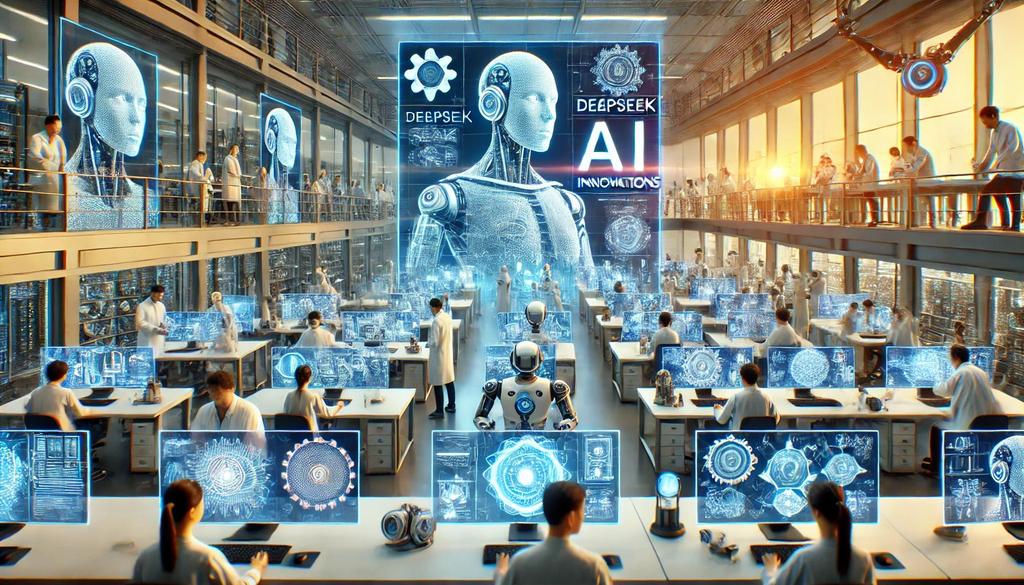
As AI continues to evolve on the global stage, China has emerged as a formidable player, pushing the boundaries of what’s possible with groundbreaking advancements and an innovative spirit. Chinese AI companies are not only meeting global standards but are setting new benchmarks, presenting a challenge to established Western technology leaders.
China’s AI journey is a testament to its strategic foresight and capability, illustrating the country’s readiness to lead in the AI domain through thoughtful innovation and technological rigor. Together, DeepSeek, Kimi, and Marco-o1 not only represent China’s current technological prowess but also signify a future where China plays a central role in shaping global AI trends and solutions.
DeepSeek’s R1-Lite-Preview
In a surprising twist, China’s DeepSeek has unveiled a model known as R1-Lite-Preview, which is turning heads in the tech community for its high reasoning capabilities. This model uses a technique called “chain-of-thought” reasoning. Imagine a diligent detective piecing together clues step by step to solve a mystery—this is how DeepSeek’s model operates. It meticulously breaks down problems, making complex decisions more transparent and understandable.
DeepSeek’s approach illustrates its ambition to tap into areas traditionally dominated by Western counterparts, showcasing China’s technological advancement and readiness to compete on an international scale. The R1-Lite-Preview not only matches the performance of established models but often exceeds it in logical inference tasks, setting a new standard for AI-driven solutions.
Kimi’s Contributions
Alongside DeepSeek, Moonshot AI’s Kimi model is also making significant strides. Kimi marks China’s investment in creating powerful AI systems that address local and global challenges, reflecting a strategic shift in how AI is developed and deployed globally.
While Kimi scales back some international efforts, its focus on strengthening local AI capacity underscores a strategy of building solid foundations before leaping forward. This cautious yet ambitious approach ensures sustainable growth and long-term success in the highly competitive AI landscape, enabling China to establish itself as a leader in AI innovation and deployment.
Marco-o1: Innovating Open-Ended Problem Solving
Another groundbreaking contribution from China comes in the form of Alibaba’s Marco-o1 model, which targets open-ended problem-solving. As discussed on GitHub, Marco-o1 employs advanced techniques such as Chain-of-Thought (CoT) fine-tuning and Monte Carlo Tree Search (MCTS) to enhance its reasoning and innovation capabilities.
Marco-o1 stands out for its focus on not just structured tasks, like mathematics or coding, but also on disciplines where clear standards are absent. It leverages MCTS to explore multiple solution pathways, providing a level of insight and understanding that traditional models often lack. This model is particularly noteworthy for its application in diverse fields, including machine translation, where it has shown remarkable proficiency in understanding colloquial nuances, demonstrating versatility beyond conventional computational tasks.
In essence, Marco-o1’s development underscores China’s commitment to pioneering cutting-edge AI that can navigate real-world problems with complexity and variability, truly embodying the spirit of innovation. Its ongoing refinement reflects a broader trend within the Chinese AI sector: the integration of robust, flexible AI systems that continue to set new benchmarks both in China and globally.

Technological Advancements and Their Broader Context
Meta’s Transformation and Global Impact
Meta, formerly known as Facebook, is undergoing a pivotal transformation from a social media giant to a leading innovator in artificial intelligence and virtual reality (VR). This ambitious rebranding reflects a broader strategy to integrate AI deeply into our daily interactions, making digital experiences more immersive and intuitive.
VR and AR Technologies
Meta’s advancements in AR (augmented reality) and VR technologies illustrate its strategic pivot. Through projects like its AR glasses, codenamed Orion, Meta is changing how we perceive and interact with digital and physical worlds. These glasses can overlay digital information onto real-world views, blending virtual insights with our everyday surroundings. Ssuch innovations push the boundaries of what’s possible, offering incredible potential in education, navigation, and entertainment by providing users with information at their fingertips without them needing to look at a screen.
Global Collaborations
Strengthening its transformative journey is Meta’s partnership with tech titans like Microsoft and NVIDIA. These collaborations enhance Meta’s capabilities to deliver complex AI applications by utilizing cutting-edge computing power and cloud solutions. This partnership not just amplifies Meta’s technological prowess but also underscores the importance of collaboration in achieving swift technological leaps, setting a new standard for what’s possible in tech-everyday life integrations.

Nvidia and Hugging Face: Powering the Future of AI
As we delve deeper into the evolving landscape of artificial intelligence (AI), two names—Nvidia and Hugging Face—stand out for their substantial contributions to advancing AI technologies. These organizations are not just tech companies; they are catalysts for innovation, driving AI’s expansion into new realms of application.
NVLM and Multimodal AI
The revolutionary NVLM 1.0 model, a true exemplar of AI’s evolving capabilities, marks Nvidia’s foray into AI. Nvidia designed NVLM to handle multimodal tasks, enabling it to process and interpret both text and images simultaneously. This is quite different from traditional AI models that often focus solely on one type of data. NVLM is setting a new standard, proving to be a versatile tool across diverse fields such as education, entertainment, and digital content creation.
One of the key features of NVLM is its ability to maintain efficiency in text-only tasks, even after extensive training on image data. This dual functionality guarantees that users benefit from cutting-edge text processing and superior image analysis, without compromising on either aspect’s quality. This makes NVLM an invaluable asset, particularly in sectors like education where understanding complex visuals alongside text is crucial.
Community and Collaboration
Meanwhile, Hugging Face is a beacon of AI accessibility and community-driven development. Known for its user-friendly AI models and open-source ethos, Hugging Face has democratized access to powerful AI tools. The company has curated an extensive library of pre-trained models that encompass various AI tasks, making them accessible to everyone from individual developers to large corporations.
Hugging Face’s collaborations with tech giants like Google, Amazon, and IBM have furthered its mission to integrate advanced AI tools into everyday applications. These partnerships not only enhance Hugging Face’s reach but also ensure that cutting-edge AI technology permeates multiple sectors, fueling innovation and providing robust solutions to complex challenges.

AI for Sustainability
In today’s environmentally conscious world, the role of AI in fostering sustainable practices is becoming increasingly critical. Technologies like ClimateGPT are at the forefront of these advancements, demonstrating AI’s potential to help solve one of humanity’s greatest challenges: climate change.
Tackling Climate Change with AI
ClimateGPT is an AI model specifically designed to process and analyze vast amounts of climate-related data. By synthesizing information from fields as diverse as environmental science, economics, and social policy, ClimateGPT provides insightful foresight into climate dynamics and helps formulate strategies for mitigating the impacts of climate change.
ClimateGPT aids policymakers by providing actionable insights, which are crucial for making informed decisions that benefit both the environment and society. This model exemplifies AI’s capability to transcend traditional data analysis, offering nuanced solutions that consider the complexities of ecological systems.
Strategic Partnerships
Beyond individual models, strategic partnerships play a pivotal role in scaling AI’s effectiveness in climate initiatives. The Global AI Infrastructure Investment Partnership represents one such collaboration. Spearheaded by financial and tech giants like BlackRock and NVIDIA, this partnership aims to invest in AI infrastructure that supports sustainable development.
These investments focus on enhancing data centers and power systems, ensuring that as AI grows, its environmental footprint decreases. By aligning technological advancements with eco-friendly practices, these partnerships demonstrate a commitment to responsible innovation, balancing progress with sustainability.
Sustainability and Infrastructure
Moreover, the push toward sustainable AI infrastructure is evident in initiatives like ClimateGPT and the Global AI Infrastructure Investment Partnership. AI’s role in addressing climate change and supporting sustainable development is a testament to the transformative power of these technologies in solving real-world issues.
Developments in AI across different regions are not just technological feats but also societal catalysts. They pave the way for more efficient businesses, advanced healthcare, and smarter cities. As we move forward, these innovations promise to create a world where AI’s potential is boundless and benevolent, helping shape a future where technology serves humanity’s greatest needs.
Integration of AI into our global fabric presents endless opportunities. From Nvidia and Hugging Face’s technological strides to the innovative applications of ClimateGPT, AI is more than an engine of growth—it’s a means of transforming how we approach our most pressing global challenges. We are poised for a future where AI not only propels technological advancement but also brings about meaningful and sustainable change if we continue to collaborate and prioritize sustainability.

A Global Vision for the Future of Humanity with AI
The global landscape of AI is more vibrant and interconnected than at any point in history. ClimateGPT is advancing climate science, and companies like Hugging Face are ensuring nearly everyone has access to AI tools, shaping the trajectory of AI development towards a future of sustainable innovation and collaboration.
Indeed, as AI technologies continue to break through barriers, the potential for positive global impacts grows exponentially. These advancements promise not just new consumer products or business efficiencies but profound changes in health, education, and the environment. The journey of AI is one of shared goals and collective human progress, reinforcing the shared sense that the real power of AI lies in its ability to improve lives around the world.
As we look forward, the question remains: how will these technologies continue to redefine our realities? With every breakthrough in AI, we edge closer to a future where technology seamlessly integrates with and enhances human potential. Through continued dedication to ethical practices, innovation, and collaboration, the possibilities are nearly limitless.


