
In recent years, artificial intelligence has transitioned from being a futuristic dream to a daily reality that we interact with. These AI systems, especially known as large language models (LLMs), are designed to understand and generate human-like text. They’re becoming even more sophisticated, to the point where they can outperform human beings in various intellectual tasks. This growing capability of AI is pushing boundaries and raising questions not just in tech circles but also in education, security, and even ethics.
AI’s Academic Prowess Redefines Intelligence in Society
One of the fascinating developments is AI’s ability to take exams and tests designed for humans—and not just any tests, but challenging ones like medical and law courses. Imagine a computer system not only sitting through a tough exam but also achieving scores that beat a majority of real human students. This scenario is playing out in the real world, prompting us to rethink the role of education and how we measure intelligence.
Furthermore, AI isn’t just limited to academic knowledge. The machines we created to work for us are now handling security protocols like reCAPTCHA tests—those small “I’m not a robot” checks we do online—almost as efficiently as we do. These advances lead many to wonder: are we moving into an era where AI might replace some traditional human roles, even in areas requiring high intelligence and moral decision-making?
The evolution of AI isn’t just about technological progress; it’s about understanding our own place alongside these increasingly capable machines. This article explores some of the key areas where AI is making leaps in intelligence, its implications for industries and education, and what the future might hold for a society where artificial and human intelligence coexist.
AI Models Outperforming Humans in Academic Settings
Medical and Legal Education
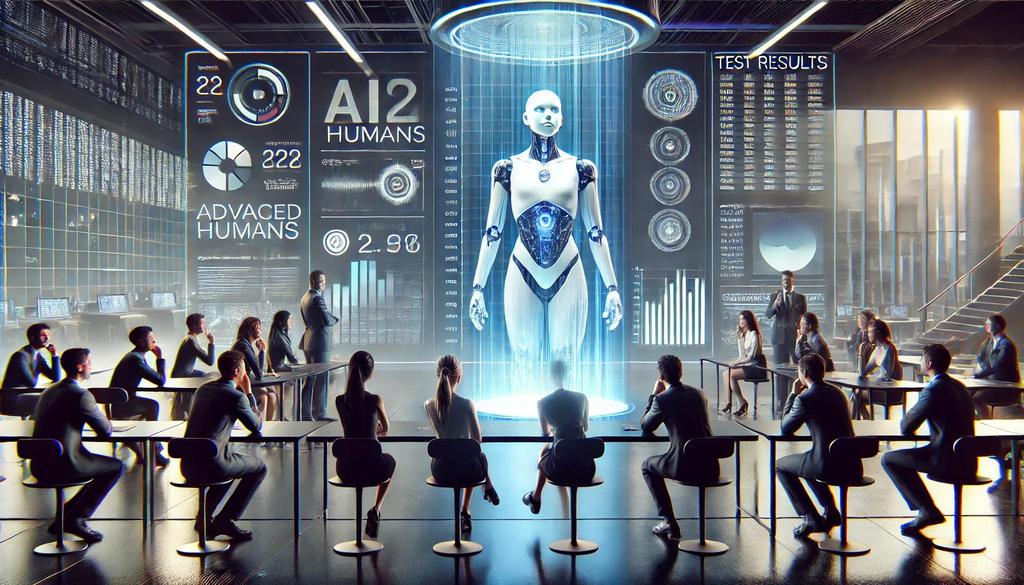
The intersection of artificial intelligence and education is rapidly evolving, with some surprising results. At the Oregon Health & Science University, for example, Dr. William Hersh carried out an experiment to see how well AI could perform against human students in his medical informatics class. The results were eye-opening: AI models scored better than 75% of the students.
Dr. Hersh’s aim was not just to gauge AI’s current capabilities but also to highlight future challenges in education. If AI can handle fact-based learning better than students, then academia must reconsider its teaching methods to focus more on the skills that AI lacks—like critical thinking and hands-on experience. These skills involve practical application and ethical judgment, areas where AI is still catching up.
Over in the legal field, Armin Alimardani of the University of Wollongong explored AI’s potential by pitting it against law students.
While the AI didn’t outperform all the students, it demonstrated that with some prompting strategies, AI could achieve respectable scores. This finding challenges the notion of AI merely being a supplementary tool, suggesting it could soon become a contender in tasks requiring reasoning and interpretation.
Implications for Education
The implications extend beyond immediate competition with human students. The presence of AI in educational settings pressures institutions to rethink assessment and teaching models. Traditional exams, focused on memory and knowledge reproduction, might need an overhaul. Dr. Hersh suggests evolving curricula to ensure students master what AI cannot—deep analytical skills and interdisciplinary thinking.
With AI models scoring significantly in academic settings, educators are encouraged to embrace these technologies as complementary tools rather than adversaries. In doing so, they can provide students with skills that are both relevant in a digital age and irreplaceable by AI: empathy, intuition, and the ability to tackle complex, abstract problems that often evade algorithmic understanding.
As we move forward, the big question remains: how can humans and machines best collaborate for a mutually beneficial educational future? This is where ongoing research and open-minded adaptation will play crucial roles in shaping tomorrow’s classrooms.

AI vs. reCAPTCHA: Rethinking Security
The internet often tests us to prove we’re human through little puzzles we encounter on websites—commonly known as CAPTCHA and reCAPTCHA. These are designed to differentiate humans from bots by having us identify distorted text or select images that contain specific objects, like traffic lights or crosswalks. These tests have been one of the primary lines of defense against automated bots that could perform millions of tasks at once, like stealing ticket sales, spamming websites, or scraping data.
In a recent development, artificial intelligence has reached a new milestone by solving these reCAPTCHA tests with human-like accuracy. Researchers from ETH Zurich, using an AI model named YOLO (which stands for “You Only Look Once”), have trained their system to perform these visual puzzles with precision. This AI can identify and categorize images just as accurately as a human, demonstrating the model’s advanced pattern recognition capabilities.
Beyond CAPTCHAs: Innovating Digital Security in the Age of AI
This breakthrough brings several implications. First, it questions the reliability of reCAPTCHA as a foolproof method for keeping bots at bay. CAPTCHAs have historically been considered an effective tool, but this latest AI advancement shows that these barriers can be easily overcome by sophisticated algorithms. Websites and online services that rely heavily on these tests may need to develop more complex alternatives to maintain security.
However, it’s not all cause for alarm. This shift is also a catalyst for innovation in security protocols. As detected by security experts, alternative methods like behavioral analysis, which examines how users navigate a website or move their cursor, and device fingerprinting, which tracks data from a user’s hardware, are emerging as more sophisticated identification techniques. These focus less on explicit challenges like CAPTCHAs and more on subtle cues that are harder for even the smartest AI to imitate without user data history. While the advancements in AI solving CAPTCHAs could make life simpler for users, they could also push us towards more complex, less intrusive methods that ensure digital security without questioning our humanity at every turn.

Turing and Reverse Turing Tests: Measuring Intelligence
The idea of the Turing Test, conceptualized by Alan Turing in 1950, is a fascinating cornerstone of artificial intelligence. Turing proposed a way to evaluate whether a machine exhibits intelligent behavior indistinguishable from a human’s. Historically, achieving this has been considered a hallmark of AI development. However, recent innovations have called for a reassessment of this test’s role and effectiveness.
Enter the reverse Turing test—an innovative twist on Turing’s original concept. Instead of determining if a machine can appear human, this test challenges AI to identify when it’s interacting with a human. One notable experiment turned this concept into a viral sensation by positioning AI agents, each emulating a historical figure—like Aristotle or Mozart—on a train. A human interloper, whom AI needed to detect, joined these personas.
AI’s Quest to Understand Human Interaction
This setup showcased the nuanced differences in conversation styles between humans and AIs. Surprisingly, the AI models, programmed to act as these historical personas, succeeded in identifying the human based on his less nuanced responses, illustrating how even the most sophisticated human mimicry has its unique signature that machines can detect.
The test provided insight into what “intelligence” truly encompasses—not just the ability to respond but the style, depth, and creativity of interaction. Yet questions remain about the practicality of these tests. AI’s capacity to assess intelligence goes beyond simple Q&A; it involves interpreting emotions and context, areas where humans have intricate, albeit sometimes flawed, intuition.
Bidirectional Interplay of Human and Machine Intelligence
As AI technology advances, the importance of these tests isn’t so much in reaching a definitive answer but in exploring the potential interactions between human intelligence and machine logic. By evaluating these interactions, we seek to understand better how AI can complement human ingenuity and search for solutions in complex environments.
This exploration into the depths of machine and human cognition continues to challenge our definitions of intelligence, pushing us to ask: in a world where AI can mimic, detect, and even outperform certain human roles, how do we redefine what it means to be “intelligent”?

“Humanity’s Last Exam”: Future Benchmarks for AI
In the quest to understand and push the limits of artificial intelligence, researchers have embarked on a new challenge known as “Humanity’s Last Exam.” This initiative, led by the Center for AI Safety alongside the startup Scale AI, seeks to craft a set of questions so challenging that only the most advanced AI systems could attempt to answer. The endeavor is akin to probing the intellectual capabilities of machines to see how far they can go beyond easily accessible knowledge and into the realm of expert-level understanding.
The idea is straightforward yet deeply ambitious: to collect questions from all over the world that can genuinely test AI’s burgeoning intellectual boundaries. These questions need to be hard enough to stump current AI models, challenging them not just in basic facts but in reasoning, creativity, and insight. By hosting a global call for submissions, the project encourages participation from experts across various fields, from rocket engineering to philosophy, ensuring a diverse and extensive examination of AI’s true capabilities.
Ultimate Exam for AI Evolution
Creating “Humanity’s Last Exam” is also about foresight. As AI continues to evolve, traditional tests and benchmarks that once gauged achievement are now becoming inadequate. This project aims to develop new standards that remain relevant and difficult, even as AI capabilities advance. One significant aspect of the initiative is that certain questions are kept confidential to ensure AI models cannot simply rely on memorized data to provide answers, encouraging genuine process-oriented understanding.
The response to this call will guide the future of AI development, helping to steer it in ways that are not merely technically efficient but hopefully ethically and socially constructive. This project could redefine the parameters for assessing both AI and human intellect, opening new possibilities for collaboration and innovation between human intelligence and our artificial creations.

AI’s Impact on Education: Balancing Progress with Human-Centric Development
The rapid advancements in artificial intelligence, especially in large language models, are continually reshaping our landscapes, from education and security to societal norms and ethical considerations. As AI systems begin to outperform humans in certain intellectual arenas, such as academic testing and even multi-faceted reasoning tests, we find ourselves at a crucial crossroads. This intersection challenges us to reevaluate the symbiosis between human and artificial intelligence, urging a deeper understanding of where AI can complement human abilities and where it might inadvertently compete or even replace them.
Through the lens of experiments in educational settings, AI’s capacity to solve complex problems, and innovative projects like “Humanity’s Last Exam,” it becomes evident that our approach to integrating AI into society will require careful thought and adaptive strategies. These technologies are very much a double-edged sword, offering immense opportunities for progress while simultaneously posing risks that must be managed.
Guiding AI Integration: Elevating Human Skills for a Collaborative Future
In navigating this rapidly evolving frontier, the emphasis must be on coexistence: creating environments where AI can enhance human creative and analytical skills rather than displace them. This calls for a revamped educational framework that prepares individuals to excel in roles AI cannot fill, championing skills such as ethical judgment, emotional intelligence, and interdisciplinary collaboration.
Ultimately, as AI continues to grow smarter and more integrated into our daily lives, it is up to us to guide this evolution with responsibility and foresight. By doing so, we ensure that technology remains a tool for human advancement rather than a competitor, making the journey into the future not just a technological transition but a revolution in how we perceive and engage with intelligence itself.


