
To maintain a competitive edge in today’s dynamic market, manufacturers must emphasize efficiency, precision, and innovation. Advanced injection molding services deliver the state-of-the-art solutions required to meet these critical demands. By utilizing the latest technologies and methodologies, these services enable manufacturers to produce high-quality components while minimizing waste and reducing production lead times.
Whether you are creating complex parts at scale or improving the durability of your products, injection molding offers exceptional capabilities to revolutionize your manufacturing processes. By embracing advanced injection molding techniques, businesses can achieve significant cost savings, boost product performance, and strengthen their position in the market. Exploring these services provides manufacturers with the opportunity to enhance operational effectiveness and better meet consumer expectations.

Understanding Injection Molding Technology
Injection molding technology is a sophisticated manufacturing process that involves injecting molten material into a mold to create complex parts in large volumes. This process allows for the production of items with precise dimensions and intricate details. The technology has evolved significantly over the years, enabling manufacturers to explore a wider range of materials and applications.
Key to this technology’s success are the advanced machinery and control systems that enable precise regulation of temperature, pressure, and speed during the molding process. These controls ensure that each component meets stringent quality standards, resulting in reduced defects and improved consistency.
With advancements in materials science and molding techniques, manufacturers can now work with an array of materials, including plastics, metals, and ceramics. This versatility makes injection molding a preferred choice for industries such as automotive, aerospace, consumer electronics, and medical devices. A plastic injection molding service, for example, can produce components that are lightweight, durable, and cost-effective for use in various applications. It is also worth noting that injection molding technology can be customized to suit specific design requirements, making it a highly adaptable process.

Benefits of Injection Molding Services
One of the primary benefits of injection molding is its efficiency in mass production. Once a mold is created, thousands of identical parts can be produced quickly, making it an ideal choice for high-volume manufacturing. This efficiency also translates to cost savings, as materials can be used with minimal waste.
Injection molding is a highly versatile manufacturing process that offers extensive customization options. Manufacturers can create components with varying textures, colors, and intricate geometries. This level of design flexibility is invaluable for industries that demand components that are both visually appealing and functionally effective.
Modern injection molding processes also incorporate advanced automation technologies. By reducing the reliance on manual labor, these automated systems significantly lower production costs and decrease the likelihood of human error. This automation contributes to a consistent level of repeatability and reliability throughout production runs, ensuring that each component meets stringent quality standards.
Utilizing injection molding not only enhances design capabilities but also streamlines operations, making it an essential method for manufacturers looking to optimize their production processes.
Advancements in Sustainable Injection Molding
The drive towards sustainability has prompted significant advancements in injection molding processes. Today’s technologies focus on reducing the environmental impact by optimizing materials, energy consumption, and waste management.
Bioplastics and recycled materials are gaining traction among manufacturers aiming to reduce their environmental impact. These sustainable materials provide comparable performance characteristics to conventional plastics while being sourced from renewable resources. By utilizing bioplastics and recycled materials, companies can significantly lessen their reliance on fossil fuels, contributing to a more sustainable production model.
Choosing these eco-friendly materials not only aligns with corporate social responsibility goals but also meets the growing consumer demand for environmentally conscious products. As industries continue to seek innovative solutions, integrating bioplastics and recycled materials is becoming an essential strategy in modern manufacturing practices.
Manufacturers are adopting energy-efficient machinery and processes. Innovations such as electric and hybrid injection molding machines consume less energy than traditional hydraulic systems, contributing to lower operation costs and environmental impact.

Choosing the Right Material for Injection Molding
Selecting the appropriate material is crucial for achieving desired outcomes in injection molding. The choice depends on factors such as mechanical properties, thermal stability, and cost-effectiveness. Common materials include thermoplastics, thermosets, elastomers, and composites, each offering distinctive characteristics.
Thermoplastics, for instance, are highly favored due to their moldability and recyclability. They are suitable for a wide range of applications, from everyday consumer products to advanced engineering components. The ability to re-melt and reshape thermoplastics also contributes to reduced material waste.
Conversely, thermosets are ideal for applications requiring heat resistance and structural integrity, as they undergo irreversible curing. Understanding the unique properties of these materials helps manufacturers meet specific performance criteria.
Improving Product Quality through Injection Molding
Enhanced product quality is a significant advantage of utilizing injection molding. The precision and control inherent in the process ensure that parts meet tight tolerances and high standards. This is especially vital in sectors where reliability and safety are non-negotiable requirements.
Injection molding allows for consistent surface finish and dimensional accuracy, minimizing the need for additional finishing processes. Detailed simulations and computer-aided design (CAD) tools aid in identifying potential issues before manufacturing, thus optimizing both product design and process efficiency.
By ensuring high-quality outputs, manufacturers can reduce time-to-market and increase customer satisfaction through reliable products that meet or exceed expectations.
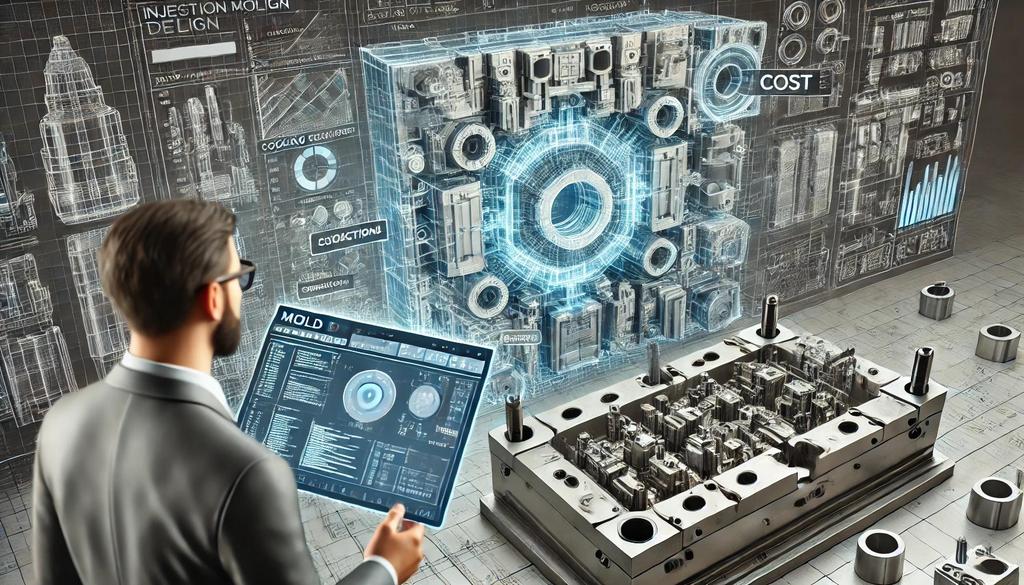
Evaluating Injection Mold Design and Cost
A critical factor in injection molding is the design and cost of molds. An effective mold design can significantly influence production efficiency and product quality. The design process involves careful consideration of part geometry, material flow, cooling channels, and ejection systems to optimize the molding cycle.
Cost considerations include the initial investment in mold creation, which varies depending on part complexity and production volume. While this upfront cost may be high, the long-term benefits of high production yields and lower per-unit costs can justify the investment.
Advanced simulation tools assist in mitigating risks associated with mold design, providing virtual prototypes to validate design choices and identify cost-saving opportunities. This approach ensures that manufacturers achieve a balance between performance, reliability, and expenditure.
Innovations in Smart Injection Molding
The integration of smart technologies into injection molding marks a significant step forward in manufacturing capabilities. Smart injection molding incorporates IoT devices, advanced sensors, and artificial intelligence to enhance real-time monitoring and control over the production process. These advancements enable manufacturers to achieve unprecedented levels of precision and efficiency.
With the use of IoT sensors, data can be collected continuously from machinery and molds, providing insights into temperature, pressure, and other critical parameters. This data allows for predictive maintenance, helping to prevent unexpected downtime and extending equipment lifespan. Moreover, AI algorithms can analyze production data to optimize process settings, identify potential defects early, and adjust operations to maintain quality standards.
The adoption of smart technologies also facilitates greater customization and flexibility in manufacturing processes. By automating adjustments and responses to real-time data, injection molding operations become more agile, accommodating rapid changes in product specifications and market demands. As a result, manufacturers can deliver personalized solutions quickly and efficiently, further strengthening their competitive edge in the industry.

Unlocking Production Potential with Advanced Injection Molding Services
Advanced injection molding services offer manufacturers a unique opportunity to enhance their production processes and improve product quality. By utilizing innovative technologies, high-performance materials, and refined techniques, businesses can achieve significant cost savings while increasing operational efficiency.
In a rapidly evolving marketplace, staying competitive demands a commitment to excellence and adaptability. Implementing advanced injection molding can lead to improved product performance and sustainable manufacturing practices. Embracing these innovations not only helps manufacturers meet current industry standards but also opens doors to new possibilities for growth and development. Understanding and leveraging these advancements can drive your business forward, maximizing efficiency and market responsiveness.


