
Imagine a world where computers could solve complex problems in a fraction of the time it takes today. Where artificial intelligence (AI) isn’t just smart—it’s lightning-fast and almost eerily intuitive. Welcome to the dawn of Quantum Artificial Intelligence (QAI), a transformative technology set to redefine our future.

The Quantum Leap Towards Intelligent Futures
Quantum AI combines the principles of quantum computing with the robust capabilities of AI, unleashing a powerful synergy that promises to revolutionize industries and scientific fields alike. Quantum computers, equipped with qubits that can exist in multiple states simultaneously, offer unprecedented processing power compared to classical computers. This leap in computation facilitates the rapid and efficient solving of intricate problems, from enhancing cybersecurity through advanced quantum cryptography to pioneering new frontiers in personalized medicine.
This comprehensive article will explore the distinctions between Quantum AI and classical AI, investigate cutting-edge research, delve into practical applications, and contemplate the technology’s vast potential. Each section is designed to break down complex concepts into layman’s terms, ensuring you grasp both the fundamentals and the nuances of this groundbreaking field.
Prepare to embark on a journey through the quantum realm, where the future of AI is not just an evolution but a quantum leap forward. Stay tuned as we unravel the intricacies and exciting possibilities that Quantum AI holds for the world of tomorrow.

Understanding Quantum AI
Quantum AI vs. Classical AI
To appreciate the full potential of Quantum AI, it is crucial to understand its foundational differences from classical AI. Classical AI operates on classical computers, which process information using bits—binary units that exist as either 0 or 1. These bits are processed sequentially, which limits the speed and complexity of the tasks that can be handled.
Quantum AI, on the other hand, employs qubits. Qubits harness the principles of quantum mechanics, specifically superposition and entanglement. Superposition enables qubits to exist in multiple states simultaneously rather than being limited to just 0 or 1. Entanglement allows entangled qubits to work in perfect synchrony, regardless of the distance separating them.
Due to these properties, quantum computers can process a vast amount of data simultaneously (quantum parallelism). This parallel processing can potentially provide exponential speedup for certain tasks compared to classical AI, which processes data sequentially. For example, while a classical AI might take years to comb through massive datasets for pattern recognition, a quantum AI could achieve this in mere minutes.
Quantum Advantage in Machine Learning
One of the most striking advantages of Quantum AI is its potential to revolutionize machine learning. Classical machine learning algorithms often struggle with large datasets and identifying complex patterns. Quantum AI, however, can leverage quantum algorithms to enhance efficiency and effectiveness significantly.
For instance, quantum algorithms can excel in tasks like image recognition, natural language processing (NLP), and recommendation systems. In the context of machine learning, Quantum AI can explore multiple solutions simultaneously due to superposition, which can drastically reduce the time required to train AI models.

Quantum Cryptography: A New Dawn in Security
In an era where cybersecurity threats are proliferating, the security advantages of Quantum AI cannot be overstated. Traditional encryption methods, based on mathematical algorithms, are vulnerable to breaches with the advent of more powerful computing techniques. Quantum cryptography, however, exploits the properties of quantum mechanics to create nearly unbreakable security protocols.
Quantum cryptography, such as Quantum Key Distribution (QKD), ensures that any eavesdropping on the communication will be detected, as it disrupts the quantum state of the data transmitted. This makes Quantum AI a formidable defense against cyber threats, promising a new level of security for sensitive data.
Hybrid Models: Bridging the Gap
While Quantum AI holds immense promise, it is essential to recognize that quantum computers are still in their nascent stages of development. To bridge this gap, hybrid quantum-classical models are being utilized. These models combine the best of both worlds—leveraging the rapid processing power of quantum computers alongside the stability and reliability of classical CPUs and GPUs for error correction and data management.
Google’s TensorFlow Quantum, for instance, is an open-source library designed to integrate quantum computing with traditional machine learning frameworks. Researchers can prototype hybrid models that utilize quantum processing for certain computationally intensive tasks while relying on classical computing for others.
Practical Implementations and Future Prospects
Quantum AI is not just a theoretical construct; practical implementations are already underway. Industries ranging from pharmaceuticals to financial services are exploring the potentials of Quantum AI. For instance, in biomedical research, Quantum AI is being used to identify genetic biomarkers, which can lead to breakthroughs in personalized medicine and cancer treatment. Companies like IonQ and Hyundai are researching QAI to enhance image processing tasks, highlighting the broad application spectrum of this technology.
As quantum technologies continue to advance and overcome current challenges, the integration of Quantum AI will likely accelerate, leading to transformative impacts across various sectors. From enabling rapid advancements in scientific research to solving complex optimization problems in real-time, the future where Quantum AI complements and, in some cases, surpasses classical AI is swiftly approaching.
In essence, understanding Quantum AI is pivotal to grasping the future trajectory of artificial intelligence. This pioneering fusion of quantum computing and AI stands at the cusp of ushering in a new era of technological innovation, promising to redefine the boundaries of what is computationally possible.

Current State of Quantum AI
Early-Stage Implementation
Despite its immense potential, it’s important to acknowledge that Quantum AI is still in its developmental phase. Quantum computers today are not yet capable of widespread practical application due to several constraints, primarily related to error correction and quantum coherence. Quantum coherence refers to the stability of qubits maintaining their state over time, while error correction deals with minimizing the errors that arise due to environmental interference.
Quantum processors are currently extremely sensitive to external factors like temperature and electromagnetic waves, which can easily disrupt quantum states. This fragility makes large-scale functional deployment challenging but not insurmountable with ongoing advancements in quantum hardware.
Hybrid Quantum-Classical Models
Given the limitations of current quantum computers, hybrid quantum-classical models have emerged as a practical solution. These models leverage the high performance of quantum computers for specific tasks while relying on classical computers for the bulk of data processing and error correction. Such an approach allows us to gain some benefits of quantum computing without requiring fully functional, large-scale quantum machines.
Google’s TensorFlow Quantum (TFQ) is a prime example of this hybrid approach. TFQ facilitates the development of hybrid models that combine quantum computations with classical machine learning techniques. Researchers can use this framework to prototype and test quantum algorithms in conjunction with classical systems, pushing the boundaries of what current technology can achieve.
Ongoing Research Efforts
A significant amount of research is focused on integrating Quantum AI with existing AI frameworks to enhance performance and tackle problems previously deemed infeasible for classical systems. One compelling area of research is the development of quantum transformers, as seen in studies conducted by the University of Edinburgh and QC Ware. These quantum transformers are designed to handle complex pattern recognition tasks more efficiently than their classical counterparts.
For instance, a recent study adapted a transformer designed for medical analysis to a quantum model, showcasing how such models can sort through complex datasets like retinal images with remarkable speed and accuracy. Although these developments are still in the early stages, they hint at a future where quantum-enhanced AI models could revolutionize fields such as medical imaging and diagnostics.

Industry Adoption and Applications
Despite the nascent state of Quantum AI, several industries are already exploring its potential. Pharmaceutical development, cybersecurity, financial services, and weather forecasting are among the first areas witnessing practical applications. Companies like IBM, Google, and numerous startups such as D-Wave Systems are pioneering the deployment of quantum capabilities in these sectors.
For example, Quantum AI is being utilized in pharmaceuticals for drug discovery and molecular simulations. The ability of quantum computers to process vast amounts of data and simulate complex chemical interactions at the quantum level is accelerating the pace of innovation in drug development.
In the realm of cybersecurity, Quantum AI offers advanced encryption methods that could outpace current technologies, providing a robust defense against increasingly sophisticated cyber threats. Similarly, financial services are leveraging Quantum AI to optimize algorithms for risk management and predictive analytics, promising more precise and reliable financial models.
Practical Uses Today
Today, some practical uses of Quantum AI include:
- Drug Discovery: Rapidly simulating and identifying potential compounds for new medications.
- Cryptography: Developing nearly unbreakable encryption methods to secure sensitive data.
- Optimization Problems: Solving complex logistical and supply chain issues with unprecedented efficiency.
- Weather Forecasting: Improving the accuracy and timeliness of weather predictions through enhanced data processing capabilities.
Future Prospects and Roadmap
Looking ahead, the integration of Quantum AI is expected to accelerate, with mainstream adoption potentially occurring by the end of this decade. To achieve this, the industry will need to overcome existing challenges and milestones, such as developing more powerful and less error-prone quantum systems, fostering a skilled developer ecosystem, and creating compelling, practical AI applications that outperform classical systems.
As the technology matures, we can anticipate notable advancements across various industries, reshaping the way we approach complex problems and enhancing the efficiency and capabilities of AI models.
While Quantum AI is still in its early stages of development, its potential is immense. The ongoing research, hybrid models, and early industry adoption signal a transformative shift on the horizon. The journey of Quantum AI is just beginning, and its path forward promises to unlock unimaginable possibilities beyond classical computing.

Potential Future Use Cases of Quantum AI
Biomedical Research and Personalized Medicine
One of the most promising areas for Quantum AI is in biomedical research, notably in the discovery and application of genetic biomarkers. Traditional computational methods often struggle with the immense complexity and volume of genetic data. Quantum AI, however, can process these vast datasets efficiently, uncovering crucial biomarkers that could revolutionize personalized medicine.
Quantum Neural Networks in Cancer Research
A remarkable study has proposed using Quantum Neural Networks (QNNs) to identify new genetic biomarkers associated with immunotherapy pathways, particularly targeting the CTLA4 gene. This research has indicated novel gene targets, such as CLIC4, ETS2, and GPR116, which are vital for developing personalized cancer treatments. By leveraging the quantum advantage, QAI could significantly accelerate the identification of these biomarkers, leading to more effective and personalized cancer therapies.
Drug Discovery and Development
Quantum AI’s ability to model molecular structures at a quantum level presents unparalleled opportunities in drug discovery. Quantum simulations can predict how different compounds interact at an atomic level, speeding up the process of identifying promising candidates for new medications. This could drastically reduce the time and cost associated with bringing new drugs to market, potentially leading to breakthroughs in treating diseases that have so far remained elusive.

Optimization Problems
Optimization problems, which involve finding the best solution from a set of feasible solutions, are commonplace across various industries. The parallel processing capabilities of quantum computers make them exceptionally suited for these tasks.
Supply Chain and Logistics
Quantum AI can revolutionize supply chain management by optimizing routes and logistics operations. For instance, finding the most efficient way to deliver goods involves numerous variables and possible routes. Quantum algorithms can process these variables simultaneously, identifying the optimal solutions far quicker than classical computers. This can lead to reduced costs and improved efficiency in retail, manufacturing, and transportation industries.
Financial Modeling and Risk Management
In finance, Quantum AI can enhance predictive analytics and risk management. Traditional financial models often struggle with the sheer volume and complexity of market data. Quantum algorithms can analyze large datasets more efficiently, providing more accurate risk assessments and predictions. This could transform investment strategies, risk management practices, and overall financial planning, offering a significant competitive edge in the financial sector.

Quantum Cryptography
Given the increasing sophistication of cyber threats, quantum cryptography offers a robust solution by utilizing the principles of quantum mechanics to create virtually unbreakable encryption methods.
Secure Communication Channels
Quantum Key Distribution (QKD) is a leading application of quantum cryptography. QKD enables the secure sharing of encryption keys between parties in such a way that any eavesdropping attempts will be detected, as it would disturb the quantum state of the keys being transmitted. This ensures a higher level of security for sensitive communications, including military, financial, and personal data exchanges.
Protecting Against Quantum Threats
As quantum computers become more powerful, traditional encryption methods face the risk of becoming obsolete. Quantum cryptography can protect against potential quantum attacks, ensuring that data remains secure even in a future where quantum computers are widespread.

Weather Forecasting and Climate Modelling
Quantum AI can play a transformational role in improving the accuracy and efficiency of weather forecasting and climate modeling. The ability to process complex climate models and vast amounts of meteorological data swiftly can significantly enhance our understanding and prediction of weather patterns.
Enhanced Climate Predictions
By utilizing quantum-enhanced AI, scientists can create more precise climate models. These models can help predict long-term climate changes more accurately, assisting governments and organizations in planning and mitigating the effects of climate change. This can lead to better policy-making, disaster preparedness, and resource management on a global scale.
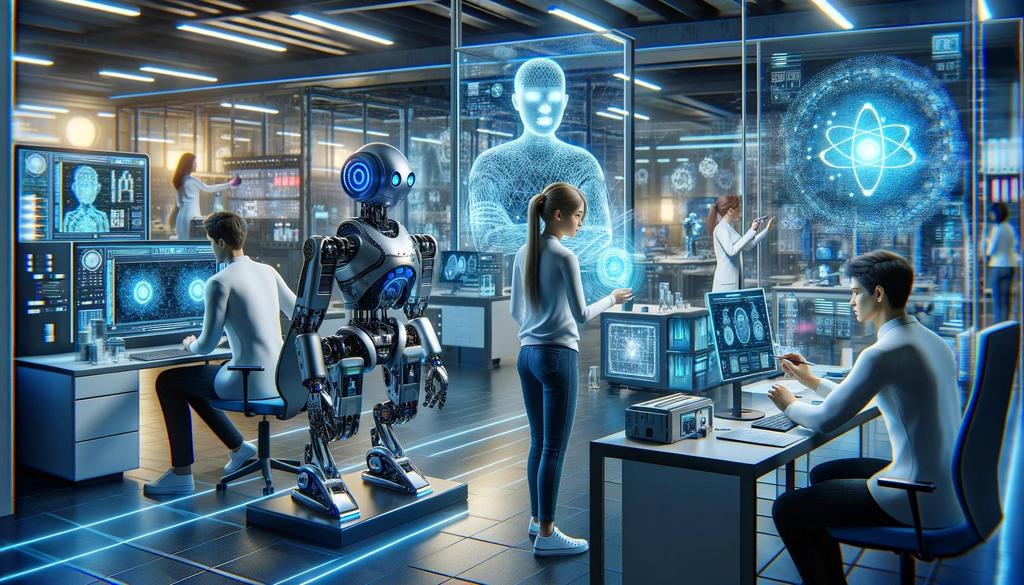
Advanced AI Solutions
The reinforcement of traditional AI with quantum capabilities can lead to the development of entirely new and unexpected AI applications.
Enhanced Machine Learning Models
Quantum algorithms can optimize machine learning models beyond the capabilities of classical methods. For instance, quantum-enhanced machine learning can improve the training of AI models, leading to faster and more accurate outcomes in areas such as image and speech recognition, medical diagnostics, and autonomous systems.
Efficiency in Data Centers
Modern AI models consume significant amounts of energy, leading to substantial carbon footprints. Quantum AI offers a more energy-efficient alternative by reducing the computational load on data centers. This not only cuts energy costs but also supports environmental sustainability initiatives.

Quantum Game Theory
Quantum game theory, an extension of classical game theory into the quantum realm, offers promising applications for complex decision-making processes.
Strategic Planning and Resource Allocation
Quantum game theory can optimize resource allocation and strategic planning in scenarios with multiple stakeholders and competing interests. For example, in economics and business strategy, quantum algorithms can identify optimal strategies that classical approaches might miss, providing a competitive advantage.
Quantum Communication Networks
Building robust and efficient quantum communication networks is another promising use case. Leveraging quantum game theory in designing these networks can ensure optimal information flow and resource utilization, enhancing the overall efficiency and security of quantum communications.

Future Impact Across Industries
As we look toward the future, the integration of Quantum AI is expected to be a gamechanger across numerous sectors.
Healthcare and Life Sciences
Quantum AI has the potential to revolutionize healthcare, from improving diagnostic accuracy to personalizing treatment plans based on genetic data. In life sciences, it can accelerate research and development, enabling breakthroughs in understanding complex biological systems.
Energy Sector
In the energy industry, Quantum AI can optimize energy distribution and consumption patterns, support the development of new energy materials, and enhance the efficiency of renewable energy sources. This has the potential to significantly reduce carbon footprints and advance global sustainability goals.
Automotive and Aerospace
Quantum AI can drive innovation in the automotive and aerospace industries through improved materials design, optimizing manufacturing processes, and enhancing the capabilities of autonomous vehicles and aircraft.
In essence, the potential future use cases of Quantum AI are vast and far-reaching. As technology continues to evolve, the synergy between quantum computing and artificial intelligence promises to unlock new frontiers of innovation, transforming industries and improving lives in unprecedented ways.

Overcoming Challenges in Quantum AI
Technological Hurdles
While the promise of Quantum AI is immense, several technological challenges must be addressed to realize its full potential. Current quantum computers are still in their early stages, facing significant limitations related to error correction and quantum coherence.
Error Correction and Quantum Coherence
Quantum bits, or qubits, are highly sensitive to external disturbances like temperature fluctuations and electromagnetic interference. This sensitivity causes quantum states to become unstable, a problem known as decoherence. Maintaining quantum coherence over extended periods is crucial for reliable quantum computations but remains a significant technical hurdle.
Error correction in quantum computing is complex and requires sophisticated algorithms to detect and correct errors without collapsing the quantum state. Advanced error correction codes and techniques are being developed, but their implementation requires qubits of high fidelity and the ability to perform numerous operations without disrupting the quantum state.

Developing Robust Frameworks
For Quantum AI to progress, it is essential to develop robust, widely adopted frameworks that can facilitate research and practical application.
Open-Source Initiatives
Frameworks like Google’s TensorFlow Quantum are pivotal in advancing Quantum AI. TFQ provides tools for developing hybrid quantum-classical models and integrating quantum computing capabilities with traditional machine learning frameworks. These open-source libraries allow researchers and developers to experiment with quantum algorithms, accelerate innovation, and share advancements within the community.
Comprehensive Toolkits
A comprehensive toolkit encompassing algorithm development, quantum hardware optimization, and simulation capabilities is crucial for overcoming current technical limitations. These toolkits should be user-friendly, allowing researchers from various fields to explore Quantum AI without requiring extensive expertise in quantum mechanics.

Cultivating a Skilled Workforce
As Quantum AI evolves, there is a growing need for a workforce adept in both quantum computing and artificial intelligence.
Education and Training
Educational institutions and organizations must develop specialized programs to train students and professionals in Quantum AI. This includes incorporating quantum computing principles into AI and computer science curricula, offering hands-on laboratory experiences, and fostering interdisciplinary collaboration.
Industry Collaborations
Partnerships between academia, industry, and government can expedite the development of Quantum AI by pooling resources and expertise. Initiatives like Quantum Industry Hubs and cross-disciplinary research projects can bridge the gap between theoretical research and practical applications, ensuring that advancements in quantum computing are translated into real-world solutions.

Enhancing Quantum Hardware
For Quantum AI to achieve widespread adoption, quantum hardware must become more powerful, less error-prone, and capable of supporting large-scale, robust applications.
Quantum Hardware Innovations
Continuous innovation in quantum hardware, including the development of high-fidelity qubits and advanced quantum processors, is essential. Companies like IBM, Google, and D-Wave are at the forefront of this innovation, pushing the boundaries of what is technologically possible.
Noise Reduction and Stability
Efforts to reduce noise and improve the stability of quantum systems are critical. Research into new materials, cooling techniques, and error-resistant quantum circuits can lead to more reliable and efficient quantum hardware. These innovations will enable longer coherence times and more accurate quantum computations, paving the way for practical Quantum AI applications.
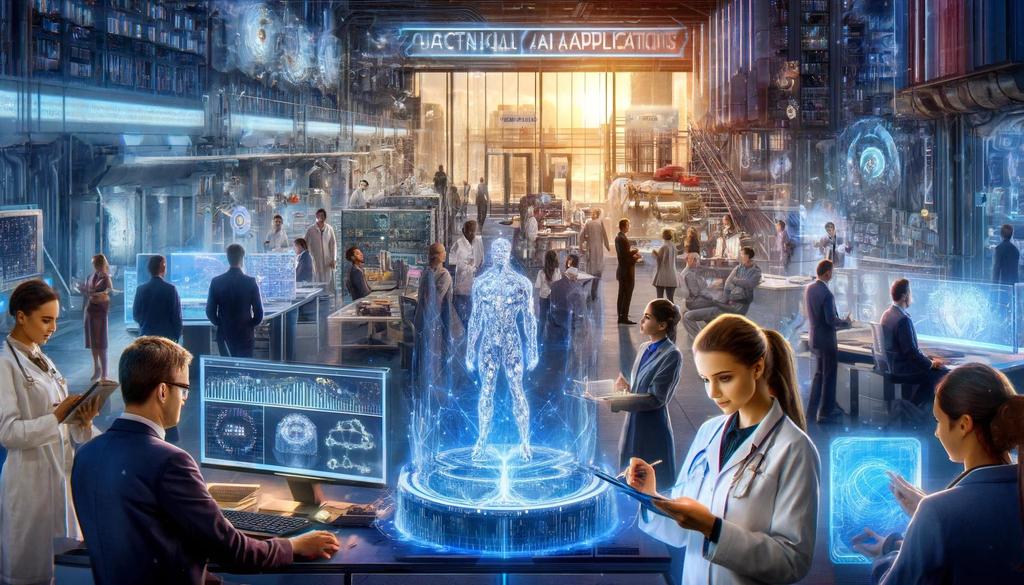
Practical AI Applications
Creating compelling and practical AI applications that leverage the strengths of quantum computing over classical systems is crucial for demonstrating the value of Quantum AI.
Early Applications
Early Quantum AI applications in fields like drug discovery, cryptography, and financial modeling showcase the potential of this technology. These successful implementations can drive further investment and interest, accelerating development and adoption.
Industry-Specific Solutions
Developing industry-specific quantum AI solutions can address unique challenges and provide tailored benefits. For example, in healthcare, Quantum AI can personalize treatment plans based on genetic data, while in logistics, it can optimize supply chain operations to reduce costs and improve efficiency.

Overcoming Initial Barriers
As with any emerging technology, initial barriers to Quantum AI adoption include:
- High costs.
- Limited access to quantum hardware.
- The complexity of integrating quantum solutions with existing systems.
These barriers can be gradually overcome through:
- Cost Reduction: As technology matures and scales, costs are expected to decrease, making Quantum AI more accessible to a broader range of organizations.
- Increased Accessibility: Cloud-based quantum computing platforms can democratize access to quantum resources, allowing more researchers and businesses to experiment with Quantum AI.
- Integration Strategies: Developing seamless integration strategies for combining quantum and classical systems can simplify the adoption process and ensure that organizations can leverage the best of both worlds.

Industry and Regulatory Support
Support from industry leaders and regulatory bodies can significantly impact the development and adoption of Quantum AI.
Standardization
Establishing standards for quantum computing and AI integration can create a more cohesive development environment. Standardization ensures compatibility, reduces complexity, and fosters collaboration across different sectors and regions.
Policy and Funding
Government policies and funding initiatives can play a pivotal role in supporting Quantum AI research and development. Grants, subsidies, and tax incentives for quantum technology projects can stimulate innovation and create a favorable ecosystem for growth.
Ethical Considerations
As Quantum AI advances, ethical considerations must be addressed to ensure responsible and fair use of this powerful technology. Discussions around data privacy, algorithmic transparency, and the societal impacts of Quantum AI are essential for building public trust and acceptance.

Looking Forward: The Path Ahead
The journey towards overcoming the challenges in Quantum AI is complex but filled with opportunities. Collaborative efforts across academia, industry, and government, coupled with continuous innovation in quantum hardware and software, will push the boundaries of what is possible.
By addressing these challenges head-on, we can unlock the full potential of Quantum AI, paving the way for a future where quantum-enhanced intelligence transforms industries, drives scientific discoveries, and improves lives.

The Quantum Horizon and Beyond
As we stand on the threshold of a new era, the intersection of quantum computing and artificial intelligence—Quantum AI—promises to usher in a revolution of unprecedented magnitude. The journey of Quantum AI, from its foundational principles to its current state of research, presents a tantalizing glimpse into a future shaped by quantum-enhanced ingenuity.
Synthesis of Quantum AI’s Promise
Quantum AI fundamentally transforms how we approach computation and problem-solving. Utilizing the principles of quantum mechanics, Quantum AI can process vast datasets with unparalleled speed and efficiency. This capability offers transformative potential across numerous fields, from biomedical research with advanced genetic biomarker discovery, to logistics and supply chain optimization, from quantum cryptography, ensuring robust cybersecurity, to climate modeling for precise weather forecasting.
Our exploration highlighted the unique strengths of Quantum AI over classical AI:
- Qubits and Quantum Parallelism: The ability of qubits to exist in superposition and entanglement unleashes exponential computational power.
- Advanced Machine Learning: Enhanced efficiency in complex tasks, from image recognition to natural language processing.
- Quantum Cryptography: Providing next-generation security solutions against sophisticated cyber threats.
Navigating the Challenges
Despite its promise, Quantum AI faces significant technological hurdles. Overcoming challenges like error correction and maintaining quantum coherence is crucial. Hybrid models that blend quantum and classical computing offer a viable pathway forward, leveraging the strengths of both systems.
Developing robust frameworks such as Google’s TensorFlow Quantum is essential for enabling further research and practical applications. Education and industry collaboration are also pivotal in cultivating a skilled workforce proficient in Quantum AI technologies.
The Potential for Transformation
Looking ahead, the transformative impact of Quantum AI is poised to revolutionize multiple sectors:
- Healthcare: Personalized treatments and accelerated drug discovery.
- Finance: Enhanced risk management and predictive analytics.
- Energy: Optimized energy consumption and sustainable development.
- Aerospace and Automotive: Innovations in materials design and autonomous systems.

The Road Ahead for Quantum Artificial Intelligence
The integration of Quantum AI into our technological landscape is more than just an advancement; it’s a monumental leap towards solving problems that were previously insurmountable. As we continue to develop quantum technologies, the synergy between quantum computing and artificial intelligence will likely reveal new frontiers of innovation.
As industries adjust to harnessing the power of Quantum AI, adopting strategies to overcome existing barriers will be crucial. This includes reducing costs, enhancing accessibility, and fostering a collaborative ecosystem that encourages continuous innovation and ethical considerations.
Quantum AI stands as a testament to human ingenuity and our relentless pursuit of progress. Its potential to redefine areas from cybersecurity to personalized medicine demonstrates its significance not just as a technological marvel but as a catalyst for profound societal change.
Stay tuned as we continue to explore the evolving landscape of Quantum AI, bringing you the latest insights, advancements, and breakthroughs in this exhilarating field. The future of Quantum AI is not just on the horizon—it is being forged today, promising a world where the impossible becomes possible.
This concludes our deep dive into the fascinating world of Quantum Artificial Intelligence. Be sure to stay connected for more updates and detailed explorations into this and other groundbreaking technologies shaping our future.


