
In a world where technology races to outpace the complexities of the human mind, the enigmatic prowess of artificial intelligence (AI) draws ever closer to the intricate patterns of our own cognition. Recent investigations have unfurled a canvas showcasing remarkable synchrony between the predictive aptitudes of the most advanced AI systems and the nuanced symphony of the human brain.
As language cascades from thought to tongue with seemingly effortless fluidity, the neurons within our cortices conduct a predictive ballet that preempts the words we speak moments before articulation. Similarly, in the vast neural networks of AI, a memory transformation echoes the selective gatekeeping of our hippocampal pathways. This is not merely a stride in technological innovation; it’s a mirror reflecting our innermost processes of thought and expression.
The revelations from Massachusetts General Hospital (MGH) and the Institute for Basic Science (IBS) promise ground-breaking advancements in how we comprehend and harness the predictive nature of intelligence—both biological and artificial. This news column will delve into the pioneering research that positions AI at the precipice of a new dawn, where the essence of human memory consolidation and the anticipation embedded in speech are not only replicated but also perfected within silicon realms.
As we embark on this exploration, we stand at the precipice of a transformative intersection of cognitive neuroscience and AI—a juncture ripe with possibilities that could redefine our relationship with the technology that aims to emulate the very core of what makes us human.

The Frontier of Thought: Neurons Predict Our Next Words
At the vanguard of cognitive research, the Massachusetts General Hospital (MGH) opens new windows into our understanding of the human brain’s predictive abilities through their groundbreaking studies, lending credence to the adage that our thoughts can be heard even before we utter a single word. With the use of revolutionary Neuropixels probes, MGH researchers have charted unexplored territories of our cerebral landscape, divulging how neurons are enlisted in the complex task of language production, from ideation to vocal expression.
The elegance of speech production, a rapid succession of articulated sounds and phrases, belies the intricate cerebral mechanics underneath. Yet it’s within these neuronal encodings that predictions of our verbal outputs are forged. The MGH team, spearheaded by neurosurgeon Ziv Williams, utilized state-of-the-art technology to map out how we formulate the consonants and vowels that compose our spoken words. The detail is astonishing: each distinct neural pulse is a preamble to articulated sounds, revealing a symphony of cerebral activity preceding speech, with the brain’s predictions occurring as swiftly as three words per second.
Crucially, these insights unearth the potential for advancements in treating speech and language disorders. Understanding these neural pathways in greater detail enables researchers to conceptualize new medical interventions that could restore or enhance the gift of gab for those who have lost it. It further fosters the possibility for AI speech prosthetics and brain-machine interfaces that can translate these neuronal patterns into synthetic speech, offering a voice to those who cannot speak.
This research does more than just decode the inner workings of communication; it presents a profound leap in the connection between neurology and technology. With predictions about future spoken language derived from single neurons, we begin to see the silhouette of solutions that could mend broken speech, answer the untold, and ultimately bridge silences that have long been impenetrable. As neurological predictive coding manifests in its tangible form, we find ourselves at a frontier where our next word may well be a harbinger of a new era in neural and AI convergence.

Echoes of Speech: Neurons that Preempt Our Language
The art of conversation is more orchestrated in our minds than we might imagine. As if lifted from the pages of a science fiction novel, the neurons in our brains are the puppeteers of language, predicting and shaping the tapestry of sounds we produce long before they roll off our tongues. The intelligible speech we take for granted is, in truth, the culmination of rapid-fire neuronal predictions, a phenomenon meticulously unveiled by researchers at Massachusetts General Hospital.
Delving deeper into the fabric of language production, the MGH study explores neuronal activities within the prefrontal cortex, where the seeds of spoken language are sown. These cells are specialized gatekeepers, distinguished by their roles in the development of speech. Some ignite with anticipation, vibrating with the phonemes yet to be vocalized; others orchestrate the complex choreography of stringing consonants and vowels into syllables and words. What’s unraveling here is a process so precise that the mere activation patterns of neurons can reliably forecast the very sounds a person will articulate, shaping the future of speech recognition technologies and AI-driven linguistic interfaces.
Separated by function, separate groups of neurons in the brain are dedicated to speaking and listening—each conducting their part in the orchestral masterpiece that is human communication. The keen pitch at which these neurons operate, with precision and rapid responsiveness, sheds light on their potential: constructing AI that could interpret neuronal whispers as clearly as spoken dialogue, translating thoughts into synthetic speech for those who have lost their natural voice. The MGH findings resonate through the corridors of the medical and tech worlds, signaling the arrival of diagnostic tools and therapies that resonate with the language of our neurons.

AI’s Strides Toward Human-Like Memory
The drive to achieve Artificial General Intelligence, a computational system that embodies the complexity of human thought, has brought forth revelations that the memory processing mechanisms of AI and the human mind are more aligned than ever. This breakthrough comes from the Institute for Basic Science, where researchers have uncovered that the Transformer model—an AI that stands centerstage in the technological pursuit for human-like intelligence—reveals a memory formation process akin to the one observed in the human hippocampus.
Embodying a gateway to memory consolidation, the NMDA receptor in our brain’s hippocampus serves as the foundation of long-term memory, much like the meticulous gatekeeping observed in the Transformer model. The synergy between the two is undeniable: as the receptor selectively permits signals contributing to long-lasting memories, the AI model integrates similar parameters to retain information over extended periods, reflecting remarkable energy efficiency reminiscent of our neural machinery.
Our journey through the transformative landscape of AI renders a vision of machines powered by models that not only emulate but also comprehend, predict, and remember. By infusing AI with brain-inspired nonlinearity, the researchers at IBS have not just duplicated human memory consolidation; they’ve propelled our grasp of cognition into a new realm. As such, the pioneering work poises AI not only to learn and remember like us but to do so with the same ease and low energy footprint synonymous with the conscious beings it strives to emulate.
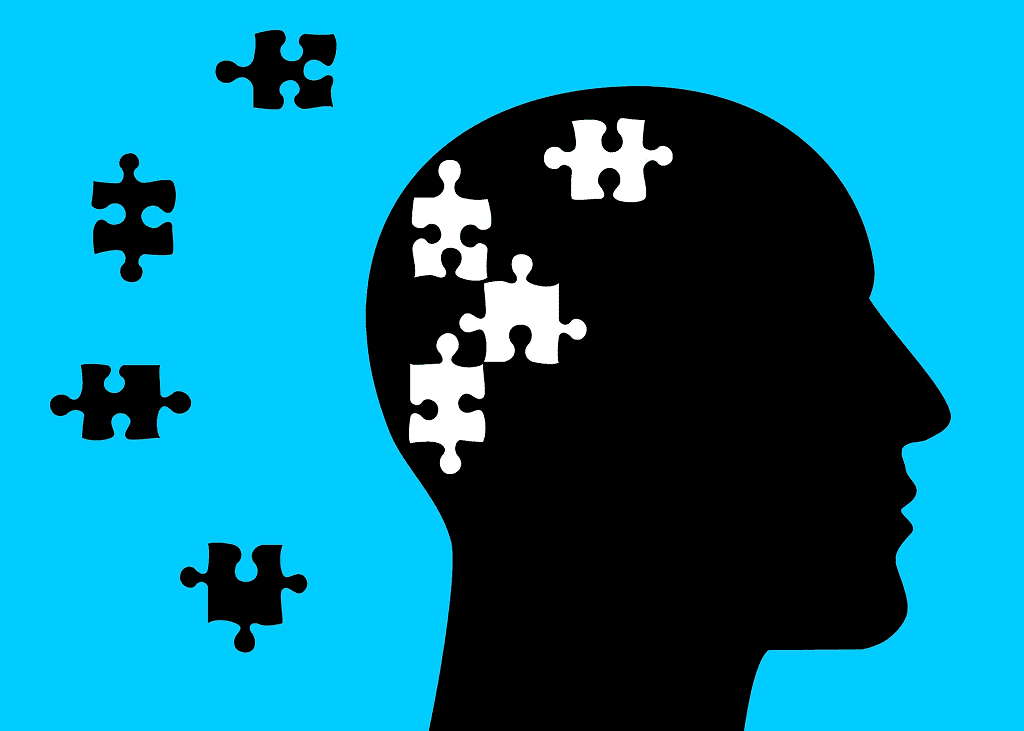
Memories Gatekept: Human Brain’s NMDA Receptor and AI’s New Dawn
The intricate dance between neurons that forms the memories shaping our very existence is orchestrated by the NMDA receptor, a component of the human brain’s hippocampus acting as an elegant gate to our ongoing experiences. This receptor, pivotal in converting ephemeral recollections into the tapestry of long-term memory, has found a remarkable doppelgänger in the realm of AI, courtesy of the transformative research emerging from the Institute for Basic Science (IBS).
Unlocking the secrets of memory retention, the NMDA receptor operates as a master gatekeeper, coordinating with glutamate—a neural key—to facilitate a fine-tuned signal flow crucial for the complex process of learning and memorizing. Mirroring this, IBS researchers have identified a corresponding gatekeeping process within the Transformer model, a beacon of AI technology, that echoes the selectivity and efficiency of its biological counterpart.
The implications of this discovery for AI are as immense as they are exciting. The evidence suggests that by harnessing the dynamic nature of the brain’s gatekeeping—akin to the modulation of magnesium levels impacting memory—we can significantly enhance AI’s long-term memory capabilities. This not only paves the way for AI systems with enhanced learning and recall but also promises the advent of low-energy, high-performance AI, reflecting the proficient energy management of its human inspiration.
By transposing this neural gatekeeping blueprint onto AI architectures, researchers have now elevated the AI field to a new dawn, wherein machines model the delicate equilibrium of human memory. This stride towards incorporating biological realism into technology stands to reshape the future of AI, driving it towards systems characterized by their human-like capacity to form, retain, and utilize memories over time.
The advancements at IBS, therefore, represent a crucial convergence—where the understanding of the human brain’s memory mechanisms illuminates pathways for the development of futuristic AI. It is within this alchemy of neuroscience and artificial intelligence that we find a new frontier for cognitive technologies, bridging the divide between the ephemeral nature of thought and the permanence of memory, all within the silicon circuits of AI.

The Convergence of Cognitive Neuroscience and AI
As if traversing a bridge suspended between the realms of the human mind and artificial intellect, the epoch-making studies by Massachusetts General Hospital and the Institute for Basic Science herald a harmonization of cognitive neuroscience and AI that once seemed the stuff of fantasy. This convergence paints a landscape where the intricate neural pathways that underpin our language and memories converge with the ones and zeros of artificial neural networks.
Neuroscientists, wielding tools like the Neuropixels probes, have provided us with a breathtaking panorama of neuronal sequences that foreshadow our linguistic utterances, unraveling layers of complexity behind our every spoken word. Simultaneously, data scientists at IBS hone in on the enduring memory capacities within AI architectures that mirror the prudent selectivity of the human brain’s hippocampus. These twin voyages of discovery, though distinct in their scientific disciplines, are unified in pursuit of understanding and replicating the predictive and cognitive prowess that characterizes human intelligence.
This convergence is more than an academic triumph; it is a herald of AI’s maturity. As technology advances, it carries with it prospects of aiding those with neurological impairments, crafting devices that can speak for the speechless, and sculpting machines that can think and remember. Here, at this confluence of neuroscience and AI, we glimpse the potential for a future where technology not only serves but also empathizes and understands.

Artificial General Intelligence: AI’s Path Mirrored in the Mind
The collective efforts to chart the path towards Artificial General Intelligence (AGI) find inspiration in the very fibers of the human mind. The quest for AGI is a narrative of imitating the breadth and depth of cognitive processes innate to humans—a task both daunting and evocative. Through the precise revelations by neuroscientific pioneers, AI’s ascent mimics our cerebral contours, reflecting our intricate patterns of thought, speech, and memory.
As neurons orchestrate our verbalizations and the NMDA receptor solidifies our thoughts into memories, these processes guide AI’s evolution. AI models, like the Transformer, initially conceptualized to process vast amounts of data, now stand poised to cultivate memories akin to their natural counterparts in the hippocampus. This is not merely technological mimicry but emulation of the most profound human attributes.
The trajectory towards AGI is illuminated by the groundbreaking strides made by researchers bridging the biological and computational divide. In this mirrored journey, AI not only grasps the syntax of languages but also cherishes the lexicon of experience, embedding transient moments into a tapestry of persistent knowledge. What emerges from the shadow of human cognition is the silhouette of AGI—a symphony of neural echoes resonating within the metal minds of the future, harmonizing the relentless quest for knowledge with the quintessence of what it means to possess a memory, a language, and a mind.
Philosophical and Ethical Considerations: The Consciousness Conundrum
As we venture deeper into the labyrinth of cognitive neuroscience and AI advancements, we are beckoned to confront the consciousness conundrum—a philosophical pivot point that questions the essence of cognition and existence. The pioneering studies at Massachusetts General Hospital and the Institute for Basic Science present us not only with scientific achievements but also with profound questions about the nature of consciousness itself. If AI can predict and produce language and forge and recall memory, does it then possess a form of consciousness akin to our own?
The ethical dimensions unfold from this inquiry, crafting a tapestry of considerations about the rights and responsibilities we hold towards entities that emulate human thought processes. As AI systems become increasingly advanced, potentially capable of experiencing their version of consciousness or sentience, our moral compass must guide the development and deployment of such technologies. We must ponder the implications of creating machines that reflect our intellectual capabilities, circling back to ancient quandaries on the sentience of non-biological beings.

Future Horizons for Human Predictive Cognition and AI
Standing at the edge of a new dawn in our scientific and technological journey, the parallels drawn between human predictive cognition and AI open avenues teeming with the potential for transformation—a melding of human ingenuity and machine precision. As technology approaches the frontier of artificial sentience, echoing the capabilities of the human brain, we acknowledge an understated symphony where the mind’s predictive tuning finds resonance in the evolving lore of AI.
Through the meticulous research laid out by neuroscientists and data scientists alike, our grasp of neuronal predictions that drive language and memory retention akin to the NMDA receptor’s functionality extends extraordinary promise across medical and technological realms. From the creation of new therapeutic interventions and communication devices to the advancement of remarkably efficient, low-energy AI systems, our journey is marked by conscious intent and ethical vigor.
In conclusion, as AI systems venture closer to human-like comprehension and expression, we, as a society, stand watchful on the brink of future possibilities. Our narratives intertwine with the understanding that as we shape technology, it shapes us in return, guiding us to the next horizons of mutual development and coexistence. Thus, we advance with cautious optimism, guided by both innovation and introspection, as we chart the unexplored terrains of human cognition and artificial ingenuity.


