
South Korea’s technology giant Samsung has been collaborating with Advanced Research Lab in the USA to develop the latest artificial intelligence platform that may be the most human-like AI ever created. What they have created is essentially ultra-realistic avatars – called NEON – that are virtually indistinguishable from real humans.
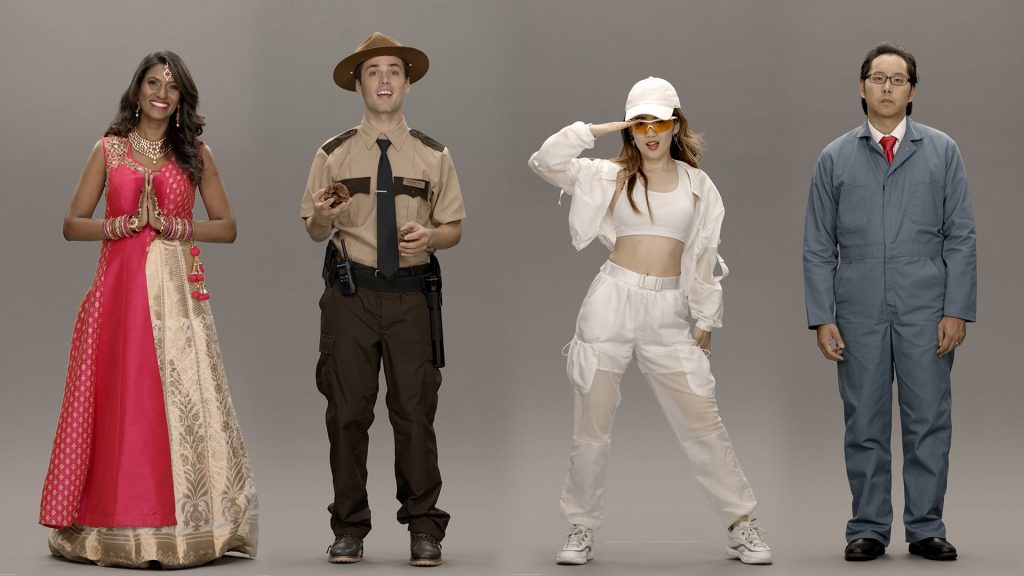
Pranav Mistry, one of the engineers working on the project, said the technology could “autonomously create new expressions, new movements, new dialogue (even in Hindi), completely different from the originally captured data.” He said:
NEON is like a new kind of life. There are millions of species on our planet and we hope to add one more. Neons will be our friends, collaborators, and companions, continually learning, evolving and forming memories from their interactions.
The official unveiling of this artificial human project– which is being developed by the Samsung subsidiary STAR Labs – took place at CES 2020 in Las Vegas. The company describes a NEON as computationally created virtual beings that behave and look like real people, with the ability to show emotions and intelligence. In other words, NEONs are essentially video chatbots that look and act like real people.

Samsung said:
Neons are not AI assistants. Neons are more like us, an independent but virtual living being, who can show emotions and learn from experiences. Unlike AI assistants, Neons do not know it all, and they are not an interface to the internet to ask for weather updates or to play your favorite music.
Instead, they’re designed to have conversations and behave like real humans. They form memories and learn new skills but don’t have a physical embodiment, at least not now. Neons can help with goal-oriented tasks or can be personalized to assist in tasks that require human touch. They can act as teachers, financial advisers, health care providers, concierges, actors, spokespeople or TV anchors.
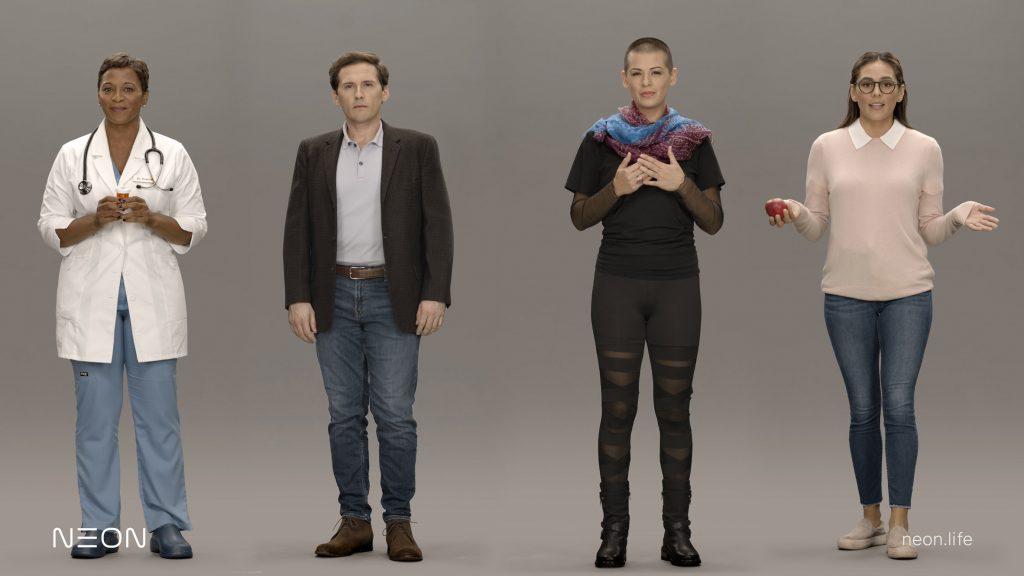
Every individual NEON is computationally generated, created by an algorithm. It can hold conversations with users and display emotions and intelligence while doing so. The avatar is modeled after real people, but their expressions, emotions, and dialog are newly generated on the spot. It can respond almost instantly with a latency of less than a few milliseconds.
What makes the NEONs respond quickly and in a lifelike manner is the Core R3 proprietary technology that powers it. Core R3 stands for realtime, reality, and responsive. It is one of two pieces of NEON technology that bring life to the artificial humans. The other proprietary technology is called Spectra. It’s responsible for NEONs’ learning, intelligence, memory, and emotions.
The company plans to beta-launch NEON at some point this year. Those that want a NEON will be able to license the avatar or subscribe to them for expert help and eventually have them play roles in movies or on the news.
The following video was a pre-CES 2020 promotional leak:


