
If bacterial resistance to antibiotics continues to escalate as dramatically as it currently is, it could kill tens of millions of people yearly worldwide by 2050. If scientists found a way to develop new drugs quickly, it could significantly reduce the number of deaths. At the moment, the discovery and regulatory approval of new antibiotics have been too slow. The biggest problem is that researchers keep finding the same molecules over and over, which doesn’t lead to new medicines! Novel chemistry with novel mechanisms of action do. Thanks to the recent revolution of artificial intelligence (AI), there is hope for new antibiotics.
A new study led by synthetic biologist Jim Collins, at the Massachusetts Institute of Technology in Cambridge, employed a pioneering machine-learning approach to identify potential antibiotics from a pool of over 100 million molecules. The AI did so well that it identified several dominant new types of medicines, including one called halicin that works against a wide range of bacteria, even strains of tuberculosis that were considered untreatable. The research has been published in Cell1.
Training A Neural Network
Collins’ team developed a neural network — an AI algorithm designed to mimic how neurons in our brains operate by learning patterns in data — that determines the properties of molecules atom by atom. The researchers used a collection of 2,335 molecules, for which antibacterial activity are known, to train the AI in spotting molecules that prevent the growth of the bacterium Escherichia coli (E. coli). The collection of molecules included a library of around 300 approved antibiotics and 800 natural products derived from plants, microbial sources, and animals.
Co-author Regina Barzilay, an AI researcher at MIT, said:
The algorithm learns to predict molecular function without any assumptions about how drugs work and without chemical groups being labeled. As a result, the model can learn new patterns unknown to human experts.
Once trained, the AI was used to screen the Drug Repurposing Hub, a library that contains about 6,000 molecules under investigation for human diseases. The team instructed the artificial intelligence to predict which molecules would be effective against E. coli and then show them only the ones that look different from conventional antibiotics. Then, they selected about 100 contenders out of the resulting hits and continued the research with physical testing.
Testing The AI’s Findings
Of the 100 chosen to bring to the lab, one turned out to be a potent antibiotic. It is a molecule currently under investigation as a diabetes treatment called halicin. When the team tested it on infected mice, the molecule was active against several pathogens, including a strain of Acinetobacter baumannii and one of Clostridioides difficile – the former being the one that is in desperate need of a new antibiotic.
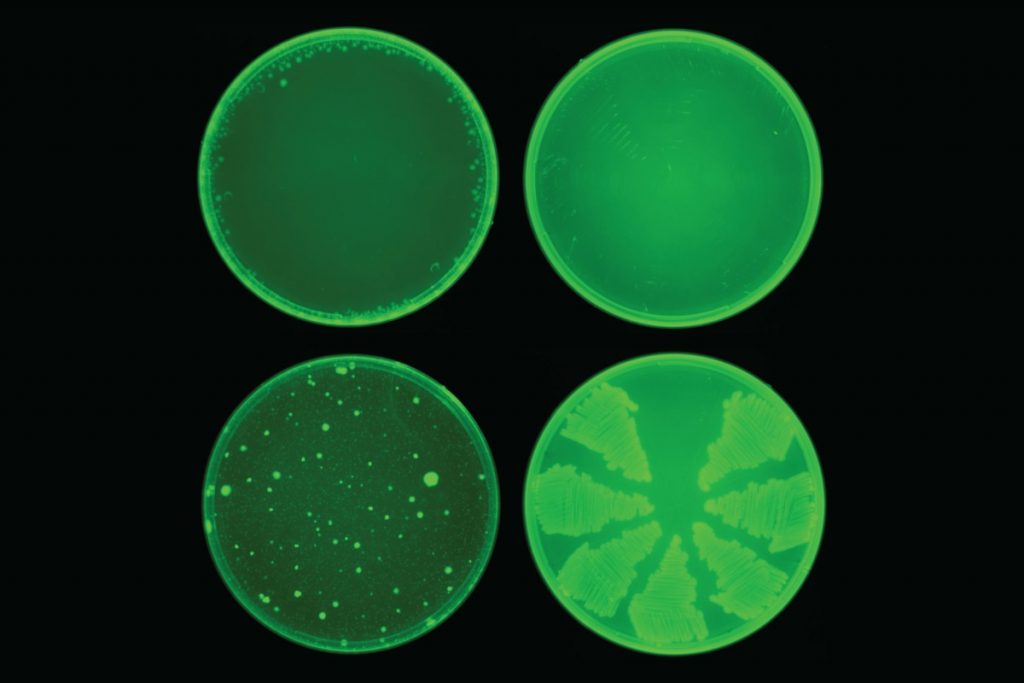
Halicin was found to have low toxicity in initial animal tests and is robust against resistance. Usually, resistance to antibiotic compounds will arise within a day or two in experiments, but halicin showed no resistance even after 30 days of testing. The team is now planning on working with an outside company to get halicin into clinical trials while continuing their research to broaden the approach and find more new antibiotics. They also want to use AI to design molecules from scratch.
Collins says that their approach is unique, rather than searching for a specific molecular class or structure they’ve trained their AI to look for molecules with a particular activity.
Jacob Durrant, a University of Pittsburgh computational biologist, was utterly amazed by the team’s work. He said:
The study is remarkable. The team didn’t just identify candidates, but also validated promising molecules in animal tests. What’s more, the approach could also be applied to other types of drugs, such as those used to treat cancer or neurodegenerative diseases.
Even though many challenges still lie ahead, it looks as if artificial intelligence networks may be the soldiers needed to conquer the never-ending battle against antibiotics resistance!


