
The ongoing global coronavirus outbreak has put protective masks at the top of the list of high-demand-items. The best mask out there is an N95 respirator mask, which blocks 95% of particles over 0.3 micrometers. However, some viruses, such as SARS-CoV-2, can still be transmitted through tiny droplets of water smaller than that. So, researchers have been coming up with ways to make masks even better. From virus-killing coatings made of salts to embedded electrically charged graphene filtration systems, the enhancements are impressive! Today, we are going to elaborate on the latter.
New York-based company LIGC Applications has been developing a face mask with a graphene filtration system – called the Guardian G-Volt – that can be sterilized and safely re-used. The design and testing (at Rice University in the US and Ben Gurion University in Israel) have been five-years in the making. Now, the company is done with the project and ready to launch the invention.
LIGC Applications’ head of international outreach Yossi Levin told Dezeen:
The timing of the campaign for us is an alignment of a worldwide need and technology that has come of age. We are first and foremost scientists and are extremely honored to be able to bring this technology at a time of need. We completely understand and the timing is cause for this cynical response.
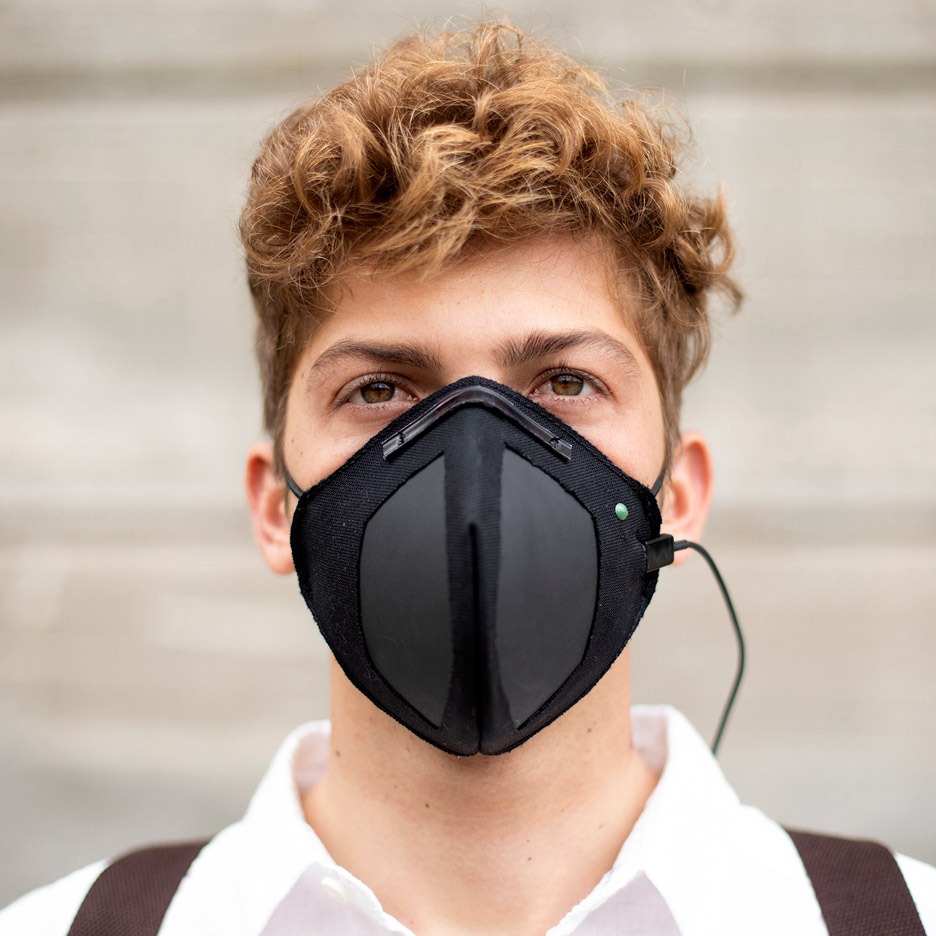
The Guardian G-Volt is 99% effective against particles over 0.3 micrometers thanks to the graphene filtration system. It is also 80% effective against anything smaller. The mask works by sending a low-level electrical charge through the surface that repels any particles trapped in the graphene. A portable battery pack powers it via a USB port. The device comes with an at-home docking system as well where the mask can be plugged in and thoroughly sterilized for future re-use.
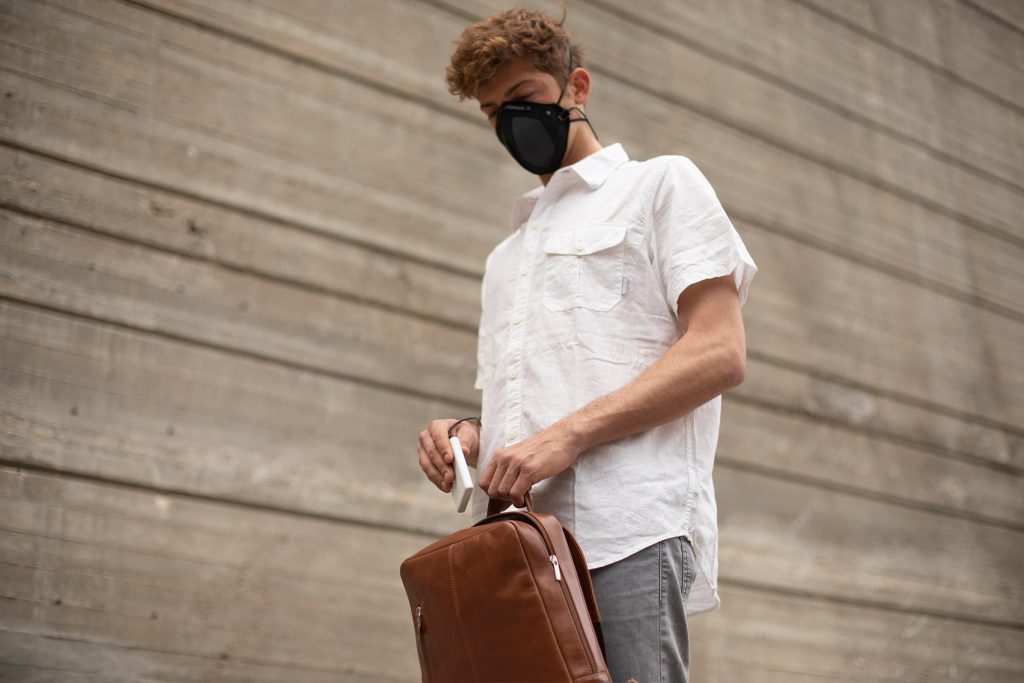
With N95 respirator masks, once it becomes damp and once it has been worn, it must be disposed of and replaced. Also, the virus gets trapped in the mask and can still be transferred onto the wearer’s fingers. But with the Guardian G-Volt, the graphene repels the germs and the mask can be re-used.
Graphene is also naturally antibacterial, so the mask can even protect the wearer from antibiotic-resistant bacteria – another threat to populations nowadays. Additionally, the mask can safeguard against inhaling air pollution particles.
The World Health Organization stresses that masks can only protect against inhaling the virus via mouth and nose. However, the virus can still be caught through the eyes, hence why medical workers wear face shields or goggles too. In the end, the most effective defense against coronavirus is to wash your hands regularly.


