
The James Dyson Award just completed its 15th year running, and all the inventions submitted by talented students worldwide were terrific, such as every year before. If you don’t know yet, the James Dyson Award is an international competition established to recognize and encourage science, engineering, and design students to solve the world’s most pressing problems creatively.
As 2021 came to an end, so did the competition. National finalists from 28 regions were chosen, and from the three finalists – one per category of importance for 2021: dealing with the pandemic, environmental concerns, and making life easier for people with disabilities. The categories change to suit the given times most pressing problems. The winning ideas are selected because they have the potential to change the world.
In 2018, a pair of students from Lancaster University, Nicolas Orellana and Yaseen Noorani won with the O-Wind Turbine. The year after that (2019), Lucy Hughes from the UK won with MarinaTex – a biodegradable plastic made from fish waste. And in 2020, there were two winners: the Blue Box and AuRUES. The Blue Box is a breast cancer home screening kit, and AuRUES is UV energy harvesting solar panel.
That brings us to the 2021 winners, which include three for the first time in James Dyson Award history: HOPES as the international winner, PLASTIC SCANNER as the winner in the sustainability category, and REACT as the winner in the medical category.
- HOPES (Home eye Pressure E-skin Sensor), by students of the National University of Singapore, is an at-home eye pressure testing device to check glaucoma painlessly.
- PLASTIC SCANNER, by Jerry de Vos from TU Delft, is a low-cost, handheld device to identify plastic for recycling.
- REACT, by Joseph Bentley from Loughborough University, is a technology that stems bleeding to help save stabbing victims’ lives. These world-improving inventions won the students £30,000 each to bring their ideas to fruition.
Here’s what each winner had to say about their project and receiving the award, and what James Dyson, Dyson founder, and Chief Engineer, had to say about their invention:
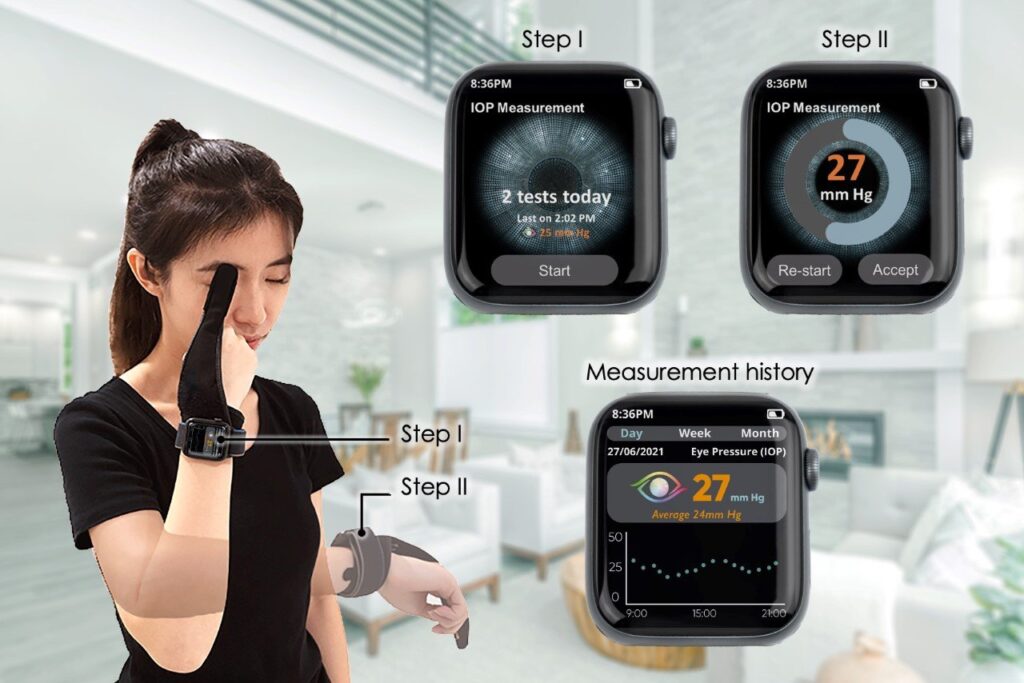
The HOPES team said:
We were thrilled to hear from Sir James Dyson that we are this year’s International winners of the James Dyson Award. For us, this all started with Kelu and her attempt to create a solution for her father after the problem they faced as a family. With this win, we hope in the future people can measure their eye pressure in a pain-free, at-home environment. We want to improve people’s quality of life and aspire to one day apply our research group’s sensor technology across different health monitoring applications, such as robotics and biomedical devices.
James Dyson added:
I’ve experienced first-hand how invasive and unpleasant the tests for glaucoma can be, but it is a vital test. This group of young people has tackled a problem that doesn’t affect them directly but which affects members of their family. Their work has the potential to make glaucoma testing much more widely available, and I wish them every success as they navigate the challenging process of further development and medical approvals.
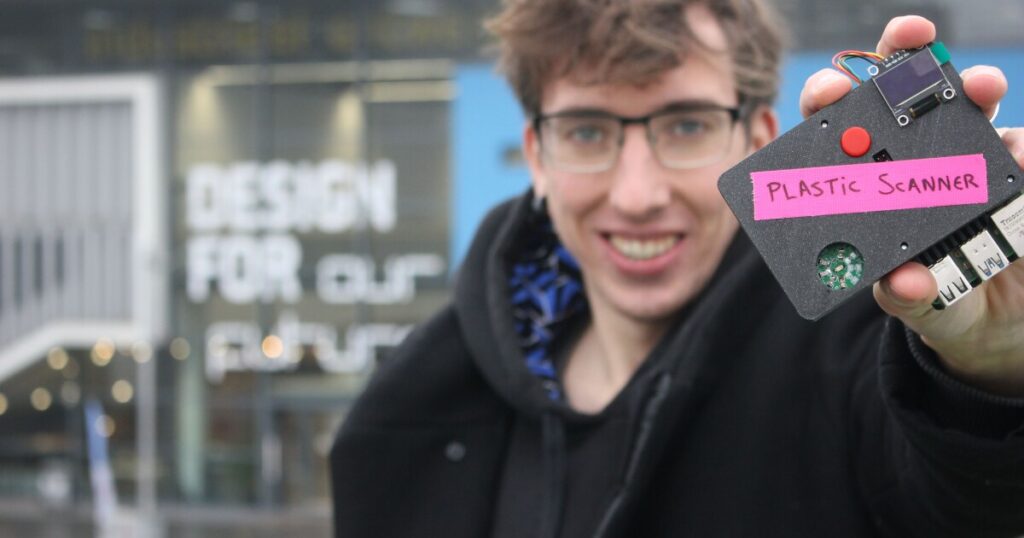
PLASTIC SCANNER creator Jerry de Vos, who is also a member of the organization Precious Plastic, which aims to reduce plastic waste, said:
When James Dyson personally told me that I had won the Sustainability prize, I was stunned and then started to realize the impact of this win and the possibilities the Award generates. The goal of the Plastic Scanner is to build a simple, open-source device that can identify the most common types of plastic. I am so motivated after winning the James Dyson Award, and it will help accelerate the development process on both the electronics as well as the software side of the invention. Furthermore, by improving its quality and making it intuitive to replicate, I hope to enable anyone to identify and sort plastic properly, overcoming one of the most complex barriers to recycling plastic anywhere around the world.
James Dyson added:
It may be fashionable to demonize plastic, but it is a durable and versatile material which has an important role to play. The challenge, of course, is ensuring it is reused and recycled effectively to avoid it going to landfill. Understanding how to recycle plastics correctly is complicated, but Jerry has developed a very effective technology that could put this knowledge into everyone’s hands. Jerry is focusing his efforts on supporting developing countries. When I rang Jerry to deliver the news, he was traveling to Algeria to help local communities deploy recycling initiatives, his is inspiring work, and I wish him every success with this potentially significant technology.
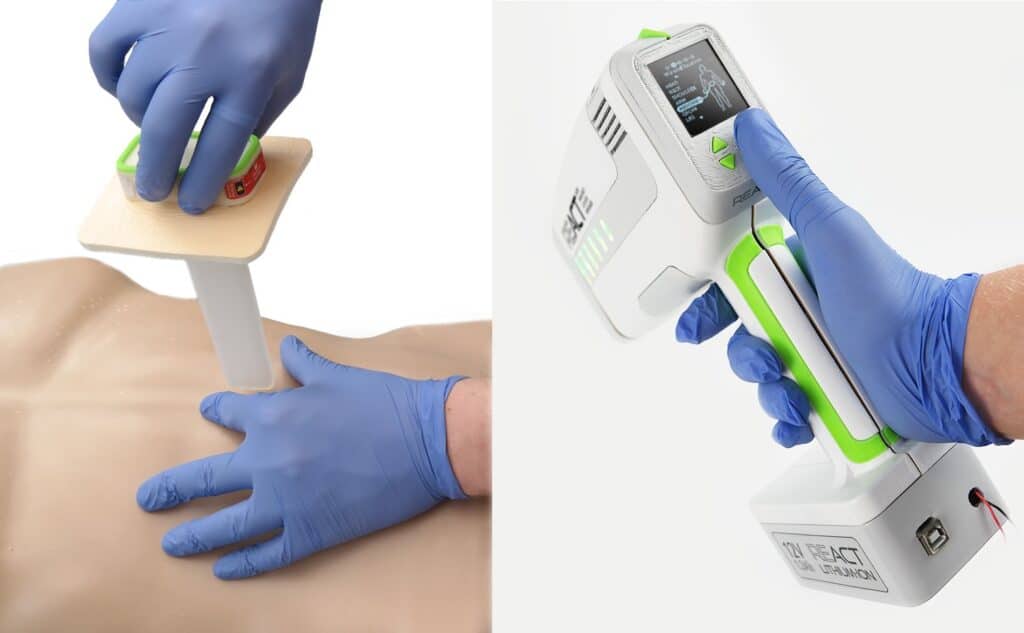
REACT inventor Joseph Bentley said:
I am beyond words in describing my gratitude in receiving this global prize dedicated to a medical innovation. Knife crime is horrific and a global challenge that is claiming the lives of thousands every year. The REACT system has the potential to be a life-saving tool in the fight against knife crime, but the development of medical devices is a long and challenging process. The recognition and funding provided by the James Dyson Award has given me the determination and confidence to develop the REACT system and getting it into the hands of first responders as soon as possible.
James Dyson added:
This type of problem-solving invention shows the significant impact engineers can have on serious, global issues, and is why I created the James Dyson Award. Developing a medical device is very challenging, and there will be no end of hurdles, but I would urge Joseph not to be put off since the opportunity to save lives is so great. I hope that through winning the Award, this invention gets the support it requires as it has the potential to make an impactful change.
Since the James Dyson Award first opened in 2005, the James Dyson Foundation and James Dyson himself have supported almost 300 inventions with prize earnings and donated over £135 million to boundary-breaking concepts. So, are you interested in joining this year’s competition? The James Dyson Award is accepting applications until June 30th, 2022. So, sign up and get your brilliant idea noticed so it can change lives!


