
Transforming a household into a hub for sustainability often begins with the most functional spaces we inhabit. Across Latin America, a fundamental reimagining of domestic life is taking root, where families are trading disposable convenience for systems that prioritize longevity and environmental health. A zero-waste lifestyle in Latin America isn’t just about individual choices; it represents a cultural pivot toward materials that honor the earth rather than clutter its landscapes.
Sustainable home design in this region now frequently highlights the genius of local resourcefulness. From bathrooms that utilize refillable household essentials to kitchens stocked with tools derived from agricultural byproducts, the modern home is becoming a laboratory for circularity. You will notice that these changes aren’t just eco-friendly—they are often more efficient, cost-effective, and deeply connected to local traditions of reuse.
Regional innovations offer a scalable model for anyone hoping to implement eco-kitchen ideas and plastic-free bathroom products into their own daily routines. By looking closely at how products are designed and used daily, we can see a clear path toward a significant reduction in municipal solid waste.
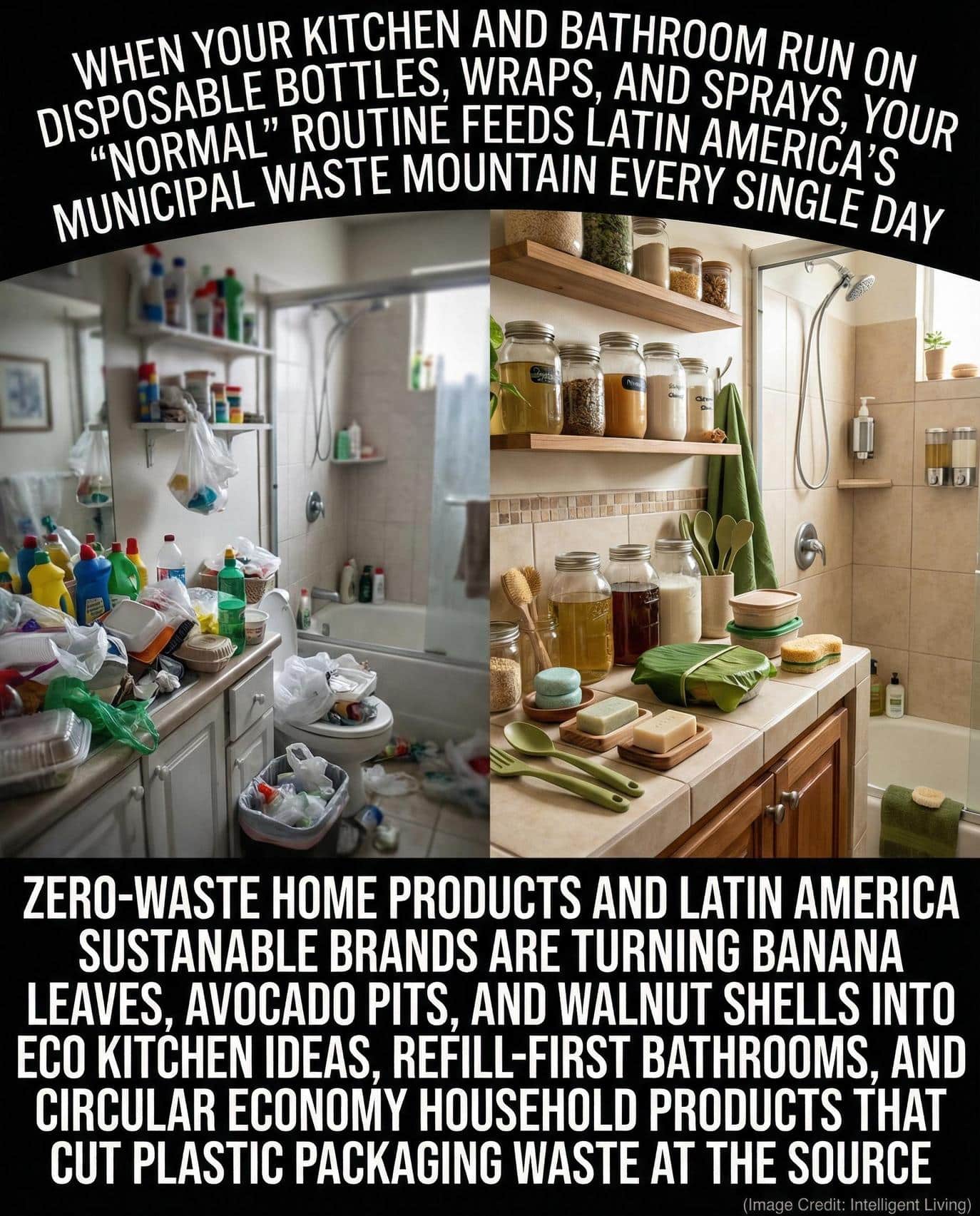
Zero-Waste Home Products in Latin America: Key Waste Statistics and System Shifts
Grasping the scale of the challenge requires looking at the raw data defining the region’s current crisis. The statistics below highlight why a shift toward circularity is no longer optional:
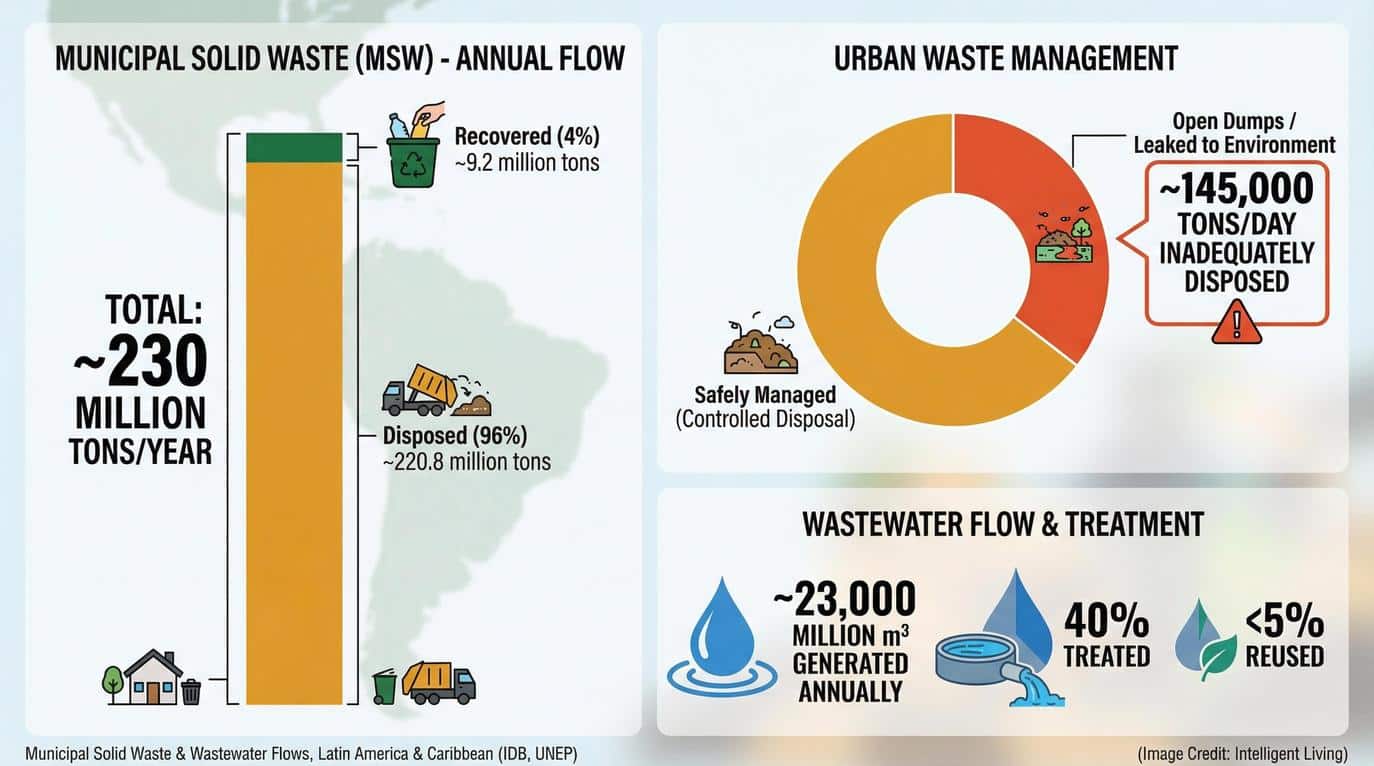
- Latin America and the Caribbean generated approximately 230 million tons of municipal solid waste in 2021, and this regional material flow assessment highlights how per capita waste is trending upward.
- The same report shows an average of roughly 360 kilograms of waste per person per year, with projections that this figure could rise to around 529 kilograms per person by 2050 if trends continue.
- The United Nations Environment Programme’s regional outlook notes that about one-third of city waste in the region ends up in open dumps or the environment.
- Globally, packaging accounts for about 36 percent of plastics produced, and a large share of single-use food and beverage packaging ends up landfilled or mismanaged.
Regional data like this serves as a stark reminder that our current trajectory is unsustainable, forcing a necessary reevaluation of how we manage resources at home. This explains why kitchens and bathrooms have become testing grounds for more durable, refill-based, and waste-to-value solutions, and why building a sustainable waste management system in your household is becoming a practical necessity.

Why Kitchens and Bathrooms Generate So Much Waste
You can start reclaiming your space and reducing your environmental footprint by identifying these common sources of plastic:
- Bathroom Essentials: Shampoo, conditioner, liquid soaps, and toothpaste tubes.
- Kitchen Disposables: Plastic wrap, food storage bags, and single-use cutlery.
- Cleaning Supplies: Detergent bottles, floor cleaners, and disinfectants.
Recent data in everything you need to know about plastic pollution suggests that packaging makes up roughly 36 percent of global plastic production. This means that even households that recycle diligently are participating in a system that produces more packaging than most municipal systems can handle.
The core issue is not individual behavior alone. It is product design. When products are built around disposable containers, waste becomes an inevitable outcome.
The Pressure Cooker: Latin America’s Waste Math Makes “Recycle Later” Too Weak
Regional assessments from the Inter-American Development Bank estimate that Latin America and the Caribbean generated more than 230 million tons of municipal solid waste in 2021. This level of waste generation turns kitchens and bathrooms into pressure points where product design choices can either relieve or intensify stress on local disposal systems.
Analysis from the latest waste management outlook for the region indicates that about one-third of urban waste in Latin America ends up in open dumps or leaks into the environment. Local communities frequently burn mismanaged plastics despite evidence that burning plastic causes severe health problems, illustrating why downstream recycling is an insufficient solution. In this context, relying solely on downstream recycling is not enough. Recycling addresses waste after it has already been created. The emerging Latin American model focuses upstream, on preventing waste from being produced in the first place.
This pressure has turned kitchens and bathrooms into laboratories for redesign. The question shifts from how to dispose of packaging to how to eliminate it.

Embracing Refillable Household Essentials to Eliminate Single-Use Packaging at Scale
You might find the refill system to be the most practical shift in the zero-waste movement. Instead of buying a new plastic bottle each time shampoo or detergent runs out, consumers reuse the same container repeatedly.
In Chile, the company Algramo has developed refill models that use durable containers equipped with RFID tags, allowing customers to refill household essentials such as shampoo, detergent, and dishwashing liquid at neighborhood stations. Payments can be tracked digitally, and smart pricing structures actively avoid penalizing smaller purchases, ensuring that refillable household essentials remain accessible to everyone. This model reframes packaging as a long-term asset rather than a disposable shell, mirroring refill machines for cleaning products already operating in Medellín, Colombia, where refill stations for detergents and floor cleaners are built directly into neighborhood shops.
Reusing a single bottle a dozen times prevents twelve others from ever needing to be manufactured, transported, or discarded. Unlike traditional recycling—which remains energy-intensive—refill systems cut material demand directly at the source.
You’ll find that the refill-first approach is often the highest-impact starting point when exploring eco kitchen ideas or plastic-free bathroom products. It does not require new habits around sorting waste. It simply changes how products are purchased.
Scaling Eco Kitchen Ideas with Dissolvable Concentrates and Zero-Waste Cleaning Tablets
A second strategy focuses on reducing the size and material intensity of cleaning products. Many liquid cleaners are mostly water, which increases shipping weight and packaging volume.
UNEP and circular-economy analysts have highlighted innovations such as effervescent cleaning tablets that dissolve in water at home. Instead of purchasing four separate bottles of disinfectant, a consumer can buy a small pouch of tablets and reuse the same spray container. According to the team behind one such initiative, each pouch can replace four traditional bottles, with early goals to prevent hundreds of kilograms of plastic waste in the first year of rollout.
Cleaning tablets offer a bridge toward more circular habits and pair perfectly with zero-waste cleaning strategies that reduce your environmental impact.
Switching to these formats reduces packaging frequency and transportation emissions while keeping product performance consistent.

Innovative Waste-to-Value Solutions: Transforming Agricultural Byproducts into Home Goods
Beyond refills and concentrates, Latin America is also experimenting with transforming agricultural and food byproducts into functional household goods.
Leveraging Local Residues for Durable Kitchen Tool Innovation
Folding waste back into the production cycle represents the next frontier of sustainable home design, where every discarded scrap becomes a potential resource. Designers now create a new class of high-performance materials from residues that were previously ignored.
Banana Leaves as Food Wrap Alternatives
In Bolivia, Banana Pack has developed food wrapping materials made from banana leaves that would otherwise be discarded as agricultural residue. Processing and preserving these leaves allows the company to offer a viable alternative to plastic cling film that requires minimal behavior change in the kitchen. Instead of reaching for plastic wrap, households can use a biodegradable leaf-based material derived from existing crops.
Avocado Seeds into Bioplastic Cutlery
In Mexico, Biofase produces bioplastic cutlery using polymers derived from avocado seeds. According to a profile by iDEASS, the material blend includes a high percentage of avocado-based biopolymers, with products designed to break down under appropriate environmental conditions over time. The company reports processing significant volumes of avocado seed waste each day, turning what would otherwise be discarded into utensils and other items.
Walnut Shell Thermoplastic from Chile
Chile’s innovation ecosystem has also explored thermoplastics derived from walnut shells. Recent work with walnut-based biodegradable thermoplastic used for kitchen utensils shows how agricultural shell waste can be converted into materials suitable for consumer products. This approach reframes what was once a disposal problem as a feedstock for new design, echoing other biodegradable plastic solutions made from nature that turn agricultural residues into new materials.

Essential Checklist for Integrating Plastic-Free Bathroom Products into Your Home
Transitioning to zero-waste home products does not require a complete renovation. The following steps prioritize impact over perfection, and they become much easier when you adopt habits of reducing waste and reclaiming space at home.
- Replace at least one high-volume liquid product with a refill version, such as shampoo or dishwashing liquid.
- Switch one cleaning product to a concentrate or tablet format and reuse the same spray bottle, ensuring your eco-friendly home cleanup routines effectively minimize harsh chemicals.
- Eliminate plastic cling film by experimenting with reusable containers or plant-based wrap alternatives.
- Choose durable kitchen tools made from recycled or agricultural byproducts where available.
- Participate in local collection programs for used cooking oil rather than disposing of it in drains.
- Track how many bottles you avoid purchasing over three months to visualize material reduction.
Small actions like these focus on reducing packaging frequency and material demand, which are often more effective than relying exclusively on recycling. Once these basics feel routine, many households gradually fold in sustainable shopping at a zero-waste store, which concentrates a wide range of low-waste options in one place without relying on single-use packaging.
Building Economic Resilience through Circular Economy Household Product Cooperatives
A zero-waste home blueprint in Latin America is not only about environmental metrics. It also intersects with economic resilience.
Everyday resource recovery becomes a vehicle for social change when local communities are empowered to manage their own waste streams. These systems bridge the gap between environmental protection and financial stability.
Social Impact and Resource Recovery in Urban Waste Management
Systems like these do more than just lower environmental impact; they anchor local livelihoods by turning discarded materials into community-building resources. In Brazil, a major circular economy resource recovery initiative organized networks of cooperatives to collect used cooking oil that would otherwise be poured down drains or discarded improperly. In 2011 alone, millions of liters of used oil were collected through dozens of affiliated cooperatives, with the material recycled into soap and biodiesel.
This model transforms waste collection into dignified, paid work, where household byproducts serve as essential inputs for local manufacturing or for household biodigesters that turn food scraps into biogas and fertilizer. Instead of exporting waste or absorbing cleanup costs later, communities build value from materials already in circulation.
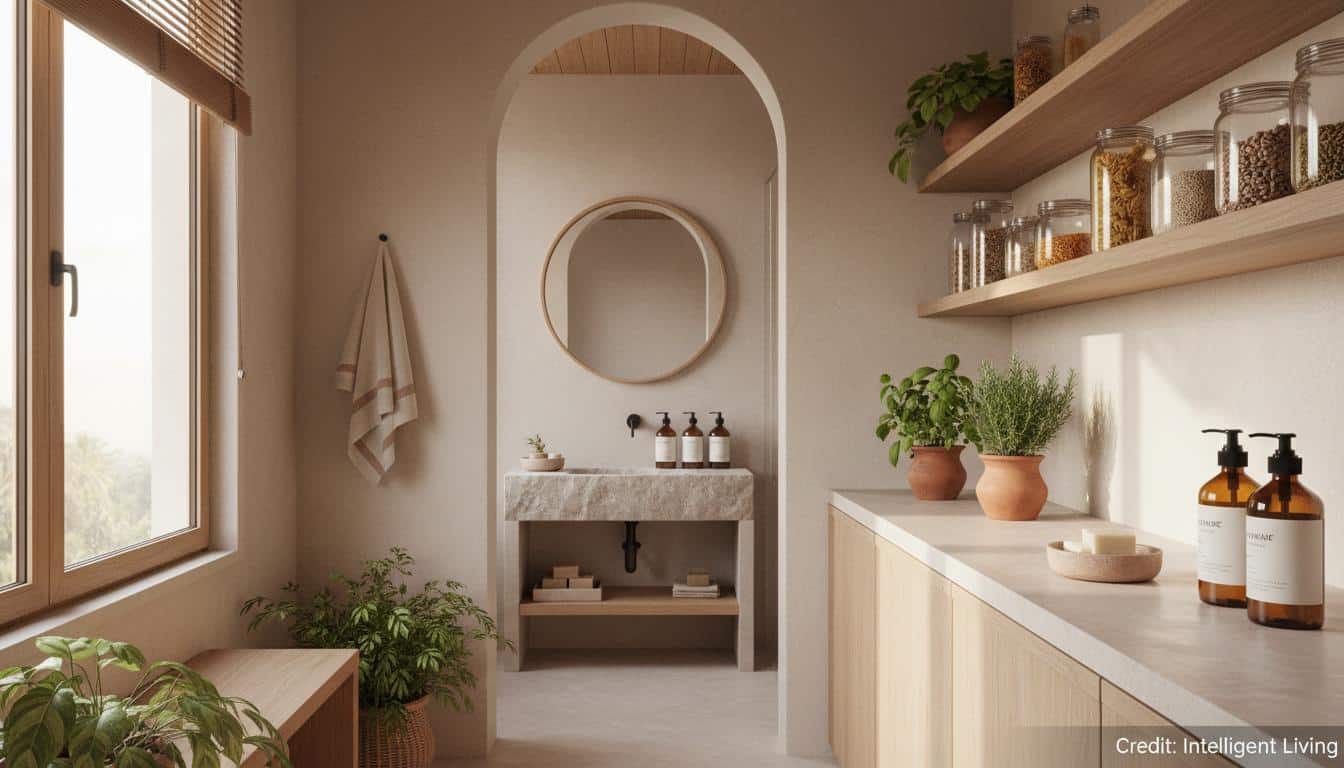
How Latin America’s Zero-Waste Model is Reshaping Sustainable Home Design
Latin America’s zero-waste movement is not defined by aesthetic minimalism or expensive eco upgrades. It is shaped by practical constraints and system-level thinking. Rising municipal solid waste volumes, limited landfill capacity, and packaging-heavy consumer goods have created pressure to redesign everyday products.
Circular systems show that the most durable sustainability gains come from changing the flow of materials through homes, not just from encouraging better sorting at the end of the line. Refill-first bathrooms, concentrate-based cleaning, and waste-to-material kitchen products represent a shift away from disposable convenience.
Redefining Resilience with Zero-Waste Home Products
Shifting toward refillable household essentials and waste-to-value materials marks a significant milestone in how we view our impact on the planet. These systems prove that we don’t need to sacrifice quality or comfort to achieve a sustainable home design. Instead, by embracing the lessons of Latin American innovators, we find that the most effective solutions are often the ones that simplify our lives and reduce our dependence on single-use packaging.
Practices like these create a ripple effect that extends far beyond the kitchen or bathroom. When we choose plastic-free bathroom products and support circular economy household products, we contribute to a broader movement that values resourcefulness over waste. The future of the home lies in these practical, human-centered designs that make living in harmony with nature feel like a natural, effortless progression.

Zero-Waste Home Products FAQ: Refill Systems, Eco Kitchen Ideas, and Plastic-Free Bathrooms
What are The Best Plastic-Free Bathroom Products to Start With?
Shampoo bars, bamboo toothbrushes, and refillable liquid soaps offer the highest immediate impact for reducing bathroom waste.
How Do Refillable Household Essentials Save Money?
Refill systems typically eliminate the ‘packaging tax’ associated with single-use bottles, allowing you to pay only for the product itself.
Can I Find Eco Kitchen Ideas that Use Local Materials?
Yes, many households now use food-wrap alternatives made from banana leaves or utensils crafted from avocado seeds and walnut shells.
Why is A Zero-Waste Lifestyle in Latin America Unique?
It focuses on ‘upstream’ prevention—stopping waste at the design level—rather than just relying on local recycling infrastructure.
How Do I Start A Sustainable Waste Management System in Your Household?
Begin by tracking your waste for one week, then replace your highest-volume disposables with durable, refillable alternatives.


