
Researchers at TMDU (Tokyo Medical and Dental University) have discovered a drug, locamidazole, that mimics the benefits of physical exercise on mouse bones and muscles. The implications of this research could have therapeutic potential for those suffering from osteoporosis and sarcopenia.
Treatment of locomotor frailty is often a multi-disciplinary approach, including regular physical activity such as strength training and aerobic exercise, a balanced diet that includes adequate protein, vitamins, and minerals, medication for underlying conditions like osteoporosis, fall prevention measures, and a comprehensive evaluation by a geriatrician or care team. The required effort put into treatment regimens is so vast that the concept locomotor activity could be meaningfully improved by medication is profound.
Osteoporosis and sarcopenia are related conditions that occur as a person ages and can result in bone density and muscle mass loss. Osteoporosis is a condition causing bone frailty, increasing the likelihood of breakage due to a loss of bone density. Loss of muscle mass and strength is known as sarcopenia. Both conditions can result in a decreased ability to perform daily activities, and the lack of locomotor activity leads to an increased risk of falls and fractures. The loss of muscle mass associated with sarcopenia can also contribute to the development of osteoporosis by reducing the body’s ability to maintain strong bones.
Potential Treatment of Locomotor Frailty
Maintaining a regular exercise routine can make you feel and look better, but did you also know it is good for your bones and muscles? People unable to exercise suffer from locomotor fragility, which weakens their muscles and bones. A novel medication recently discovered by Japanese researchers may help alleviate locomotor frailty by having effects similar to exercise.
Lack of physical activity can weaken the bones, muscles, and skeletal muscles supporting the linkage between the two structures. Exercise eliminates this fragility by increasing muscle growth, reducing bone resorption, and encouraging bone growth. However, physical activity through exercise therapy cannot be used in every medical situation. For example, drug therapy may be highly beneficial for treating sarcopenia and osteoporosis in individuals with brain dysfunction, dementia, cerebrovascular disease, or who are already bedridden. However, no single medication to treat impaired locomotion simultaneously targets both tissues.

LAMZ Locomomimetic Drug
In a study published on August 3, 2022, in the journal Bone Research, researchers from the TMDU used a novel drug screening system to identify a substance that mimics the changes in bone and muscle that occur as a result of exercise. Using the screening system, the team found the aminoindazole derivative locamidazole (LAMZ). LAMZ could stimulate the cell growth of muscle and bone-forming osteoblasts while suppressing bone-degrading osteoclasts’ growth.
When given orally to mice, LAMZ was successfully transmitted into their bloodstream with no apparent adverse effects. The study’s lead author, Takehito Ono, said,
“We were pleased to find that LAMZ-treated mice exhibited larger muscle fiber width, greater maximal muscle strength, a higher rate of bone formation, and lower bone resorption activity,”
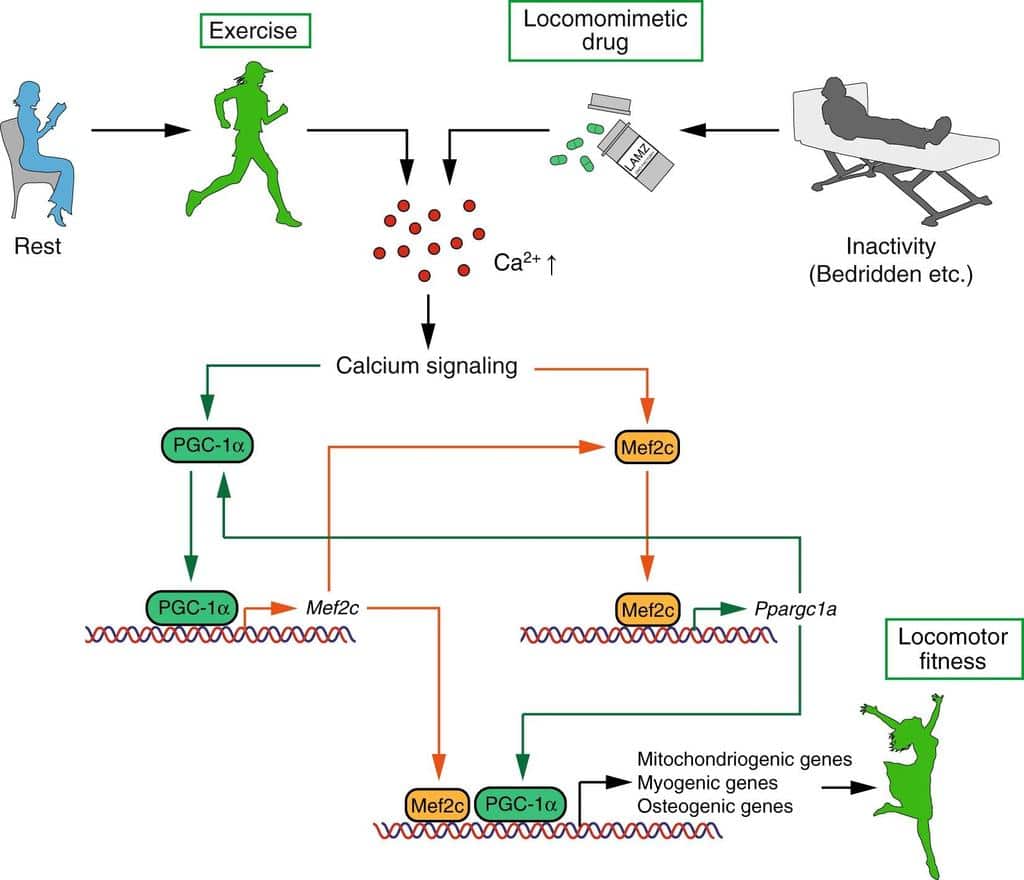
Further investigation into LAMZ treatment’s mode of function revealed that it mimics the calcium and PGC-1 signaling pathways. This is significant because, during exercise, these pathways become active and boost the development of molecules downstream that are vital for bone and muscle maintenance.
Locamidazole was administered to a mouse model of osteoporosis and sarcopenia to see whether it could treat impaired locomotion. “Both oral and subcutaneous administration of the drug improved the muscle and bone of mice with locomotor frailty,” said the study’s senior author Tomoki Nakashima.
Overall, the research team’s findings at Tokyo Medical and Dental University suggest that locamidazole could be used as a therapeutic technique to alleviate locomotor fragility by simulating physical exercise. With just this improvement in locomotion from medication, other treatment options used in tandem could also see great benefit.


