
Concrete, formed mainly from portland cement, water, and gravel, is the most consumed substance on the planet after water. As a result, most construction operations cannot be conceived in North America, Europe, or Asia without concrete, particularly portland cement.
Global cement production is responsible for 8% of yearly greenhouse gas emissions, primarily due to the combustion of mined limestone. Fortunately, a CU Boulder-led team of engineers developed a means to make cement manufacturing carbon-neutral—and even carbon negative—using microalgae that pulls carbon dioxide out of the air.
The team and their colleagues have been rewarded with a $3.2 million grant from the US DOE’s Advanced Research Projects Agency-Energy for their innovation.
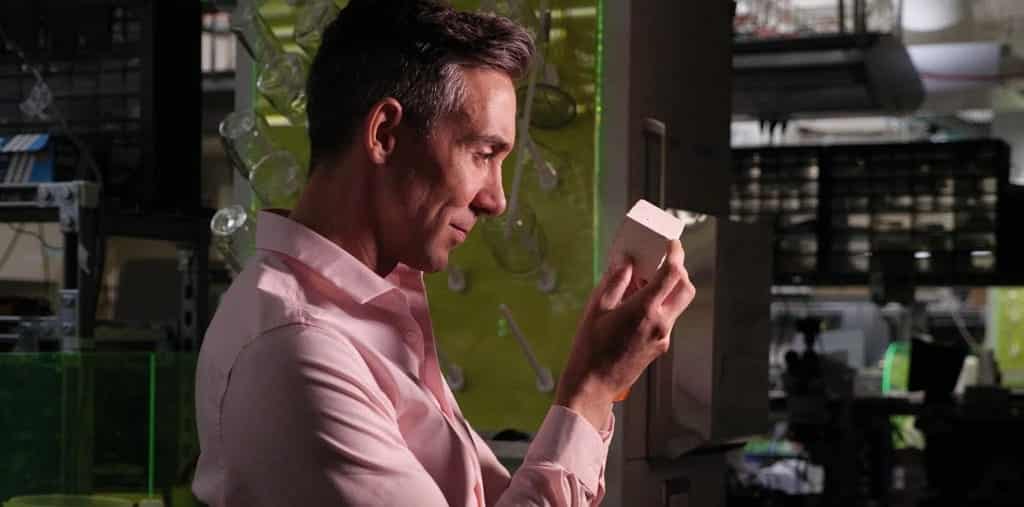
Lead principal investigator Wil Srubar said:
“This is a really exciting moment for our team. For the industry, now is the time to solve this very wicked problem. We believe that we have one of the best solutions, if not the best solution, for the cement and concrete industry to address its carbon problem.”
Reducing the concrete industry’s carbon footprint would contribute tremendously to our fight against climate change.
Concrete, Portland Cement, and Organically Generated Limestone
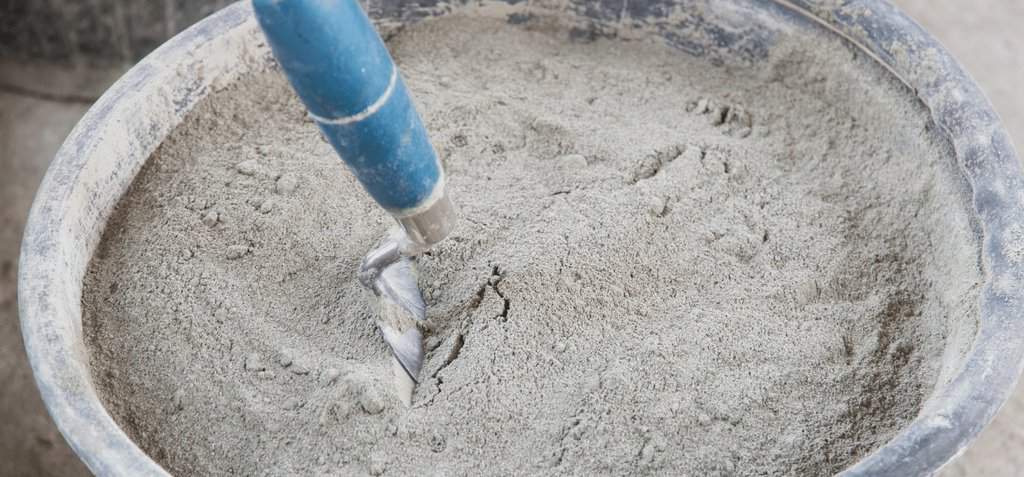
Sand, gravel, or crushed stone are added to a paste made of water and portland cement. The paste bonds the particles, creating concrete. This material is a global building mainstay. Unfortunately, limestone is mined and burnt at high temperatures to manufacture portland cement, generating carbon dioxide.
The study team concluded that substituting mined limestone with organically generated limestone offers a carbon-neutral alternative to making portland cement. Calcareous microalgae naturally produce limestone through photosynthesis. Thus, the microalgae’s carbon dioxide capture equals what’s emitted, making it carbon neutral.
But how can the team’s solution be carbon negative? Ground limestone is used to fill 15% of portland cement. So, by employing biogenic limestone as the filler, portland cement could become carbon negative by storing CO2 in concrete.
Srubar said:
“We see a world in which using concrete as we know it is a mechanism to heal the planet. We have the tools and the technology to do this today.”
Say all cement-based construction worldwide was replaced with biogenic limestone cement. Then a massive two gigatonnes of CO2 would no longer be put into the sky each year. In addition, over 250 million tons of CO2 would be removed from the atmosphere and stored in the fabric of these built structures.
The transition can happen today since contemporary cement manufacturing techniques wouldn’t have to change to use biogenic limestone instead.
The present global development rate will build a new New York City every month for 40 years. This worldwide growth is a chance to clean up the construction industry. Srubar expects that using local limestone would enhance air quality, lessen environmental harm, and boost global access to construction materials.
Inspiration and Real-Time Limestone Production
Professor Srubar got inspired by looking at calcium carbonate formations around coral reefs. Limestone is calcium carbonate; he thought, “maybe limestone can be created organically instead of quarried.” Thus, the idea to grow limestone like nature does was born.
Upon his return to America, he and his crew grew coccolithophores. During photosynthesis, this algae species can create biogenic limestone. They chose this species because it can build biogenic limestone in real-time instead of millions of years like the limestone used today. And, since microalgae can thrive in saline and fresh water, they can grow limestone practically anywhere.
These microalgae live in warm and cold, salt and fresh seas across the planet, making them ideal for cultivation in cities, on land, or at sea. According to the team’s estimations, 1 to 2 million acres of open ponds would be needed to generate all of the U.S.’s cement—between 0.05 and 0.10% of total U.S. land area and 1% of corn-growing land.
In addition, microalgae can produce other products. For example, its lipids, proteins, sugars, and carbohydrates can be used to make biofuels, food, and cosmetics. Therefore, the extra cost of producing limestone in this manner could be offset by using the microalgae to generate materials needed for other products. In other words, the revenue coming in from all these sectors would balance the extra cost of biogenic limestone compared to mined limestone for concrete.


