
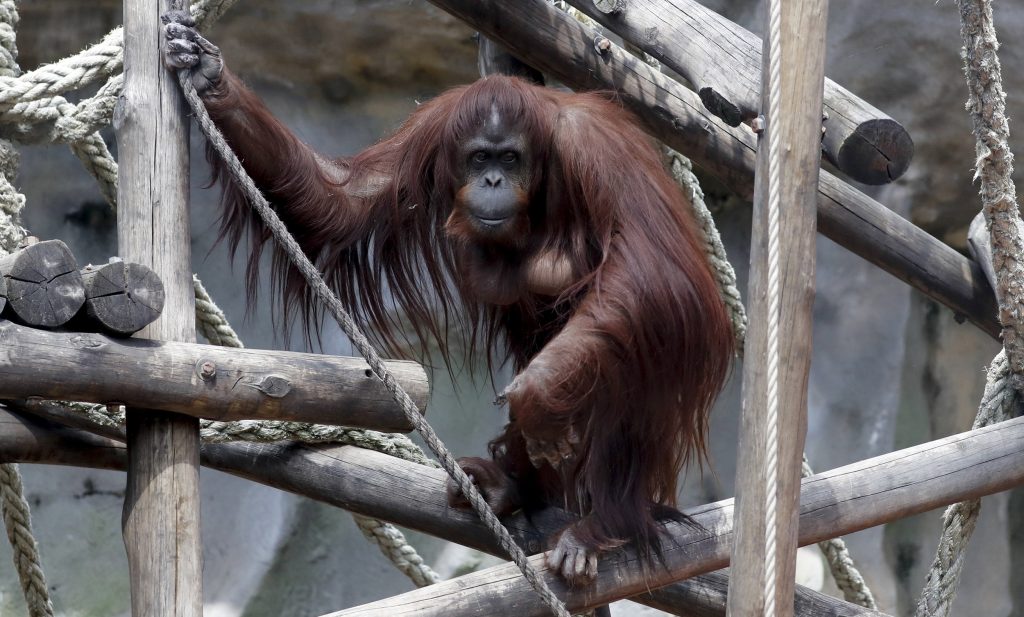
A captive-born orangutan, granted non-human personhood nearly five years ago, is finally settling into her new cozy home in central Florida at the Center for Great Apes sanctuary.
Meet Sandra
Sandra is a female hybrid mix of Bornean and Sumatran orangutans. She was born in Germany on Valentine’s Day in 1986. She spent 25 years at the Buenos Aires Zoo until a judge ruled her as a non-human person. This means Sandra was granted some of the same rights as people. Some of these rights include better living conditions and making it illegal to keep her in a zoo.
On Nov. 5, 2019, she had the honor to join over 50 other rescued orangutans and chimpanzees in her new sanctuary home. All of these animals have been saved or retired from circuses, stage shows, and the exotic pet trade.
Founder of the Center for Great Apes, Patti Ragan, said:
Sandra is very sweet and inquisitive. She was shy when she first arrived, but once she saw the swings, toys, and grassy areas in her new home, she went out to explore.
Ragan adds that Sandra is adjusting very well to the new climate, environment, and the other apes at the center. This new home is excellent for Sandra because not only is she free but she has the opportunity to make new friends too!
Judge Ruling
In 2015 Judge Elena Liberatori declared that Sandra is legally a non-human person. However, without a proper alternative, the orangutan remained at an old-fashion zoo in Argentina until departing for the US. When Sandra entered the US, she was in quarantine for a month at a zoo in Kansas before arriving at the sanctuary in Wauchula, Florida.
The judge said:
With that ruling, I wanted to tell society something new, that animals are sentient beings and that the first right they have is our obligation to respect them.
According to the nonprofit organization Nonhuman Rights Project, advocacy groups have been pushing to protect intellectual animals such as great apes, elephants, dolphins, and whales. They believe these animals deserve to upgrade from mere ‘things,’ which cannot possess any legal right, to ‘legal persons,’ who own such fundamental rights.
Benefits Of Being Granted Nonhuman Personhood
The rights secured under the designation of non-human personhood include that individual animals cannot be owned, but are instead an individual with rights and interests. Listed below are some of the rights, according to Animal Ethics:
- The right not to be killed or assaulted.
- The right to gain access to health care.
- Assistance in the case of an accident.
- For large animals, they wouldn’t be used as “resources” anymore.
- Any required decisions must take their interests and wellbeing into consideration.
Other Animals Who Deserve Personhood
Advocates have compiled a list of other intelligent animals who deserve personhood, as well. The Whale and Dolphin Conservation believe that cetaceans should also have individual rights given their intelligence, complex social structures, and rare personalities. These creatures deserve protection too.
The organization wrote:
The first step on the legal journey will be the recognition of dolphins and whales as non-human persons. From there, we can begin to look at what this will mean for having specific rights for whales and dolphins recognized in law.
Some environmentalists argue that these rights should extend to include natural landscapes under “environmental personhood.”
Happy The Elephant
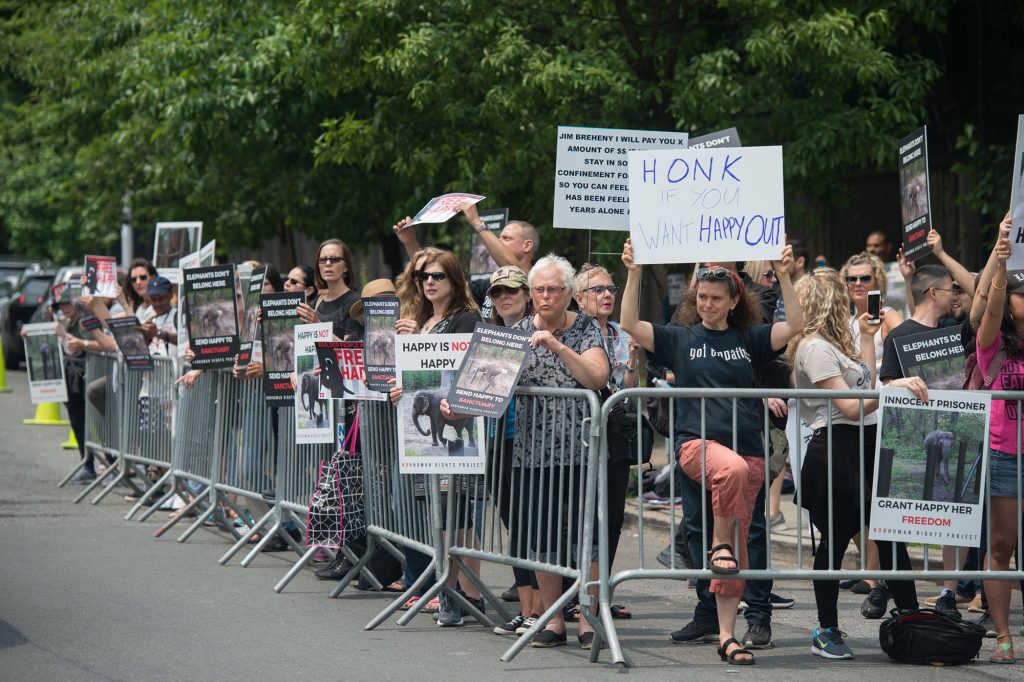
Recently at the Bronx Zoo, many activists gathered together to petition the release of Happy the elephant, who was nicknamed the loneliest elephant in the world. Lawyers argued in the case at a New York courtroom that the animal is being held illegally, due to her personhood, and must be set free.
According to the Change.org petition, the Association of Zoos and Aquariums (AZA) recommends that elephants be kept in groups of three or more. However, Happy is the only elephant in the US being held in captivity all alone, without a single elephant friend around.


