
Are you one of the people who can’t wait to turn their pallid white winter skin into a lovely shade of tan this summer? But, unfortunately, while your body does need that sunshine to produce vitamin D, there’s a fine line between enough and too much. Alas, sunlight is one of those things in which “too much of a good thing is dangerous.”
But how do you know when you have had enough sun exposure? It is tough to tell when the weather is on and off overcast. Fortunately, researchers at Northeastern University have developed a solution – a button that warns the user when they need to make for the shade or put on more sunscreen.

The Northeastern team came about the idea through a serendipitous discovery while studying the color-changing characteristics of camouflaging squid. They applied the chemistry of squid skin to a sensor, enabling it to sense damaging levels of UV radiation. The team envisions people putting the wearable device on their shirts or bathing suits as a skin cancer prevention tool.
The researchers identified a range of chemical reactions, mechanisms, and pigments that facilitate color-changing camouflage during the study. They discovered that a tiny molecule, in particular, plays a central role. Called xanthommatin, it is what gives the animal its visible color.
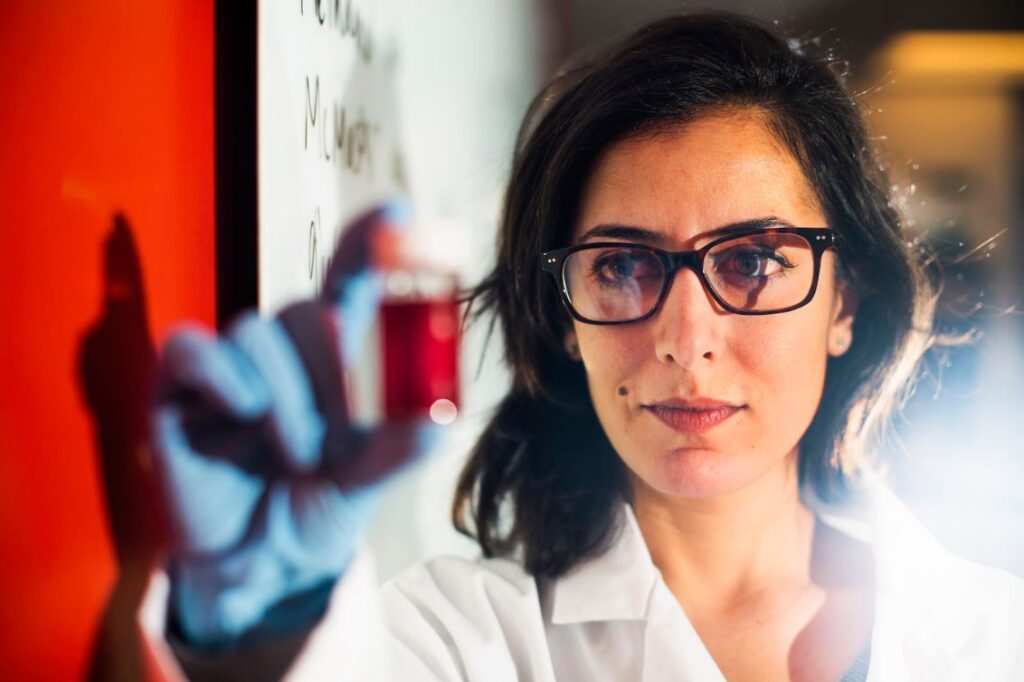
Next, they investigated how to work xanthommatin into clothing to give it color-changing capabilities. However, when they left it out on the lab bench to test its stability in everyday environments, it changed color. That was not the desired outcome, and, at first, the scientists were disappointed because it meant that the substance was not suitable for the applications they had in mind.
Leila Deravi, assistant professor of chemical biology and chemistry at Northeastern University, said:
When we noticed it changed color in light, we were super annoyed.
Fortunately, research scientist Dan Wilson from Northeastern’s Kostas Research Institute saw an opportunity in the hiccup. He realized that he could turn the failure into a feature. He could use the substance’s reaction to sunlight to make an ultraviolet light sensor.
Wilson had studied paper-based microfluidics in graduate school, so he leveraged that knowledge to construct a system that dyes tiny paper fragments with the xanthommatin pigment, activating it with the press of a button. Then, the team incorporated this light-sensitive paper into a finger-tip-sized device.
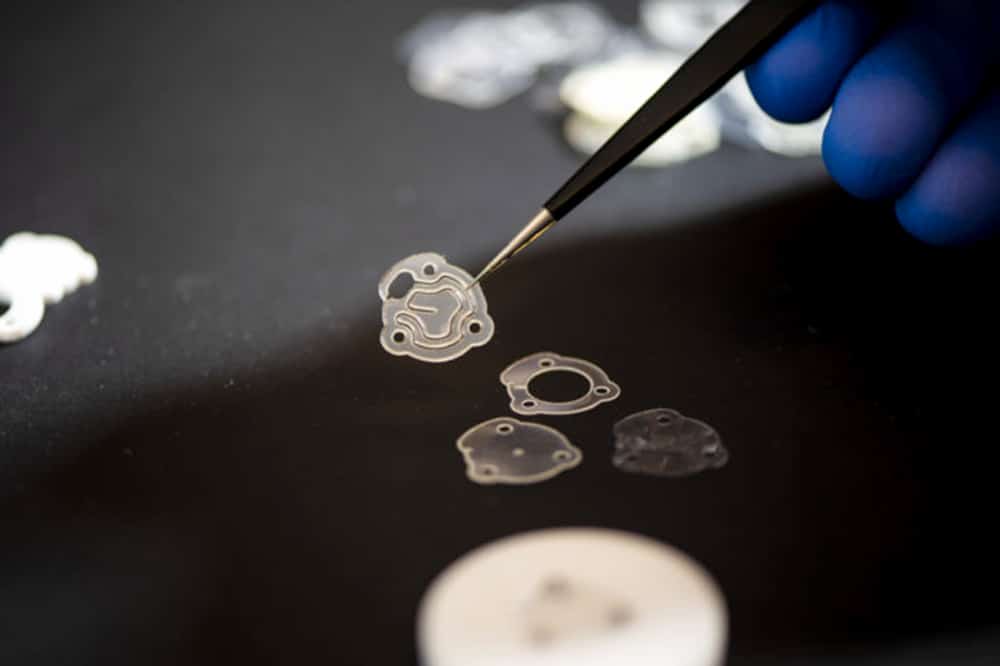
The button comprises five thin layers of carefully crafted sheets of plastic sandwiching the treated paper. When the user presses the device, it activates the sensor. The pressure pushes a small fluid reservoir from the edge of the device, through channels cut into the middle plastic layer, to the treated paper. Wetting the paper activates it, causing it to react under UV radiation—the sensor changes from a yellowish-orange color to red. The longer the exposure, the redder the button gets.
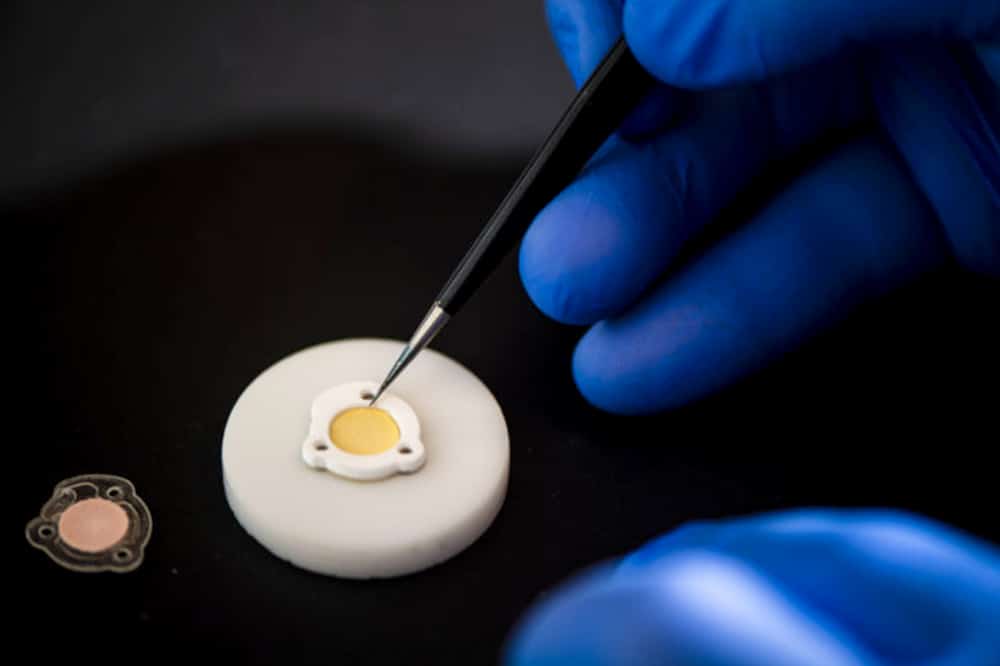
While their device is still a prototype, a final product could come in the form of a tiny sticker or pin that people could wear on their clothing when going outdoors. It could help prevent cancer-causing skin damage.
Wilson said:
We all know more or less that too much sun on a high-UV-index day is bad. But we don’t necessarily know how that translates to time in the sun. This is meant to provide a visual, qualitative indication of when you may have been in the sun for too long, and you should consider spending some time in the shade or reapplying sunscreen.
I think you’re always surprised by what a safe amount of sun time is. Of course, it really depends on the weather, but it can be minutes.
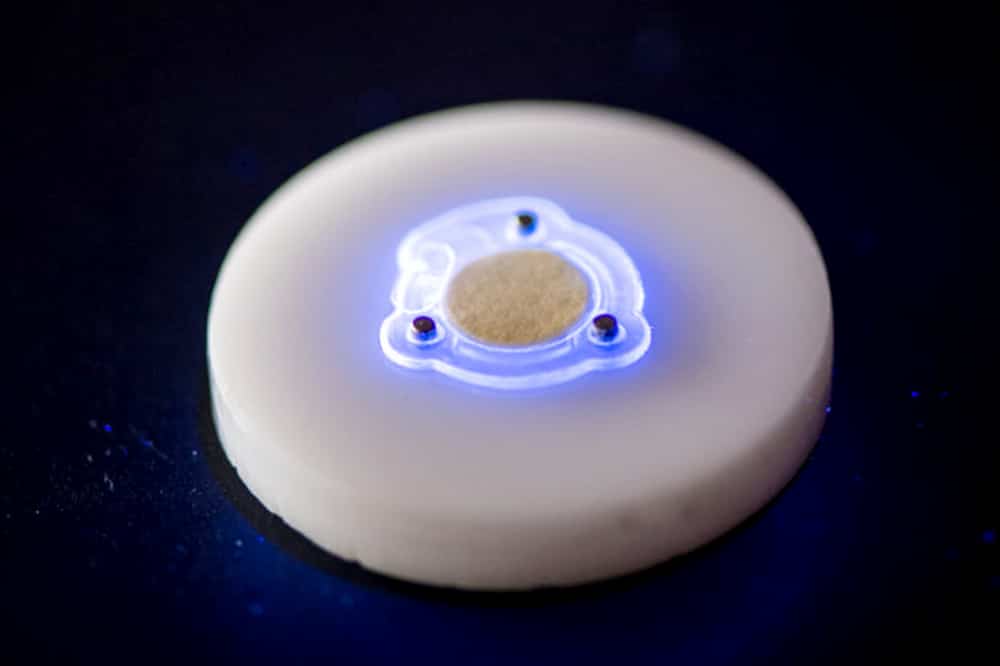
Testing proved that the device works well in various conditions. The team even coated it in sunscreen, resulting in a much slower change of color. Therefore, users could apply sunscreen to the device when they put it on their skin to know precisely when to reapply.
While the device is for monitoring sunlight, the scientists speculate that it could also serve as a sensor for measuring UV radiation exposure in other situations, like sterilizing environments. For example, their sensor could help indicate if a surface has been exposed to UV radiation long enough to be thoroughly sterilized.


