
Picture a Saturday inspection. Fresh paint, a new split system in the lounge, a vendor who says the place is “well insulated” and sounds like she means it. You buy.
Come July, the heater is running from six in the morning and the back bedroom still feels like a garage.
Nobody lied to you. Nobody looked, either, and that’s the problem. Heat loss is invisible to the naked eye, so it never makes it into a standard report.
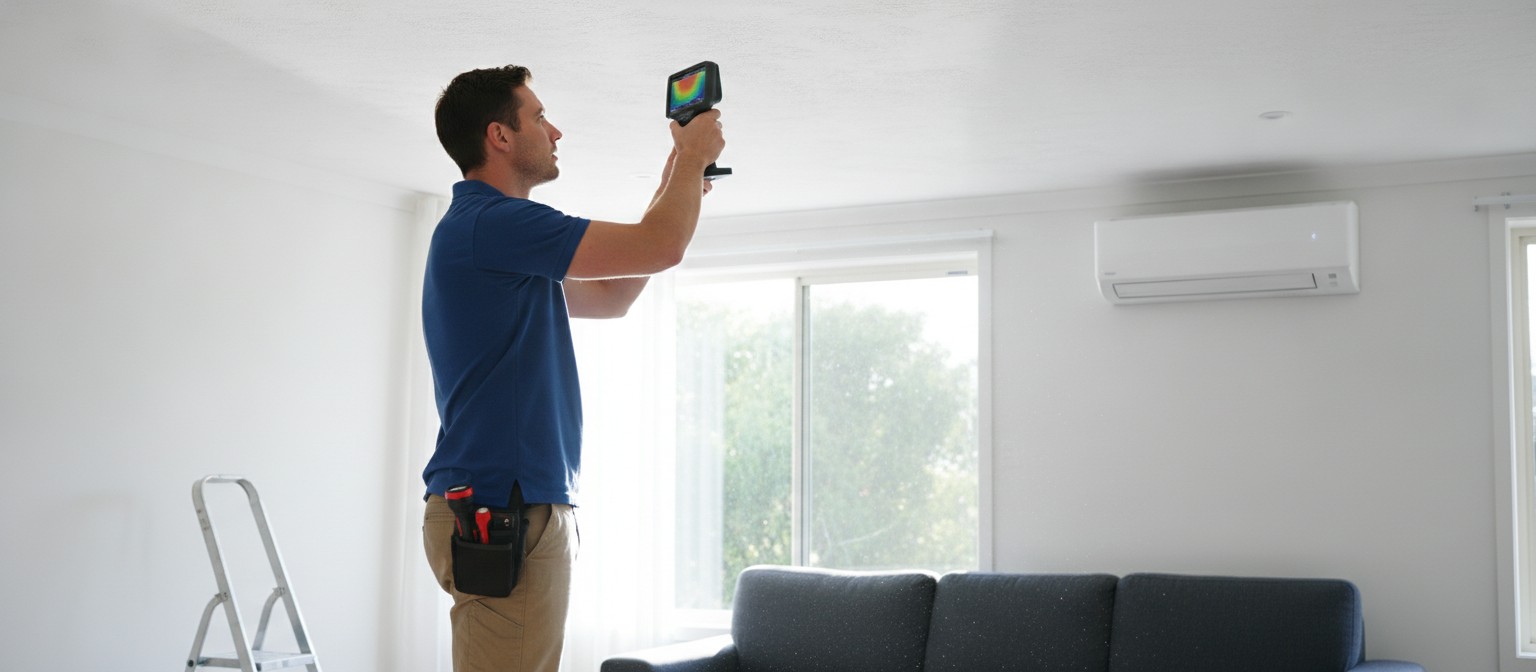
A thermal camera sees it. That doesn’t make thermal imaging a magic wand (more on its limits below), but it does answer a question no clipboard can: where is this house losing the energy I’ll be paying for?
What the usual reports skip
Building and pest inspectors do a big job in a short visit. They check the roof space, the subfloor and the timber work.
Still, insulation that slumped years ago looks identical to insulation that’s fine. A cavity with a hole in it looks like a wall. A switchboard connection that’s slowly working itself loose, and heating up as it goes, looks like a switchboard. Plenty of buyers assume one of the reports covered all this. Mostly, none did.
What the camera picks up
It reads infrared energy leaving a surface and paints the differences as colour. Hot is one shade, cold another. It can’t see through plasterboard, and it can’t see through a metal panel either. The NHBC Foundation, the UK new-home warranty body’s research arm, calls the output a map of surface temperatures.
The trick is reading it comparatively. One warm patch means nothing. But a ceiling corner that’s way colder than everything around it, on a freezing morning with the heater on? That’s worth a closer look.
In practice a scan can point to thin or missing insulation, draughts around windows and downlights, framing that carries heat straight through a wall, and damp patches (wet materials behave differently from dry ones). It can also flag an electrical connection running hotter than the identical ones beside it. That one wastes energy and raises a safety issue, and it’s a job for a licensed electrician, not a handyman.

Where it stops
Think of a scan as a photo, not a film. It captures one day. Without a decent temperature gap between inside and out, problems can hide, so a mild afternoon is a poor time to scan and a cold morning is a good one.
The camera reads surfaces. It can’t tell you what’s inside a sealed cavity, when a fault began or how long a repair will hold. It isn’t an energy rating either. The report describes what was recorded and nothing more: no ruling on standards, no engineering advice.
The NHBC Foundation also warns that a strange-looking patch doesn’t always need fixing. So whatever gets flagged goes to the right trade, whether that’s an insulation installer, a builder or an electrician. Get their quote. It’s the figure you’ll want if you’re negotiating on price.
Same leak, opposite season
In a cold climate, the heat you’ve paid for walks out the walls and roof. In a hot one, it walks in. The camera shows both. And either way you end up with a heater or air conditioner working overtime for years.
Older houses are the worst offenders. Think of a place that’s been renovated three times by three different owners: mismatched insulation, patched wiring and no paperwork to say who did what.
Melbourne is a good example. A lot of the city’s terraces, weatherboards and 1990s townhouses were built before today’s insulation expectations, and heating is a big part of what they cost to run. Scanning on a cold morning with the heating on will tell you more than an autumn open-for-inspection ever could.
Then there’s the calendar. Win a Victorian auction and there’s generally no cooling-off period, so every inspection has to happen before the hammer falls. Private sales usually have one, but it’s short. Ask your conveyancer to check the contract before you plan around it.
So ask early. The inspector needs access, which means the seller’s or agent’s agreement, and the power has to be on. When you book thermal imaging in Melbourne alongside the building and pest inspection, a local provider can tell you how far ahead to book and what they’ll need from the agent.
What to ask a provider
Before you pay for a scan, ring the provider and ask what they’ll actually look at. Some only do the switchboard. Others will go over the walls, ceilings and windows too, and for an energy question you want the second kind.
Ask what the weather needs to be doing, as well. A scan on a mild afternoon can miss things that a cold morning would show up straight away.
Then ask for a sample report. It should have a normal photo next to each thermal image, so you can see exactly where the camera was pointed, plus the date, the conditions and who held the camera. Look at the colour key, too. The NHBC Foundation points out that two images can use similar colours for very different temperatures, and that trips people up.
The last question is simple. If the scan flags something, who do you call? A fuzzy answer there tells you most of what you need to know.
Your next step
Email the agent today. Ask whether the property can be accessed for a scan before you commit. If something turns up, you’re not guessing anymore. You’ve got a quote, a number to set against the price and a clear question for your conveyancer.
One last thing. Don’t open the switchboard cover yourself. Leave that to a licensed professional.

