
From February 18, 2027, the most important battery part in Europe will not be a cell. It will be a QR code with a supply chain behind it. Every electric vehicle battery, every e-bike battery, and every large industrial battery placed on the EU market will need its own digital record.
That record is the EU battery passport. It links a physical battery to verified data about what it contains, where its materials came from, how it performs, and how to reuse or recycle it. This guide explains what the passport is, which batteries are covered, what data it holds, and what makers and buyers must actually do.
What the EU Battery Passport Actually Is
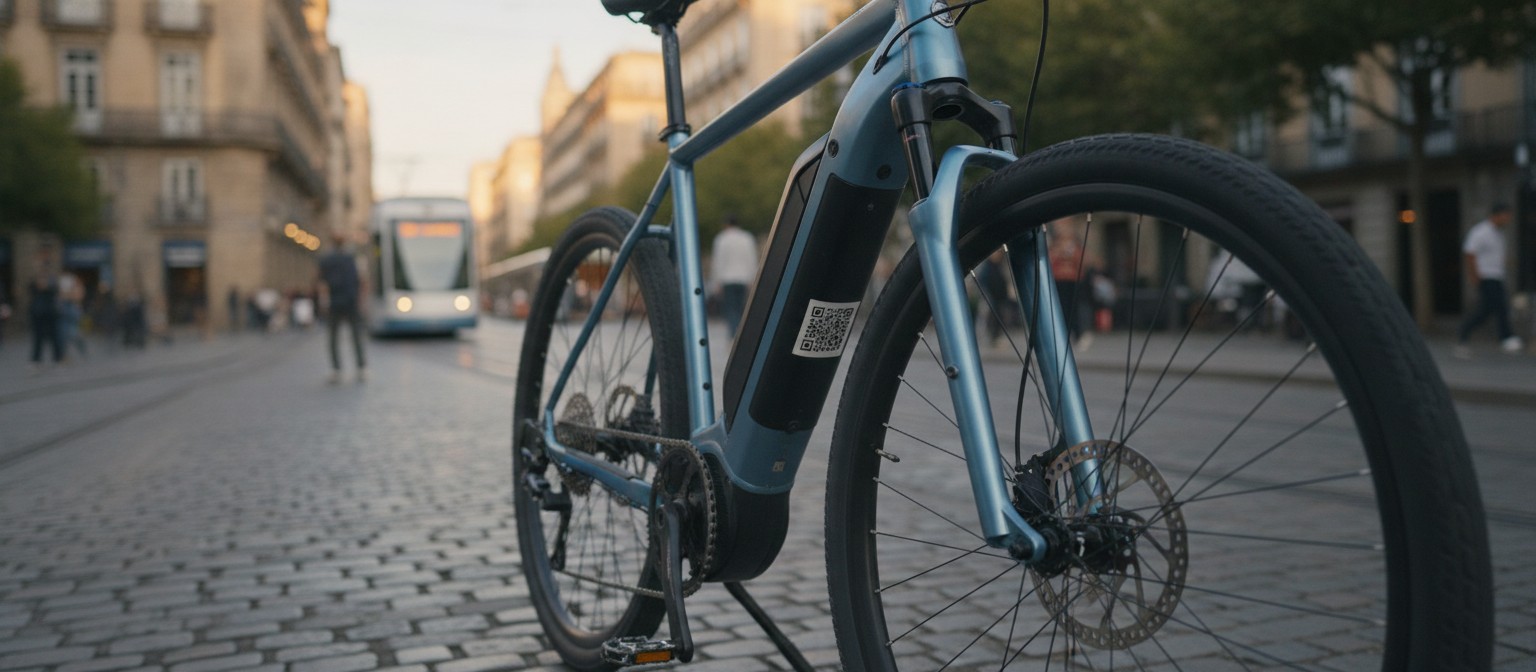
The battery passport is a digital product passport, which means a scannable online file tied to one physical product. Scan the QR code on the battery, and you open its file. That file stays with the battery from factory to second life to recycling.
The passport comes from the EU Batteries Regulation, which is Regulation (EU) 2023/1542. Article 77 creates the passport. Article 13(6) creates the QR code link. Annex XIII lists the information fields. The full text of the EU Batteries Regulation is the in-force law, while details are filled in through later technical rules.
Two phrases need a plain English gloss. A delegated act is a detailed rule the European Commission adds later to fill in the law. Due diligence is the duty to check supply chains for risks and to fix what you find. The passport carries the proof that those checks happened.
Which Batteries Need a Passport on February 18, 2027
From February 18, 2027, three groups need a passport for each battery placed on the market or put into service. This is in-force law with a fixed application date, not a proposal.
- Electric vehicle batteries: traction batteries for cars, vans, trucks, and buses.
- LMT batteries: LMT means light means of transport, which covers e-bikes, e-mopeds, and e-scooters at 25 kg or less. Each TENWAYS style e-bike pack needs its own passport.
- Industrial batteries over 2 kWh: this includes many home storage batteries and stationary systems above that threshold.
A quick disambiguation helps searchers. This rule is not about CR2025 or CR2032 coin cells. Those numbers describe small lithium coin batteries for key fobs and watches. The 2027 in this article is a calendar year, not a cell size.
Batteries outside those three groups do not need a full passport. Portable AA and AAA batteries, starter lighting and ignition batteries, and industrial batteries at or below 2 kWh fall outside Article 77. Many of those products still need a QR code with basic label information from the same date, but the QR opens a simpler record rather than a full passport.
| Battery type | Full passport from Feb. 18, 2027 | What the QR opens |
|---|---|---|
| EV battery | Yes | Model plus unit passport under Article 77 |
| LMT e-bike and e-scooter battery | Yes | Model plus unit passport under Article 77 |
| Industrial over 2 kWh, including home storage | Yes | Model plus unit passport under Article 77 |
| Portable, SLI, industrial at or below 2 kWh | No | Basic labeling and safety information |
Finished battery edge cases: packs, systems and imports
The passport applies to the finished battery, which means a complete product that can safely deliver power. It can contain many cells, modules, or packs. The official battery passport FAQ confirms the case-by-case test makers actually use.
If several packs share a common battery management system and work as one unit, the whole system takes one passport. If each pack works alone, each pack takes its own passport. The 2 kWh threshold follows the same logic. Assess the finished battery, not each part inside it.
Cells or modules imported for assembly in the EU do not need passports on arrival. The EU firm that completes the finished battery and places it on the market takes responsibility. A limited exception covers do-it-yourself kits sold ready for the end user to assemble with common tools. Batteries built into machines, vehicles, or home systems stay in scope, and the importer of the larger product normally carries the battery duty. The passport must be registered, but the registration identifier does not go on the customs declaration.
What Data Travels Inside the Passport
The passport holds two layers. One layer describes the battery model. The other describes the specific unit, including data that results from its use. That split lets a buyer compare models and lets a recycler understand one exact pack.
The European Commission overview of the battery passport system groups the fields into five families. The wording below follows that source.
Identity and maker
Expect battery identification, chemistry, capacity, model, and serial identifiers, plus manufacturer and economic operator details. The economic operator is the company that places the finished battery on the EU market, not the supplier of one cell or module.
Performance and durability
Expect rated capacity, power, round trip efficiency, expected lifetime, and state of health updates where relevant. Repairers and second-life buyers use these fields to price reuse. Similar repair logic already shapes phones and laptops under new right-to-repair rules for parts pairing and service access. Dynamic fields work on a practical rhythm. Update them when the battery changes status, such as repair, repurposing, or recycling decisions, rather than streaming them constantly. An offline e-bike pack can update when it comes in for service. New batteries may leave use-life fields empty at registration because that history does not exist yet.
End of life and second life
Simple repair keeps the same passport. Repurposing, remanufacturing, preparation for reuse, or recovery from waste triggers a new passport linked to the old one, with a new operator taking responsibility. When a battery becomes waste, the record passes to the producer or waste operator, and it closes once recycling ends the battery story. A battery first sold before February 2027 but remanufactured after that date enters the system at remanufacture, with carbon and durability exemptions where the underlying duty does not yet apply.
Sustainability and compliance
Over time, expect carbon footprint category, recycled content shares for cobalt, lithium, nickel and lead, material composition, and supply chain due diligence evidence. The official FAQ confirms those three families are not required in passports created from February 2027. They arrive with their own later application dates, and the passport then carries them only for batteries placed on the market after those duties apply. Separate collection, safety, and handling information support reuse and recycling from the start.
How the QR Code, ID and Registry Fit Together
Think of three parts. The QR code is the door. The unique identifier is the address. The decentralized record is the house. The company placing the battery on the market assigns the identifier.
The system is decentralized, which means detailed data stays with the responsible company rather than in one central database of everything. A central EU registry stores identifiers and access pointers so a scan resolves to the right record. The registry became operational on July 20, 2026, under an indicative Commission timeline, with the passport duty applying from February 18, 2027.
Technical plumbing follows eight harmonized standards from CEN-CENELEC JTC 24. Six were cited in the Official Journal in July 2026 and now carry a presumption of conformity. Two more were published in September 2026 but are not yet cited. In plain terms, a cited standard is a tested way to meet the law, while a published but not yet cited standard is guidance to prepare with now.
- EN 18219: unique identifiers, so each passport points to one battery.
- EN 18220: data carriers, so the QR code scans reliably.
- EN 18216 and EN 18222: data exchange and search, so systems can read each other.
- EN 18221 and EN 18223: storage and interoperability, so records persist and travel.
- EN 18239 and EN 18246: access rights and authentication, so private data stays private and tampering is shown.
The same QR logic now links farms to stores in food law. Europe uses scannable records to prove deforestation-free sourcing in EUDR farm to store QR passport trials, which shows how one scan can serve shoppers, auditors, and regulators with different views.
What Is Law Now, What Phases Later, What Is Still Draft
Readers deserve a clear status line in the same sentence. The passport duty is in-force law with application from February 18, 2027, for EV, LMT, and industrial batteries over 2 kWh. Carbon footprint methods and recycled content verification phase in through separate dates and product thresholds. Registry access rules for restricted data were still in draft consultation in late 2026.
Three milestones anchor the timeline. The Batteries Regulation entered into force in 2023 and sets the passport duty. The DPP Registry Implementing Regulation 2026/1778 was adopted in 2026 to run the central lookup. The Commission guidance on data points by category was updated on October 19, 2026, to show what is mandatory, optional, case-specific, or not required as of February 2027.
One date often causes confusion. In July 2025 the EU moved battery due diligence application to August 18, 2027, which is in-force relief with a later date, while the passport start stayed at February 18, 2027. Broader circular strategy context appears in circular battery economy rules for passports and recycling supply chains.
Pilots Already Testing the Plumbing
The law sets what to report. Pilots test whether miners, refiners, cell makers, automakers, and recyclers can actually pass that data along without breaking it.
The largest test bed is the Global Battery Alliance 2026 Operational Trials. Seventeen supply chain partnerships joined in early 2026, with cell makers covering about 80 percent of global production. Teams test data gathering, third-party assurance, and prototype scoring using developmental methods, so results measure readiness rather than ranking brands. A September 16, 2026 webinar shared lessons on data exchange and verification ahead of scale deployment. The Global Battery Alliance battery passport program frames the trials as preparation for the EU requirements.

Why an e-bike pilot matters
E-bikes show the hardest case. Volumes are high, suppliers are many, and packs change often. On October 7, 2026, Minespider and TENWAYS announced work to create digital passports for TENWAYS light transport batteries ahead of the deadline. Early work focuses on supplier engagement, data structures and digital infrastructure at production scale.
The lesson from both pilot tracks is the same. A compliant platform with weak supplier data fails. Complete data in an unreadable format also fails. Companies need verified inputs and working identifiers, carriers and interfaces at the same time. Early pilots for minerals and storage already pointed to this verification gap in battery passport pilots for critical mineral shock buffers.
What Makers and Buyers Must Actually Do
For makers, the work starts with scope. Confirm which packs are EV, LMT or industrial over 2 kWh. Confirm who is the economic operator placing the finished battery on the EU market. Map every Annex XIII field to a source system and an owner.
Then close two gaps in parallel. On data, secure carbon footprint calculations, recycled content evidence, durability test results and due diligence artifacts from tier two and tier three suppliers. Push the duty up the chain by contract, because the carbon value sits with cell production and the origin proof sits with the mine and refinery, not with the final assembler. On technology, assign unique identifiers, print durable QR carriers, publish machine readable records, and register pointers in the EU registry flow. Free help exists. A registry helpdesk runs 08:00 to 20:00 Central European Time, plus a user guide and a test environment for onboarding.
For buyers, the passport changes shopping and procurement. A consumer can scan a used EV or e-bike and check chemistry, health and handling notes before buying. A fleet buyer can require carbon and recycled content fields in tenders. A recycler can pull dismantling and composition data before quoting. None of this is legal advice. It is a practical reading of what the record is designed to enable.
Frequently Asked Questions
When does the EU battery passport start?
February 18, 2027. From that date, each LMT battery, each industrial battery over 2 kWh, and each EV battery placed on the market or put into service needs an electronic record accessible through a QR code.
Does it cover phones, laptops or coin cells?
No. Portable batteries for phones and laptops and small coin cells are outside the Article 77 passport. They follow separate labeling and QR information rules. Confusing 2027 the year with 2025 or 2032 cell sizes is the most common search mix up.
Who creates and maintains the passport?
The economic operator that places the finished battery on the EU market. That firm may authorize another operator in writing to act on its behalf, but legal responsibility stays with the firm placing the battery on the market.
What will the public see versus a recycler?
The public sees general model data, performance summaries, and sustainability claims. Authorities and notified bodies see compliance detail. Repairers, refurbishers and recyclers with a legitimate interest see deeper dismantling, composition and health data under access controls once the restricted access act is final.
Should buyers outside the EU care?
Yes. Any battery sold into the EU must comply, so global suppliers will adopt passport grade data systems. Expect similar data requests in non EU tenders as buyers reuse the same carbon, provenance and health fields.
A QR Code Becomes a Trade Document
The battery passport turns a battery into a provable claim. Materials, carbon, durability and custody travel with the hardware. Repairers can trust health data. Recyclers can plan recovery. Customs and customers can check compliance from a scan.
Companies that treat 2026 as a build year will enter 2027 with cleaner suppliers, tested identifiers and readable records. Companies that treat the passport as a label will learn that a QR code without a supply chain behind it scans to an empty promise.

