
Evidence surrounding industrial food formulations has shifted the public health narrative from minor dietary concerns to a broader systemic pattern. Evidence analyzed in a comprehensive review of clinical datasets covering nearly 10 million individuals has identified direct associations between ultra-processed food intake and 32 health outcomes spanning cardiovascular, metabolic, mental, and cancer categories.
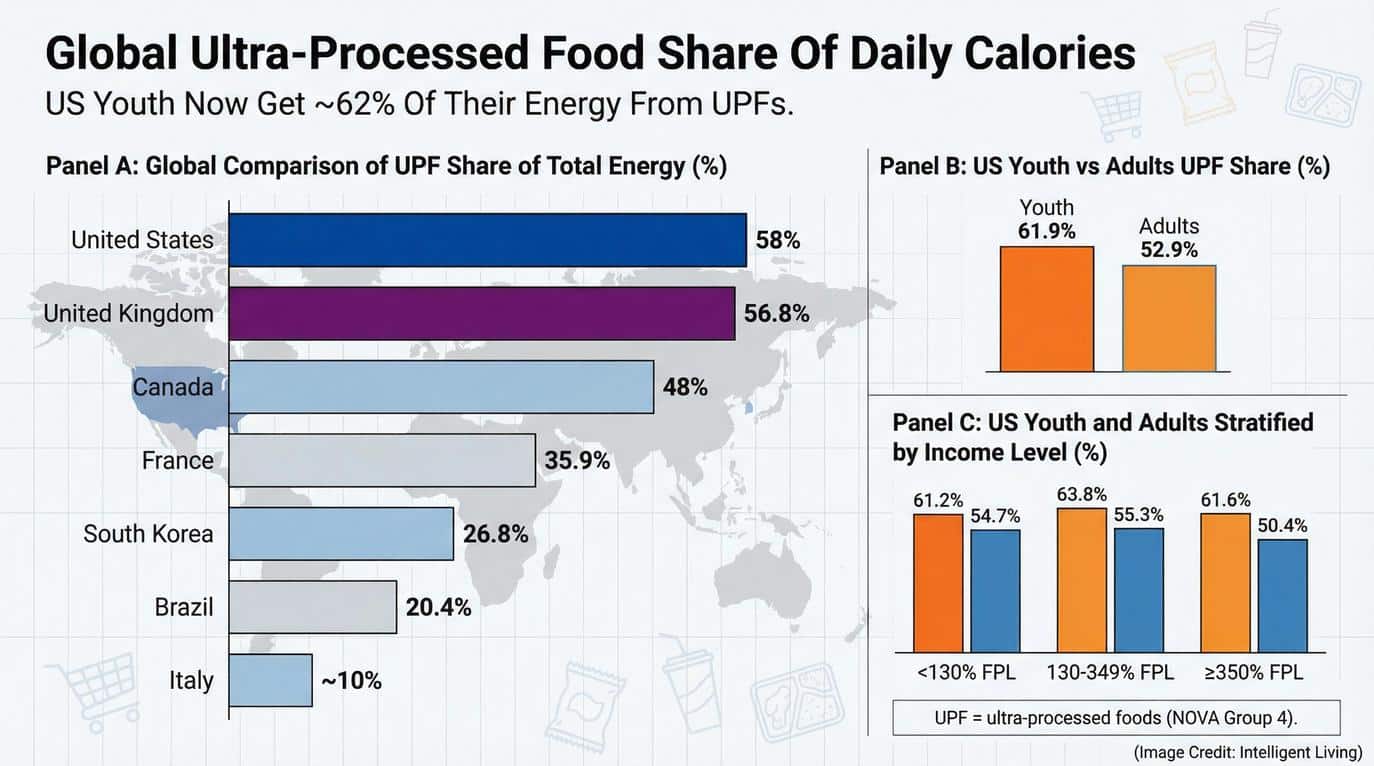
National consumption levels highlight a growing reliance on these hyper-palatable products, which now account for approximately 55 percent of total daily calories in the United States. According to a recent CDC data brief, youth average 61.9 percent of their energy from industrial sources. Common culprits include packaged sandwiches, sweet bakery products, and sugar-sweetened beverages. Shifting away from these dominant industrial sources represents a critical opportunity for improving population-level metabolic health through better dietary defaults.
Navigating this complex evidence map allows readers to identify ultra-processed formulations and implement realistic food swaps that stabilize glycemic regulation. Prioritizing nutrient-dense defaults over factory-made items supports long-term wellness without demanding unattainable dietary perfection or restrictive rules.

Ultra-Processed Foods List and Health Risks: Key Facts You Should Know
- Ultra-processed foods are defined under the NOVA classification system as industrial formulations made mostly from substances derived from foods and cosmetic additives, with little intact whole food remaining.
- A major BMJ umbrella review found associations between ultra-processed food intake and 32 health outcomes, with the strongest evidence linking higher intake to cardiovascular mortality and type 2 diabetes. Mental health outcomes observed in these studies often intersect with the biological link between anxiety and gut microbiome health.
- In a controlled NIH inpatient randomized trial, participants consumed about 508 additional calories per day on an ultra-processed diet compared to a minimally processed diet, leading to measurable weight gain over two weeks.
- US children and teens obtain nearly two-thirds of their daily calories from ultra-processed foods, highlighting the scale of exposure and the need to prioritize sustainable and affordable food choices that keep lower-processed options financially realistic for families.
- Evidence remains primarily observational, indicating strong associations that do not yet prove direct causation on their own.
Defining Ultra-Processed Foods: Identifying Industrial Formulations and Group 4 Products
The term “ultra-processed food” comes from the NOVA classification system, developed by public health researchers to group foods by the degree and purpose of processing. Under NOVA Group 4, ultra-processed foods are industrial formulations made from refined starches, sugars, and protein isolates. These bases are then combined with cosmetic additives like emulsifiers, flavorings, and artificial sweeteners. The foundational explanation of the NOVA system in the journal Public Health Nutrition describes how foods are grouped by degree and purpose of processing.
Unlike minimally processed foods such as frozen vegetables or plain yogurt, ultra-processed foods are designed for convenience, hyper-palatability, and long shelf life. Identifying these products becomes easier when observing common grocery items engineered for long-term storage.
- Packaged snack foods and sugary breakfast cereals
- Reconstituted meat products and instant noodles
- Sweetened beverages and ready-to-eat frozen meals
These industrial staples represent the primary sources of ultra-processed intake for many households.
Deciphering Ingredient Lists and Additive Markers
A practical way to identify a likely ultra-processed product is to scan the ingredient list. If the list includes substances that are rarely used in a home kitchen, such as maltodextrin, hydrogenated oils, modified starches, or multiple cosmetic additives, it likely falls into the ultra-processed category and may also introduce endocrine-disrupting exposures that hinder your ability to restore hormonal balance through targeted nutrition.
Classification is not always perfectly precise. Some products blur the line between processed and ultra-processed depending on formulation, and researchers have acknowledged variability in how foods are categorized across studies.
Research findings tie specifically to foods fitting this industrial formulation profile, making the definition essential for accurate risk assessment. Cooking beans or freezing fruit does not place those foods in the same risk category as packaged snack cakes or sugar-sweetened beverages.

Research-Backed Evidence: Analyzing 32 Health Outcomes Linked to Industrial Diets
The most comprehensive summary of ultra-processed food research to date is the 2024 BMJ umbrella review that evaluated 45 meta-analyses. An umbrella review sits at the top of the evidence hierarchy for observational research because it synthesizes findings across many large datasets. The review assessed nearly 10 million participants and evaluated 32 distinct health outcomes.
Importantly, the authors graded the strength of evidence for each outcome. Some associations were considered convincing or highly suggestive, while others were rated as weak or showing no clear evidence. Below is a system-by-system breakdown.
Cancers and Respiratory Health Issues
Cancer (7 Outcomes)
- Overall cancer risk
- Breast cancer
- Colorectal cancer
- Central nervous system tumors
- Chronic lymphocytic leukemia
- Pancreatic cancer
- Prostate cancer
Respiratory Health (2 Outcomes)
- Asthma
- Wheezing
Wheezing showed a stronger association than asthma in pooled analyses. Evidence strength varied, with some respiratory findings graded as weak.

Analyzing Cardiovascular and All-Cause Mortality Patterns
The strongest signal in this category was cardiovascular disease-related mortality. In non-dose response analyses, higher ultra-processed food intake was associated with a relative risk of 1.50 for cardiovascular mortality. All-cause mortality was also associated with higher intake, although the overall quality of evidence across mortality outcomes ranged from highly suggestive to weaker depending on the model used.
Mortality (4 Outcomes)
- All-cause mortality
- Cancer-related mortality
- Cardiovascular disease-related mortality
- Heart disease-related mortality
Cardiovascular Risk Factors (5 Outcomes)
Research identifies several critical markers associated with high industrial food intake:
- Combined cardiovascular disease events
- Hypertension and hypertriglyceridemia
- Low HDL cholesterol and cardiovascular morbidity
Recognizing these markers helps explain why cardiometabolic prevention often emphasizes food choices that fight inflammation and reduce reliance on industrial formulations.

The Intersection of Gut Health and Brain Function
Mental health associations stood out in the umbrella review. Anxiety and combined common mental disorder outcomes were rated among the highest confidence categories in relation to ultra-processed food consumption. Depression outcomes also showed consistent associations in incident analyses. While observational, these findings align with emerging research on how diet affects brain health and mood regulation.
Gastrointestinal Health (2 Outcomes)
- Crohn’s disease
- Ulcerative colitis
Crohn’s disease showed a stronger association signal than ulcerative colitis. Evidence strength in this category was generally weaker than in cardiometabolic domains.
Mental Health (4 Outcomes)
- Anxiety outcomes
- Depression outcomes
- Combined common mental disorder outcomes
- Adverse sleep-related outcomes

The Protective Role of Dietary Fiber in Metabolic Regulation
High intake of added sugars and refined starches often displaces fiber-rich foods. Adequate fiber intake supports weight regulation and gut health, making it essential to meet recommended daily fiber requirements to stabilize metabolic responses. Replacing refined starches with fiber-rich staples often stabilizes metabolic responses.
Metabolic Health (8 Outcomes)
Metabolic disruption often manifests through a cluster of conditions linked to energy-dense formulations:
- Type 2 diabetes and hyperglycemia
- Metabolic syndrome and non-alcoholic fatty liver disease
- Abdominal obesity and general overweight
Addressing these metabolic health outcomes requires a shift toward minimally processed staples to improve glucose control by adhering to evidence-based nutrition science and dietary guidelines.
What the Evidence Can and Cannot Prove
Most of the 32 outcomes come from observational cohort studies. Observational research can reveal strong patterns across large populations, but it cannot prove direct cause and effect.
Public health researchers view these consistent patterns as meaningful signals, especially when they appear across millions of participants in diverse global populations.
Participants were randomly assigned to either an ultra-processed or minimally processed diet matched for sugar, fat, and fiber. Despite identical nutrient targets, those on the ultra-processed diet consumed 508 more calories daily and gained weight. Because this was a randomized trial, it strengthens the plausibility that certain characteristics of ultra-processed foods may drive overeating.
Taken together, the evidence does not argue that a single packaged item will determine health outcomes. Instead, it suggests that when ultra-processed foods dominate dietary patterns, measurable risks increase across multiple physiological systems.

Satiety Disruption: Why Industrial Formulations Trigger Increased Calorie Consumption
One of the most common critiques of ultra-processed food research is that it relies heavily on observational data. While those large population studies are valuable, they cannot by themselves prove cause and effect. That is why a controlled inpatient randomized trial conducted by the National Institutes of Health is so important to this conversation.
In that study, participants were randomly assigned to consume either an ultra-processed diet or a minimally processed diet for two weeks, then switched. The diets were designed to be similar in calories, sugar, fat, fiber, and macronutrient composition. Despite this matching, participants consumed about 508 more calories per day on the ultra-processed diet and gained weight during that phase. The original NIH trial in Cell Metabolism describes these findings in detail.
Mechanical Satiety Signals and Caloric Intake
The results suggest that characteristics like texture and eating speed may encourage higher energy intake. These factors disrupt the subtle biological cues and satiety responses that normally regulate hunger even when nutrient targets appear similar on paper.
Overeating is not an inevitable result of every packaged food. However, diets dominated by industrial formulations engineered for palatability likely disrupt the subtle biological cues regulating hunger and fullness over time.

What to Eat Instead: A Clean Eating Swap Ladder that Doesn’t Require Perfection
If ultra-processed foods are associated with higher health risks, the next question is practical: what should you eat instead? The answer is not dietary perfection. It has better defaults.
Public health guidance from the current US dietary guidelines for healthy eating (2025-2030) emphasizes building meals around vegetables, fruits, whole grains, lean or plant-based proteins, and minimally processed foods.
Implementing the 2025-2030 US Dietary Guidelines for Better Defaults
Below is a simple swap ladder designed for real life.
Level 1: Drinks and Snacks (The Fastest Wins)
Sugar-sweetened beverages, packaged sweets, and salty snack foods are among the largest contributors to ultra-processed calorie intake in the United States, according to nationally representative dietary surveys.
Instead of soda or energy drinks, consider water, sparkling water, or unsweetened tea. Instead of packaged snack cakes or candy bars, try fruit paired with nuts or plain yogurt.
Strategic swaps and portion awareness allow you to reduce sugar intake effectively without rigid rules. Focusing on rethinking drinks, desserts, and snacks creates more sustainable dietary defaults.
Level 2: Breakfast and Lunch Defaults
Many common breakfast items such as sugary cereals, flavored pastries, and ultra-processed breakfast sandwiches fall squarely into NOVA Group 4 categories. A more stable default might include oatmeal with fruit and nuts, eggs with vegetables, or whole-grain toast with nut butter.
At lunch, replacing highly processed deli meats and packaged ready meals with simple grain bowls, salads, beans, legumes, and minimally processed proteins can reduce exposure to additives while improving fiber intake. Metabolic insights into how grain metabolism affects blood sugar clarify why intact grains typically outperform refined alternatives.
Level 3: Dinner Staples and Hidden UPFs
Ultra-processed ingredients often hide in sauces, condiments, frozen entrées, and packaged side dishes. Cooking simple meals with whole ingredients, such as vegetables, legumes, fish, poultry, and intact grains, can dramatically shift overall dietary patterns even if some packaged items remain.
Reducing reliance on products dominated by refined substances and cosmetic additives serves the primary goal rather than eliminating convenience entirely.
Level 4: Desserts and Cravings
Cravings are part of normal eating. Instead of framing desserts as forbidden, consider upgrading them. Dark chocolate and fruit-based desserts offer satisfying alternatives to highly engineered snacks. Choosing homemade baked goods with recognizable ingredients ensures you stay in control of your intake.
Such choices align with broader healthy eating patterns like the Mediterranean diet, which emphasizes minimally processed foods and balanced indulgence, and adopting a Mediterranean Diet for longevity illustrates how traditional patterns adapt to contemporary wellness needs.
Public Health Implications: Evaluating Modern Consumption and Population Risk
How Much Ultra-Processed Food People Actually Eat
Ultra-processed foods are not a fringe issue. Ultra-processed foods account for roughly 55 percent of daily calories in the United States, with youth averaging nearly 62 percent of their intake from these industrial sources according to the CDC’s National Center for Health Statistics. Primary dietary sources contributing to these statistics often center on common industrial staples:
- Packaged sandwiches and burgers
- Sweet bakery products and savory snacks
- Sugar-sweetened beverages
Industrial formulations accounting for over half of daily calories mean small purchasing shifts can translate into meaningful population-level health improvements.
What Burden Models Suggest at Population Scale
A recent multi-country modeling study in the American Journal of Preventive Medicine estimated that each 10 percent increase in energy intake from ultra-processed foods was associated with a relative risk of 1.03 for all-cause mortality. Modeling outcomes relies on assumptions and observational data rather than proving direct causation.
Not All Ultra-Processed Foods are Identical
It is important to avoid oversimplification. Not every product classified as ultra-processed carries the same risk profile. Sub-analyses in large cohort studies suggest that some subcategories show stronger associations with adverse outcomes than others. Variability across subcategories suggests that specific formulations carry significantly higher risk profiles:
- Sugar-sweetened beverages
- Certain processed meats
Subtype findings from a long-term cohort analysis published in The BMJ provide detailed comparisons across ultra-processed food subcategories. Fortified or reformulated products occasionally exhibit neutral or modestly protective nutrient profiles depending on the specific context. The goal is to reduce reliance on high-risk categories, not to label every packaged item as harmful.
The Health and Planet Co-Benefit
Shifting toward minimally processed foods often aligns with broader sustainability goals. Diets centered on whole foods typically require fewer industrial inputs and less intensive manufacturing. Implementing a comprehensive 23-point framework for building a sustainable food system reinforces how agricultural reform and dietary shifts protect ecosystems.
Aligned health and environmental benefits ensure that small dietary upgrades trigger ripple effects beyond individual well-being.

Strategic Food Swaps for Lasting Metabolic Health
Reclaiming vitality from a diet dominated by industrial food formulations relies on the cumulative power of repeated, better choices.
Shifting toward intact grains and plant-based proteins reduces exposure to cosmetic additives and emulsifiers that often disrupt natural inflammatory balance.
Nutrient-dense upgrades prioritize satiety response over hyper-palatability triggers, allowing the body to regulate energy levels and glycemic markers effectively by connecting individual physiology to environmental resilience through a broader wellness ecology.
Sustainable eating patterns thrive on flexibility rather than rigid restriction. Adopting principles from the Mediterranean Diet 3.0 allows for a diverse roster of minimally processed foods that support gut microbiome diversity and environmental resilience. Focus on incorporating nutrient-dense foods into your daily schedule to ensure your biological systems remain resilient against the pressures of modern, mass-produced food systems.
Ultra-Processed Foods FAQ: What Readers Most Want to Know
Are All Processed Foods Bad?
No. Processing exists on a spectrum. Freezing vegetables, pasteurizing milk, or grinding whole grains are forms of processing that can improve safety and convenience without creating ultra-processed products. Ultra-processed foods refer specifically to industrial formulations dominated by refined substances and additives.
Do Ultra-Processed Foods Cause Disease?
Most evidence linking ultra-processed foods to disease is observational. That means researchers observe associations between higher intake and higher risk. Observational studies cannot prove causation. However, when patterns are consistent across millions of participants and supported by controlled feeding trials showing increased calorie intake, researchers consider the signals meaningful.
How Much Ultra-Processed Food is Too Much?
There is no universal cutoff. Risk appears to increase as the proportion of calories from ultra-processed foods rises. Reducing the overall percentage, even gradually, is likely more realistic and sustainable than aiming for complete elimination.
Is Clean Eating the Same as Avoiding Ultra-Processed Foods?
Not necessarily. Clean eating is an informal term that can mean different things to different people. Avoiding heavy reliance on ultra-processed foods is a practical, evidence-informed strategy, but it should not become rigid or restrictive. The healthiest dietary patterns are flexible, nutrient-dense, and sustainable over time.
What is the First Change I Should Make?
For most people, replacing sugar-sweetened beverages and packaged snack foods with water, fruit, nuts, yogurt, or other minimally processed options provides the fastest and most impactful improvement. Repeatable changes typically outperform dramatic short-term overhauls by fostering sustainable habits over time.


