
Austrian company Tec-Innovation has produced an intelligent shoe, dubbed “InnoMake,” that warns blind, visually impaired, and elderly people of obstacles in their path, making their everyday life safer.
The built-in warning system and battery are mounted in a waterproof and dust-resistant casing at the front of the shoe. It includes:
- Distance sensors
- Sensors for detecting foot movements
- A vibration unit
- An ultra-bright LED
- A processing unit
- A wireless connection to a smartphone
The intelligent shoe utilizes ultrasound sensors on the toe to warn users of obstacles. It can detect obstacles located up to four meters in their path. The wearer is immediately alerted via acoustic, visual, or vibration (haptic) signals.
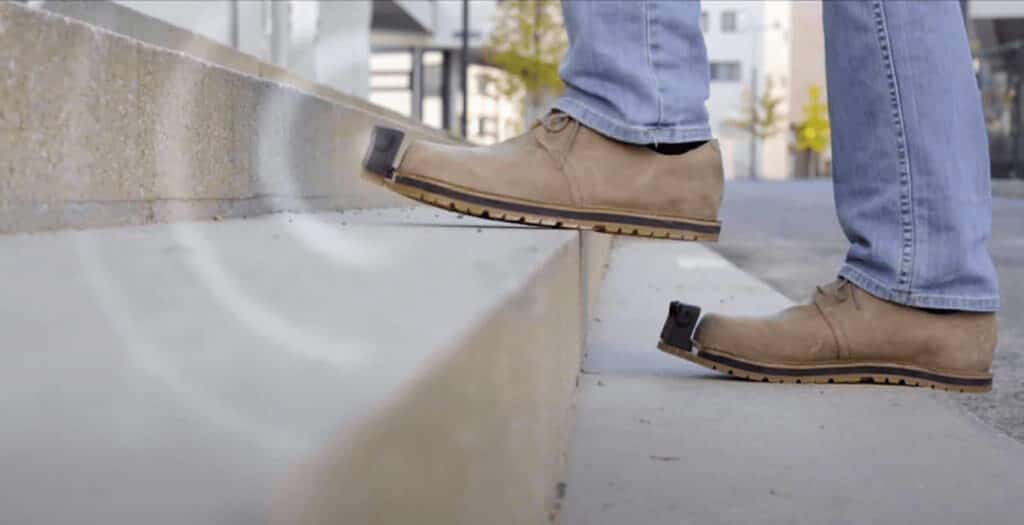

The acoustic feedback is provided by a smartphone, while the shoe’s LED can conduct the visual impulses, and they can offer additional support in the dark. The vibration feedback is provided in the shoe, allowing users to feel if there’s an obstacle in their way.
The built-in batteries last for up to one week, depending on use, and can be fully recharged within three hours with the provided Micro-USB cable.
The InnoMake intelligent shoe was designed in collaboration with Austria’s Graz University of Technology (TU Graz). Computer scientists at TU Graz are now developing a camera-based AI image recognition version of the shoe’s removable sensor module. This version will involve deep-learning algorithms analyzing the camera images to identify and mark areas that can be walked on safely.
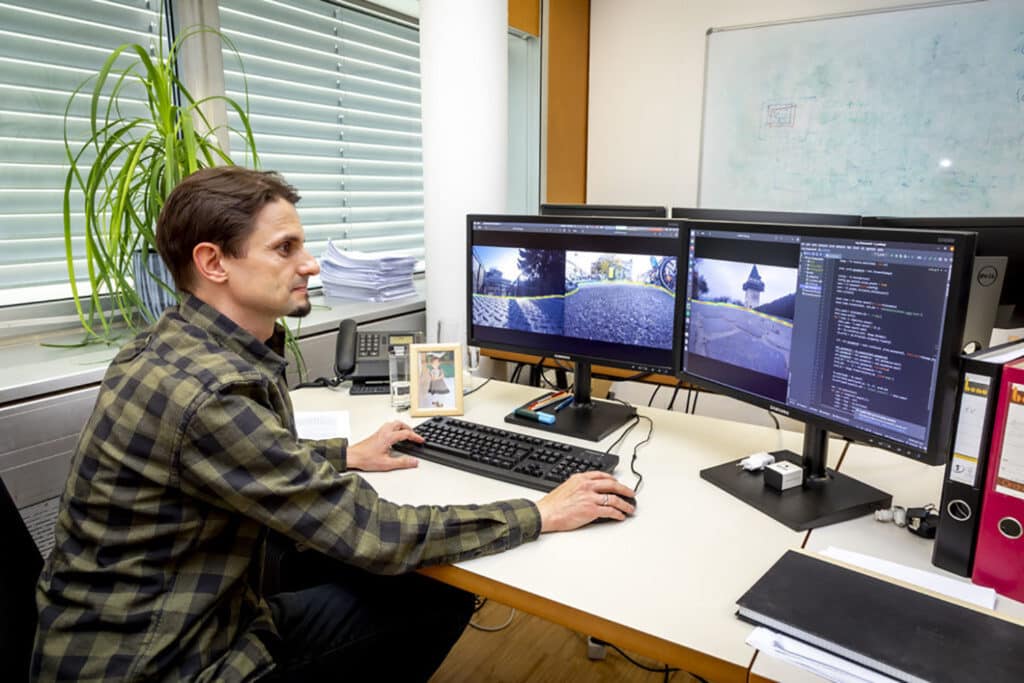
The team also plans to combine the data collected while wearing the shoe regarding swarm intelligence into a street view navigation map for blind and visually impaired people. InnoMake is designed to not only help people with visual impairments and older people but also rescue organizations in their daily lives.
So far, there’s no date on when the camera-equipped InnoMake smart shoes will become available. However, the existing version of the InnoMake shoe is already available on the market for €3,200 (around $3,900) per pair.
In 2019, we saw blind engineer Kursat Ceylan develop a handy smart cane called the WeWalk that guides blind people using google maps and sensors.


