
You get a new lead. Someone filled out your form, clicked your ad, or requested a demo. By any measure, that person is interested. But by the time your team gets to them — a few hours later, maybe the next morning — the conversation never quite gets off the ground. They’re polite but distant. The moment has passed.
This isn’t bad luck. It’s a timing problem, and automated lead follow-up exists precisely to solve it. Research shows that leads are 21 times more likely to qualify when contacted within 5 minutes compared to 30 minutes later, according to an MIT and InsideSales.com study, later confirmed by Harvard Business Review research on more than 2,241 U.S. firms. Extending response time from 5 to 10 minutes reduces qualification odds by 400%. Yet 55% of companies take more than 5 days to respond to a new lead. And 12% never respond at all.
AI agents were built specifically for this gap — responding in seconds, at any hour, without waiting for a human to be available. But technology alone isn’t enough. Understanding why leads go cold in the first place is what makes automated lead follow-up actually work.
The Response Window Is Shorter Than You Think
Most sales teams assume they have hours to follow up. The data says otherwise.
52% of leads come in outside standard business hours. If your team only operates 9 to 5, you’re already losing half your opportunities before the day even starts. Leads generated between 8 and 10 PM have 15% higher purchase intent than daytime leads — which means the people most ready to buy are often the ones you’re least likely to reach in time.
This is where automated lead follow-up changes the equation. Instead of waiting for a rep to become available, the system responds immediately — acknowledging the inquiry, providing relevant information, and keeping the conversation alive until a human can take over. After-hours leads that receive a same-night response have an 85% contact rate. Those waiting until the next morning? 35%.
Why Manual Follow-Up Can’t Keep Up
The problem isn’t that sales teams don’t care. It’s that manual follow-up doesn’t scale.
A rep managing 30 active leads can’t realistically monitor every form submission in real time. They have calls to make, deals to close, and internal meetings to attend. Something inevitably slips. And what slips is usually the newest lead — the one that just came in and is still warm.
80% of sales require at least five follow-up touchpoints before closing. Yet nearly half of sales reps give up after just one attempt. Automated lead follow-up fills this gap by running multi-step sequences that continue regardless of how busy the team is. The system doesn’t forget. It doesn’t get distracted. It doesn’t decide a lead isn’t worth the third email.
Pickyassist’s research confirms that trigger-based automated lead follow-up workflows significantly outperform standard email sequences. When a lead receives the right message at the right moment — immediately after expressing interest — the likelihood of engagement increases dramatically.
Multi-Channel Follow-Up Outperforms Single-Channel Every Time
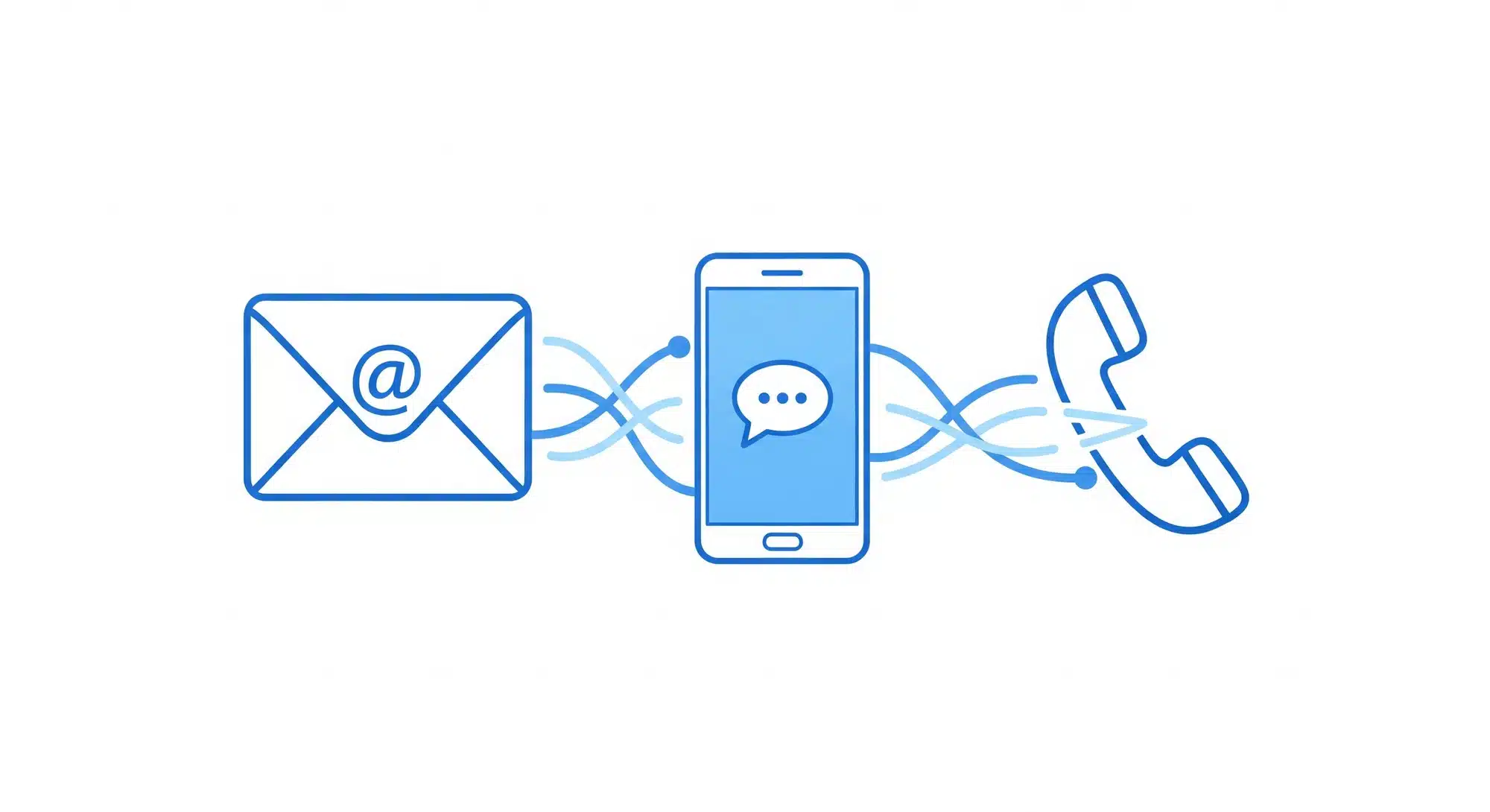
One of the most common mistakes in automated lead follow-up is relying on a single channel. A lead who doesn’t open emails might respond immediately to a WhatsApp message. A prospect who ignores SMS might pick up a phone call. Limiting your follow-up to one channel means missing everyone who doesn’t happen to prefer it.
Combining email, phone, and messaging channels in a structured automated lead follow-up cadence leads to 28% higher conversion rates than single-channel outreach. The best systems adapt to user behavior — if a lead engages with WhatsApp but ignores email, the system learns and adjusts.
Orbitforms’s analysis of top-performing automation systems shows that the most effective setups coordinate touchpoints across multiple channels while maintaining consistent messaging. The experience feels cohesive to the prospect, even when it’s running automatically in the background.
Lead Scoring: Not All Leads Need the Same Response
Effective automated lead follow-up isn’t just about speed — it’s about prioritization. Someone who visited your pricing page three times and downloaded a case study is in a very different position than someone who read a blog post once. Treating them identically wastes resources and risks pushing a warm lead through a sequence designed for cold ones.
How Lead Scoring Works in Practice
Lead scoring assigns behavioral signals a weight: pages visited, time spent, content downloaded, and return visits. High-score leads get immediate human attention. Lower-score leads enter an automated lead follow-up nurture sequence until they’re ready to move forward.
Kommo’s AI agent builder manages this process automatically. It tracks each lead’s history, determines the appropriate next action, and delivers the right message at the right time — without requiring manual review at every step. The result is a follow-up system that’s both fast and intelligent.
Speed Without Losing the Human Touch
There’s a counterintuitive finding worth noting. AI has raised buyer expectations for speed while simultaneously increasing demand for human connection. Buyers expect instant acknowledgment but increasingly want authentic human conversation for anything beyond basic questions.
The companies winning right now aren’t using automated lead follow-up to replace human interaction. They’re using it to accelerate the path to human interaction. An automated response that acknowledges the inquiry, provides relevant information, and sets expectations for a follow-up call does more than fill the time gap — it builds confidence that the company is responsive and organized.
The automation handles the first moments. The human handles the relationship. AI-powered sales development tools that qualify and nurture leads before human handoff are proving this hybrid model works at scale.
What to Measure
Building a faster automated lead follow-up system is only half the work. Knowing whether it’s actually performing requires consistent tracking:
- First response time: How long from form submission to first contact?
- Contact rate by time of day: Are after-hours leads being reached at all?
- Follow-up sequence completion: How many leads receive all planned touchpoints?
- Channel performance: Which channels drive the most responses and conversions?
- Conversion rate by response speed: Does faster response actually correlate with more closed deals in your context?
These metrics tell you where your automated lead follow-up system is working and where leads are still going cold.

The Bottom Line
Most lead loss isn’t dramatic. There’s no single moment where a deal visibly falls apart. It’s quieter — a form submission that didn’t get a timely response, a follow-up that never came, a sequence that stopped after one email.
The leads aren’t gone because they weren’t interested. They’re gone because the window closed before anyone showed up. Automated lead follow-up exists to keep that window open — not to replace the sales process, but to make sure it starts before the opportunity disappears.

