
CO2 is one of the primary drivers of climate change. It is a potent greenhouse gas that is emitted into the atmosphere naturally (like when we exhale for example), and by non-natural means (man-made things). Once in the atmosphere, it stops heat from Earth escaping into space. This is a good thing in normal quantity, but now with things like cars and power plants, a lot more is being emitted than what is considered a normal and safe amount.
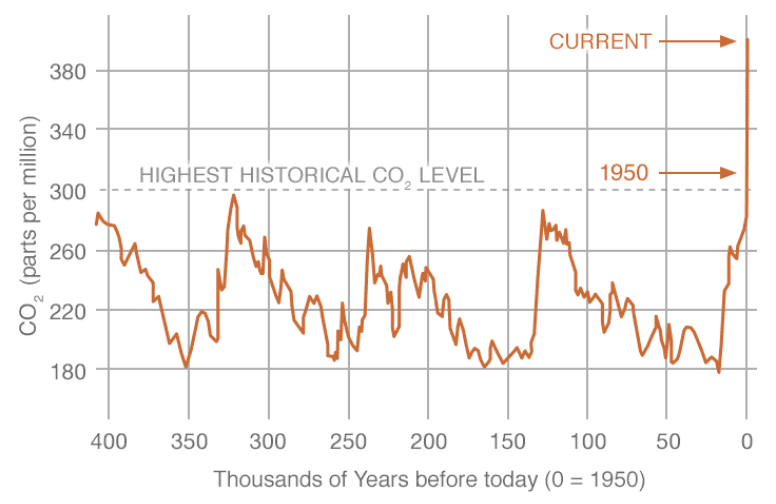
Levels of atmospheric CO2 have tripled since the beginning of the Industrial Revolution — a shift attributed to the burning of fossil fuels. Each month that passes, the level of atmospheric CO2 only gets higher. There are other greenhouse gases that are more efficient at trapping heat, like methane, but CO2 is worse because it lingers in the atmosphere for far longer.
Many scientists and researchers worldwide are now trying to find ways to take CO2 out of the atmosphere – and several proposals for how to do this have been made. One of the most recent of these has to do with researchers finding ways to turn CO2 into something useful: fuel.
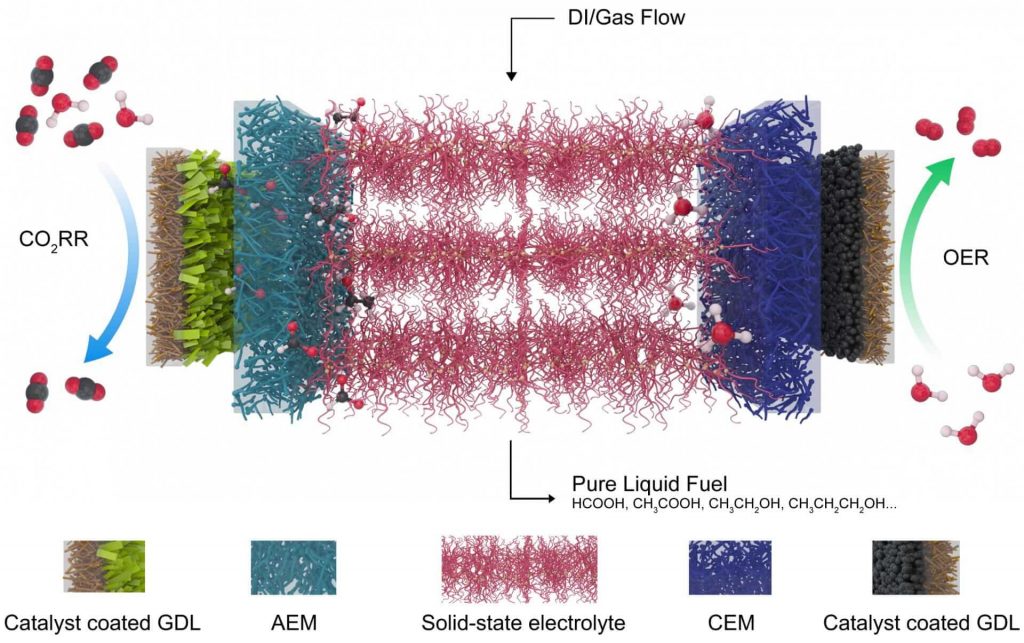
A team of scientists led by Chuan Xia, from Rice University, Texas, has created a device that runs on renewable energy and turns carbon dioxide into formic acid. Formic acid is a venom produced naturally by ants that can be used as a biofuel. The prototype electrolyzer (reactor) produced the purified liquid fuel at high concentrations. Their invention may just pave the way for a new mechanism to produce energy and reduce greenhouse gas emissions at the same time.
Producing formic acid at the required levels to be used as fuel is costly and inefficient. Which is why it hasn’t been used yet as a fuel carrier. But now, with the development of this reactor, it could become commercially used. The device has the capability of producing high concentrations of this liquid fuel. A full description of the device and study has been published in Nature Energy.
Haotian Wang, who made the reactor, said:
Formic acid is an energy carrier. It’s a fuel-cell fuel that can generate electricity and emit carbon dioxide—which you can grab and recycle again. It’s also fundamental in the chemical engineering industry as a feedstock for other chemicals, and a storage material for hydrogen that can hold nearly 1,000 times the energy of the same volume of hydrogen gas, which is difficult to compress. That’s currently a big challenge for hydrogen fuel-cell cars.

How is it able to produce more of the fuel? The team created a catalyst that is more stable than others for the reaction that has to take place. Therefore, instead of producing it on small milligram or gram scales, it can be produced on kilogram scales. “That will make our process easier to scale up for industry,” Xia said.
Another difference between their device and previous attempts at the same thing is that their reactor was designed to not need salt for the reaction to take place. Wang explained:
Usually people reduce carbon dioxide in a traditional liquid electrolyte like salty water. You want the electricity to be conducted, but pure water-electrolyte is too resistant. You need to add salts like sodium chloride or potassium bicarbonate so that ions can move freely in water.
But when you generate formic acid that way, it mixes with the salts. For a majority of applications, you have to remove the salts from the end product, which takes a lot of energy and cost. So, we employed solid electrolytes that conduct protons and can be made of insoluble polymers or inorganic compounds, eliminating the need for salts.
Almost half of the energy produced by the reactor can be stored in the compound as fuel. It has an energy conservation efficiency of 42%. During testing, they ran it for 100 hours with little to no sign of degradation—an important factor in scaling up technology like this. The next evolution of the device will be a reactor that can that produce even high concentrations of formic acid, and that the machine could be adapted to produce other fuels, including acetic acid, ethanol or propanol.


