
Scientists predict that roughly 3.6 million Americans will experience the loss of a limb by 2050.
How limb loss occurs varies — military injuries, industrial accidents, congenital disabilities, and the list goes on. While prosthetics have significantly advanced over the years, doctors are still unable to induce human limb regeneration, unfortunately.
However, a new study brings scientists one step closer. In the breakthrough study, scientists from Tufts University and Harvard’s Wyss Institute demonstrated how a single dose of a five-drug cocktail could trigger the regrowth of a lost limb in a frog species that usually can’t regenerate lost limbs.
Few animals like crabs, salamanders, starfish, and lizards can naturally regrow a fully functional replacement after losing a limb. Meanwhile, most animals have a decent ability to heal after injuries, but that doesn’t extend to regrowing lost limbs. Their limbs comprise various tissues, muscles, bones, nerves, and blood vessels, which are far too complex to regrow. So instead, skin cells and scar tissue rapidly form over the end of the stump called a blastema to reduce blood loss and infection.
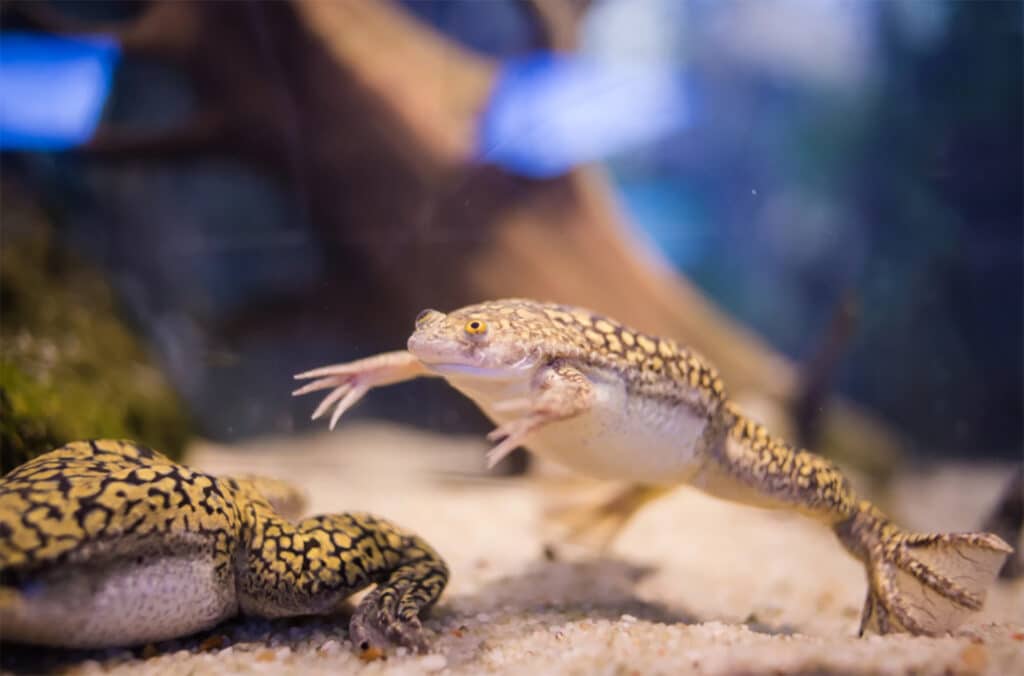
The new study, published on Jan 26 in the journal Science Advances, shows that it might be possible for humans to regrow their limbs in the future. The scientists developed a new method to regrow the legs of African clawed frogs, which involved exposing the wound to a drug cocktail for 24 hours to regrow a new, functional leg within 18 months.
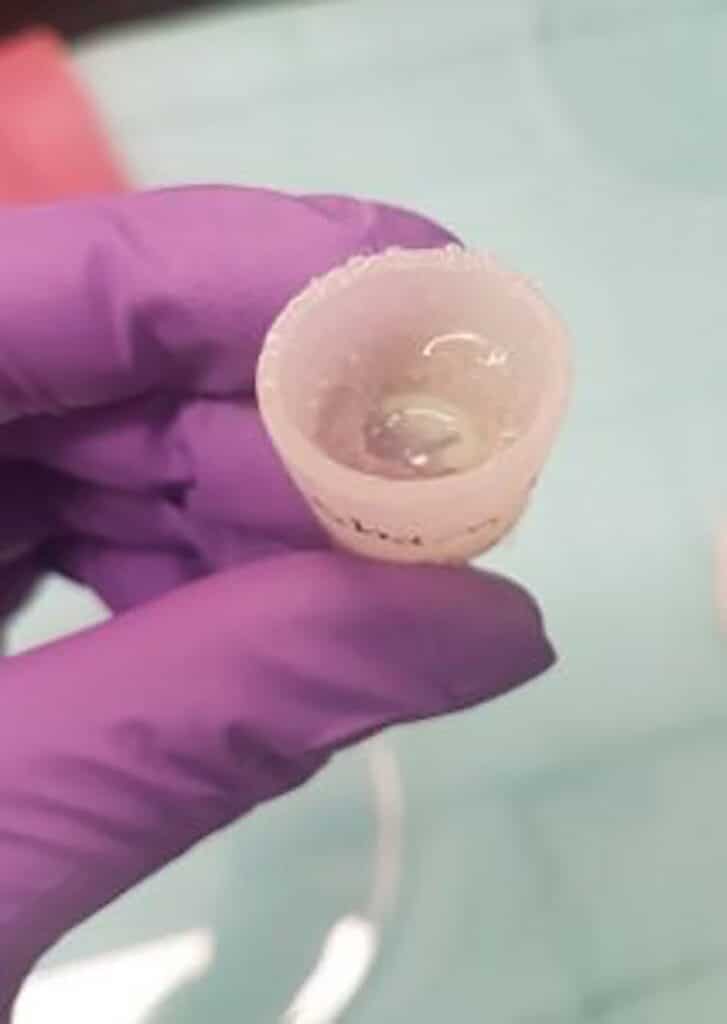
The team sedated 115 female frogs, amputated their back legs, and then placed a cap-shaped silicone wearable dubbed the BioDome over the stump. This cap contained a silk protein gel comprising a blend of five drugs designed to mimic the amniotic environment and boost regeneration by preventing scar tissue formation, reducing inflammation, and encouraging the growth of new muscles, blood vessels, and nerve fibers.
David Kaplan, the study’s co-author, said:
Mammals and other regenerating animals will usually have their injuries exposed to air or making contact with the ground, and they can take days to weeks to close up with scar tissue. Using the BioDome cap in the first 24 hours helps mimic an amniotic-like environment which, along with the right drugs, allows the rebuilding process to proceed without the interference of scar tissue.
Interestingly, within the first few days of the treatment, molecular pathways that support the development of embryos were triggered once again. Over the following 18 months, the treated frogs grew new functional legs with partially formed toes. The new limbs contained tissues, nerves, and bones. The frogs could use their new limbs to stand and swim and even respond to touch stimuli.
However, the new legs didn’t have the usual webbing and long toes of African-clawed frogs. The scientists believe the reason for that may be that the team didn’t wait long enough for the legs to develop fully, or the cocktail recipe needs some improvement.

Nirosha Murugan, the study’s first author, concluded:
It’s exciting to see that the drugs we selected were helping to create an almost complete limb. Furthermore, the fact that it required only a brief exposure to the drugs to set in motion a months-long regeneration process suggests that frogs and perhaps other animals may have dormant regenerative capabilities that can be triggered into action.
Next, the scientists will improve the technique to grow a completer and more functional limb and explore whether the same method could work in mammals.
While regrowing a limb is impressive, sea slugs lose their heads and regrow new bodies! In another study conducted in March 2021, researchers from Japan’s Nara Women’s University found two species of sacoglossan sea slug that can voluntarily drop their heads and then regenerate their entire body from it – complete with vital organs and a new heart!
Meanwhile, another study conducted last year by scientists at Japan’s University of Fukui and Kyoto University involved an antibody treatment that could activate the human body to regrow missing teeth. With these advances in regenerative medicine, it’s hard not to imagine a future where humans can regrow everything!


