
As we get closer to 2025, the housing market continues to reflect the aftermath of pandemic-era shifts, fluctuating interest rates, and the evolving priorities of American homeowners. While headlines tend to focus on skyrocketing prices and interest rate hikes, there’s an emerging narrative about how many homeowners are choosing to stay put rather than move. In fact, a recent survey by West Shore Home highlights a striking trend: nearly 45% of homeowners report feeling “stuck” in their current homes due to current market conditions. This sense of feeling “trapped” has become a defining feature of the housing landscape, influencing everything from renovation trends to community stability.
Rising Interest Rates Mean Fewer Moves
The ongoing pressure from interest rates remains a significant factor, keeping potential sellers on the sidelines. With mortgage rates hovering around 7%, the incentive for homeowners to sell and move into a new home has diminished significantly. Many are unwilling to exchange their current, historically low interest rates for today’s costlier options. For those who secured mortgage rates in the 3-4% range just a few years ago, the thought of doubling that rate is financially prohibitive. This has resulted in a trend where individuals prefer to renovate and invest in their current properties rather than risk the cost of upgrading.
Additionally, the higher interest rates have had a ripple effect on affordability. Potential buyers, especially first-time buyers, are finding it increasingly difficult to enter the market. Monthly mortgage payments for a median-priced home are significantly higher than they were just a few years ago, making homeownership less accessible. As a result, the overall volume of transactions in the housing market has slowed, leading to a stagnation that affects both buyers and sellers.
Renovations as the New Upgrade
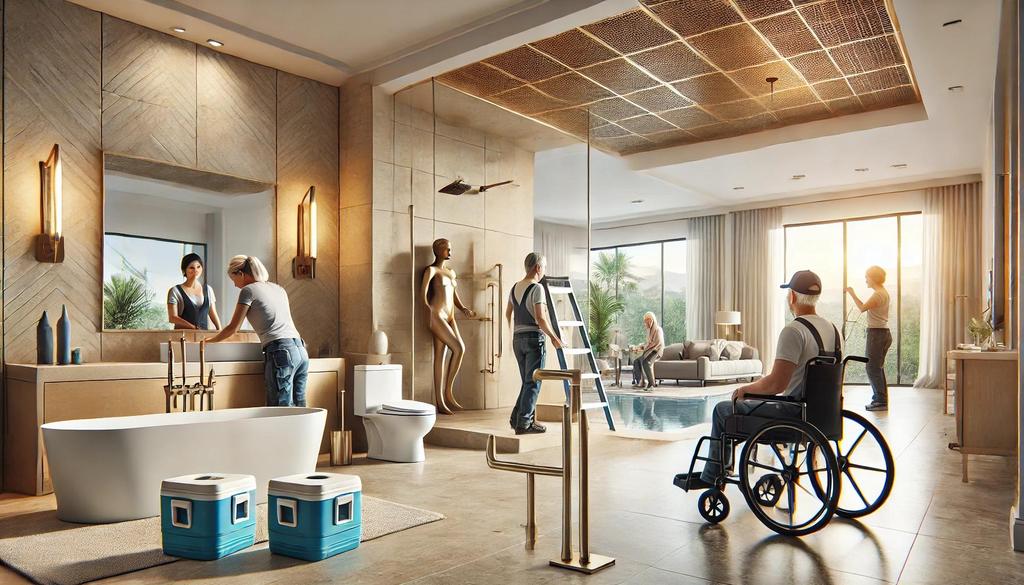
With fewer people opting to move, home improvement and renovation projects have spiked. The same survey from West Shore Home shows that a significant number of homeowners are focusing on accessibility and safety features, such as improved bathrooms and mobility-friendly upgrades. This shift has been particularly notable among aging homeowners, many of whom are choosing to “age in place” by investing in upgrades that will allow them to remain comfortably in their homes for as long as possible.
The trend is not just about accessibility. Luxury features such as spa-style bathrooms, high-end kitchens, and smart home technology are also popular renovations as homeowners aim to maximize their quality of life without incurring the stress and cost of moving. Homeowners are increasingly viewing their homes as long-term investments, and they are willing to put more money into making these spaces as comfortable and enjoyable as possible. This movement has spurred growth in the home renovation market, with businesses that specialize in bathroom remodeling, like West Shore Home, seeing increased interest in their services.
The renovation trend also reflects a deeper shift in homeowner psychology. Many people are placing a greater emphasis on personalization and comfort, wanting their homes to better reflect their tastes and lifestyles. The pandemic taught many of us the value of having a home that is not just a place to sleep but a sanctuary—a place where we can work, relax, and feel safe. This has led to an increased demand for features like home offices, outdoor living spaces, and wellness amenities such as home gyms and saunas.

Persistent Housing Supply Problems
Low housing inventory continues to exacerbate these challenges. Fewer new listings have meant that even those who do wish to move face limited options. As a result, prices remain high, and competition can be fierce for the desirable properties that do come on the market. It’s a cycle that feeds back into itself: high interest rates discourage selling, which in turn limits supply, further pushing prices up and keeping potential buyers from taking the leap.
Another factor contributing to the supply issue is the lack of new construction. The construction industry has faced its own challenges, including labor shortages, supply chain disruptions, and increased material costs. These factors have made it difficult for builders to keep up with demand, particularly for entry-level homes. The scarcity of affordable new homes means that even those who want to upgrade may not find suitable options, further contributing to the trend of staying put and renovating.
The limited supply of homes has also had social implications. Many families who might have otherwise moved to accommodate changing needs—such as a growing family or the need for multigenerational living—are instead finding ways to make their current homes work. This often involves major renovations, such as adding extra bedrooms or converting existing spaces into more functional areas. The result is a housing market that is increasingly characterized by adaptation rather than mobility.
Looking Ahead to 2025 Housing Market
The home market going into 2025 appears to be defined by a mix of adaptation and hesitation. For many, the dream of upgrading has shifted from purchasing a new home to transforming their existing spaces. With nearly half of all homeowners feeling “stuck” due to economic factors, it’s clear that renovations are filling the gap, redefining what the American dream home looks like in a challenging market.
This trend suggests that the renovation boom may continue well into the future as more people decide to build their dream homes from the inside out rather than move to a new address. The demand for renovations, smart home technologies, and improved accessibility features will likely keep this sector of the market vibrant, even as traditional real estate transactions slow. Additionally, as homeowners invest more in their properties, we may see a positive impact on neighborhood stability and community engagement. People who choose to stay in their homes longer are more likely to become invested in their local communities, contributing to stronger neighborhood ties and a greater sense of belonging.
It will be interesting to see how these trends evolve in the coming years. Will interest rates eventually drop, prompting a resurgence in buying and selling activity? Or will the renovation boom continue to redefine the concept of homeownership in America? For now, it seems that many are content to stay where they are, making their current homes the best they can be in the face of economic uncertainty. The housing market of 2025 will be less about moving up and more about making do—turning what might have once been seen as limitations into opportunities for creativity and comfort.


