
For businesses that bundle thousands of products daily, material waste can quietly drain profits and contradict sustainability goals. Understanding how modern banding machines tackle this challenge helps operations managers make smarter equipment investments. How do modern banding machines minimize material waste during operation?
Modern banding machines minimize waste through precision tension control, automatic band length adjustment, and smart sensors that detect product dimensions. These features typically reduce material consumption by 20-40% compared to older systems.
While these core technologies form the foundation of waste reduction, the real savings come from understanding how each feature works in different production scenarios—because a high-speed packaging line has very different waste challenges than a low-volume bundling operation, and choosing the wrong approach can actually increase material costs rather than reduce them.
Precision Tension Control Systems
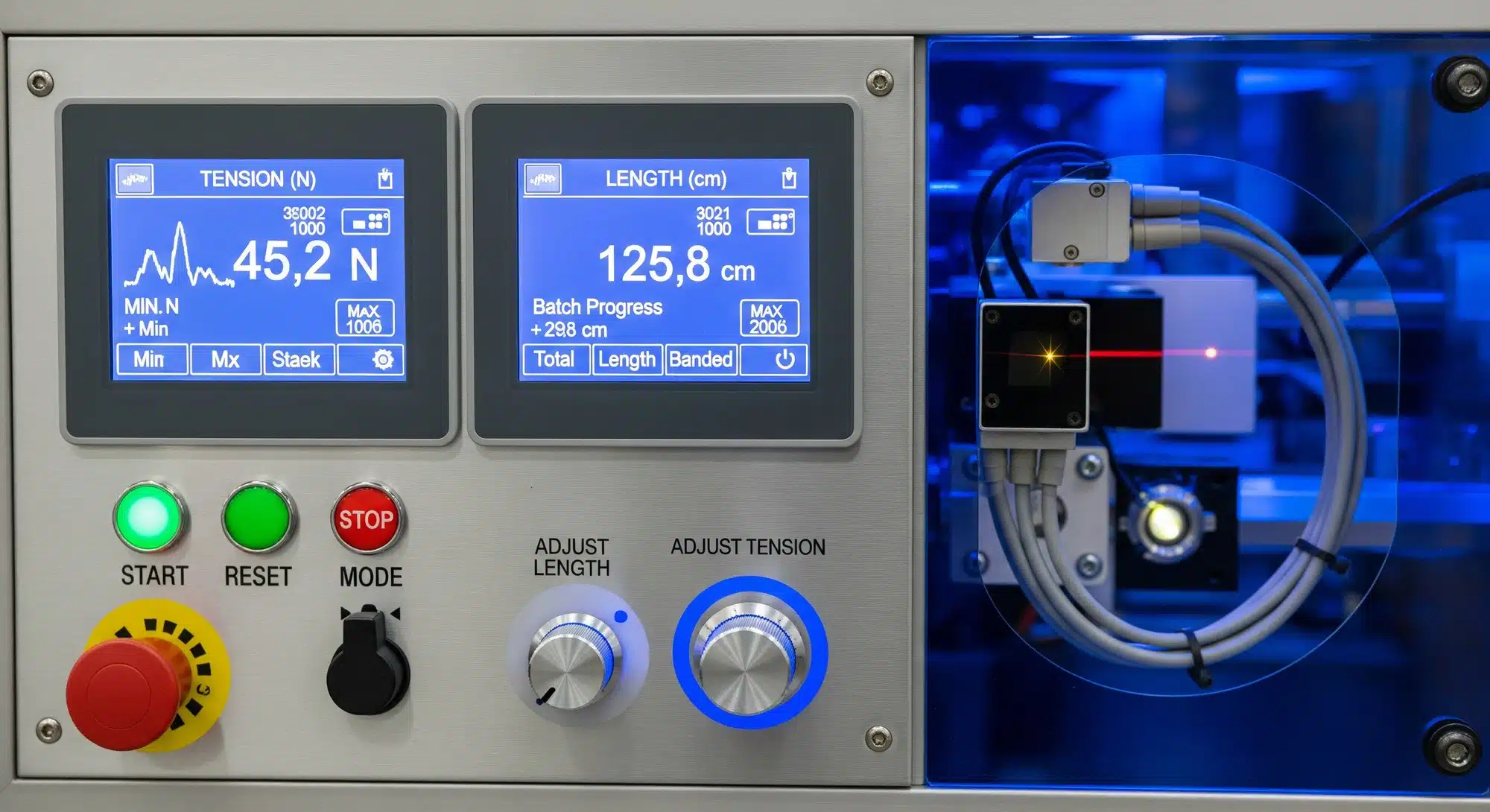
The tension applied to the banding material makes a significant difference in waste generation. Modern machines use servo motors and digital feedback loops to apply exactly the right amount of tension for each product. Too much tension wastes material through stretching and breakage; too little requires using excess material to achieve a secure bundle. These systems continuously monitor and adjust tension in real-time, adapting to variations in product size and material properties for consistent bands that use the minimum amount of material necessary.
Automatic Band Length Adjustment and Smart Material Management
One of the biggest waste culprits in older systems is the one-size-fits-all approach to band length. Modern machines use photo-eye sensors or ultrasonic detectors to measure each product before applying the band and then cut it to the precise length needed, eliminating excess material that would otherwise be trimmed and discarded. For operations handling varied product sizes, this feature alone can cut material waste by 15–25%.
Contemporary machines also incorporate intelligent material monitoring systems that track usage patterns and identify inefficiencies, alerting operators when consumption exceeds expected parameters. Some advanced models include predictive algorithms that optimize material usage based on historical data and suggest ideal settings for different products.
Reduced Setup Waste and Rejected Bands
Setup and changeover periods traditionally generate significant material waste as operators make test runs and adjustments. Advanced banding machine solutions for automation help reduce this issue through quick-change features and saved recipe programs that store optimal settings for different products — eliminating the trial-and-error waste that accumulates across multiple changeovers per day. Instead of running dozens of test bands, operators simply select the appropriate product profile — drastically reducing trial-and-error waste during each changeover.
Every improperly applied band also represents wasted material. Modern machines reduce rejection rates through improved sealing technology, better alignment systems, and quality verification features. Vision systems detect improperly formed bands before they’re applied, and some machines automatically recycle defective bands back into the material stream.
Eco-Friendly Materials and Variable Speed Optimization
Modern banding machines are designed to work efficiently with newer, thinner materials, including biodegradable films and paper-based bands. The ability to use thinner materials without sacrificing strength means less material per band, while paper and biodegradable options align with corporate sustainability initiatives and potentially reduce material costs simultaneously.
Operating speed also directly impacts waste generation. Modern machines feature variable speed controls that optimize throughput while maintaining waste-minimizing precision — slowing down for irregular products that need careful handling and speeding up for uniform items, balancing productivity with material conservation throughout the production run.
What Waste Challenges Should You Assess Before Selecting A Machine?
Understanding the specific waste patterns in your current operation is the foundation for choosing equipment that delivers real ROI. Track waste across different categories for at least two weeks — material discarded during changeovers, rejected bands, excess length trimmed from oversized bands, and material lost to breaks or jams. Many operations discover that 60–70% of their waste comes from just one or two sources, making the equipment selection much clearer.
Product variability plays a crucial role in this assessment. Operations running ten or fewer product types may find simpler automatic length adjustment sufficient, while operations with fifty-plus variations benefit more from advanced sensor systems and extensive recipe storage. Also consider human factors — if your team frequently adjusts tension or band length manually, you’re likely losing material to trial-and-error testing, and machines that store settings and remove guesswork will deliver significant returns.
How Do You Calculate the True ROI of Waste Reduction Features?
Begin with your current material costs. Multiply annual band consumption by cost per unit, then apply the expected waste reduction percentage for the features you’re considering. A facility using 500,000 bands annually at $0.03 per band with 30% waste reduction saves $4,500 yearly on materials alone. Don’t overlook the labor component — if setup waste reduction features save 15 minutes per changeover across eight changeovers daily, that’s two hours of productive time reclaimed each day. Secondary benefits like reduced material orders, less storage space, better bundle quality, and sustainability improvements can become the deciding factors when choosing between equipment options.
Which Features Deliver the Best Waste Reduction for Different Scenarios?
High-volume, uniform product operations get the most value from speed optimization and precise tension control — fractional improvements in material usage per band multiply into substantial savings at scale. Variable product operations need to emphasize automatic adjustment and recipe management, with photo-eye sensors and ultrasonic detection systems that measure products on the fly. Low- to medium-volume operations with budget constraints should focus on features that address their primary waste source rather than spreading budget across capabilities that address minor issues.
What Maintenance Practices Preserve Waste Reduction Performance?
Sensor calibration tops the maintenance priority list. Photo-eyes that detect product dimensions can drift out of alignment, causing bands to be cut too long or too short — a sensor off by just 5mm can waste hundreds of meters of material monthly in high-volume operations. Tension system components, including servo motors, brake pads, and drive rollers, experience wear that affects their ability to apply consistent tension, quietly increasing consumption by 10–15% before operators notice. Tracking material usage per thousand bands as a key performance indicator catches degrading performance early. Don’t overlook software updates either — manufacturers frequently release firmware improvements that deliver 2–5% waste reduction without any hardware changes.
How Can You Optimize Material Selection?
Machines with precision tension control can often secure bundles using bands 20–30% thinner than what older equipment required — and thinner materials typically cost less per meter. Width optimization offers another overlooked opportunity. Reducing the band width from 12mm to 9mm cuts material consumption by 25% on every application, and many products are banded with materials wider than necessary simply because that’s what was specified years ago. Premium materials with uniform thickness and width also deliver better results from precision features — the cost difference between economy and premium materials is often just 5–10%, but the waste reduction from consistent materials can exceed 15%.
Time to Measure Your Waste Baseline
Spend the next two weeks tracking exactly where and how your operation wastes banding material, categorizing losses by changeovers, rejections, excess length, and material breaks. This data transforms equipment discussions from vague feature comparisons into targeted conversations about solving your specific waste challenges — ensuring you invest in capabilities that deliver measurable returns.


