
Scientists discover underwater seagrass naturally cleans the sea by trapping millions of marine plastic pieces in a ball and removing them from the ocean. This unique and resourceful seagrass is called Posidonia oceanica, and it’s endemic to the Mediterranean.
P.Oceanica, known as Neptune grass, forms lush meadows on the seafloor in coastal waters up to 40 meters deep. When Neptune grass sheds leaves, fibers in the leaf sheaths intertwine and form tangled spheres called Neptune balls. These balls provide an incredible ecosystem service by trapping plastic items and releasing them back to nearby shorelines.
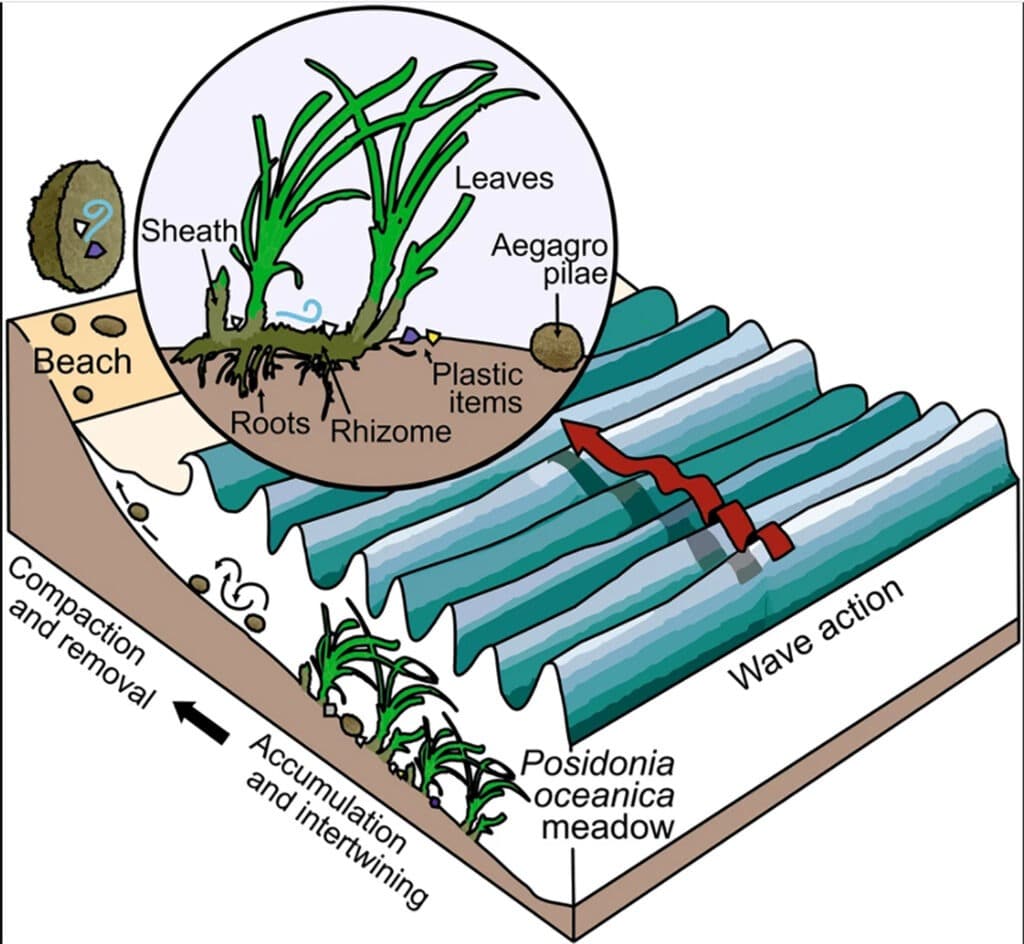
Lead author Anna Sanchez-Vidal at the University of Barcelona and her colleagues estimate that these Neptune balls trap more than 860 million plastic items in the Mediterranean Sea per year. “When there’s a storm, and these balls are ejected from the sea to land, the plastic also is ejected back to shore,” explained Sanchez-Vidal.
From 2018 to 2019, the team measured the quantity of plastic collected from seagrass litter from four beaches in Mallorca, Spain. They picked this area to study because Mallorca has exceptionally high levels of plastic near the shore, as well as extensive seagrass meadows.
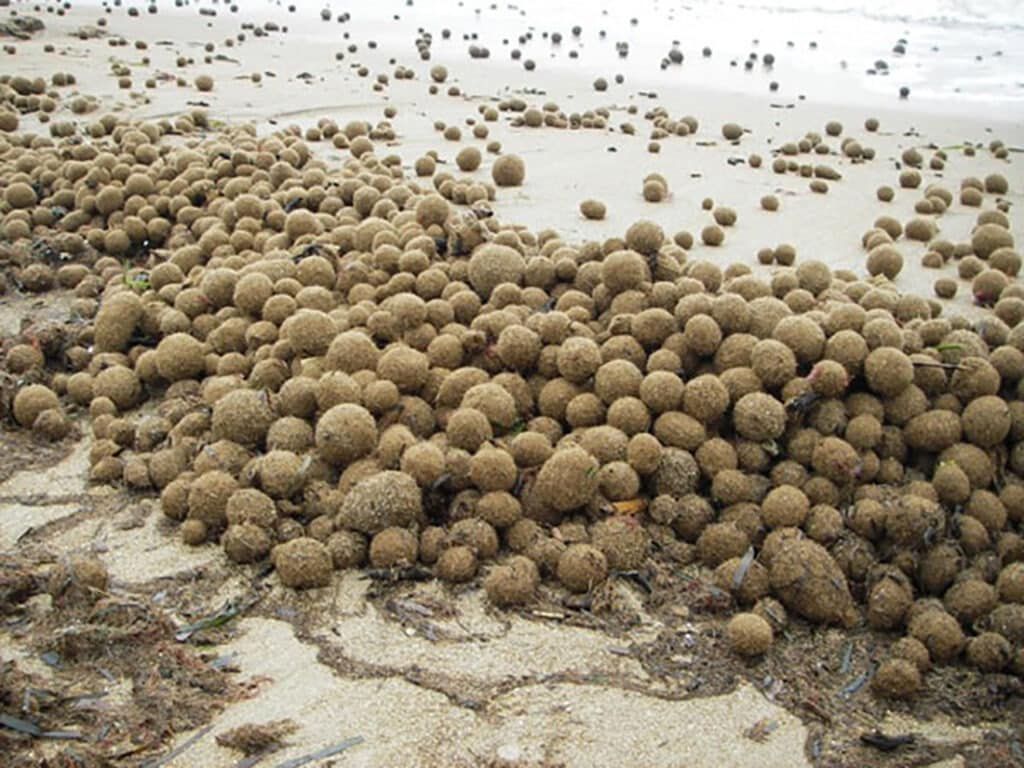
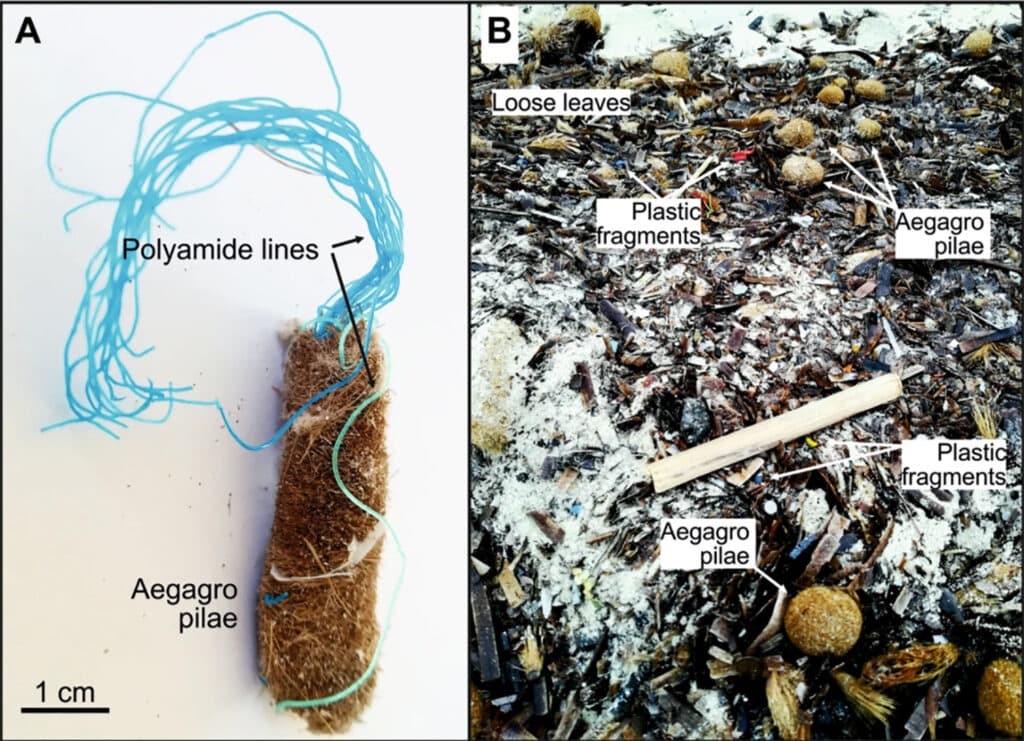
Overall, the team found plastic in half of the 42 loose seagrass leaf samples, with 613 plastic items per kilogram of loose leaves. Out of the 198 Neptune balls that the team collected, 17% contained plastic items.
These findings highlight the need for better conservation of seagrass meadows. Marine vegetation also interacts with pollution in revealing ways: researchers now treat sargassum washing onto Mexico’s beaches as a record of what the ocean carries. “Strict measures should be taken to protect these systems,” said Sanchez-Vidal.
Trapping and removing plastic from the sea isn’t the only significant role P. oceanica plays in the ecosystem. Seagrass meadows are also an essential reservoir of CO2 and sediment and offer a nursery for a wide range of marine animals.
While Neptune grass is found only in the Mediterranean Sea, other seagrass species are found in shallow waters off Australia’s coast. However, it’s unclear whether these different species can form Neptune balls too, but it would be a good idea if scientists could find out.


