
Oak Ridge National Laboratory (ORNL) in Oak Ridge, Tennessee is home to the smartest and most powerful supercomputer on the planet. ‘Summit’ was recently used by two researchers to see if it could find possible drug compounds that may help fight against the SARS-CoV-2 coronavirus that is responsible for the COVID-19 outbreak.
The researchers performed simulations using Summit with more than 8,000 compounds to screen for ones that would be most likely to bind to the main “spike” protein of the virus, they identified 77 small-molecule drug compounds.
SARS-CoV-2 binds to host cells through extended arm like tentacles called trimeric spike glycoproteins. This protein is key because it’s a potential target for therapies and diagnostics. What they discovered using biophysical assays, is this particular protein binds 10x more tightly, than the corresponding spike protein found on severe acute respiratory syndrome (SARS-CoV).
As part of their research findings, they tested three antibodies that successfully bound the SARS-CoV spike protein, however, those antibodies could not bind this 2019-nCoV spike protein.
The researchers had the idea to use Summit after Chinese researchers had discovered that the coronavirus’ entry point into a host cell used the same mechanisms as the first SARS virus.
Jeremy C. Smith, Governor’s Chair at the University of Tennessee (UT) and director of the UT/ORNL Center for Molecular Biophysics, thought maybe it was possible that the two viruses would “dock” to the cell the same.
Team member Micholas Smith is a UT/ORNL CMB postdoctoral researcher, who then built a model of the coronavirus’ spike protein, also known as the S-protein.
Smith explains that because of a study published in Science China Life Sciences; “We were able to design a thorough computational model based on information that has only recently been published in the literature on this virus.”
ORNL’s press release further explains:
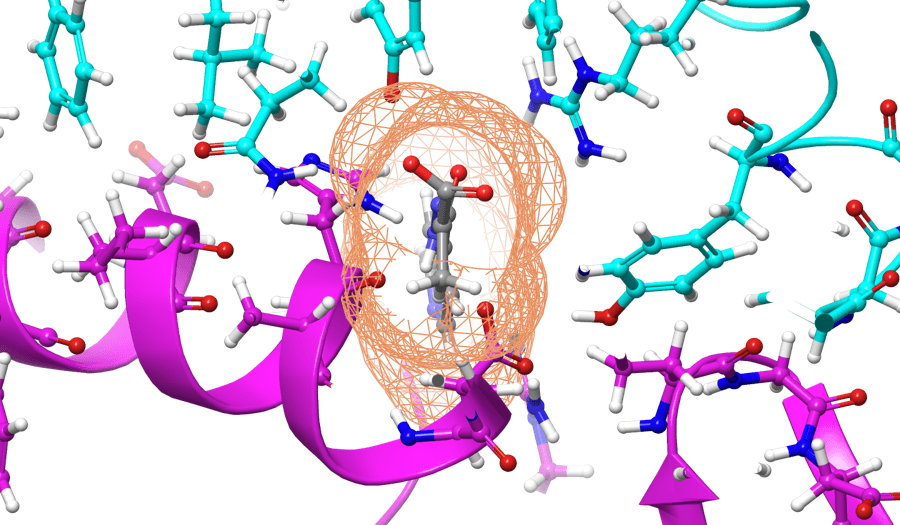
After being granted computational time on Summit through a Director’s Discretionary allocation, Micholas Smith used a chemical simulation code to perform molecular dynamics simulations, which analyze the movements of atoms and particles in the protein. He simulated different compounds docking to the S-protein spike of the coronavirus to determine if any of them might prevent the spike from sticking to human cells.
Smith goes on to say; “Using Summit, we ranked these compounds based on a set of criteria related to how likely they were to bind to the S-protein spike.”
The 77 small-molecule compounds the team discovered such as natural compounds and medications exhibit binding properties that could lead to interference for the infection process. These will now need to be studied by scientists to see which ones, if any, may work.
Since the team’s findings, a new highly accurate S-protein model has been released in Science, now the ORNL team plans to run the study again with the new model to see if the rankings change.
Summit was needed to rapidly get the simulation results we needed. It took us a day or two whereas it would have taken months on a normal computer,” said Jeremy Smith. “Our results don’t mean that we have found a cure or treatment for the Wuhan coronavirus. We are very hopeful, though, that our computational findings will both inform future studies and provide a framework that experimentalists will use to further investigate these compounds. Only then will we know whether any of them exhibit the characteristics needed to mitigate this virus.
Summit supercomputer has enabled for the rapid screening of these molecules that would take any other computer months to get the same results. Now and possibly even more so after the next screening, scientists can begin running tests to see if any could help bind these S-proteins and possibly increase chances of survival. There is another scientific research project called Folding@home, which uses people’s home or office spare computer processing resources to help with its research, and you can personally help contribute to that project.


