
The weekday calendar often creates a significant barrier for anyone attempting to increase physical activity. Professionals frequently find that the only reliable opportunity for movement exists within the weekend window. Extensive longitudinal research indicates that total weekly movement volume outweighs the importance of rigid daily intervals. Reaching the targeted dose and prioritizing safety ensures that a compressed workout schedule aligns effectively with meaningful health outcomes.
A practical whole-body health habits roadmap treats movement, sleep, and stress as a single, interdependent system. Adopting an integrated mindset transforms a weekend warrior training plan into a repeatable, high-value habit. Practical guidance leverages current clinical evidence to help you hit weekly activity targets without feeling that Saturdays and Sundays have become a form of punishment.
Success relies on metabolic resilience rather than daily perfection. Physiological load management helps stabilize blood pressure and glucose levels even if Monday through Friday involves long stretches of sedentary work. Adopting a two-day workout plan provides a significant advantage by optimizing your physiological load, ensuring that even a compressed schedule yields measurable protective benefits.

Weekend Warrior Quick Facts: The 60-Second Guide to Activity Targets
If the phrase “weekend warrior training” sounds like a shortcut, research pushes a more grounded idea: weekly volume matters more than the day-by-day pattern. This guide turns that evidence into a compressed workout schedule that busy professionals can follow without turning every weekend into a punishment.
- Standard aerobic and muscle-strengthening baselines suggest 150 to 300 minutes of moderate activity per week, or 75 to 150 minutes of vigorous activity, plus two muscle-strengthening days.
- In many accelerometer studies, a weekend warrior pattern means reaching weekly MVPA with at least 50% of it clustered into 1 to 2 days—a definition used in a large UK Biobank mortality pattern analysis that examined activity distribution and death risk.
- A 21-study pooled weekend warrior evidence review found lower all-cause mortality risk than inactive groups, with benefits broadly similar to regularly active patterns.
- Global targets line up closely with U.S. guidance, including the adult thresholds summarized in global weekly movement targets for adults, which reinforces that the weekly dose is the anchor.
Optimizing your schedule requires attention to several foundational safety pillars. Following these core principles ensures that your compressed training remains productive rather than risky:
- Detailed warm-ups to prime blood flow and muscle temperature.
- Measured progression intervals to avoid sudden physical shocks.
- Consistent strength minimums for joint and bone stability.
- Deliberate recovery windows to allow for tissue repair.
Maintaining these standards turns sporadic exercise into a sustainable health strategy.
Effective planning relies on adaptable frameworks that match your current fitness level and weekly availability. Choose the structure that best fits your immediate needs:
- Low-risk beginner templates for those returning to movement.
- Intermediate protocols focused on strength and intervals.
- Condensed one-day options for particularly chaotic schedules.
Selecting the right starting point prevents the burnout often associated with over-ambitious goals.
Use the Quick Facts as the map, then build the plan section by section. The goal is not to mimic an athlete’s routine; it is to make the weekly dose realistic enough that it happens again next weekend.

Defining Weekend Warrior Training: Why a Two-Day Workout Plan Still Counts
Core Definitions: What Weekend Warrior Training Actually Means
Core movement patterns in weekend warrior training involve reaching recommended MVPA levels, typically through sessions concentrated on Saturday and Sunday. Practical applications of this pattern include brisk walking, cycling, or gym circuits—modalities that effectively contribute to your cumulative weekly volume. The pattern is not about perfection; it is about reliably reaching a weekly dose.
A typical weekend protocol involves a longer endurance-focused session on Saturday followed by a recovery or strength-based block on Sunday to avoid repeating the same physical stress. For people who feel stiff by midweek, the mobility ideas in practical flexibility tips for everyday bodies fit naturally alongside weekend training because joint range and tissue readiness shape how safe a long session feels.
What Counts as Moderate-to-Vigorous Activity
You can perform a subjective intensity assessment by gauging your ability to speak in full sentences during exercise. Moderate activity elevates your heart rate enough to allow full sentences but prevents singing. Vigorous intensity, by contrast, forces heavier breathing that limits speech to brief, fragmented phrases.
Measurement methodologies vary across clinical research, shifting between subjective self-reporting and objective wearable accelerometer data. Wearables reduce memory bias, but definitions can still vary, including how the “most active” days are calculated and how intensity is classified. The takeaway is simple: use the evidence to justify the weekly target, then tailor the plan to real life.
Physiological Mechanisms: Why Schedule Compression Still Delivers Results
Dose Over Calendar
Longitudinal data indicates that your total weekly MVPA volume is the primary driver for the biological adaptations that secure long-term metabolic health. Cardiorespiratory fitness, blood pressure regulation, glucose handling, and metabolic resilience respond to cumulative training load. Frequency helps build rhythm, but volume is the main lever.
Professionals who consolidate two extended walks when weekday obligations peak still achieve a significant metabolic threshold. The same goes for someone who uses Saturday and Sunday mornings to cycle and lift because evenings are swallowed by deadlines and family logistics.
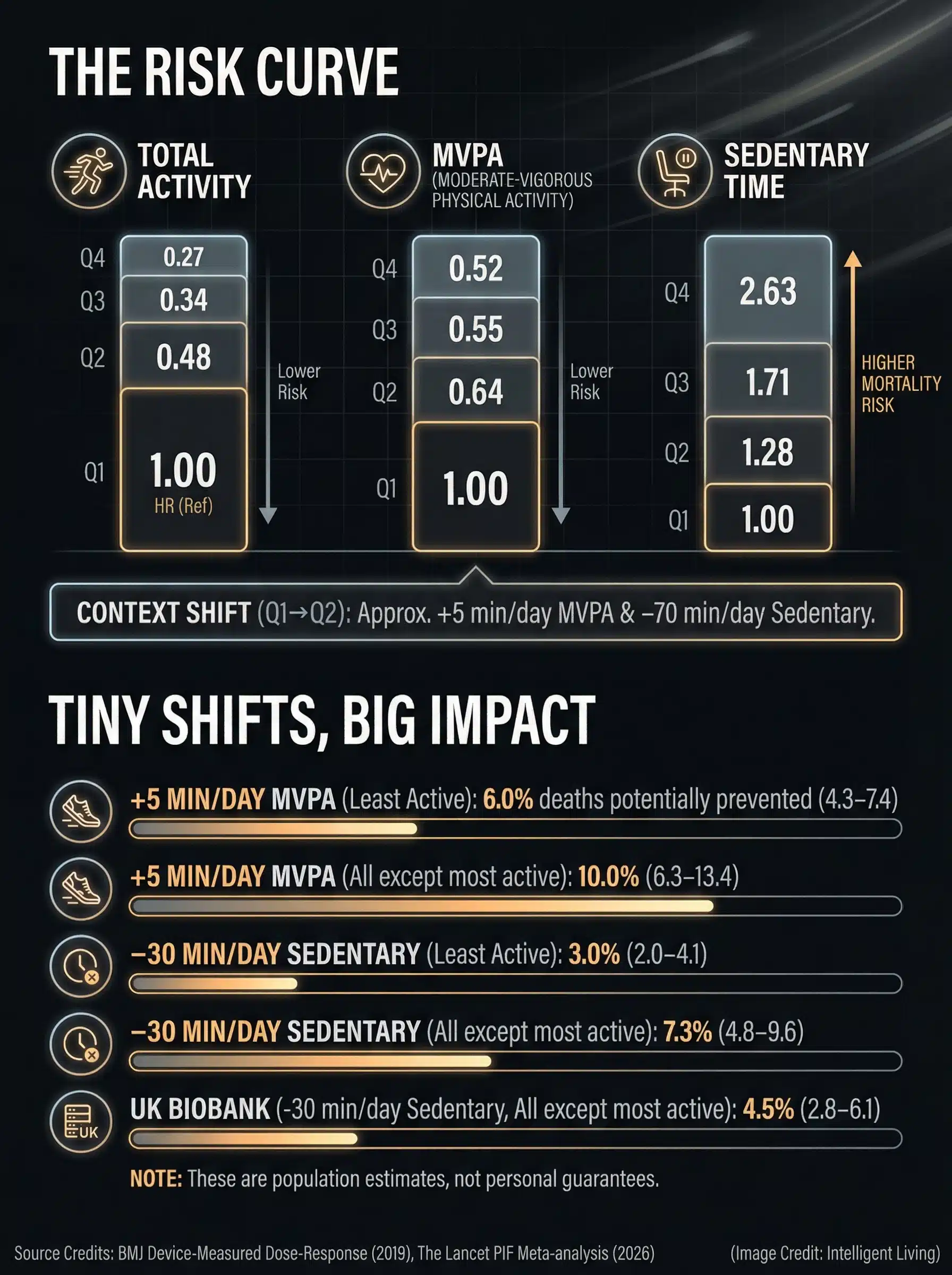
Device-measured dose-response evidence linking activity and mortality points in the same direction: as weekly movement rises from very low levels, death risk generally drops, which is why a two-day workout plan can matter when it reliably lifts a person out of the inactive category.
Mechanisms Behind the Effect
Clustering your activity triggers specific biological adaptations that support long-term metabolic resilience:
- Enhanced vascular function and improved insulin sensitivity.
- Superior mitochondrial efficiency through consistent metabolic stress.
- Reduced systemic inflammation via stabilized endothelial function.
Even when sessions are concentrated, the body utilizes the intervening days for recovery and tissue repair.
The interplay between exercise, blood vessels, and insulin action helps explain why dose can matter more than day count, especially for people worried about blood sugar drift after years of desk-heavy weeks.
Behavioral Trade-Offs and Sedentary Time
Schedule compression provides flexibility but does not negate the risks associated with a sedentary workweek. Prolonged sitting creates physiological stress that even intense weekend sessions cannot fully offset.
Professionals who integrate brief movement snacks—such as two 10-minute walks between meetings—frequently report improved energy levels and reduced stiffness. These micro-habits ensure your high-intensity weekend blocks remain physically manageable and reduce the ‘Monday morning stiffness’ typical of inactive weeks.
A harmonized meta-analysis on sitting time and mortality risk suggests higher levels of moderate activity can blunt some sitting-related risk, yet long chair time still deserves attention, especially when weekdays are screen-heavy.
Current population-scale movement analysis demonstrates that even brief increases in brisk activity can meaningfully impact overall health metrics, which makes weekday movement snacks feel less like filler and more like strategy.
The health risks of sedentary jobs show why small interruptions in sitting are part of the foundation that keeps weekend training safer, particularly for people whose days disappear into screens.
When sitting is truly unavoidable, the serious health risks of sitting too much underline why standing breaks and short walks are not an optional add-on in a compressed workout schedule.

The Weekend Warrior Health Payoff: Outcomes and Safety Rules that Keep it Sustainable
Clinical Outcomes: Health Benefits that Make this Strategy Effective
Mortality and Hypertension Outcomes
Large prospective cohorts show that weekend warrior patterns are associated with lower all-cause mortality compared with inactivity. The Mexico City cohort study of more than 150,000 adults found lower mortality risk among weekend warriors, including those with and without hypertension. One detail that matters for real-world planning is that sessions of at least 30 minutes were particularly relevant, which fits naturally with two longer weekend blocks.
Cardiovascular Events: Atrial Fibrillation, Heart Attack, Heart Failure, Stroke
Accelerometer-based data from nearly 90,000 UK Biobank participants linked both weekend warrior and regularly active patterns with similarly lower risks of major cardiovascular events compared with inactivity. Large-scale cardiovascular outcome data indicates that clustered MVPA sessions offer protective benefits similar to more frequent, distributed activity.
The “Hundreds of Diseases” Finding
A broad analysis of 678 medical conditions indicates that guideline-level activity reduces the risk of hundreds of future diseases. Clinical data shows that weekend warrior and daily patterns yield remarkably similar protective outcomes. Strong associations showed up for cardiometabolic conditions like hypertension, diabetes, obesity, and sleep apnea in the phenome-wide UK Biobank analysis in Circulation across its full condition map.
Consistency in this pattern yields a significant result: the stabilization of clinical markers like blood pressure and glucose, replacing health ambiguity with measurable progress.
Brain Health and Mood Benefits
The UK Biobank brain health study in Nature Aging highlights that clustered activity patterns provide neuroprotective benefits comparable to daily exercise. Evidence suggests a significantly lower risk for:
- Neurodegenerative conditions such as dementia and Parkinson’s disease.
- Vascular issues including stroke.
- Psychological challenges like depressive disorders and anxiety.
Integrating psychological stability habits helps mitigate the chronic stress that often triggers skipped workout sessions.
Musculoskeletal Considerations
While concentrated training can trigger initial muscle soreness, these symptoms typically subside as your body adapts to the new metabolic demand. Evidence regarding long-term joint preservation suggests that weekend warrior training correlates with lower risks of osteoarthritis and spine degeneration compared with inactivity.

The Safe Compression Blueprint: Essential Non-Negotiable Standards
Warm-Up and Cool-Down: The Small Investment that Pays Off
A warm-up preps blood flow, raises tissue temperature, and reduces the chance that the first hard minutes of a workout feel like a cold start. A cool-down helps heart rate and blood pressure return gradually to baseline. The warm-up and cool-down basics for safer workouts include easy steps that fit any weekend session, including 5 to 10 minutes of easier movement before intensity ramps up.
The Ramp Rule: Progress Gradually
Weekend warrior training works best when it is earned. Analyzing common sport-related injuries reveals that most setbacks occur when individuals attempt high-intensity efforts without a preliminary conditioning phase.
The safest approach is to build a weekday movement base first, then compress. A safer transition uses a safe return to exercise after injury strategy set that emphasizes progression and early warning signals.
Strength Minimums
Aerobic work safeguards cardiovascular health, while resistance training ensures muscle, bone, and joint stability. Prioritizing structural stability through resistance work ensures your joints remain resilient as you extend the length of your training sessions. Correcting resistance training inefficiencies like improper recovery or excessive load prevents the injuries that derail long-term plans.
Recovery and Mobility
A weekend plan is only as good as the recovery that lets it repeat next weekend. Short daily mobility work during the week helps restore range of motion and reduces the Monday stiffness that makes people skip the next session. Establishing regular mobility routines ensures tissue readiness and reduces the physical discomfort often experienced after a sedentary week.
Recovery also includes sleep and hydration. When sleep is short, soreness lingers and motivation collapses. The core ideas in sleep for longevity fit naturally here because better sleep quality often decides whether a two-day workout plan feels energizing or punishing.
A grounded recovery routine also benefits from the fundamentals in recovery techniques that support muscle repair, especially when weekend sessions include resistance work.

Building Your Custom Weekend Warrior Plan: Adaptations and Workout Templates
Fifteen Practical Strategies to Adapt Weekend Warrior Training
- Plan the Weekly Dose First: Decide the minutes before choosing the workouts.
- Split Saturday and Sunday on Purpose: One day, steadier endurance; the other, strength plus a shorter cardio block.
- Use Intervals as a Tool, Not a Punishment: The time-efficient logic behind short bursts of intense exercise works best after a warm-up and with controlled effort.
- Add Midweek Movement Snacks: Two 10-minute walks during the week reduce the shock of long weekend sessions.
- Choose Low-Impact When Joints Complain: Cycling, swimming, and rowing keep the dose high with less pounding.
- Keep One “Easy Win” Session: A brisk walk counts and keeps consistency alive.
- Bookend Sessions With Mobility: Five minutes before and after is a realistic starter rule.
- Make Strength Nonnegotiable: Two short full-body sessions beat one massive effort.
- Use Perceived Effort for Intensity: Moderate is talkable; vigorous is breathy and challenging.
- Build Accountability Into the Weekend: A standing Saturday time block beats hoping the day opens up.
- Keep a Backup Plan: If weather breaks the plan, an indoor circuit preserves the weekly dose.
- Stop Treating Work as a Reason to Stay Still: Small, strategic lifestyle adjustments make the transition to weekend training feel more natural even after a demanding chair marathon.
- Use Your Environment: Stairs, parks, and errands can become part of the dose.
- Rotate Modalities: Hiking one weekend, cycling the next, and then a swim keeps overuse down.
- Track Minutes, Not Perfection: The weekly total is the anchor, and consistency is the multiplier.
If a person needs a menu of options to avoid boredom, the heart-pumping cardio exercise mix offers variety that still fits the weekend warrior goal.
Proven Weekend Warrior Templates: Choose Your Strategy
Beginner Two-Day Template (Low Injury Risk)
- Saturday: 40 minutes of brisk walking plus 20 minutes of basic bodyweight strength (squats, push-ups, and hip hinges), with 10 minutes of mobility at the end.
- Sunday: 50 minutes mixed cycling or brisk walking with 15 minutes of balance and core work.
- Weekdays: two 10-minute movement snacks.
Intermediate Template (Strength Plus Intervals)
- Saturday: 20-minute strength session with compound lifts followed by 30 minutes of moderate cardio.
- Sunday: 45 minutes of interval-based cardio (warm-up, intervals, cool-down) plus 10 minutes of mobility.
- Weekdays: one 10- to 15-minute mobility block and one 10-minute brisk walk.
One-Day Big Session Plus Maintenance
- Sunday: 90 to 120 minutes combining steady aerobic work and two short resistance blocks.
- Midweek: two short strength or brisk-walk blocks to maintain circulation and reduce stiffness.
View these frameworks as adaptable baselines. Success hinges on a protocol that remains sustainable, avoiding the physical setbacks or mental fatigue that often derail inconsistent efforts.
Fitness Reality Check: Analyzing the Data and Your Next Steps
Data Analysis Reality Check: What the Evidence Proves and Disproves
Analytical outcomes often shift depending on whether research relies on self-reported logs or objective wearable trackers. Subjective reporting frequently inflates both the duration and perceived intensity of movement, whereas accelerometers offer higher precision but may misinterpret specific non-rhythmic activities.
These variations do not invalidate the broader findings. Instead, they reinforce that current evidence represents robust population-scale associations rather than absolute clinical certainties for every individual.
Safety Boundaries that Keep the Plan Honest
Federal health promotion standards emphasize that any duration of movement is preferable to sedentary time.
People with uncontrolled hypertension, advanced cardiovascular disease, or complex medical conditions should get clinician guidance before turning a weekend into a high-intensity training block. Safety for most adults stems from a steady, realistic progression. Start with modest goals, accumulate weekly minutes, and introduce intensity only after establishing a consistent strength and recovery foundation.
Strategic Conclusion: Strengthening Your Long-Term Health Roadmap
Commitment to a weekend warrior protocol begins with a scheduled block on your calendar. Tracking total MVPA minutes and respecting the need for a gradual ramp-up bridge the gap between a sedentary workweek and the vigorous activity required for longevity. Consistent clinical markers stabilize when you meet weekly activity targets.
A comprehensive wellness framework ensures that your overall energy levels support your physical performance. Protecting sleep and maintaining a basic midweek mobility habit prevents the Saturday and Sunday sessions from feeling like a shock. Cumulative volume and attention to early warning signals give you the confidence that a two-day workout plan secures your future health.

Common Weekend Warrior Training FAQ: Expert Answers for Busy Professionals
Does a two-day workout plan actually improve longevity?
Extensive accelerometer studies confirm that meeting weekly activity targets in one or two days provides similar mortality benefits to spreading the volume across the entire week.
What is MVPA in plain language?
Moderate-to-vigorous physical activity includes brisk movement where you can talk but not sing; vigorous activity is intense enough that speaking full sentences becomes difficult.
Is strength training necessary for weekend athletes?
Maintaining at least two full-body sessions per week is vital for bone density, joint stability, and metabolic resilience as you age.
How do I avoid injuries when compressing my workouts?
Prioritize a 10-minute warm-up, increase total minutes gradually each week, and keep minor movement snacks during the workweek to avoid stiffness.
Can I still see results if I only have one day?
While two days are ideal for spacing, data suggests that hitting the total weekly dose on a single day is significantly better than remaining inactive.


