
PEGylated Liposomal Doxorubicin, a drug used for breast cancer, bladder cancer, and leukemia treatment, has to be administered by targeted local delivery. Some ways to do that include injectable implants and cast implants. And soon, there may be another option involving 3D printing.
Nagoya City University researchers have developed a new type of 3D bio-printed drug delivery system. The polymer hydrogel used to fabricate the implantable patches is made primarily of fish gelatin. The choice of gelatin was due to its relatively low cost and the fact that fish doesn’t tend to clash with any religious or personal beliefs.
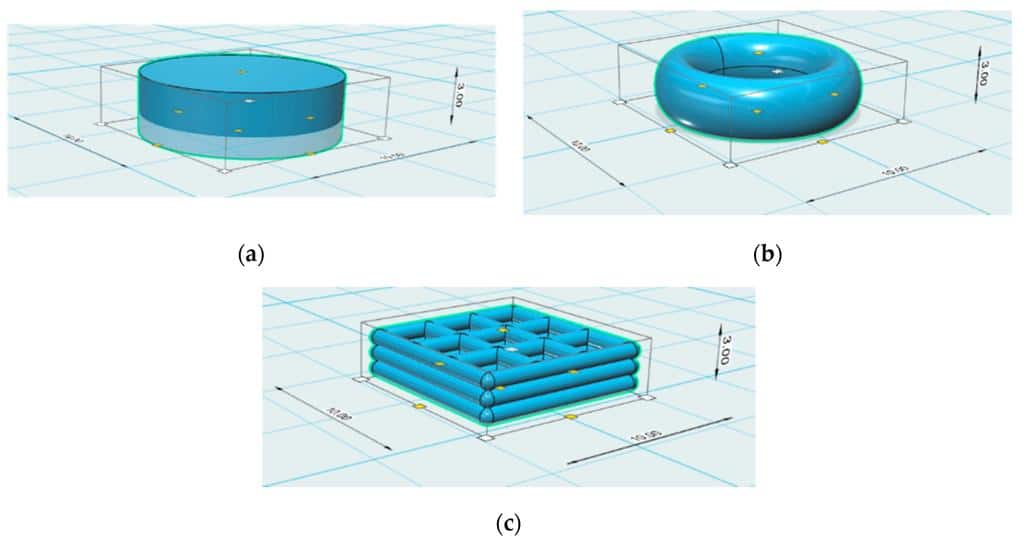
The team printed three different patch shapes – a torus (donut), a cylinder, and gridlines – using a semi-solid extrusion-type bioprinter. Then, they tested each variation by loading it with the DOX compound and analyzing the release rates in vivo.
The results revealed that the most suitable form for a sustained-release device is gridlines. They also realized that they had to add carboxymethyl cellulose sodium, a pharmaceutical excipient, to the hydrogel because the fish gelatin had an extremely low viscosity on its own.
Furthermore, the patches had a photosensitive component to them, so the researchers were able to control the release rates by varying UV exposure times. The full DOX release was capped at a lower percentage, and the DOX release rates decreased as UV exposure increased.

There’s another way 3D printing technology may help with cancer treatments someday. A separate team of scientists printed tiny sponges that bring the filtering abilities into the blood vessels. It cuts down on the toxic effects of cancer treatment by absorbing excess drugs before it spreads throughout the body, lessening chemotherapy’s ill side effects, such as vomiting.
Using 3D printing for medical applications is becoming increasingly popular. Other studies include personalized cervix tissue implants being printed to counter HPV and a multi-drug delivery device that combats E. coli. Aside from implants, 3D printing is also used to print skin directly into a wound using a custom-made mobile skin 3D bioprinting system that can be rolled right to a patient’s bedside.
Scientists have also been developing ways to produce muscles, cartilage, bone, blood vessels, and whole organs for testing new drugs or medical procedures and, eventually, organ transplantation. They’ve already managed to print hearts and working livers, among other things. Bioprinting will probably be a core element of life-saving solutions within this century.


