
Bioprinting is 3D printing with organic cells as ink. The technology is mostly used for medical research and regenerative medicine, but some scientists are now using it to help restore ecosystems in nature and make biofuels as well. Wherever and however it is applied, bioprinting will likely be a core element of life-saving solutions, as well as planet-saving initiatives, within this century.
In the medical field, teams of scientists from different institutions around the world have been developing ways to produce bone, muscles, living tissue, blood vessels (vascularized tissue), cartilage, and whole organs – all for use in testing new drugs, practicing medical procedures, and eventually organ transplantation. Meanwhile, bioprinting is also being used to help address the problem of coral bleaching with a group of Cambridge researchers fabricating biocompatible synthetic coral that’s even more algae-friendly than its natural equivalent.
How do they make the ink?

Bio-ink for human body parts requires a sample of cells from a patient. The cells are then cultivated in the lab until they multiply enough to be loaded into the printer. Sometimes it’s necessary to add adult stem cells, which can develop into any type of cell that’s required. It’s also needed to add an organic or synthetic “glue” that the cells can attach to and grow on – usually a dissolvable gel or collagen scaffold. Some cells don’t need this extra ingredient, but most do.
The bioprinted coral requires two different kinds of ink – one for the skeleton and another for the tissue. The skeleton ink consisted of a biocompatible polymer gel infused with cellulose nanocrystals and the tissue a gelatin-based polymer hydrogel, also infused with cellulose nanocrystals as well as living algae cells.
Bioprinting Body Parts
Bone
A team from Swansea University used a biocompatible, regenerative material to create an artificial bone matrix in the precise shape of the bone required. The “bone” is then transplanted into the body where it fuses with and eventually replaces the patient’s natural bone within months.
Another team has been printing bones to replace diseased or injured tissue and testing it in animals. They write about their success with the procedure of implanting bone and also muscle and ear structures into rat models in Nature Biotechnology. The parts matured into functional tissue over time and even developed a system of blood vessels within five months.
Anthony Atala, an author of the study and director of the Wake Forest Institute for Regenerative Medicine, said:
This novel tissue and organ printer is an important advance in our quest to make replacement tissue for patients. It can fabricate stable, human-scale tissue of any shape. With further development, this technology could potentially be used to print living tissue and organ structures for surgical implementation.
Cartilage
Skin Tissue For Face Reconstruction
The face is one of the most challenging areas to treat because of its varied contours and the intricate movements it makes. There is a work in progress, a strategy called “BioMask,” which involves a printer that can print skin cells directly onto a wound. First, a scanner determines the exact dimensions of the injury. Then, using the patient’s cells that have been pre-cultivated and loaded into the printer, the problem is filled in and good as new.
Organs
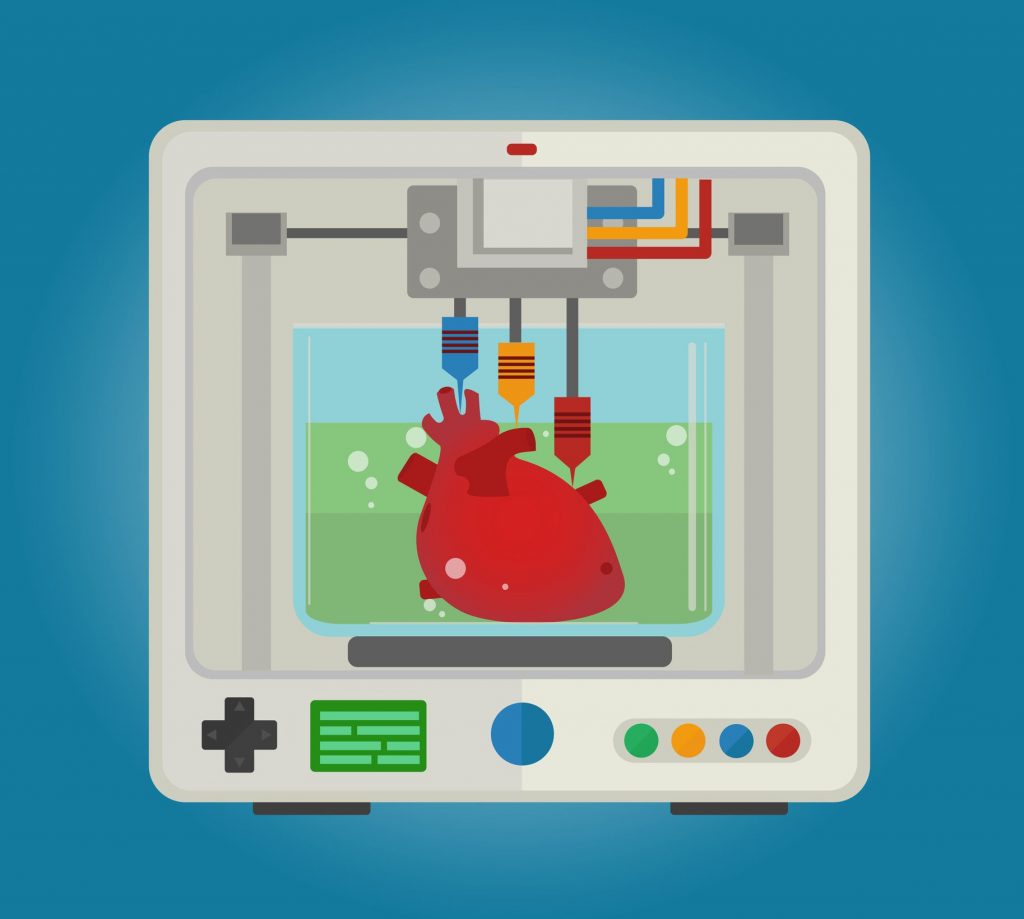
Organs are complicated to make real because they require intertwined layers of different materials such as connecting tissues, blood vessels, filtration systems, nerves, durability, and strength. The closest researchers have gotten to the real deal is in the making of tiny organoids – for example, a beating heart that’s a fraction of the size of the real thing.
Nature Regeneration And Biofuel
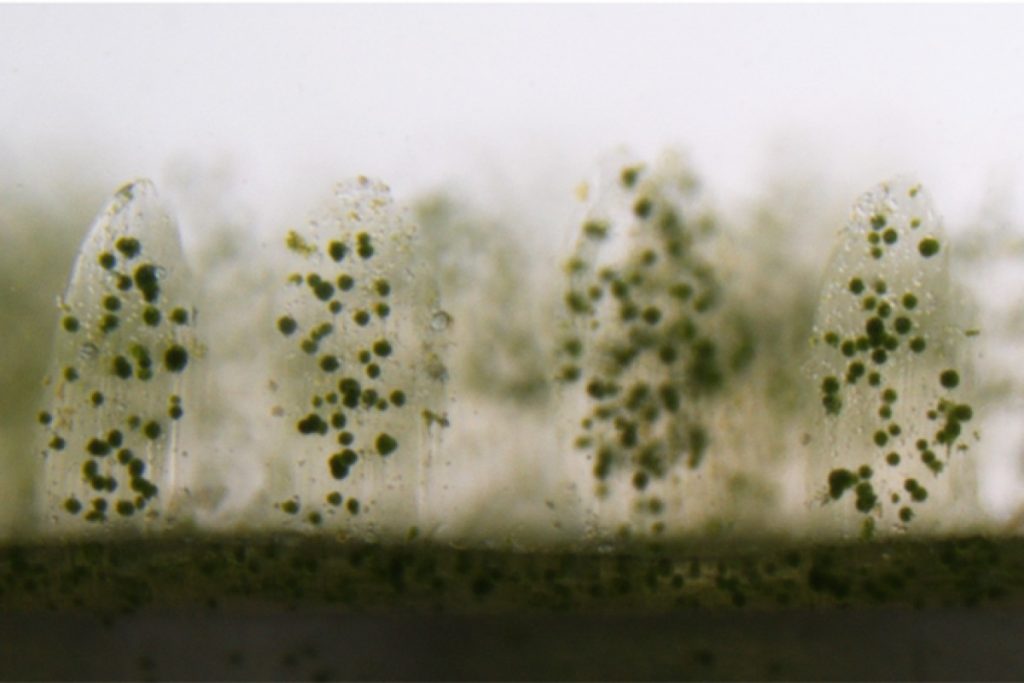
Veering away from the world of medicine, bioprinting is also being used to 3D print coral for algae production. The technology is being developed to build more efficient bioreactors that grow algae to make biofuels. It’s also serving as a model for marine scientists to better understand the relationship between coral and their live-giving algae to hopefully find a solution to coral bleaching. Their model worked so well that the microalgae the team incorporated into the material grew 100 times more densely than it did on natural coral. The research is published in Nature Communications.
Conclusion
We are living in fascinating times. Scientists worldwide are beginning to grasp the incredible complexity of the human body, and it is accelerating the application of 3D bioprinting at an ever-increasing rate. However, there is still a long way to go before they create fully functional and viable organs for human transplantation or find ways to fix our degrading ecosystems. But we are on the road nonetheless, and that’s absolutely amazing!


