
Autonomous robotics company Carbon Robotics unveiled its third-generation Autonomous elimination robots. The Autonomous Weeder uses robotics, artificial intelligence (AI), and high-powered laser technology to safely and effectively drive through crop fields to identify, target, and eliminate weeds.
Weed control is a prime concern for farmers for many reasons, including:
- Weeds compete with plants for soil nutrients, space, and sunlight.
- They make it easier for insect pests to harm crops.

While chemical herbicides can effectively kill weeds, they can also contaminate water and harm soil health. Farmers can pluck weeds out by hand, but it’s tedious work, and labor shortages are already a significant problem in the agriculture industry. Vegetable farmer Shay Myers said that each year “It’s harder to find people to do that work.”
The ‘smart farming’ robot kills weeds without contaminating water or affecting the soil. It operates autonomously, eliminating the dependence on manual laborers – improving the reliability and predictability of crop yield, costs, and more.

The 9,500-lb (4,300-kg) farming robot looks like a giant cube on four wheels. It uses GPS and twelve high-resolution cameras to drive down rows of crops, scanning the ground for weeds. An onboard supercomputer, powered by AI, identifies unwanted weeds, and the robot’s eight simultaneously operating 150-W carbon dioxide lasers then kill the plants off by targeting their meristems.
The fully autonomous weeder runs on diesel and can operate around the clock, covering 15 to 20 acres (6 to 8 ha) of crops per day – eliminating more than 100,000 weeds per hour. In comparison, a laborer from Myers’s farm can weed roughly one acre of his onions per day.
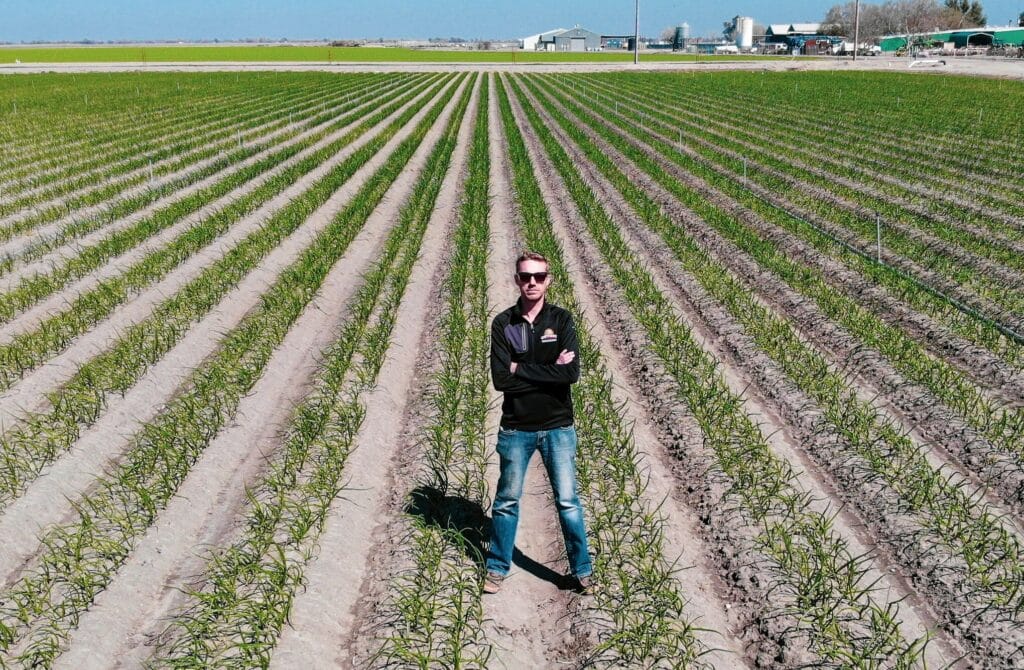
According to Myers, the farming robot is expensive, but it could pay for itself in two to three years. Paul Mikesell, the CEO of Carbon Robotics, told the Seattle Times the farming robot costs hundreds of thousands of dollars (he did not mention an exact price.) However, leasing options are available.
While this is not an unheard-of price range for advanced agricultural equipment, it could still put the robot out of reach for lots of farmers who can’t afford it. Even wealthy farmers who can afford it won’t be able to get their hands on one until next year. The robotics company has already sold out of the bots it had available for 2021 delivery, though pre-orders are now open for the 2022 run.

Agricultural technology has quickly grown in popularity across the world. Last year, we saw several companies create robots and AI systems that improve crops’ efficiency, yield, and profitability. These include Odd.Bot – the autonomous weed-pulling robot that uses no chemicals, Greenfield Robotics’ fleet of tiny smart robots that act as little lawnmowers to remove weeds. Others include a flame-throwing tractor that blasts weeds away!


