
Generally, an RV air conditioner rates 13500 to 15000 BTUs and requires 1/1.5 kW energy for one hour to function. You can calculate the solar power needed for your RV air conditioner by getting the size of your RV electrical system in kilowatts. And multiplying the size by 1000 (remember, 1000 watts makes 1 kilowatt).
Size of RV plug supply x 1000 = solar power needs
With an AC unit calculator, you can calculate the amount of solar power required for your AC and know how many panels can achieve it.
It is achievable to run your air conditioner on solar. You just need more knowledge of an RV AC’s energy consumption and power usage before running it. Additionally, you would need a solar panel, a solar charge controller, a battery bank, and an inverter when installing solar for an RV air conditioner.
Learn more about these necessary components and how to calculate each accurately for optimal operation and comfortability.
RV Solar Power Pros and Cons
Although solar energy is frequently referred to as an “unlimited power source,” actually using solar energy remains slightly challenging.
Since you are researching solar power for your RV, learning about solar energy’s pros and cons is essential.
Pros
- Renewability: Every day, as the sun rises, so does your solar power. The main advantage of solar energy is that it is entirely renewable, regardless of whether there are clouds in the sky to the side.
- Decrease of reliance on the electric grid: Solar energy can decrease your total electricity expenses and provide you complete freedom to go to remote places, even when it isn’t running at 100% capacity.
- Electrical application utility: Solar energy can be used for electrical applications and heating.
- Requires little maintenance: You’ll probably only need to worry about washing your panels off three or four times a year to keep them running well once you’ve got them installed and the wiring run properly.
Cons
- Expensive initial setup: The initial installation expense is solar energy’s main disadvantage. Purchasing solar panels to start your RV solar power installation is not always inexpensive. You also need to buy batteries, wiring, an inverter, and other essential components to fully protect your RV roof solar panels.
- Dependent on cloud cover: Direct sunshine is vital for panels to perform at their best. The weather isn’t always cooperative, and finding a parking spot that will allow your panels to receive direct solar exposure might be challenging.
- Expensive and inefficient battery storage: By connecting batteries to your solar panels, you can charge them during the day and use that energy to power your appliances at night. Unfortunately, large-capacity batteries are very expensive and are most necessary.

Components You Need to Run Your RV Solar-powered Air Conditioner
Solar inverters, panels, and batteries are the major components you must properly size as part of a system to power RV air conditioning.
Solar panels
Solar panels automatically solve the power supply problem for your RV AC. The panels can generate enough power or electricity with the perfect angle and abundant direct sunlight.
Inverters
Your inverter must be large enough to accommodate both the starting power and running power of your AC appliances. Solar energy generated by your panels and stored in your battery is converted into AC power by inverters. An inverter is highly required to power the common devices found in an RV, such as TVs and air conditioners.
Batteries
Your battery bank is essential for your RV’s AC system to operate. The more solar panels you have, the more energy your batteries can store. Nevertheless, the electricity is wasted if your batteries can’t hold all the power the panels generate. For this reason, it’s crucial to have a battery bank that is big enough to supply an AC unit with all the energy it requires.
When determining the solar power requirements for an RV air conditioner, selecting the right solar kit is crucial for efficiency and reliability. OffGrid Living Power Solutions offers a variety of solar kits designed to meet off-grid energy needs, ensuring that RV owners can maintain consistent power without relying on traditional sources. Their kits include high-efficiency solar panels, charge controllers, and inverters, making them an excellent choice for those looking to optimize their RV’s energy system.
Powering Your RV Air Conditioner with Solar: Tips and Tricks
To provide sufficient power for an RV AC, you must know the electricity amount your exact RV needs.
Selecting the right size of panels, batteries, and inverter to meet those electrical requirements is very significant.
Selecting the Right Size Solar Components
Most RVs are designed with a quality AC unit with a 13,500 BTU rating. However, there are some RVs with larger air conditioning units ranking higher.
With an RV panel LED display, you can simply turn on your AC unit while reading the displays.
Number of Solar Panels Required
Dividing the daily energy consumption of your air conditioner by the number of peak sun hours you receive each day will help you determine how many solar panels you need to get the approximate amount of solar electricity.
Let’s imagine, for instance, that you want to operate your air conditioner for three hours every day, and it uses 1.2 kWh of energy per hour. As a result, your air conditioner will use 3.6 kWh (3600 Wh) every day.
With this information, you can calculate the size of the system that you need:
Panel Rating (W) = power consumption (Wh) ÷ Highest Sun Hours
Panel Rating (W) = 3600 Wh ÷ 5.86
Panel Rating (W) = 614.33 Watts
So, to be able to run your RV AC for three hours every day, you need panels that are about 600 watts in size. 6 RV solar panels with a 100 Watt rating or two home solar panels with a 300 Watt rating each would make up such a system.
Also, you need a battery bank to give the AC the power it requires and access to the energy generated by the solar panels.
Sizing RV Battery Bank
Although estimating battery banks requires some sophisticated calculations, it’s a crucial step in determining the size of your solar project.
You require an additional 150 Ah of capacity for every hour that you intend to run your air conditioner when the sun isn’t shining directly on your solar panels with this 150 amp A/C unit.
So, the length of time your AC runs on overcast days or in the evenings depends on the size of your battery bank.
Integrating Your Inverter
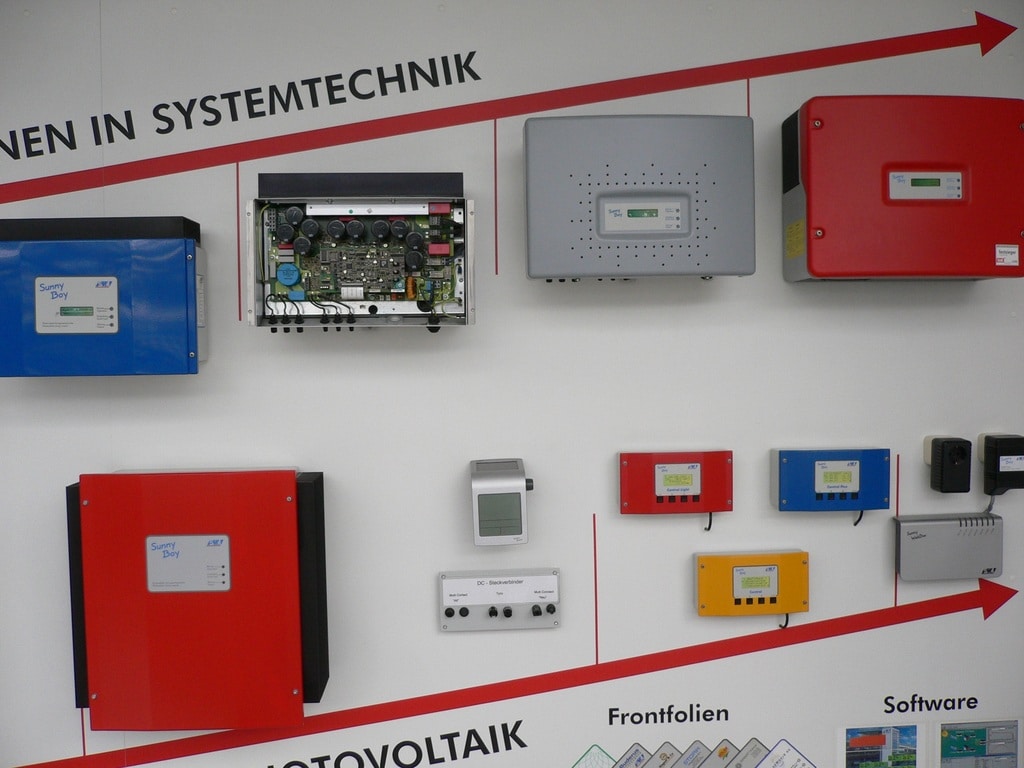
The DC-to-AC inverter is another crucial factor in your solar project. The initial wattage of your solar power system will significantly impact the size of your inverter.
The initial power of 13,500 BTU air conditioners ranges from 2800 to 3000 watts. It’s detrimental to max out an inverter each time you are on the air conditioning system.
So, it would be best to look for an RV inverter of at least 3500 or 4000 watts. Naturally, this number will be higher if you have a larger air conditioner that needs a higher initial wattage.
Calculating the Solar Power Output
According to the manufacturer, a typical solar panel, when installed on the roof space of your RV, produces between 100 and 160 watts. While in the sun for up to 9 hours, a 100-watt panel may produce 30 Ah of battery electricity. A 12-volt lead-acid battery also has a capacity of roughly 100 Ah.
As a result, you need at least three to four solar panels if you wish to charge a 100 Ah 12-volt battery in your RV. Each solar panel produces roughly 30 Ah. But, because of how they are installed, your RV solar panels may not always receive the best sunshine exposure.
How much energy does your RV air conditioner consume?
An average RV air conditioner normally uses 1 to 1.5 kWh of electricity per hour and is rated at 13500 or 15000 BTUs. Some RVs have two air conditioners, which would use two times the amount of electricity to operate.
So, you would need to install a minimum of 1,728 watts of solar panels to maintain the level of operation of the 13,500 BTU A/C unit in your RV (120 amps x 14.4 volts = 1,728 watts).
Conclusion
Generally, the RV air conditioner has lower power consumption compared to other solar-powered air conditioners. A 13500 to 15000 BTUs RV AC requires 1-1.5 kW energy for an hour to run. Also, the higher the AC BTUs, the higher the power required.
Furthermore, solar batteries (battery banks), solar panels, and inverters are all essential components for solar installation. And you have to get the right sizing for your RV AC to run properly.
Frequently Asked Questions – FAQs
How much solar power do you need to run AC in an RV?
With 100 Ah of energy storage, you need 300 watts of power to run your AC in an RV. If you have two combinations of batteries that are up to 200 or 250 Amp Hours, your panel output must be less than 600 watts.
Is there a formula for calculating my needs?
Yes, there is! First, get the size of your RV electrical system in kilowatts. Multiply the size you need in kW by 1000 to get the system’s size in watts. Remember, 1000 watts makes 1 kilowatt.
Size of RV plug supply x 1000 =?
What are BTUs?
BTU, meaning a British thermal unit, is used for the measurement of thermal energy. This measurement indicates how many BTUs per hour the unit can add or remove the air in heating and cooling applications.


