
The signs of climate change are evident all around us, and it’s triggering a collective urge to take action. Increasingly, we’re seeking meaningful ways to lessen our environmental impact, recognizing the urgent need for sustainable solutions.
While many strive to reduce their carbon footprint, a growing number of homesteaders aim even higher—by creating carbon-negative properties. These innovative spaces not only neutralize their emissions but also actively absorb more carbon dioxide than they release.
At first glance, a farm might seem like an odd place to start because we often perceive them as carbon-neutral (at least). However, the reality is more complex. Modern farming relies heavily on fertilizers, whose production is highly energy intensive. Farming relies on equipment, and much of today’s agricultural machinery operates on diesel, generating significant greenhouse gas emissions.
However, a shift in farming methods toward homesteading can play a crucial role in combating climate change. Implementing intelligent resource management strategies makes this transformation not just an aspiration but a practical reality for many farmers dedicated to sustainability.

Tips for Creating Carbon-Negative Homesteads
Here are some practical tips to help you go from green to greener.
Understanding Carbon Cycles on Your Property
Every homestead functions as a complex carbon ecosystem with both sources and sinks. Carbon sources include fossil fuel use for equipment and purchased materials with embedded carbon costs (fertilizer, for instance). Carbon sinks include growing trees and building healthy soil.
Carbon-negative homesteads work on the basic idea of closed-loop systems, which means that the outputs of one process are used as inputs for another. This keeps waste and outside inputs to a minimum.
Envision a homestead where every resource is utilized to its fullest potential.
- Kitchen scraps nourish chickens or become rich compost.
- Chicken manure fertilizes vibrant gardens, while orchard prunings create carbon-rich mulch.
- Fallen trees, skillfully moved with a compact tractor log hitch, are converted into valuable lumber or firewood.
- Wood ash enhances soil quality, and plant residues protect against erosion.
- Captured rainwater provides crucial irrigation during dry spells.
This interlinked system turns waste into valuable resources, reducing reliance on external inputs and continually enhancing soil carbon. By minimizing the need for fertilizers, building materials, and heating fuels, better agricultural practices maximize carbon capture through ongoing biomass production and soil enhancement.
Strategic Land Management Practices
Regenerative agriculture is the foundation of carbon-negative land management. Conventional agriculture depletes soil carbon, while regenerative practices build soil organic matter year after year.
Sustainable farming techniques such as no-till farming, cover cropping, and managed rotational grazing capture substantial atmospheric carbon while enhancing soil health and agricultural productivity. Strategic tree planting and effective woodland management stand out as key strategies for carbon sequestration.
A well-managed woodland not only stores carbon in thriving trees but also offers sustainable timber yields, contributing to both environmental health and resource availability.

Timber as a Multi-Purpose Resource
Fallen trees and managed timber harvests are valuable carbon resources—not waste products. Milled lumber used in buildings can store carbon for decades or centuries. Converted to biochar and incorporated into soil, wood carbon can remain stable for thousands of years while improving soil fertility.
Making the best use of fallen timber becomes straightforward with the right tools—many homesteaders find that a compact tractor log hitch allows them to process windfall trees into usable lumber or firewood efficiently, eliminating the need for fossil-fuel-intensive removal services or letting valuable resources go to waste.
Even when used as firewood, locally and responsibly harvested timber can create a more favorable carbon balance than fossil fuel alternatives, especially when burned in high-efficiency stoves.
Energy Systems for Carbon-Negative Living
Energy independence is one of the most integral pillars of carbon-negative homesteads.
- Wind and solar systems can provide clean electricity.
- Building thermal efficiency plays an equally important role, as heating and cooling typically represent the largest energy demands.
- Passive solar design, superinsulation, and thermal mass can dramatically reduce energy needs while improving comfort.
Biomass heating is a vital aspect of energy independence for many rural households. When sourced from sustainably managed resources, biomass can be viewed as nearly carbon-neutral in the short term. The carbon released during combustion would have been emitted naturally through decomposition, making it an environmentally friendly option for heating needs.
Measuring and Verifying Carbon Negativity
While precise carbon accounting might seem complex, homesteaders can use simple estimation methods to track their progress. Free carbon calculators, basic record-keeping of inputs and practices, and even periodic soil testing can provide useful feedback on carbon sequestration efforts.
Local permaculture groups and homesteading networks provide valuable community support, facilitating knowledge exchange and practice verification. In some areas, more structured systems are emerging, enabling small landholders to document their carbon sequestration efforts. These initiatives may even open doors to carbon credit markets, offering financial incentives for sustainable practices.
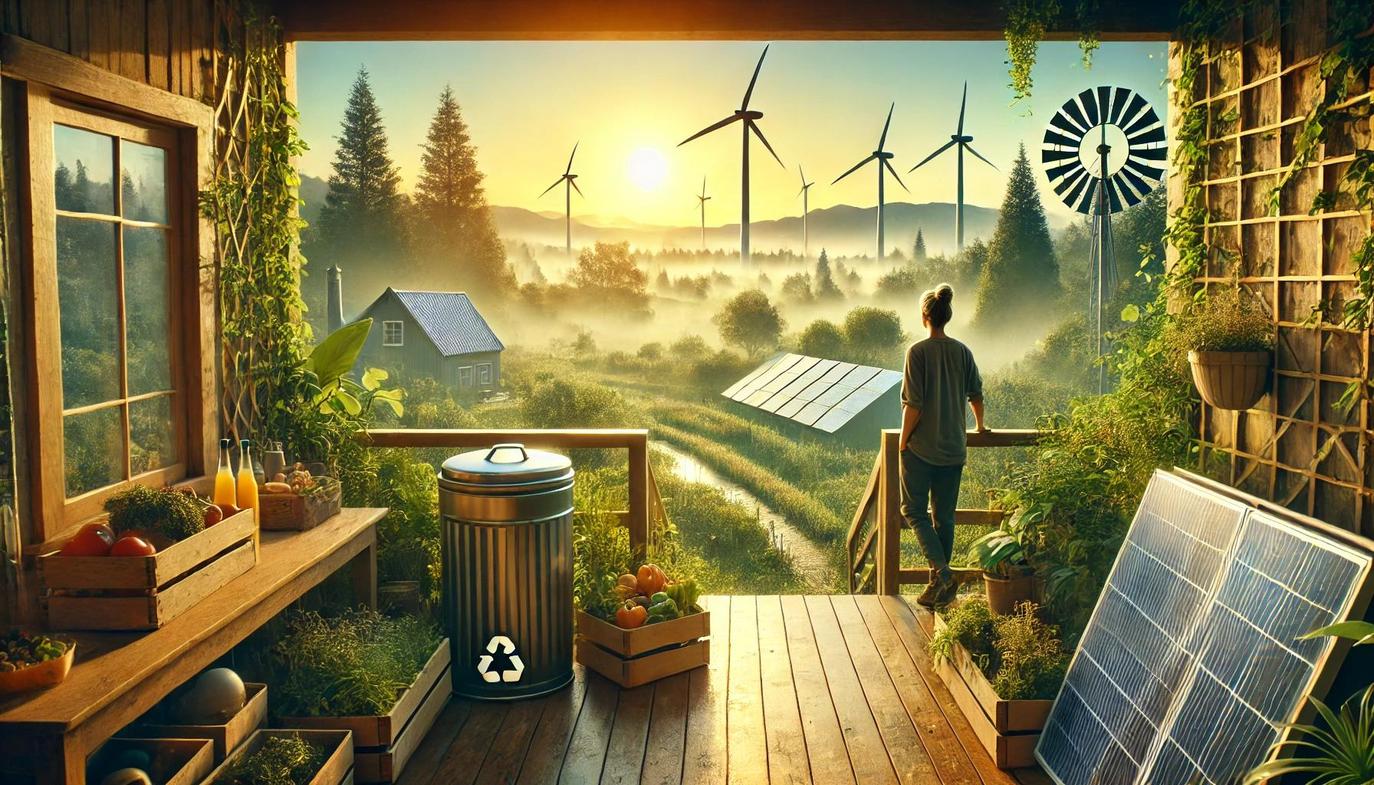
Daily Renewal in Your Carbon-Negative Homestead Awaits
As you step into a new lifestyle on a carbon-negative homestead, remember that the journey is always as important as the destination. Each small change you make contributes to a more sustainable future—not just for you, but for our planet and generations to come.
Imagine waking up each morning in a home that nurtures both personal well-being and the planet. By cultivating fertile soil and harnessing energy from solar panels or wind turbines, every action contributes to a positive impact, creating a ripple effect that extends far beyond your property. In this journey, a thriving community of eco-conscious individuals awaits, all sharing a passion for sustainability and responsible living.
Face challenges head-on; let them spark innovation! Dive into regenerative agriculture or turn organic scraps into nutrient-rich compost. Each initiative leads closer to achieving carbon negativity. As skills grow, so does the bond with the land, fostering a profound sense of stewardship and pride.
This path toward sustainability not only transforms your surroundings but also cultivates a resilient mindset. Embrace the excitement of each small win, knowing that every step contributes to a healthier environment for all. Joyfully engage with this adventure, and witness how it enriches life on your homestead.
As you set forth on building your carbon-negative homestead, keep in mind that it’s a continuous process of learning, adapting, and growing. Embrace each moment, and take pride in knowing that your efforts contribute to a healthier planet. With every action, you are paving the way to a resilient future—one brimming with harmony between humanity and nature. So, gather your tools, dig in, and let the journey unfold. Your carbon-negative haven is waiting!


