Engineers at the University of California San Diego have developed a way to generate an electric voltage from a super-hydrophobic surface and saltwater. The team of scientists tried many times and, after much frustration, was able to find a way to create sustained energy by running saltwater over a specially patterned electrically charged surface.
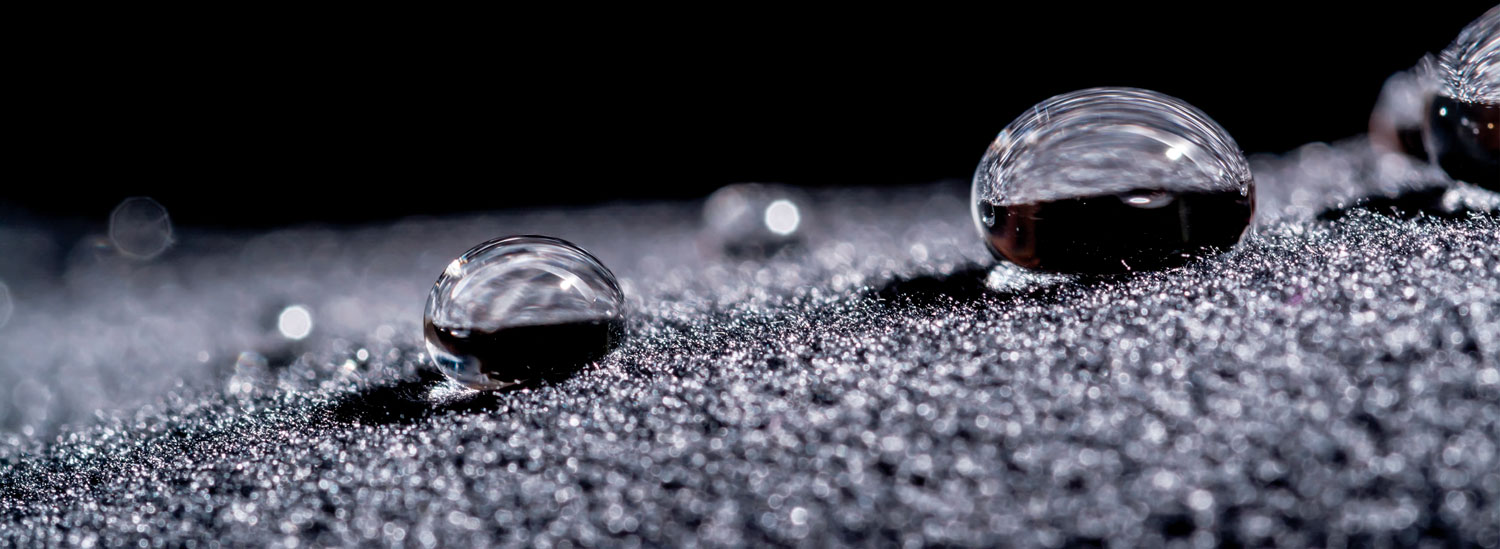
The charged surface is super water repellent and causes water to run over it much more quickly, allowing the water-electrolyte to gain a charge. In their experiments, they reached electrical charges of at least 50 millivolts.
The reaction begins with table salt or sodium chloride. The sodium and chlorine atoms break off in a chemical reaction, causing each atom to turn into charged ions. The sodium becomes a positively charged ion and the chlorine a negatively charged ion, which causes the two to be attracted to one another.
The dissolving of salt in water causes a loosening or separation of these two ions, causing sodium ions to slow down and chlorine ions to speed up. This is when the salt molecules split into atoms, resulting in a release of the energy stored between the two.
Prab Bandaru, a scientist, and engineer on the project explains:
When the chlorine flows away fast, then the relative velocity between the slow sodium and the fast chlorine is enhanced, and that will increase the electric power it generates.
In the past, other researchers have added tiny grooves to a surface to help boost energy production. While they were able to speed up the flow of the water, the energy produced was not much greater due to the air cutting into the exposure of the water. Initially, Bandaru’s team tried providing more air at the surface to speed things up, this did not work. Then they had an idea to put liquid inside the surface.

The team replaced the air in the surface grooves with oil. Bandaru speaks of the results:
We got a very, very high result for the voltage. We have to try this again! After several more tests, they realized that it was indeed reproducible.
Oil, like air, repels water, and some are more hydrophobic than others. An added benefit to using oil is that it sticks to the surface and won’t wash off from the water. The team is conducting further research to find out how well this technology will work on a large scale.
If this can work on a large scale it could be used to generate electricity from ocean waves, or as Bandaru explains, possibly used in wastewater treatment plants. “It doesn’t have to be saltwater, maybe there is wastewater that contains ions. As long as there are ions in the liquid, one can use this scheme for generating voltage.” Other scientists have noted that if this works, it could also be a breakthrough in future battery technology.