
Water leaks can cause serious damage to buildings, infrastructure, and the surrounding environment if they are not identified and repaired promptly. In residential properties, commercial premises, and municipal water systems, even a minor leak can result in structural deterioration, higher water bills, mould growth, and unnecessary water loss, highlighting the importance of sustainable building practices. Since many leaks occur underground, within walls, or inside complex pipe networks, specialised equipment and modern technology are required to locate them accurately without causing unnecessary disruption.
Recent advancements in leak detection technology now allow professionals to identify leaks more quickly, with greater precision, and with minimal impact on the property. The following are some of the main types of specialised equipment and technologies used for leak detection.
Acoustic Leak Detection Equipment
Acoustic leak detection equipment is commonly used to detect water leaks. Water escaping from a pressurised pipe creates a distinctive sound or vibration as it flows through cracks, holes, or damaged joints. Acoustic leak detectors used by professional leak detection companies use highly sensitive microphones and listening devices to pick up these sounds. Technicians place sensors along the pipe network or directly on fittings such as valves and hydrants. The equipment amplifies the sound of water escaping, allowing specialists to identify the location of the leak.
Advanced digital acoustic systems can filter out background noise such as traffic or machinery, making them particularly effective in urban environments. These tools are widely used by water utilities and professional plumbers because they allow leaks to be located without digging or dismantling structures.
Leak Noise Correlators
A correlator uses 2 or more sensors placed at different points along a pipeline. The sound will travel along the pipe if a leak occurs; each sensor detects it at slightly different times. The correlator’s computer system measures the time difference and calculates the exact location of the leak between the sensors. This technology is especially useful for long pipelines, such as those used in municipal water supply networks. Because correlators rely on precise measurements and algorithms, they can pinpoint leaks with remarkable accuracy, reducing the need for extensive excavation and lowering repair costs.
Thermal Imaging Cameras
Thermal imaging cameras are also widely used for detecting water leaks, particularly in buildings. These cameras detect differences in temperature on surfaces such as walls, ceilings, and floors. When water leaks from pipes, it can change the temperature of surrounding materials because moisture absorbs and transfers heat differently than dry materials. Thermal cameras display these variations as colour patterns on a screen, allowing inspectors to identify areas where water may be present behind surfaces. For example, a cold patch on a wall might indicate a leaking pipe or water accumulation. Thermal imaging is especially useful for locating hidden leaks in heating systems, underfloor pipes, or roof structures without the need to remove panels or tiles.
Moisture Meters and Hygrometers
Moisture meters measure the amount of moisture within materials such as wood, plaster, concrete, and drywall. They are particularly useful for confirming whether an area suspected of having a leak is actually damp. There are two main types of moisture meters: pin-type and pinless. Pin-type meters use small probes inserted into the material to measure electrical resistance, which changes depending on moisture levels. Pinless meters use electromagnetic sensors to scan surfaces without penetrating them. Hygrometers, on the other hand, measure humidity levels in the air and help identify areas where excess moisture may indicate a hidden leak or water intrusion.
Dye Testing
Dye testing is a simpler but still effective leak detection method. Special fluorescent dyes are added to water systems, drains, or plumbing fixtures. If a leak is present, the coloured dye will travel with the water and become visible at the point where the leak emerges. Ultraviolet (UV) lights can be used to enhance the visibility of fluorescent dyes, making it easier to trace the path of water flow. Dye testing is often used in plumbing inspections, roof leak detection, and drainage system investigations.
Ground Penetrating Radar (GPR)
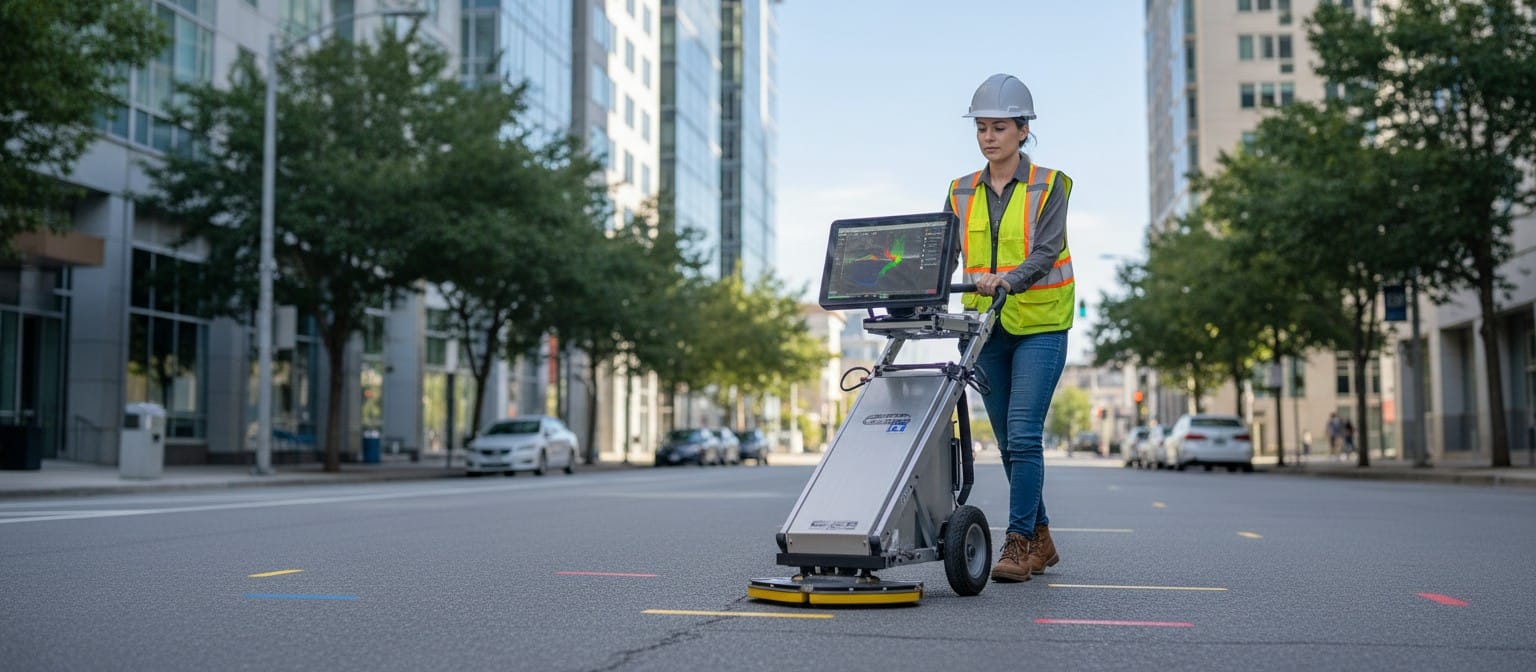
Ground penetrating radar (GPR) is another high-tech tool used in leak detection, especially for underground infrastructure. GPR works by sending electromagnetic waves into the ground and measuring the signals that bounce back when they encounter different materials or voids. When water leaks underground, it can change the density and composition of the soil, creating anomalies that the radar system can detect. GPR allows technicians to scan beneath surfaces such as roads, concrete floors, and landscapes without excavation. Although it requires specialised training to interpret the data accurately, it is a valuable tool for locating leaks in large or complex underground pipe networks.
Video Pipe Inspection Cameras
Video pipe inspection systems are also commonly used in modern leak detection. These systems consist of small waterproof cameras attached to flexible cables that can be inserted into pipes and drains. The camera transmits real-time video footage to a monitor, allowing technicians to visually inspect the interior of the pipe. This method helps identify cracks, blockages, corrosion, or joint failures that may cause leaks. Video inspection is particularly useful for sewer lines and drainage systems where direct access is limited. Some systems also include distance counters and rotating camera heads, enabling inspectors to precisely locate and document the problem area.
Pressure Testing Equipment
Pressure testing equipment is essential for identifying leaks in plumbing systems. The process involves sealing the pipe network and introducing air or water at a controlled pressure level. If the pressure decreases over time, it suggests that a leak is present somewhere in the system. Once a pressure drop is detected, technicians can use additional leak detection tools to locate the exact source of the problem. Pressure testing is often carried out when installing new plumbing systems or after repairs to confirm that the pipes are properly sealed and operating as intended.
Smart Water Monitoring Technology
Recent developments in smart water monitoring technology are also transforming the way leaks are detected. Advanced leak detection and flow monitoring systems, such as smart water sensors and Internet of Things (IoT) devices, can be installed in buildings or water networks to continuously monitor water flow, pressure, and usage patterns. If the system detects unusual activity—such as continuous water flow when no fixtures are in use—it can alert property owners or maintenance teams through mobile apps or automated notifications.
Some advanced systems can even automatically shut off the water supply to prevent further damage when a leak is detected. These technologies are becoming increasingly popular in modern buildings because they provide real-time monitoring and early warning of potential problems.

Satellite-based Leak Detection Technology
Satellite-based leak detection technology is an emerging innovation used by large water utilities. Satellites equipped with advanced sensors can detect subtle changes in soil moisture levels over large areas. By analysing these patterns, experts can identify locations where underground water pipes may be leaking. Although this technology is still developing and is mainly used for large-scale infrastructure, it has the potential to revolutionise how water utilities monitor extensive pipeline networks.
Specialist equipment and modern technology have greatly improved the ability to detect water leaks quickly and accurately. Tools such as acoustic detectors, thermal imaging cameras, tracer gas systems, moisture meters, and ground penetrating radar allow professionals to locate leaks without unnecessary destruction of walls, floors, or landscapes. In addition, smart leak detection sensors now provide real-time monitoring, helping property owners identify leaks before they cause serious damage.
By using these advanced technologies, plumbers, engineers, and water utilities can reduce water loss, prevent structural damage, and save property owners significant repair costs. As technology continues to evolve, leak detection methods will become even more precise, efficient, and accessible.


